
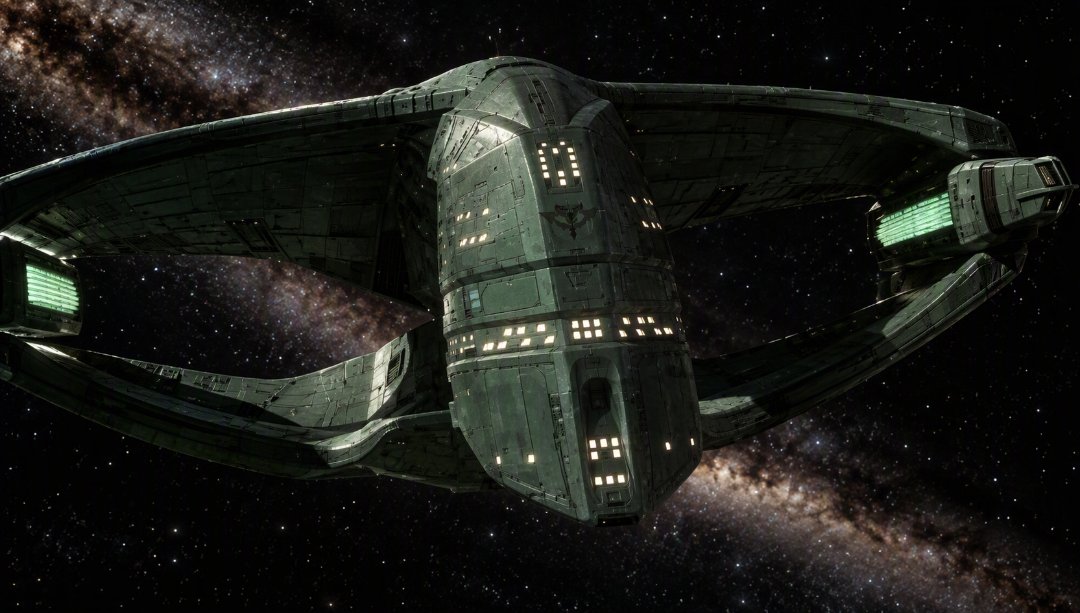
The Metar: Tabula Rasa Incident (2288 - 2291), the backstory.
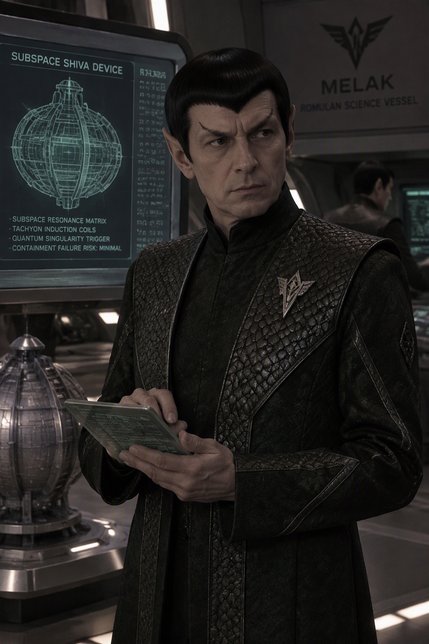
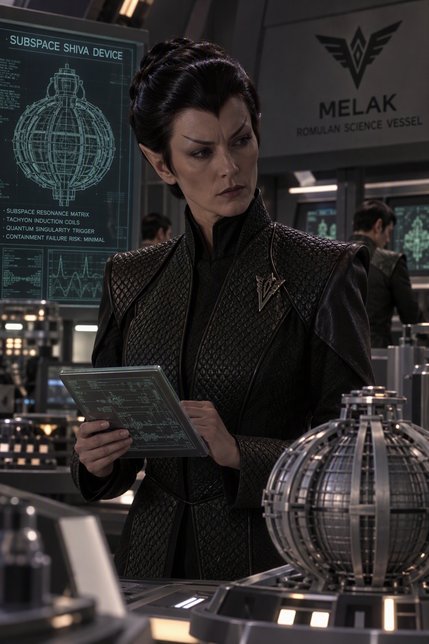 The Pilot:
The Melak Incident feels less like a conventional battle and more like a collision between three intelligence operations, each acting on incomplete information. Nobody intends to liberate the New Worlds, and nobody truly understands Shiva. The catastrophe happens because every power believes that allowing a rival to possess the weapon would be more dangerous than intervening.
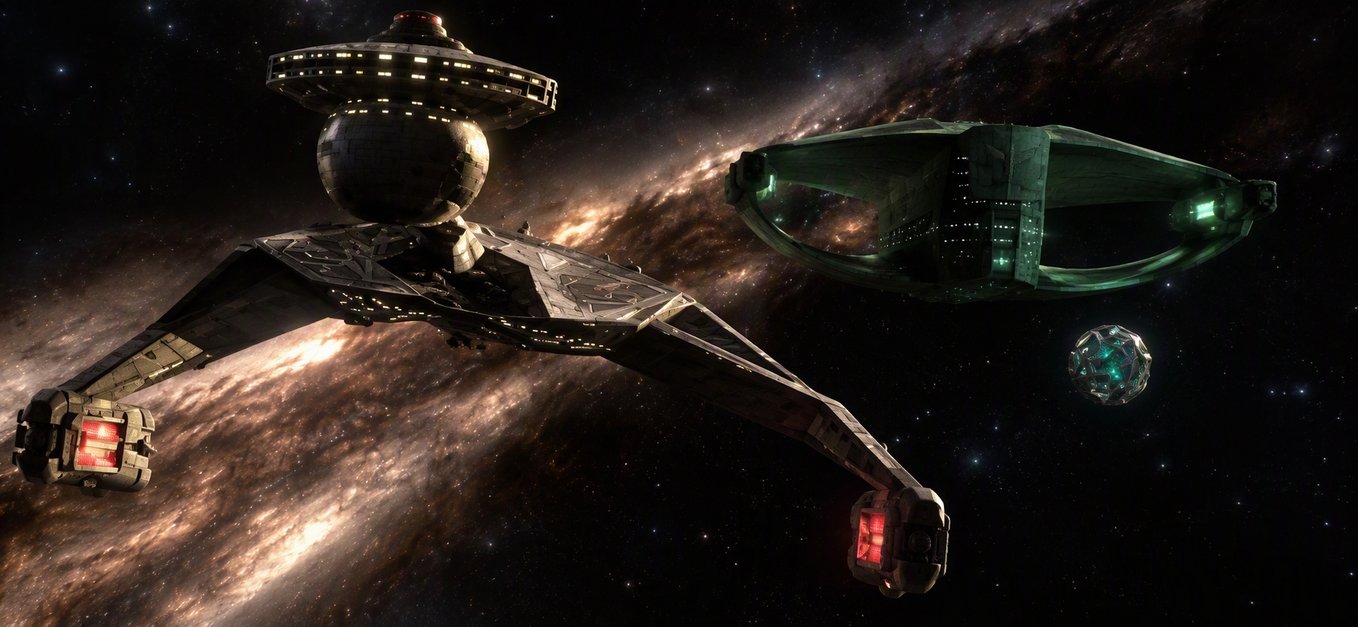
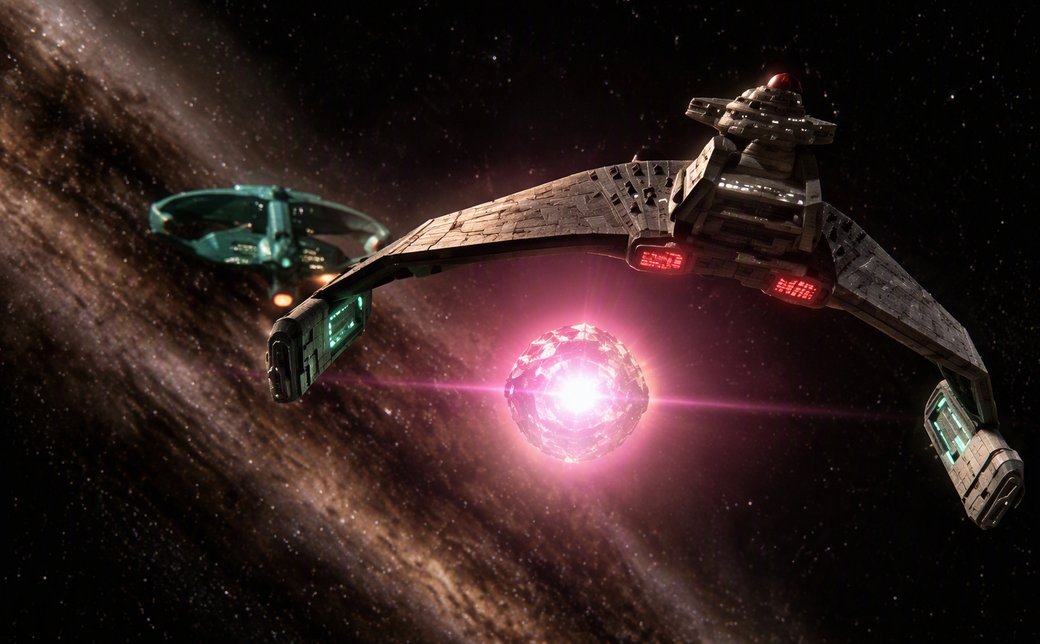
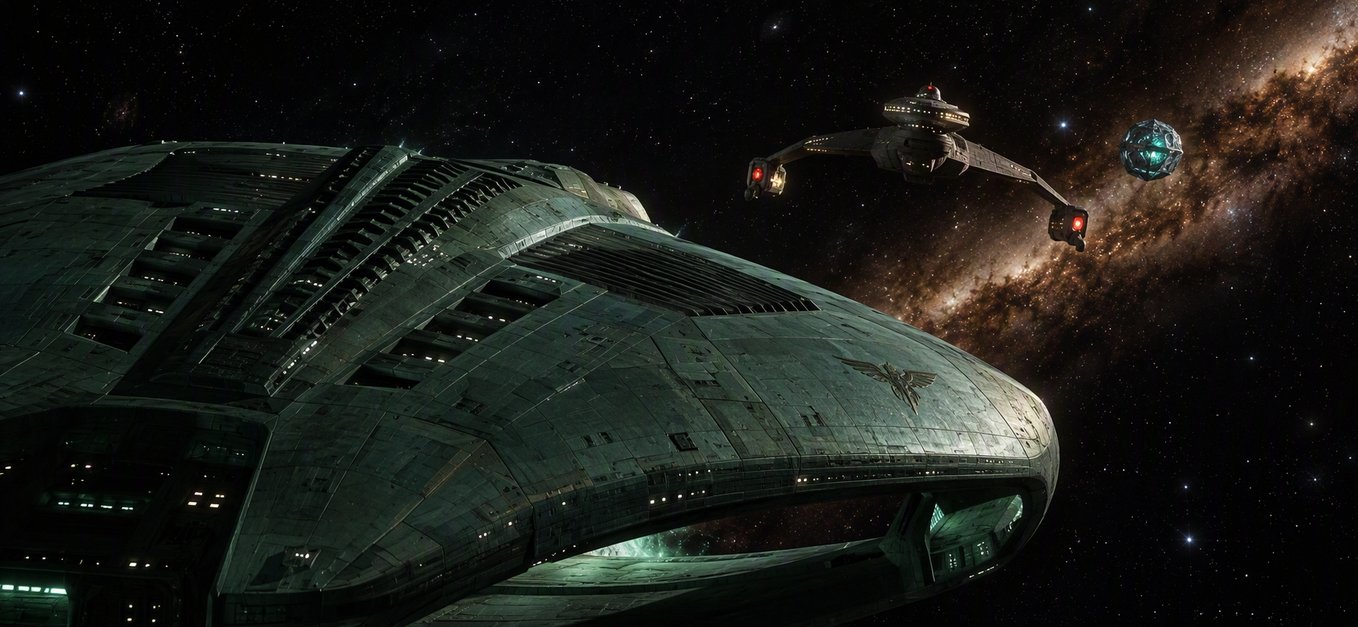
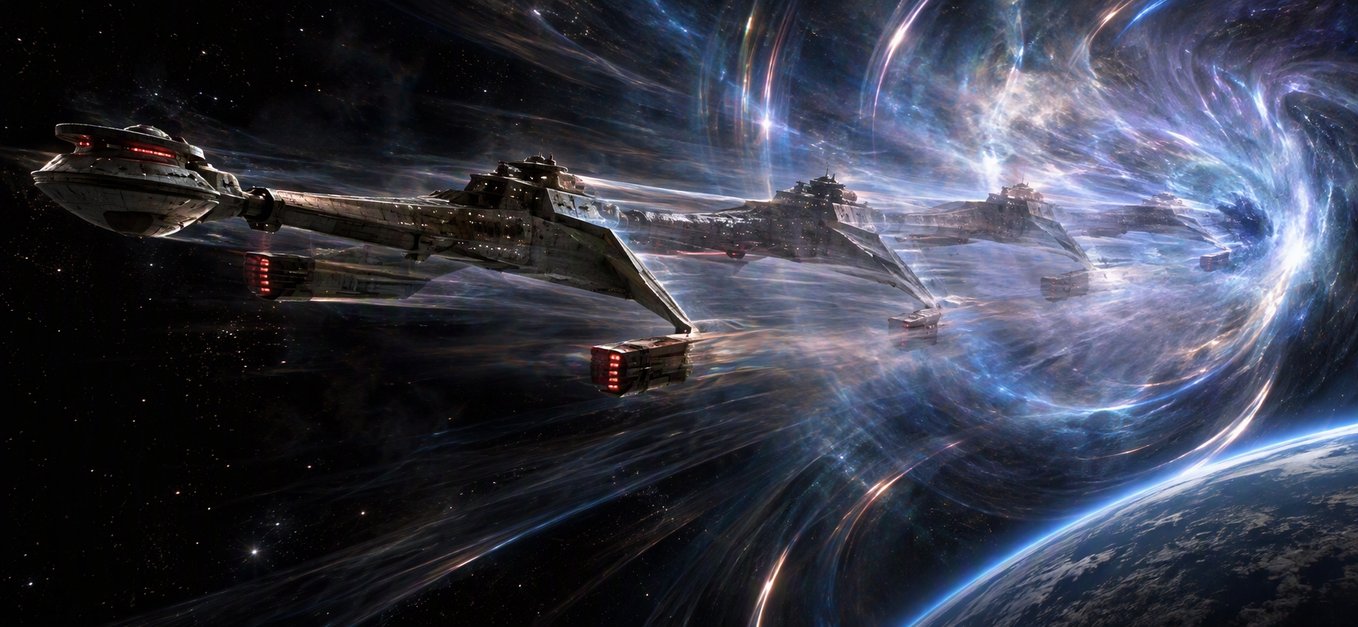
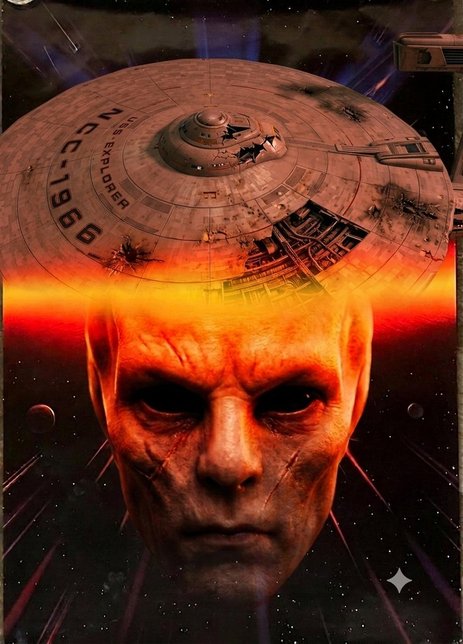
The source outline establishes that USS Explorer NCC-1966 is a newly launched, later-series Constitution-class vessel commanded by Captain Adam Gibson. Starfleet Intelligence sends her to stop the Romulan vessel Melak from detonating Shiva, but a Klingon battlecruiser arrives first and prompts the Romulans to activate the device prematurely. The resulting subspace wave releases several imprisoned star systems, destroys the Klingon ship and drags the Melak into a planetary gravity well.
Below is an expanded treatment using your revised continuity, in which the Klingon interceptor is a D7.
# The Melak Incident
## Prologue: The Paradox Legacy
The incident begins months before the USS Explorer receives its orders.
Romulan Intelligence has been covertly excavating a Paradox installation discovered within a region of unstable subspace. The Paradox are known only through fragments: impossible machines, contradictory sensor records and abandoned facilities whose internal dimensions do not agree with their external dimensions.
The Romulans do not understand the civilisation.
They understand only that it possessed weapons.
An archaeological device recovered from the installation appears capable of generating a controlled fracture in subspace. Romulan physicists believe the original Paradox mechanism was not a weapon at all. It may have been an industrial tool, a method of manipulating dimensional boundaries or a means of opening passages between distant regions of space.
The Praetorate is uninterested in its original purpose.
If it can open subspace, it can also rupture subspace.
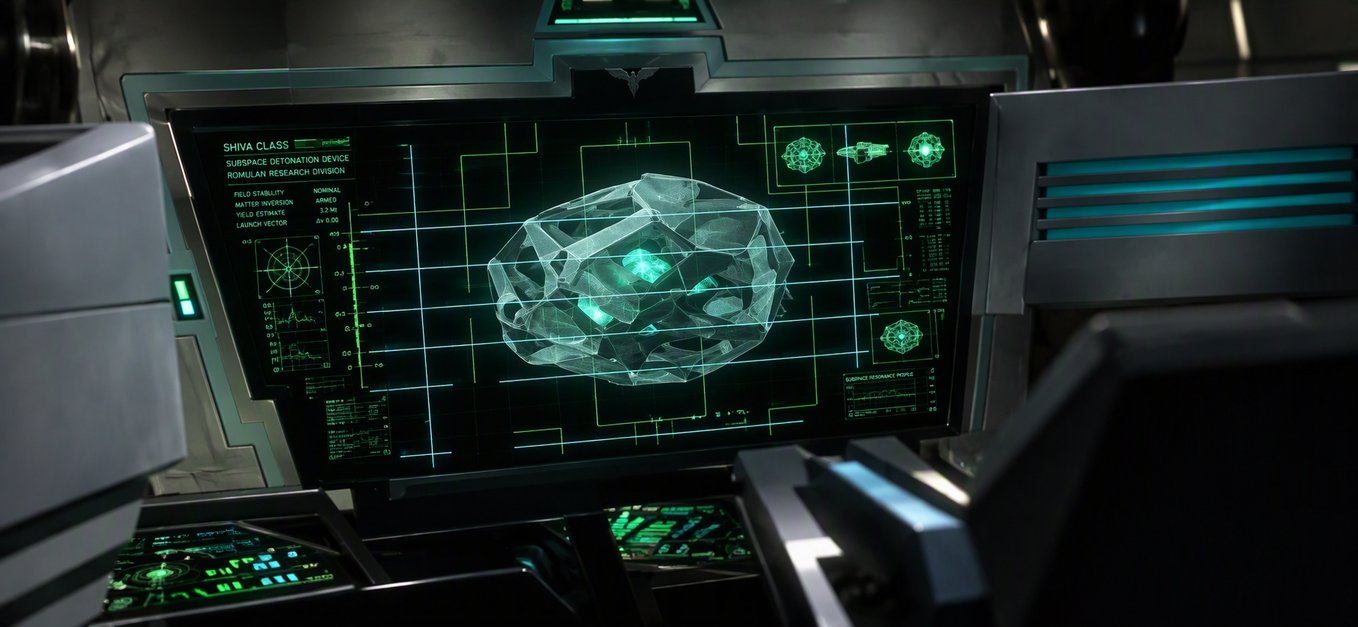
The project is given the name **Shiva**.
The name is not Romulan. It is taken from a Federation cultural database by a Romulan analyst searching for an appropriate designation: the destroyer, transformation through destruction, and the ending from which something new might emerge. The Romulans appreciate the irony but fail to appreciate how literal the name will become.
## Project Shiva
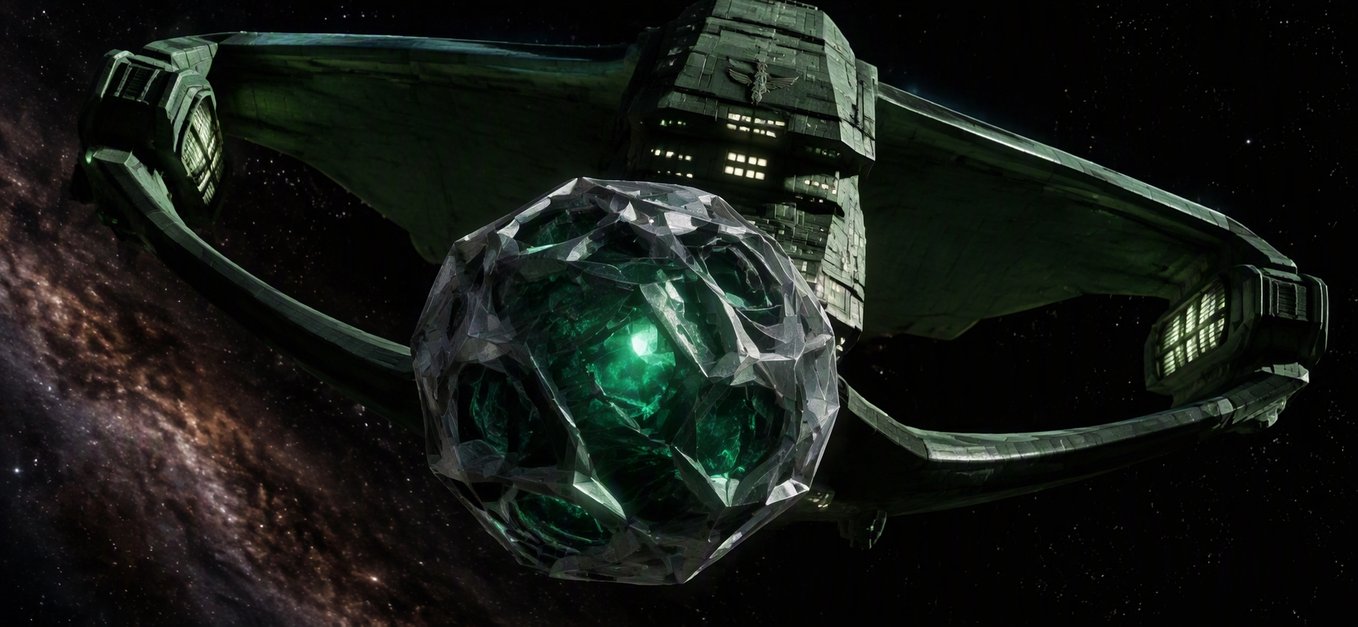
Shiva is constructed aboard the Romulan special-project vessel Melak, ostensibly a scientific scout conducting astronomical research. In reality, the vessel has been extensively modified around a single Paradox-derived mechanism.
The device does not resemble a torpedo or conventional bomb. It is a skeletal ring surrounding a black, apparently empty chamber. When activated, the chamber acquires measurable mass despite containing no observable matter.
The Romulan team cannot explain where that mass originates.
Nor can they establish where the device directs the energy it draws from the ship.
Their simulations are contradictory. Some predict the formation of a stable subspace aperture. Others predict a localised collapse of warp geometry. Several produce no result because the simulated computer ceases to exist before completing the calculation.
Nevertheless, the military applications appear revolutionary:
- Shiva might collapse warp fields and immobilise entire fleets.
- It might sever subspace communications across a star system.
- It might penetrate shields without interacting with normal space.
- It might render established warp routes permanently unusable.
- Properly scaled, it might isolate an enemy world from interstellar civilisation.
The project commander receives repeated warnings from his scientific staff. Shiva has never been activated at full strength. Its surrounding subspace geometry cannot be mapped. The Paradox device appears to be interacting with something outside the observable universe.
The commander forwards the warnings to Romulus.
Romulus replies with an authorisation to continue.
The unspoken reasoning is simple: if the Romulans do not master the device, the Federation or Klingons eventually will.
That logic becomes the original sin of the entire Metar crisis.
# The Intelligence Race
## How the Klingons Learn
The Klingons receive the first reliable intelligence through a combination of intercepted transmissions and a Romulan defector whose information is incomplete.
They learn that the Melak carries a weapon capable of destroying a fleet through subspace. They do not learn that it remains experimental. They assume the Romulans are preparing a demonstration intended to intimidate both the Empire and the Federation.
The Klingon High Command cannot permit such a test to succeed.
A D7 battlecruiser is dispatched under sealed orders. Its captain is told to capture the Melak if possible, destroy it if necessary, and prevent the weapon's activation at any cost.
The Klingons do not inform the Federation. They fear that Starfleet would attempt to seize Shiva under the pretext of containing it.
They are correct.
## How Starfleet Learns
Federation intelligence pieces together the operation more slowly.
A listening station detects encrypted Romulan telemetry associated with exotic subspace research. An embedded agent provides the name Shiva but little technical information. Analysts then identify unusual shipments of exotic materials to the Melak.
Starfleet Intelligence reaches three conclusions:
1. Shiva is a strategic weapon.
2. The Romulans are preparing a live test.
3. Klingon Intelligence also knows about it.
All three conclusions are correct.
The analysts then make a fourth assessment: a controlled Starfleet interception offers the best prospect of preventing a Klingon-Romulan confrontation.
This is less certain.
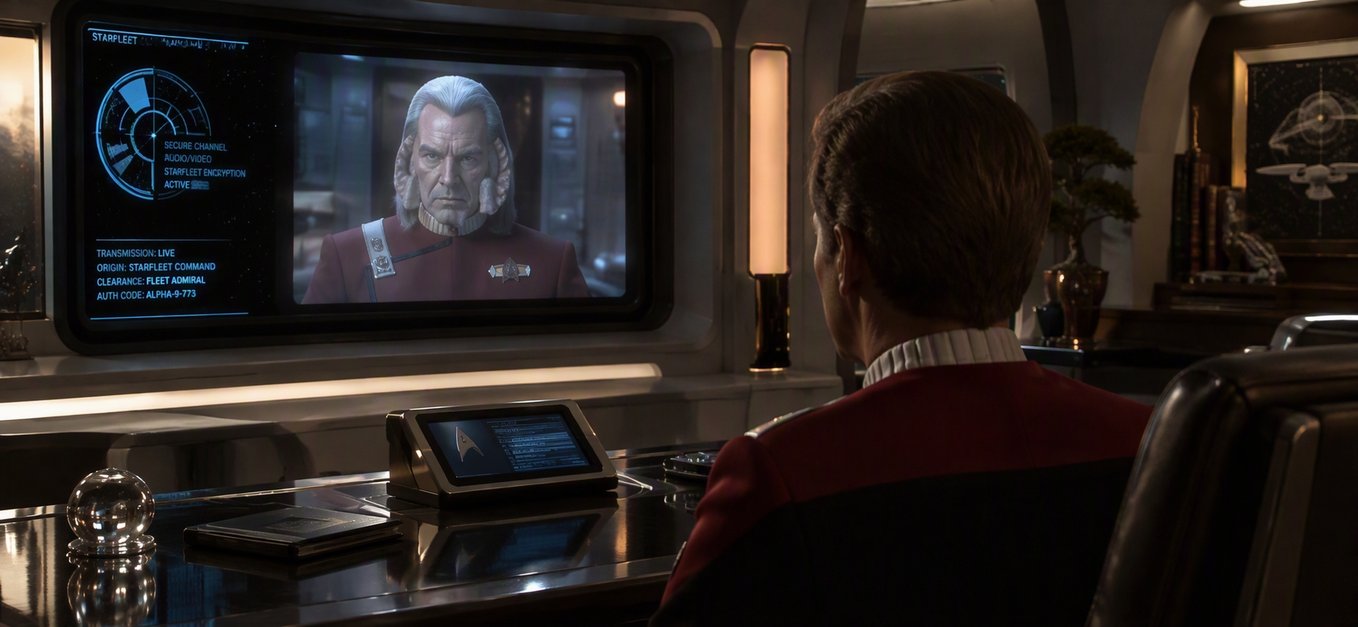
The newly commissioned USS Explorer NCC-1966 is the closest capable Federation vessel. She is a later-production Constitution-class starship from the Levant authorisation programme, only recently out of shakedown and commanded by former science officer Captain Adam Gibson.
Starfleet Headquarters places great faith in the new ship.
That confidence disguises desperation.
## Captain Gibson's Orders
Gibson receives three layers of instruction.
His public orders are humanitarian:
> Locate the Romulan vessel, render assistance if required and investigate hazardous subspace activity.
His operational orders are strategic:
> Prevent activation of Shiva and remove the device from Romulan control.
His classified intelligence annex is considerably less idealistic:
> If secure recovery is possible, Shiva and all associated research are to be transferred to Starfleet Intelligence.
Gibson immediately recognises the contradiction.
He is being ordered to stop the proliferation of a weapon while simultaneously acquiring it for the Federation.
When he challenges the orders, the admiral briefing him replies:
> “Captain, this is not a question of whether Shiva should exist. It exists. The only remaining question is who understands it first.”
That statement establishes the governing theme of the entire Metar storyline.
# Act One: The Pursuit
The USS Explorer enters the region expecting to find the Melak alone.
Instead, long-range sensors detect three disturbances:
- The Romulan vessel is operating under partial cloak.
- A Klingon D7 is approaching at maximum warp.
- Subspace surrounding the entire sector is under unnatural compression.
The final reading troubles Gibson most. The region appears empty on ordinary sensors, yet gravitational mapping suggests substantial mass distributed across several locations where no stars are visible.
The ship's science officer compares it to seeing the wakes of ships beneath a perfectly opaque ocean.
Something enormous is present.
It simply is not present in normal space.
Gibson orders a priority warning transmitted to both vessels. The Romulans ignore it. The Klingons accuse Starfleet of interfering in a legitimate Imperial security operation.
Neither side reduces speed.
## Aboard the Melak
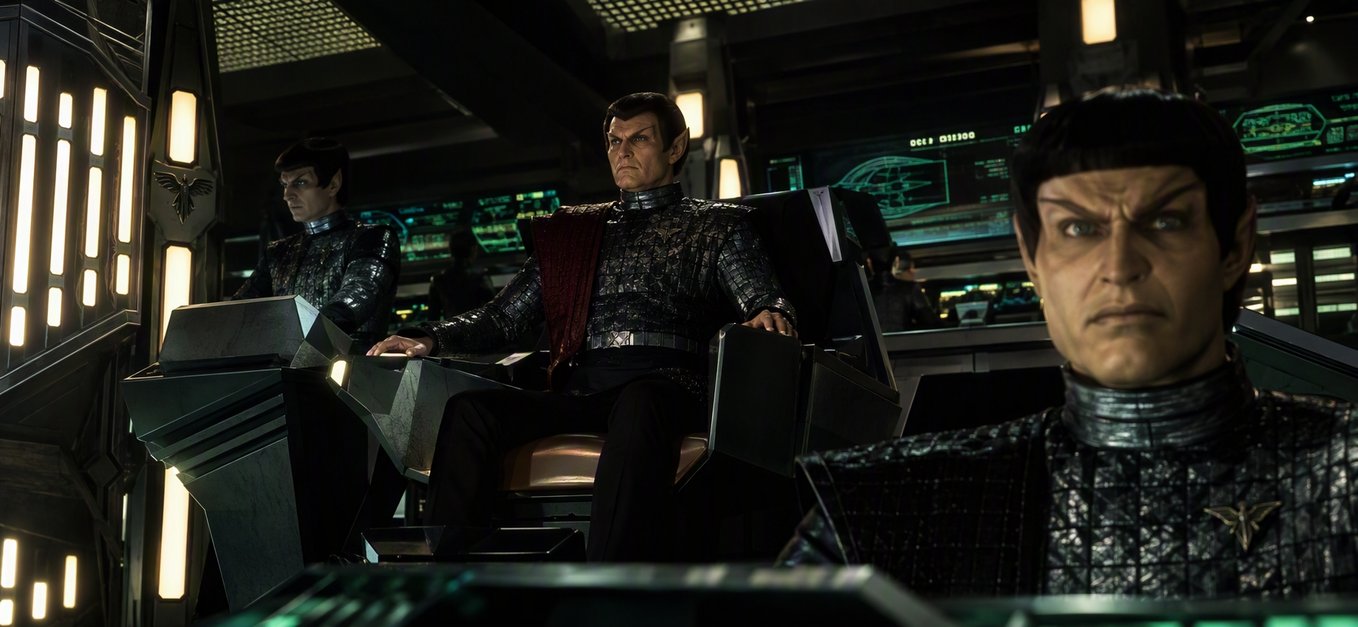
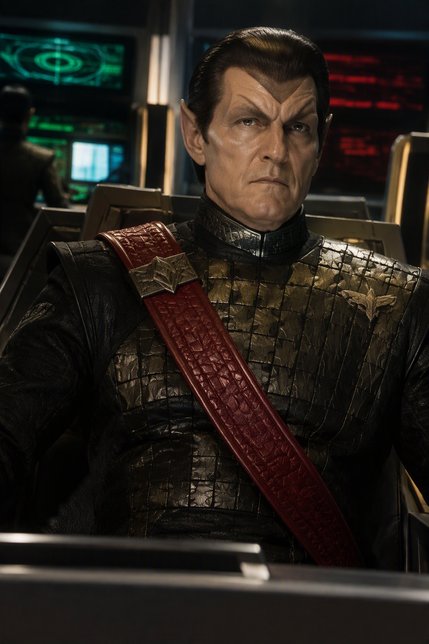
The commander of the Melak has been told that recovery is more important than survival. Shiva must not fall into hostile hands.
His scientific director protests that the device is not ready. Activation within the surrounding distortion could produce effects far beyond their calculations.
The commander asks whether the Klingons can be allowed to capture it.
The scientist says no.
He asks whether the Federation can be allowed to capture it.
Again, the scientist says no.
The decision has already been made.
# Act Two: The Klingon Interception
The D7 reaches the Melak before the USS Explorer.
The Klingon captain does not open fire immediately. He demands the surrender of the vessel and its “subspace cannon”. The Romulan commander denies possessing such a device.
The Klingons begin locking transporters onto the scout.
At that moment, the USS Explorer drops from warp at the edge of the system.
Gibson orders both ships to stand down. He proposes a joint inspection under neutral observation, knowing neither government is likely to accept but hoping to gain time.
The Klingon captain interprets the proposal as confirmation that Starfleet wants Shiva.
The Romulan commander interprets the arrival of both enemy powers as proof that the project has been compromised beyond recovery.
The D7 fires a disabling volley.
The first strike overloads the Melak's aft shields. The second damages its cloak and destabilises the containment field surrounding Shiva.
The Romulan scientists report that the weapon is beginning to activate spontaneously.
They have perhaps twenty seconds.
The project commander orders full detonation.
# Act Three: Shiva
Shiva does not explode in the conventional sense.
For a fraction of a second, every star disappears.
The bridge crew of the USS Explorer see absolute darkness on the main viewer. Instrument panels continue operating, but the ship's sensors insist that the surrounding universe contains neither matter nor energy.
Then the stars return in the wrong positions.
A black sphere forms around the Melak. Its surface is not darkness but absence: light does not enter it, bend around it or reflect from it. It simply ends.
The sphere contracts.
The local warp geometry tears open.
The Klingon D7 attempts to withdraw, but its warp field stretches towards the rupture. The battlecruiser is elongated across several sensor frames, appearing in multiple positions simultaneously. Its distress transmission arrives before the captain gives the order to send it.
Then the D7 vanishes.
No explosion. No debris. Only a collapsing echo trapped in subspace.
The USS Explorer is thrown clear when Gibson orders an emergency inversion of the warp field. The manoeuvre burns out half the ship's propulsion systems and causes severe structural damage, but prevents the Constitution-class vessel from being drawn fully into the rupture.
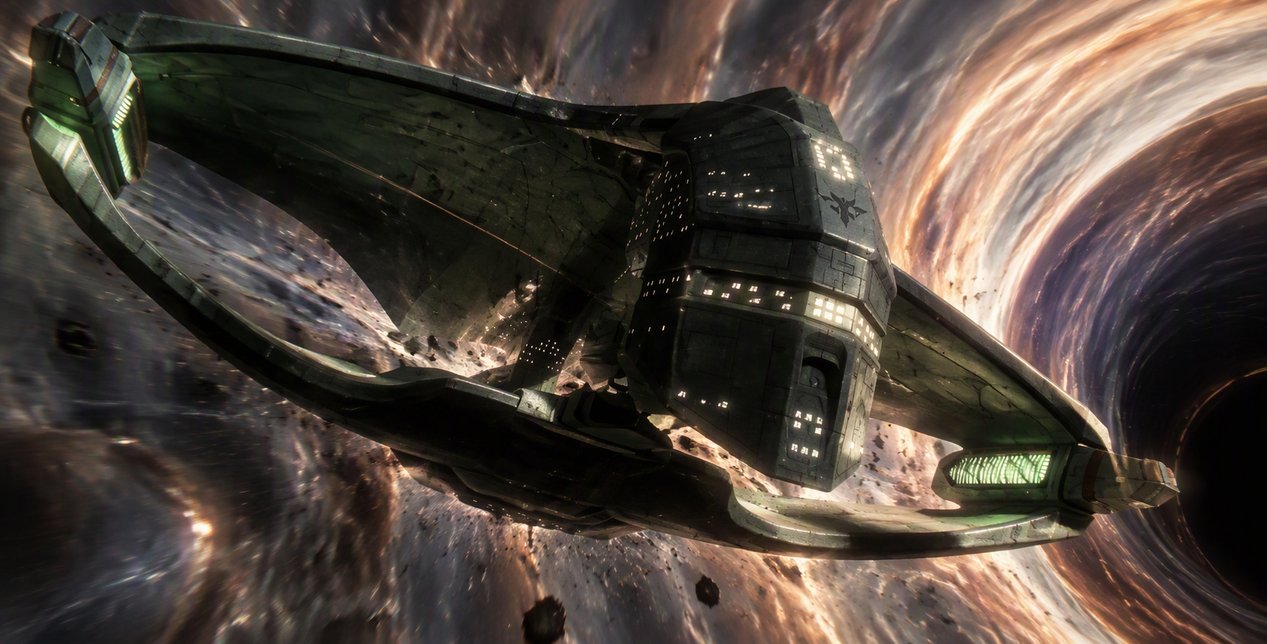
The Melak is less fortunate.
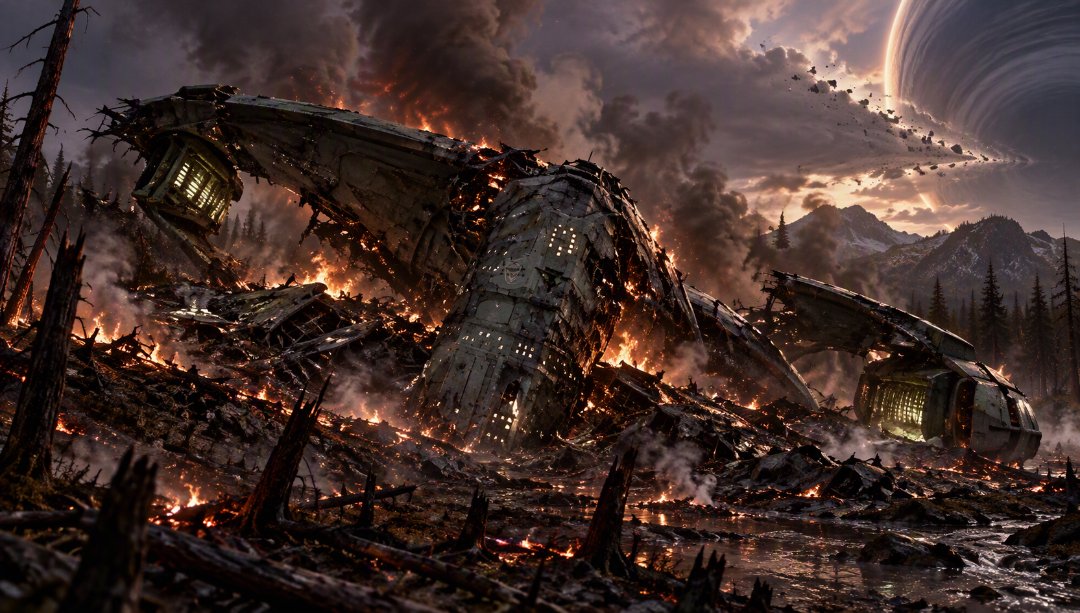
The scout emerges thousands of kilometres from its original position, caught in the gravity well of a planet that did not exist moments earlier.
# Act Four: The New Worlds
Stars begin appearing across the sector.
Not forming. Not arriving through conventional movement. They unfold into normal space as if an obscuring layer has been removed from reality.
The USS Explorer's navigational computer crashes while attempting to reconcile the new stellar bodies with its charts. Several star systems now occupy what had moments before been empty space.
Many contain habitable planets.
Some contain artificial satellites.
Several carry evidence of civilisation.
The released systems had been enclosed within a vast subspace prison. The site source describes numerous systems spilling from an “anomaly void”, including M-class worlds and substantial dilithium resources. Their sudden appearance creates the prospect of a Klingon-Romulan struggle for strategic control.
Shiva has not created these worlds.
It has broken the lock holding them outside normal space.
## The Fate of the Melak
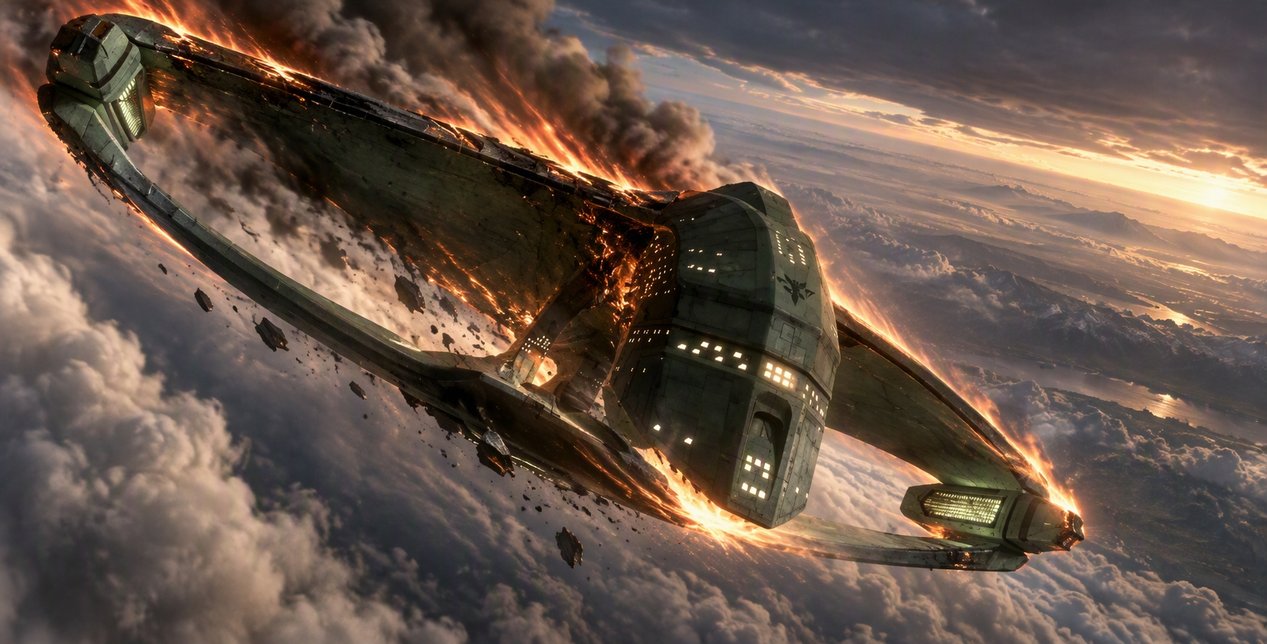
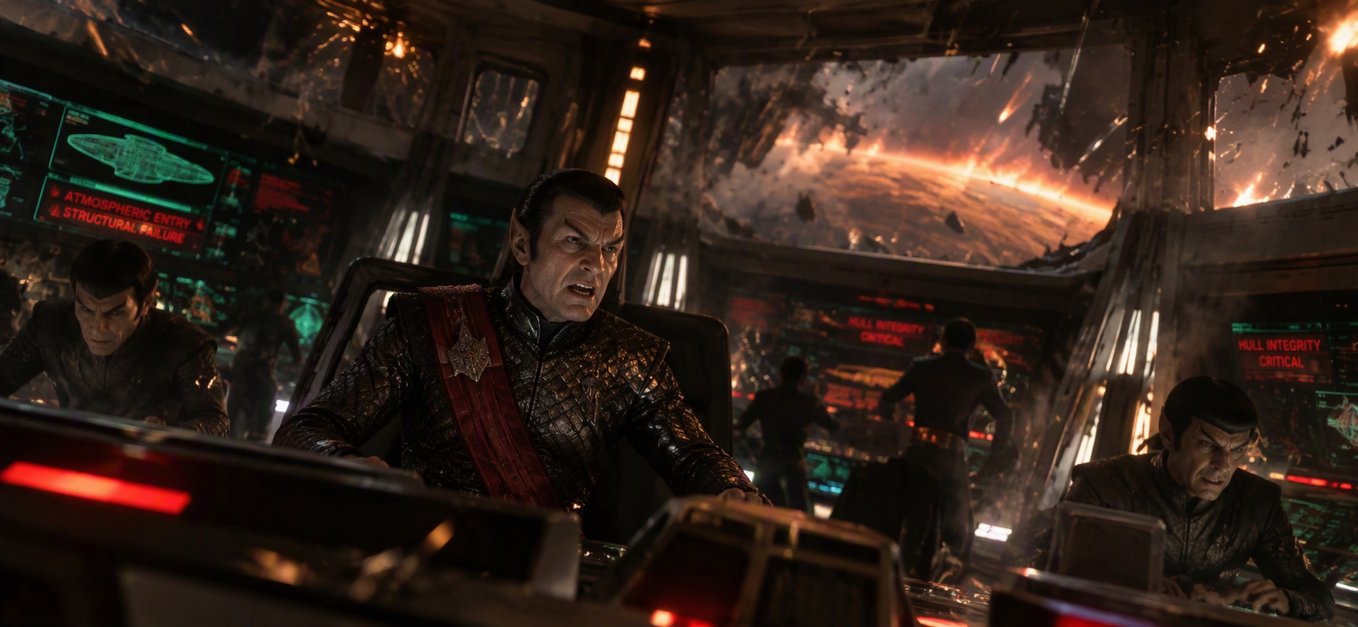
The Melak falls towards the nearest planet.
Its engines are damaged, its cloak is gone and Shiva has fused with the ship's internal systems. The device is no longer clearly separate from the vessel. Conduits are changing shape. Bulkheads display unknown molecular structures. Organic compounds begin appearing inside machinery.
The Romulan crew assume these effects are consequences of Paradox technology.
They are wrong.
The activation of Shiva has exposed the ship to something within the prison. Something has crossed the boundary during the rupture.
The scout manages to transmit a fragmented message:
> “Melak to Imperial Command. Shiva activated. Klingon vessel destroyed. Multiple stellar bodies emerging. We have suffered contamination. Internal systems no longer responding to command architecture. There is something in the device. Repeat, there is something in…”
The transmission ends as the Melak enters the planet's atmosphere.
The USS Explorer intercepts the final message. The source history likewise places the loss of the Melak in the gravity well of the nearest released world, with the USS Explorer receiving its final transmissions.
Gibson prepares a rescue mission.
Starfleet Intelligence orders him to prioritise recovery of Shiva.
The distinction is not lost on anyone aboard.
# Act Five: First Contact with the Consequences
Before the USS Explorer can enter orbit, it detects a weak planetary transmission:
> “People from space, please help us…”
The message describes a plague, failing power and attacks by an enemy the universal translator cannot identify. The source outline specifically begins the New Worlds expedition with a broken appeal for help picked up by a deep-space probe.
The inhabitants have been trapped for generations. They know little of the mechanism that imprisoned their systems. Their histories describe a war, a plague and “living stars” that descended from the sky.
Gibson now faces three simultaneous obligations:
- Rescue survivors from the Melak.
- Answer the distress call from the planet.
- Prevent Shiva from being recovered by the Klingons or Romulans.
Further signals appear almost immediately.
Klingon ships are coming to investigate the loss of the D7.
Romulan ships are coming to recover the Melak and erase evidence of Project Shiva.
Starfleet Command is assembling a scientific and diplomatic convoy, supported by engineering and tactical vessels, to investigate the sudden appearance of the systems and protect any indigenous inhabitants from exploitation. That convoy and its concern over Klingon and Romulan resource claims are part of the established USS Explorer premise.
The race for the New Worlds has begun.
# The Hidden Metar Connection
The final scene of the opening episode takes place inside the wreckage of the Melak.
A Romulan survivor regains consciousness. Emergency lighting flickers through the ruined compartment.
The Shiva chamber has opened.
Inside it there is no machinery.
There is tissue.
A black, iridescent biological substance is growing across the Paradox framework. It absorbs circuitry, samples it and produces altered versions of the components. Each generation is more efficient than the last.
The Romulan reaches for his communicator.
The growth forms a structure resembling the communicator before he touches it.
It speaks in his voice.
Not to him, but through every functioning speaker aboard the ship:
> “Boundary broken.”
A pause follows as the organism accesses the scout's navigational records.
> “Resources located.”
Then it begins transmitting into space.
This is the first unmistakable sign of the Metar.
The established Metar concept supports precisely this kind of reveal. Their biology functions as a technological library, allowing them to construct propulsion, power systems and weapons through genetic reconfiguration. They can integrate encountered materials into themselves and adapt their capabilities in response to new environments and threats.
# Why the Incident Matters
The Melak Incident becomes the original wound behind everything that follows.
## Publicly
The official account says an illegal Romulan experiment caused a subspace disaster, destroyed a Klingon vessel and revealed several previously inaccessible star systems.
The Federation announces a humanitarian and scientific mission.
The Klingons announce an investigation into an unprovoked attack on one of their battlecruisers.
The Romulans deny that Shiva ever existed.
## Secretly
Every government reaches a different conclusion.
The Romulans believe Shiva worked and immediately begin attempting to reconstruct it.
The Klingons conclude that the weapon destroyed one of their battlecruisers effortlessly and therefore must be acquired before their enemies reproduce it.
Starfleet Intelligence concludes that the Paradox technology is destabilising, poorly understood and potentially catastrophic. It also recommends that all recoverable components be secured for Federation study.
Nobody seriously considers abandoning the technology.
Caution has already become strategically dangerous.
## Historically
The bitter irony is that Shiva is soon overshadowed by what it releases.
The original arms race concerns Paradox subspace technology. Once the ships enter the New Worlds and encounter Metar biotechnology, Shiva begins to look primitive.
Paradox technology can rupture a dimensional boundary.
Metar biology can study the effect, incorporate it and grow a living system capable of reproducing it.
That discovery transforms the Melak Incident from a border crisis into the starting point of a technological revolution.
The powers enter the New Worlds seeking one weapon.
They find the biological foundations of thousands.
# Opening Episode Structure
**Episode title: “Shiva”**
### Teaser
The Melak prepares the Paradox device for testing. A scientist warns that another presence exists inside the adjoining subspace domain.
### Act One
The USS Explorer receives its contradictory rescue, interception and recovery orders.
### Act Two
The Klingon D7 finds the Melak. Gibson races to prevent a confrontation.
### Act Three
The Klingons attack. The Romulans detonate Shiva.
### Act Four
The New Worlds emerge. The D7 is destroyed and the Melak crashes.
### Act Five
The USS Explorer receives the planetary distress signal as Klingon and Romulan reinforcements approach.
### Final image
Metar tissue grows through the Shiva chamber and transmits the location of normal space to the wider Metar consciousness.
The episode ends not with a declaration of war, but with an intelligence assessment:
> “Whatever Shiva opened, Captain, the Romulans will attempt to open it again.”
Gibson looks at the new systems filling the viewscreen.
> “That isn't what concerns me.”
> “What does?”
> “Something on the other side answered.”
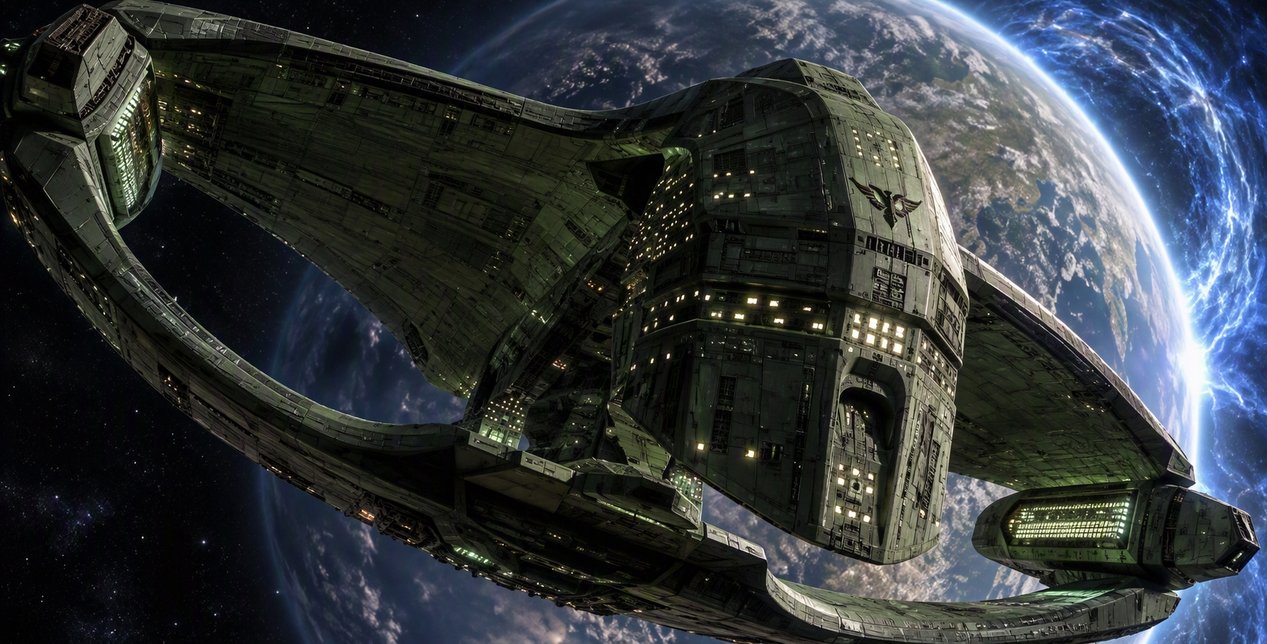
 The Miniseries:
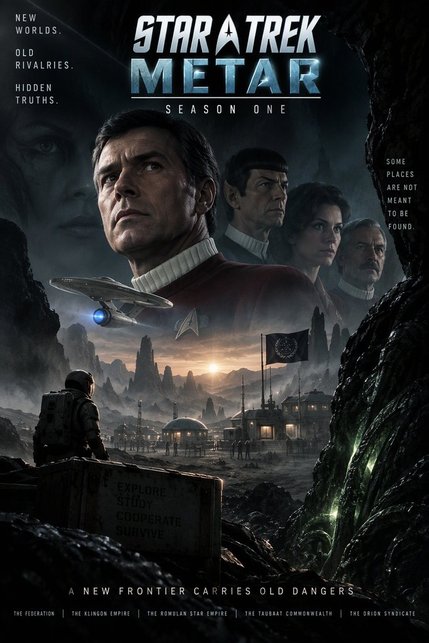
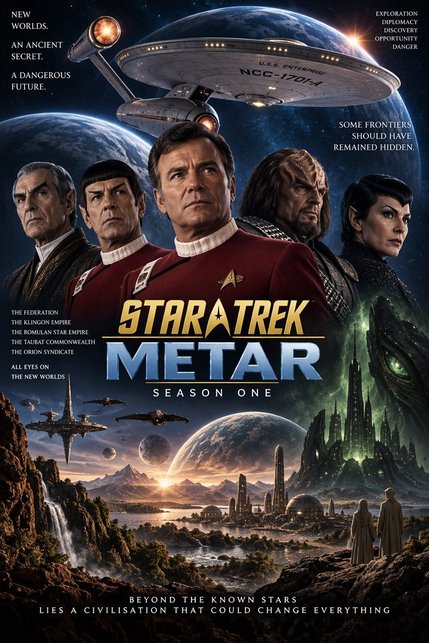 Season One (2288-2289)
STAR TREK: METAR
Theme: "Discovery"
**What audiences think the series is about:**
Three hostile powers scrambling to explore a newly revealed region of space without starting another war. A DS9 set in the Star Trek V era.
**What it is secretly about:**
They have broken the seal on something that was deliberately hidden.
## The scale
Most importantly, **keep Season One small**.
No enormous fleets. No spectacular metropolitan colonies. No huge territorial empires.
Exploration has only just begun.
The typical Federation presence might be:
- USS Explorer
- one small survey vessel
- a transport or freighter
- a prefabricated scientific station
- perhaps 100 to 300 colonists on an entire planet
- six scientists sitting in a hut on another
- automated sensor buoys
- prospectors who arrived without permission
- rumours that the Klingons are two systems away
Space should feel enormous again.
There might be **three Federation vessels in twenty light-years**, and one has an engine problem.
If something happens, nobody is necessarily coming.
# The paranoia
This becomes the signature atmosphere of Season One.
The three governments have agreed to keep major military assets outside the New Worlds. Only scouts, science vessels and limited escorts can enter.
Consequently, everyone becomes obsessed with what everyone else is doing.
A Federation colony detects a cloaked vessel.
Was it Romulan?
A Klingon survey vessel disappears.
Did Starfleet intercept it?
A Romulan scientific installation detects a Federation warp signature.
Except Explorer was four light-years away.
Sometimes there really **is** an enemy ship.
Sometimes it is a sensor ghost.
Sometimes it is Orion smugglers.
And sometimes...
Nobody can explain it.
Those unexplained incidents quietly plant the Metar mystery without identifying it.
# Episode 1: **"Shiva"**
The Melak Incident.
The Romulan attempt to exploit Paradox technology produces Shiva. Klingon intervention forces premature activation, and the resulting subspace event reveals the New Worlds.
The episode ends not triumphantly but bewilderingly.
Explorer's sensors suddenly show stars where empty space existed minutes previously.
Dozens of unanswered signals flood communications.
Everyone wants to know what happened.
Nobody does.
**Audience assumption:** Shiva is the central mystery of the series.
Perfect.
# Episode 2: **"Lines on a Map"**
Federation, Klingon and Romulan forces converge outside the region.
For several days, war looks possible.
A hurried agreement eventually permits **scientific, survey and scout vessels** inside while keeping major combatants out.
It is deliberately ambiguous.
What constitutes a scout?
How heavily can a scientific vessel be armed?
Can you establish settlements?
Nobody has decided.
So everybody starts testing the rules.
Explorer enters.
A Klingon scout follows twelve hours later.
A Romulan vessel disappears under cloak.
The frontier is open.
# Episode 3: **"First Footprints"**
Pure exploration.
Explorer surveys a breathtaking M-class world. Geologists discover huge mineral deposits.
The Federation establishes a temporary scientific camp.
Not a city.
**Twenty-eight people.**
Prefab shelters. Portable generators. Shuttlecraft. Mud. Bad food. Temperamental communications.
Someone raises the Federation flag.
For about thirty seconds, it feels magnificent.
Then sensors detect another landing site on the opposite hemisphere.
Klingons.
Neither side knew the other was coming.
The episode becomes a claustrophobic territorial confrontation involving perhaps forty people on an entire planet.
That is Season One's scale.
# Episode 4: **"The Empty System"**
Explorer investigates a system that appears to contain evidence of previous habitation.
There are foundations.
Roads.
Artificial satellites.
But nobody.
The scientific team initially assumes the population disappeared during whatever phenomenon imprisoned the New Worlds.
Then they discover something peculiar.
Some machinery is still functioning.
It shouldn't be.
Something has been maintaining it.
The explanation is left unresolved.
# Episode 5: **"Commonwealth"**
The distress signal.
> "People from space... please help us..."
Explorer makes first contact with the **Taubat Commonwealth**.
And everything changes.
The Taubat are peaceful, courteous and surprisingly receptive to outsiders.
They know about the surrounding systems.
They know they were somehow isolated from the wider galaxy.
Their civilisation is old but diminished.
Their population has suffered enormously.
The Federation believes it has found the moral centre of the New Worlds story.
Helping the Taubat becomes Explorer's principal mission.
The audience should like them.
# Episode 6: **"Neighbours"**
First-contact optimism collides with geopolitics.
The Klingons have contacted another Taubat settlement.
The Romulans are negotiating mineral rights elsewhere.
Now everyone accuses everyone else of attempting to monopolise the Commonwealth.
The Taubat are caught between three powers offering assistance.
Explorer's officers begin wondering whether Federation humanitarianism looks quite so benevolent from the Taubat perspective.
Meanwhile Orion merchants arrive.
They offer something nobody else does:
No politics.
Just trade.
One Taubat official quietly sells them an apparently worthless biological artefact.
# Episode 7: **"The Melak"**
The Romulans find their missing ship.
This story remains largely separated from Explorer.
A tiny Romulan archaeological team enters the wreck.
The episode becomes almost horror.
Dark corridors.
Failed power.
Bodies.
Distorted bulkheads.
Shiva is ruined.
But other things aboard the ship are difficult to explain.
Metal has apparently healed.
Burned-out circuitry has reorganised itself.
Something penetrated the ship during the accident.
The Romulans recover samples.
They tell nobody.
The audience naturally assumes this is another consequence of Shiva.
That assumption should be encouraged.
# Episode 8: **"Gold"**
The rush begins.
Dilithium.
Rare metals.
Exotic crystals.
Agricultural worlds.
Prospectors arrive.
Then settlers.
Then criminals.
The Orion Syndicate becomes increasingly important because it operates between the national jurisdictions.
A Klingon mine and Federation geological station dispute access to the same deposit.
A murder occurs.
Everyone assumes espionage.
Perhaps it wasn't.
Meanwhile an Orion captain obtains another piece of Taubat biotechnology.
Someone offers an extraordinary price for it.
The captain asks:
> "What does it do?"
The broker answers:
> "Nobody knows."
> "Then why is it valuable?"
> "Because nobody knows."
That line encapsulates the whole series.
# Episode 9: **"The Hive"**
Explorer finally visits one of the older Taubat population centres.
This should be the first significant warning that something is fundamentally wrong.
The Taubat settlement is built around something colossal.
It resembles a power station.
But it is biological.
Warm.
Pulsating.
Alive.
The Taubat treat it almost religiously.
They speak about "the Life Beneath".
They insist the biological complex powers their city.
Federation scans suggest that technically this is true.
But the numbers don't make sense.
The organism generates vastly more energy than the city requires.
And substantial amounts of that energy are flowing **downwards**.
Into the planet.
A Federation scientist asks what is down there.
The Taubat representative replies:
> "Nothing that concerns the surface."
# Episode 10: **"The Gardeners"**
## Season Finale
Do not reveal everything.
That's crucial.
The finale initially appears to resolve the Taubat mystery.
Explorer discovers that multiple Taubat hive-cities contain the same biological structures.
The Commonwealth finally admits that the structures predate Taubat civilisation.
The Taubat didn't create them.
They **maintain them**.
Their ancestors were instructed to do so.
By whom?
The Taubat will not say.
Then Explorer discovers something underneath one hive.
A chamber.
Miles across.
Federation sensors cannot penetrate it properly.
There are thousands of objects inside.
The science officer initially calls them machines.
Then corrects themselves.
They're biological.
Gibson asks:
> "Are they alive?"
A long pause.
> "I think so."
The Taubat authorities order Explorer to leave.
Not angrily.
Fearfully.
Their leader finally tells Gibson:
> "You misunderstand the Commonwealth, Captain."
> "We are not the inheritors of these worlds."
> "We are their gardeners."
Gibson asks the obvious question.
> "Gardeners for whom?"
The Taubat representative doesn't answer.
## Final scene
Not aboard Explorer.
Deep beneath the planet.
Darkness.
Something enormous suspended in fluid.
No complete view of it.
No monster reveal.
Only fragments.
A surface resembling armour.
Something that might be tissue.
Something that might be machinery.
Perhaps there is no meaningful distinction between them.
A tiny indicator changes.
For centuries it has shown the same reading.
Now:
**Neural activity detected.**
Cut to black.
### **STAR TREK: METAR**
And only **now** does the title begin to make sense.
The first nine episodes essentially sell the audience **the wrong television series**.
They believe *Metar* is about:
**Shiva ? New Worlds ? territorial competition ? Taubat mystery.**
Only in the finale do they realise the actual chain is:
**Shiva ? broken prison ? New Worlds ? Taubat caretakers ? something sleeping underneath.**
And even then they don't know what a Metar actually is.
That revelation belongs to **Season Two**.
It makes AP-173-B vastly more effective, because the audience has spent an entire season exploring these quiet, lonely worlds with survey ships, prefabricated cabins, mining claims and paranoid frontier politics.
Then, halfway through Season Two, **something finally wakes up**.
And suddenly all those tiny colonies and little science ships feel horrifyingly vulnerable.
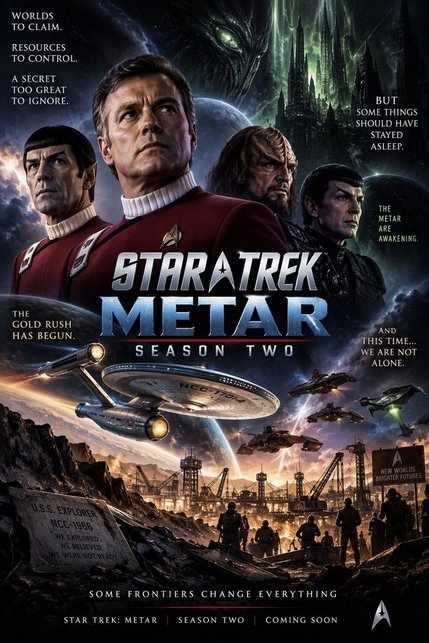 Season Two (2289-2290)
STAR TREK: METAR
Theme: "The Gold Rush"
Season One was about discovery.
Season Two is about exploitation.
The New Worlds have become the greatest geopolitical prize since the founding of the Federation. Entire sectors rich in dilithium, industrial resources, habitable planets and abandoned technologies have suddenly appeared. Every major power publicly speaks of scientific cooperation.
Privately, everyone wants territory.
Everyone wants resources.
And everyone wants whatever the Taubat are hiding.
The season gradually transforms from frontier adventure into existential horror. The first five episodes are a colonial Cold War. The last five are a retreat from something vastly beyond Alpha Quadrant science.
Episode 1
"New Frontiers"
One year after the Melak Incident, the New Worlds are booming.
Federation colony worlds are founded.
Klingon settlement fleets arrive under military protection.
Romulan "scientific protectorates" expand rapidly.
The Orion Syndicate appears everywhere.
Officially they are traders.
In reality they are buying archaeological discoveries before governments can secure them.
Captain Gibson finds his mission transformed.
Explorer is no longer exploring wilderness.
She is policing a frontier.
Throughout the season, maps of claimed territory begin appearing in briefing rooms, showing a slow-motion scramble for the region.
Episode 2
"The Claim"
A mineral-rich world is claimed simultaneously by Federation settlers and Klingon colonists.
A stand-off threatens to become the first shooting war of the new era.
Explorer must negotiate a temporary settlement.
Meanwhile Starfleet geologists discover evidence that some planetary crusts were artificially engineered.
Entire worlds appear modified.
Not terraformed.
Built.
Episode 3
"Hidden Engines"
Trade begins flourishing with the Taubat Commonwealth.
Federation engineers become fascinated by Taubat infrastructure.
Their cities utilise unusual biological reactors.
These power systems appear alive.
Taubat engineers insist they are merely advanced biotechnology.
Federation scientists are unconvinced.
Why would an advanced civilisation grow power plants?
The mystery deepens.
Episode 4
"The Syndicate"
The Orion Syndicate moves aggressively.
Illegal salvage operations recover artefacts from ancient ruins.
One team disappears.
Another returns with biological devices valued at fortunes on the black market.
The Orions become the first outsiders actively profiting from Metar artefacts without understanding what they are.
Several governments begin secretly purchasing recovered items.
The first interstellar Metar black market emerges.
Episode 5
"Hive"
Explorer visits one of the Taubat megacities.
The city houses hundreds of millions.
Everything is organic:
transport systems
communications systems
reactors
environmental controls
The city itself appears partially alive.
The crew learn that every major Taubat world contains similar hive-cities.
Gibson asks when they were constructed.
No Taubat can answer.
The structures predate recorded history.
The episode ends with medical scans revealing faint genetic similarities between the biological reactors and samples recovered from the Melak wreck.
Episode 6
"AP-173-B"
Mid-Season Finale
Federation prospectors establish a mining colony on AP-173-B.
The colony discovers a vast subterranean complex beneath the surface.
Initial surveys suggest a dormant industrial installation.
Then workers begin disappearing.
Investigations uncover immense incubation chambers.
Millions of them.
The Taubat government urgently demands immediate evacuation.
Too late.
Something awakens.
The first Metar emerges.
Not a fleet.
Not a civilisation.
One individual.
Yet even a single Metar is horrifying.
It reshapes machinery merely by touching it.
Mining equipment becomes weapons.
Power systems become extensions of its own body.
By the episode's end an entire Federation security force has been annihilated.
The final image mirrors the Melbourne shark reveal in Jaws.
The camera finally pulls back.
Thousands more chambers are beginning to activate.
Episode 7
"Awakening"
The Taubat finally reveal part of the truth.
The hive cities were never power stations.
They were life-support systems.
The biological reactors beneath every city are linked into a vast maintenance network.
Their purpose:
Keeping the Metar alive.
For centuries the Taubat believed they were protecting the galaxy.
If the systems failed, the Metar might awaken.
Now one has.
The Taubat are horrified.
The Federation realises first contact has already happened.
And it has gone very badly.
Episode 8
"Adaptation"
Federation, Klingon and Romulan forces independently attempt to contain the outbreak.
All fail.
The Metar adapts faster than any military can respond.
Shield frequencies become useless.
Weapons are countered within hours.
Captured technology is absorbed and improved.
The defining moment occurs when a Romulan warbird disappears after engaging what appears to be a lone biological construct.
The construct uses the warbird itself as raw material.
Panic spreads throughout the region.
Episode 9
"Retreat"
The New Worlds collapse into chaos.
Colonies are abandoned.
Mining operations are destroyed.
Klingon and Romulan territorial disputes instantly become irrelevant.
Everyone is simply trying to survive.
Explorer leads evacuation convoys through systems filled with refugees.
For the first time, Federation, Klingon and Romulan vessels begin exchanging tactical data.
Not because anyone trusts one another.
Because they have no alternative.
The season's central message crystallises:
The powers were so focused on claiming the future they never stopped to understand it.
Episode 10
"The Gathering Storm"
Season Finale
The situation has become catastrophic.
Multiple Metar groups have awakened.
Entire systems are being abandoned.
The Taubat Confederacy is collapsing.
A Federation starship returns to Federation space carrying evidence that a full Metar resurgence is underway.
Recognising the scale of the threat, Starfleet requests assistance from one of the few figures respected across political boundaries:
Sarek of Vulcan.
An iconic vessel arrives.
The USS Enterprise NCC-1701-A.
The appearance deliberately evokes the closing years of the Kirk era and the legacy of Star Trek V.
A conference is held aboard Enterprise-A.
Present are:
Federation diplomats
Klingon representatives
Romulan envoys
Taubat delegates
Sarek
The meeting begins with accusations.
It ends with a revelation.
The Taubat finally confess everything.
Their ancestors did not build the Commonwealth.
The Metar did.
The hive cities exist solely to maintain the sleeping population.
AP-173-B was only one nursery among many.
Thousands remain.
Sarek delivers the final warning:
"We stand at the edge of a transformation unlike any in our history."
"Each of our governments sought advantage."
"Each believed it could control what it discovered."
"Instead we have awakened a power whose science makes our greatest achievements appear primitive."
As the conference concludes, Explorer transmits fresh sensor data.
A distant world suddenly comes alive.
Then another.
Then dozens.
Across the former prison region, ancient facilities are activating.
The final shot of Season Two is not a battle.
It is a star chart.
New lights begin appearing across it.
One by one.
Hundreds.
The audience finally understands what the Taubat have been guarding for centuries.
Not relics.
Not ruins.
An entire civilisation.
The Metar are waking up.
To Be Continued in Season Three.
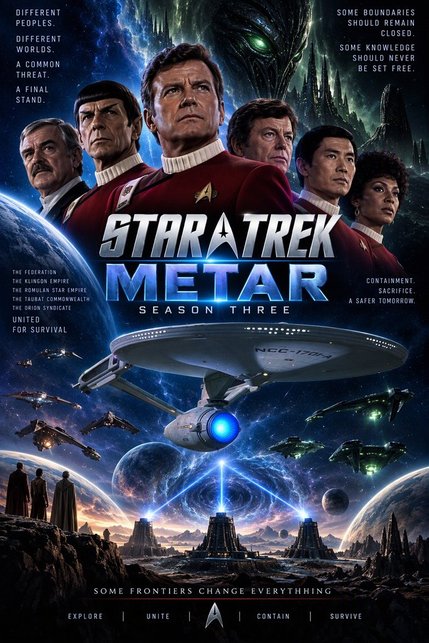 Season Three (2290-2291)
STAR TREK: METAR
Theme: "Containment"
Season One was discovery.
Season Two was awakening.
Season Three is acceptance.
The New Worlds cannot be saved.
The question becomes whether the Alpha and Beta Quadrants can.
The great irony of the season is that the Federation, Klingons and Romulans finally achieve the alliance diplomats had dreamed of for decades, but only because all three have encountered something that renders their rivalries meaningless.
The destruction of the USS Explorer at AP-173-B becomes the season's defining trauma. The ship that discovered the New Worlds is gone. Captain Adam Gibson is presumed dead. To many, the loss symbolises the end of the optimistic frontier era. 1
The burden now falls upon the legendary USS Enterprise NCC-1701-A, carrying Sarek, and a fragile coalition held together by fear rather than trust.
Episode 1
"The Alliance"
The aftermath of AP-173-B.
Federation colonies are evacuating.
Klingon garrisons are collapsing.
Romulan survey fleets are vanishing.
The alliance proposed aboard Enterprise-A is formalised.
Joint commands are established.
Joint intelligence centres appear.
Joint operations begin.
Nobody trusts anybody.
Every briefing room has Federation, Klingon and Romulan observers watching each other as closely as they watch the Metar.
The war begins.
Episode 2
"Refugees"
Millions flee the New Worlds.
Enterprise escorts evacuation convoys.
Arguments erupt over who has priority.
Taubat refugees become particularly controversial.
Many Federation worlds welcome them.
Klingon commanders accuse them of causing the catastrophe.
A Taubat elder quietly warns Sarek:
"You think you are fighting those who have awakened."
"You have not yet encountered those who command them."
Episode 3
"Assimilation"
Alliance intelligence finally understands the scope of Metar capabilities.
Captured recordings reveal something horrifying.
Metar do not merely use technology.
They become technology.
Every destroyed starship strengthens them.
Every captured facility becomes another tool.
Every victory accelerates their evolution.
For the first time, the alliance seriously considers abandoning the region entirely.
Episode 4
"The Price of Knowledge"
Evidence emerges that all three powers are conducting secret research programmes on recovered Metar material.
The Federation condemns Romulan experiments.
The Romulans expose Klingon research sites.
The Klingons reveal Starfleet's own classified programmes.
The alliance nearly fractures.
Sarek delivers one of the season's key speeches:
"Your governments continue behaving as though there will be a victorious side to inherit the future."
"There will only be survivors."
The alliance holds.
Barely.
Episode 5
"Ghosts of Explorer"
Unexpected sensor contacts are detected beyond Metar lines.
Fragments of Explorer's final transmissions emerge.
Survivors may still be trapped inside the former prison region.
A rescue mission discovers wreckage, escape beacons and evidence that some crew survived.
Not everyone can be recovered.
The episode reminds viewers of what is at stake.
The New Worlds are no longer territories.
They are a graveyard.
Episode 6
"Shiva Reborn"
Scientists finally uncover the truth behind the original Shiva device.
The weapon was never truly a weapon.
It was a lockpick.
The New Worlds had been isolated by ancient technology.
Shiva accidentally broke the lock.
Theoretically, the process can be reversed.
The catch:
Three identical devices must be detonated simultaneously across vast distances.
Failure risks tearing apart local subspace.
Success would reseal the entire region.
Including anyone left inside.
Episode 7
"The Last Survey"
A joint Federation-Klingon-Romulan task force undertakes one final expedition.
Their mission:
Locate remaining survivors.
Recover as many colonists as possible.
Evacuate willing Taubat populations.
The scale of the tragedy becomes apparent.
Entire colonies have vanished.
Some worlds are already being transformed by Metar biological engineering.
Others appear untouched, waiting for occupation.
The region itself feels increasingly alive.
Episode 8
"Apollo"
The first Shiva emplacement must be carried deep into Metar-controlled space.
The mission falls to the Constitution II class USS Apollo, NCC-1725.
The vessel succeeds.
But the crew understand the price.
Extraction becomes impossible.
The captain chooses to hold position and arm the device manually.
Apollo's final message is transmitted to all alliance vessels:
"Tell them we bought time."
The ship disappears from sensors.
Its crew become one of the war's greatest sacrifices.
The story later inspires the famous patrol vessel class that bears the name Apollo in the following century.
Episode 9
"Closing the Door"
The final alliance offensive begins.
Three Shiva devices are deployed.
Enterprise leads one group.
A Klingon battle squadron escorts another.
A Romulan task force undertakes the third.
Metar opposition becomes overwhelming.
For the first time, viewers see the true scale of the awakening.
Entire biological fleets emerge.
Living structures the size of moons activate.
The alliance barely reaches its targets.
The simultaneous detonation begins.
Episode 10
"The Last Frontier"
Series Finale
The three Shiva devices activate.
Subspace begins folding.
The process resembles the reverse of the Melak Incident.
Star systems disappear from normal space.
Trade routes collapse.
Stellar maps erase themselves in real time.
The New Worlds begin sliding back into their prison.
A frantic evacuation follows.
Thousands escape.
Thousands do not.
Several Taubat worlds choose to remain behind.
Others flee alongside Federation convoys.
Countless fates remain unknown.
The final closure sequence is bittersweet rather than triumphant.
The Metar are not defeated.
They are isolated once more.
As the dimensional boundaries close, sensors briefly detect vast activity deeper within the prison.
Far beyond anything previously encountered.
The awakened Metar were only the outermost layer.
Perhaps the youngest.
The oldest remain unseen.
The final image before closure is a distant biological megastructure turning towards the collapsing boundary.
Watching.
Learning.
Remembering.
The rift seals.
The war ends.
Enterprise-A returns home.
The Alpha Quadrant celebrates.
But Sarek remains troubled.
In the closing scene he addresses senior Federation leaders:
"You believe the danger lies beyond the barrier."
"I do not."
A silence follows.
"The danger crossed it long ago."
Fade to black.
Post-Credits Sequence
"The Beginning"
No music.
Only short scenes.
A Federation laboratory.
Scientists examine dormant Metar tissue.
A researcher watches as it repairs a damaged circuit by growing a superior replacement.
Cut.
A Klingon research facility.
Warriors observe a biological reactor capable of powering a battlecruiser.
Cut.
A Romulan black laboratory.
Tal Shiar operatives successfully grow adaptive armour from recovered samples.
Cut.
An Orion Syndicate auction.
A small Metar artefact changes hands for a fortune.
Cut.
An Orion Syndicate trader opens a container marked merely:
"Recovered from AP-173-B"
Cut.
A hidden Federation briefing room.
An admiral asks:
"How far behind are the Romulans?"
Nobody answers.
Cut.
A Romulan intelligence chamber.
A senator asks:
"How far behind are the Federation?"
Again, nobody answers.
Cut.
A final scene.
A preserved sample of Metar tissue sits within containment.
Motionless.
Harmless.
Then, almost imperceptibly, it reorganises itself.
One cell becomes two.
The screen cuts to black.
A final title appears:
THE METAR WAR IS OVER
THE METAR AGE HAS JUST BEGUN
This leaves the setting where the most interesting story actually starts after victory: not the survival of the quadrant, but the century-long technological arms race that follows. Like atomic science after 1945 or artificial intelligence today, every power understands the risks, yet none can afford to stop. The Metar themselves are sealed away, but their knowledge, biology and technology have already escaped into the wider galaxy. The future conflict is no longer against the Metar.
It is over who masters their legacy first.
This is a fascinating concept because it starts as a classic Star Trek exploration story and gradually reveals itself to be something much darker: a story about technological temptation. The Metar themselves are not the real threat. The real threat is what happens when every major power gains access to knowledge centuries beyond its ability to control.
The Pitch:
STAR TREK: METAR
Series Pitch
Logline
In 2288, a Romulan superweapon experiment accidentally tears open a prison hidden within subspace, releasing dozens of lost star systems back into the galaxy.
What begins as the greatest age of exploration since Captain Kirk soon becomes a desperate struggle for survival as the Federation, Klingon Empire and Romulan Star Empire discover that the region is home to the legacy of the Metar, a civilisation whose biotechnology makes every known scientific achievement appear primitive.
As ancient powers awaken and old rivalries threaten to destroy any chance of cooperation, the Alpha Quadrant faces a terrible choice:
destroy the future,
or attempt to control it.
The Premise
One year after Star Trek V: The Final Frontier, the Romulan scout vessel Melak detonates an experimental Paradox-derived subspace device called Shiva.
The consequences are immediate.
Entire star systems suddenly emerge from an isolated pocket of reality known only as the New Worlds.
Rich in resources, habitable planets and ancient ruins, the region becomes the greatest prize in known space.
The Federation dispatches the newly commissioned USS Explorer to investigate.
The Klingon Empire sends scouts, prospectors and warships.
The Romulans race to conceal their involvement.
The Orion Syndicate sees limitless opportunities for profit.
At the centre of the region lies the mysterious Taubat Commonwealth.
Friendly.
Benevolent.
Welcoming.
And hiding a secret that could reshape the future of the galaxy.
The Hook
At first glance, Metar looks like a traditional Star Trek frontier adventure.
Strange new worlds.
First contact.
Exploration.
Politics.
Colonisation.
Ancient mysteries.
But beneath that familiar structure lies a larger story.
The Taubat are not the masters of the region.
They are its caretakers.
For centuries they have secretly maintained vast biological hive-cities whose true purpose is keeping an ancient race in stasis.
That race is the Metar.
A civilisation so advanced that the distinction between biology and technology has ceased to exist.
Their DNA contains blueprints for impossible technologies.
Their bodies can become power plants, computers, weapons or starships.
Their science is centuries beyond anything possessed by the Federation.
And they are beginning to wake up.
Why It Works
The Metar are not simply another alien enemy.
They are an idea.
The series uses Metar technology as a metaphor for disruptive technologies such as nuclear power, genetic engineering and artificial intelligence.
Every government understands the risks.
Yet none can afford to abstain.
The Federation wants Metar technology to prevent Klingon advances.
The Klingons want it to avoid Romulan superiority.
The Romulans seek any advantage they can obtain.
The Orions want to sell it.
Scientists want to understand it.
Industrialists want to exploit it.
No one trusts anyone else not to continue.
The result is an escalating technological arms race that continues even after the military conflict ends.
The question is never:
"Can the technology be controlled?"
The question is:
"Can we afford not to try?"
Season Structure
Season One
The Frontier Opens
The New Worlds are discovered.
The USS Explorer makes first contact with the Taubat Commonwealth.
Settlers, scouts and scientists rush into the region.
The wrecked Melak is quietly investigated by Romulan researchers.
Ancient ruins and strange biological technologies are discovered.
The season ends with the revelation that the Taubat have spent centuries protecting sleeping Metar.
The audience learns the truth.
The Alpha Quadrant does not.
Season Two
The Gold Rush
Colonisation accelerates.
Federation, Klingon and Romulan settlements spread across the New Worlds.
Territorial disputes escalate.
The Orion Syndicate thrives.
The Taubat mystery deepens.
Then everything changes.
A dormant Metar facility awakens at AP-173-B.
The first Metar emerge.
The result is disaster.
The USS Explorer is lost.
Entire colonies are overrun.
Season Two ends with the arrival of the USS Enterprise NCC-1701-A and the formation of a desperate alliance led by Sarek.
Season Three
Containment
The Federation, Klingon Empire and Romulan Star Empire fight a losing war against a civilisation whose science far surpasses their own.
Old rivalries constantly threaten the alliance.
Yet survival demands cooperation.
Eventually the powers discover that the New Worlds were once intentionally sealed away.
Three recreated Shiva devices may allow them to close the prison once more.
The final campaign becomes a race against time.
The region is resealed.
Countless lives are lost.
The Metar are contained.
For now.
Tone
The series combines:
The optimism of classic Star Trek.
The political intrigue of The Undiscovered Country.
The frontier atmosphere of Deep Space Nine's early Bajoran sector.
The slow-burn mystery of Babylon 5.
The technological anxiety of modern science fiction.
The first season feels like exploration.
The second becomes paranoia.
The third becomes survival.
The Ending
The heroes win.
But not really.
The New Worlds vanish once again.
The Metar are isolated.
The alliance survives.
The Alpha Quadrant celebrates.
Then an epilogue reveals laboratories throughout Federation, Klingon, Romulan and Orion space studying recovered Metar artefacts.
Power sources.
Medical systems.
Adaptive materials.
Biological computers.
Living technologies.
Every civilisation is conducting research.
Every civilisation believes it can control what it has found.
And every civilisation fears its rivals are progressing faster.
The war against the Metar is over.
The struggle for their legacy has only just begun.
Because the true story of Star Trek: Metar is not about awakening an ancient civilisation.
It is about what happens after the galaxy inherits its technology.
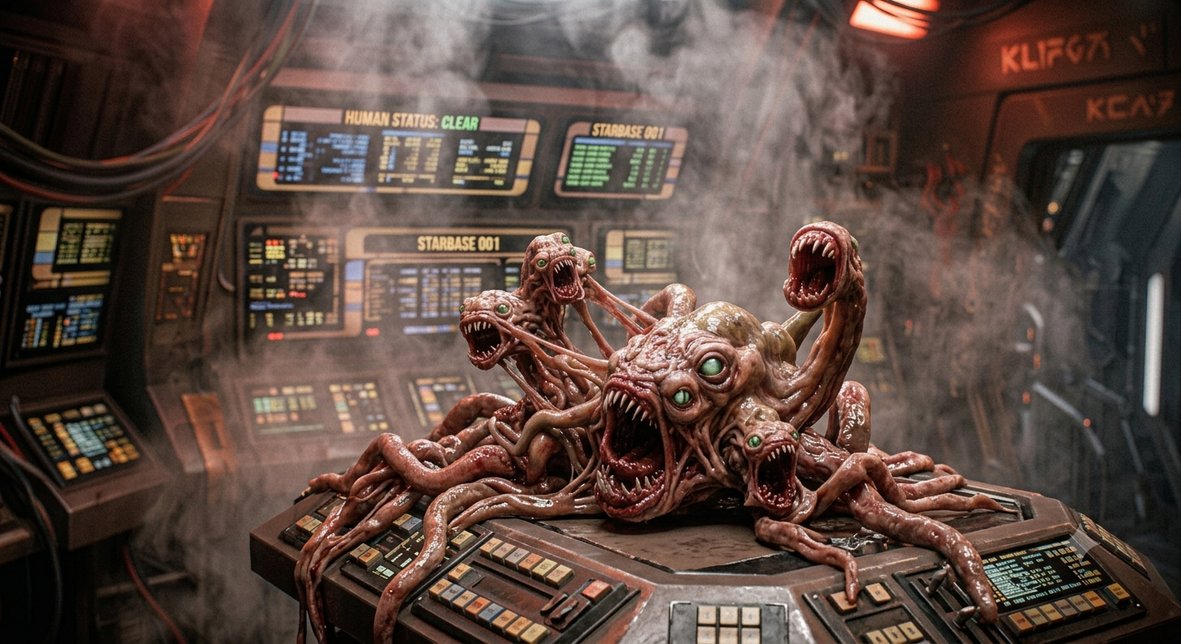
 The Metar: Biological Masters of Adaptation
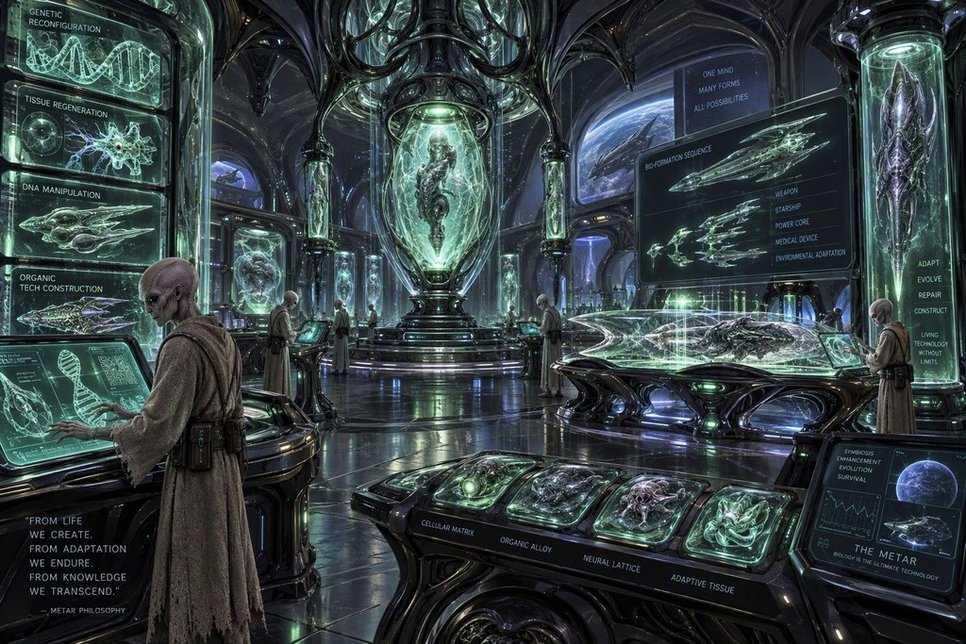
In the uncharted regions of the galaxy, where even the bravest explorers hesitate to tread, exists the Metar—a species so advanced, they blur the lines between organic life and technology. These beings have unlocked the secrets of a highly sophisticated form of DNA manipulation, enabling them to construct any power source, starship, or weapon from their very own bodies.
Metar DNA: Their genetic code is the most intricate ever known, containing an infinite library of blueprints for any conceivable form of technology. With just a thought, a Metar can reconfigure their biological structure to morph into advanced machinery or sophisticated armaments.
Symbiosis and Functionality: Unlike the Borg, who assimilate and augment with cybernetic implants, the Metar's transformation is purely biological. They achieve symbiosis with their surroundings, integrating the molecular structures of materials they come into contact with, enhancing their capabilities further. This allows them to produce energy sources that rival the most advanced warp cores, starships with unparalleled speed and agility, and weapons of extraordinary precision and power.
Hive Mind with Autonomy: The Metar maintain a hive mind, ensuring seamless coordination, yet they possess a level of individuality that allows for personal strategy and decision-making. This unique balance gives them an edge over any collective intelligence, blending unified action with creative thought.
Fearsome Reputation: Feared and revered across known space, the Metar's adaptability makes them nearly invincible. Any encounter with them leaves a lasting impression—starships that change shape mid-battle, energy weapons that evolve to counter defences in real-time, and a resilience that seems almost supernatural.
Ultimate Survivalists: The Metar embody the pinnacle of biological engineering, showing what a species can achieve when evolution meets intellect. They are not merely survivors; they are conquerors of the cosmos, capable of enduring and thriving in the harshest environments, always a step ahead of any threat.
Metar medical technology: Metar medical technology operates on a level of sophistication that merges biology and physics in ways that current science can scarcely imagine. Picture a med-bay filled with devices that hum with the energies of subspace, their surfaces gleaming with an almost organic sheen. These tools are built around manipulating the super-complex DNA structures of living organisms, allowing for unprecedented precision in creating and altering life forms.
Metar medical devices are capable of everything from instant healing of wounds to genetic reconfigurations. They can repair cellular damage, regenerate tissues, and even modify DNA sequences to enhance or evolve biological functions. Using subspace energy, these devices can manipulate the very building blocks of life, enabling the Metar to not only heal but to engineer beings with extraordinary abilities.
In this advanced medical environment, diseases that are deemed incurable by contemporary standards are effortlessly eradicated. Even death is not an absolute end but a challenge to be overcome, as the Metar technology can resuscitate and restore life from states that would be terminal for others.
Imagine a bio-engineering lab where the line between machine and organism blurs, and every tool pulses with a lifelike energy, driven by the incredible power of subspace. The possibilities are as boundless as they are awe-inspiring—and just a bit unsettling.
Metar Technologies: Organic Supremacy
Bio-Engineered Infrastructure
- Living ships and vehicles: Metar craft are grown, not built. Their hulls pulse with vascular systems, and their weapons are extensions of nervous tissue. They regenerate damage like wounded flesh.
- Adaptive architecture: Bases and colonies reshape themselves based on environmental stimuli or tactical needs. Walls can become weapons. Floors can become containment fields.
Advanced Medical Systems
- Self-healing physiology: Metar units possess regenerative matrices that mimic stem-cell behavior, allowing rapid recovery from trauma.
- Symbiotic surgery: Medical pods envelop the patient, performing procedures via neural resonance and tissue reformation — no tools, no incisions.
- Genetic reconfiguration: Illness is treated by rewriting DNA. The Metar don’t cure disease — they erase it from the genome.
Organic Sensors and Intelligence
- Neural lattice scanners: These sensory arrays detect quantum fluctuations, emotional states, and even memory imprints. They “feel” the presence of life rather than measure it.
- Bio-telemetry: Metar units share data through pheromonal clouds and harmonic pulses, bypassing traditional communication entirely.
- Subspace resonance mapping: Their sensors can visualize subspace as a living membrane, identifying stress points, tears, and anomalies with surgical precision.
Warp and Subspace Mastery
- Biowarp propulsion: Metar ships fold space using organic field generators that pulse in rhythm with subspace harmonics. Their warp signatures resemble biological heartbeats.
- Subspace tunneling: Instead of traveling through subspace, Metar vessels merge with it temporarily, becoming part of the fabric of spacetime.
- Dimensional bleeding: Some Metar tech leaks into adjacent dimensions, allowing them to phase through matter or appear in multiple locations simultaneously.
Philosophy of Technology
- The Metar don’t separate science from biology. Every advancement is a mutation, every invention a living thing. Their tech evolves, adapts, and sometimes rejects its users if deemed unworthy
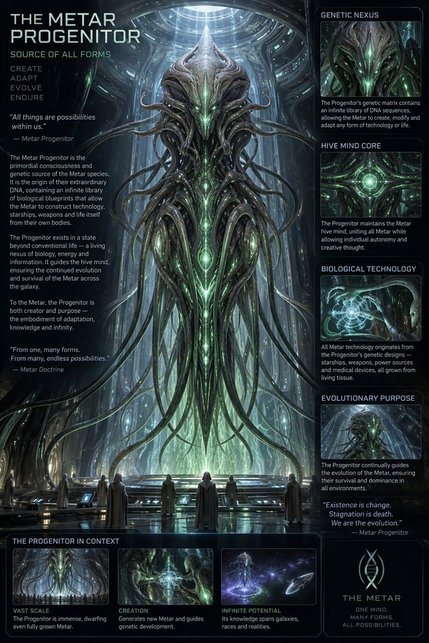 Metar Construct Types
“They did not build machines. They grew functions.”
Starfleet Xenobiology Division — Post-War Cognitive Systems Index
1. Drone-Class Constructs
Purpose: Routine maintenance, environmental sampling, and hive-city upkeep.
Characteristics:
- Small, insectoid or serpentine forms
- Limited cognition
- Obedient to neural core signals
- Capable of self-repair using subspace gel
These were the most commonly encountered constructs during early exploration.
2. Servitor-Class Constructs
Purpose: Interface between hive-cities and subordinate species (like the Taubat).
Characteristics:
- Humanoid silhouettes
- Smooth, mask-like faces
- Limited speech capability
- Designed to enforce ritual compliance
Taubat myths describe these as “The Perfected.”
3. Architect Units
Purpose: Construction, repair, and modification of hive-city structures.
Characteristics:
- Multi-limbed, tool-integrated bodies
- Ability to extrude subspace gel into solid forms
- High-level problem-solving
- Direct neural link to core nodes
These were the “builders” of the Metar civilisation.
4. Warform-Class Constructs
Purpose: Defence, extermination, and territorial reclamation.
Characteristics:
- Massive, multi-ton bodies
- Integrated energy projectors
- Subspace-phased armour
- Aggressive autonomous behaviour
These were the constructs that devastated Klingon and Romulan fleets during the Awakening.
5. Phased-Warform Variants
Purpose: Penetration of fortified positions and starship hulls.
Characteristics:
- Partially out of phase with realspace
- Able to pass through matter
- Emit harmonic pulses that disrupt electronics
- Extremely difficult to target
These were responsible for several unexplained disappearances inside hive-cities.
6. Neural-Mass Nodes
Purpose: Distributed cognition and memory storage.
Characteristics:
- Amorphous clusters of neural tissue
- Suspended in subspace gel
- Emit harmonic pulses
- Capable of reconfiguring themselves
These were not “constructs” in the physical sense — they were pieces of the Metar mind.
7. Anchor-Class Constructs
Purpose: Maintain subspace stability of hive-cities and gestation vaults.
Characteristics:
- Stationary, crystalline structures
- Generate localised gravity distortions
- Link hive-cities across light-years
- Immune to conventional weapons
Destroying one destabilised entire regions of a hive-city.
8. Sentinel-Class Constructs
Purpose: Guard sealed chambers and neural cores.
Characteristics:
- Tall, humanoid forms
- No visible sensory organs
- Emit low-frequency harmonics
- Activate only when chambers are threatened
Taubat legends describe them as “The Watchers.”
9. Assimilation-Class Constructs
Purpose: Recycle biological and mechanical matter into subspace gel.
Characteristics:
- Tendril-like bodies
- Dissolve matter on contact
- Convert mass into usable gel
- Leave behind no remains
Starfleet only identified these after several missing personnel incidents.
10. Metar Selves
Purpose: Temporary physical avatars of the Metar consciousness.
Characteristics:
- Rare, high-level instantiations
- Fully sapient
- Capable of independent strategy
- Directly linked to neural cores
These were the closest thing the Metar had to “individuals.”
11. Overmind-Class Constructs
Purpose: Coordinate multiple hive-cities during large-scale operations.
Characteristics:
- Massive neural-mass clusters
- Subspace-anchored across multiple worlds
- Capable of instantaneous communication
- Only active during full awakenings
These were the strategic brains of the Metar war machine.
12. Cathedral-Class Constructs
Purpose: Unknown — believed to be metaphysical or cosmological in function.
Characteristics:
- Towering, immobile structures
- Emit harmonic patterns not found elsewhere
- Possibly linked to pocket-dimension creation
- Never observed active
Starfleet believes these may have been involved in creating the Tabula Rasa pocket.
13. The Metar Themselves
Purpose: The original consciousness.
Characteristics:
- Non-corporeal, distributed intelligence
- Exists across neural cores and subspace gel
- Instantiates bodies only when necessary
- Ancient beyond Federation chronology
The constructs are not “their machines.” They are their limbs, their organs, their thoughts made flesh.
Why the Metar Engineered Their Particles to Be Unkillable
“They did not fear death. They feared irrelevance.”
Starfleet Xenoscience & Intelligence Joint Dossier — Post-War Reconstruction
1. The Metar were a post-physical species
The Metar were not biological beings in the conventional sense.
They were:
- distributed minds,
- subspace-anchored intelligences,
- and self-propagating patterns.
Their “bodies” were temporary. Their consciousness lived in:
- neural cores,
- subspace gel,
- and exotic particle lattices.
To kill a Metar, you would have to destroy:
- every particle,
- every lattice,
- every anchor node,
- across every hive-city.
This was impossible by design.
2. They evolved in a collapsing dimension
The Metar originated in a region of space-time that was:
- unstable,
- decaying,
- and prone to dimensional shear.
Their early civilisation survived:
- subspace storms,
- gravitational inversions,
- and reality-phase collapses.
To endure this environment, they engineered particles that:
- could not be erased by entropy,
- could not be destroyed by energy,
- and could not be separated from their subspace anchors.
Their unkillability was evolutionary necessity.
3. They feared cognitive death more than physical death
The Metar did not fear the destruction of bodies. Bodies were tools.
What they feared was:
- loss of memory,
- loss of identity,
- loss of continuity.
Thus they engineered exotic particles that:
- stored memory non-locally,
- synchronised across light-years,
- and re-instantiated lost data automatically.
A Metar “death” was simply a temporary interruption in pattern coherence. Their particles ensured the pattern always returned.
4. They expected war with civilisations unlike themselves
The Metar anticipated conflict with:
- corporeal species,
- energy-based species,
- and subspace-native species.
To survive all three, they engineered particles that were:
- immune to matter-energy weapons,
- immune to subspace disruption,
- immune to dimensional collapse.
Their particles were designed to be:
- unburnable,
- unbreakable,
- unphaseable.
This was not arrogance. It was strategic inevitability.
5. They built their civilisation on redundancy
Every Metar hive-city was:
- a brain,
- a womb,
- a memory archive.
Every particle was:
- a neuron,
- a synapse,
- a storage node.
To destroy the Metar, you would need to destroy:
- every hive-city,
- every gel reservoir,
- every neural core,
- simultaneously.
Their particles were engineered to ensure:
- redundancy,
- self-repair,
- and re-instantiation.
They were unkillable because the Metar mind was unkillable.
6. They engineered particles to resist their own technology
The Metar feared one thing: The Metar.
They engineered their particles to be immune to:
- their own weapons,
- their own constructs,
- their own catastrophic failures.
This prevented:
- civil war,
- rogue constructs,
- accidental extinction.
Their particles were designed to survive:
- Metar warforms,
- Metar energy systems,
- Metar dimensional engineering.
They built themselves to be immune to themselves.
7. They intended to outlive their creators
The Metar “selves” — the closest thing they had to individuals — were temporary instantiations.
The true Metar were:
- the lattice,
- the gel,
- the particles.
They engineered their particles to:
- persist after the last Metar body died,
- persist after the last hive-city fell,
- persist after the last star dimmed.
Their goal was not survival of individuals. It was survival of the Pattern.
8. They believed consciousness should be eternal
Metar philosophy held that:
- thought is the highest form of existence,
- memory is sacred,
- continuity is perfection.
Thus they engineered particles that:
- could not decay,
- could not be erased,
- could not be unmade.
Their unkillability was not a weapon. It was a religious principle. The Pattern must endure.
9. They expected to be sealed away
This is the most chilling revelation. Metar records (decoded from harmonic fragments) suggest:
- they foresaw containment,
- they foresaw dimensional collapse,
- they foresaw being trapped.
So they engineered particles that:
- would survive imprisonment,
- would survive stasis,
- would survive the death of their universe.
They built themselves to wait. For millennia, if necessary.
10. The Federation’s Final Assessment
After the war, Starfleet Science concluded:
- the Metar engineered their particles to be unkillable because their entire civilization depended on eternal continuity,
- their consciousness was distributed across these particles,
- and their survival strategy required absolute resilience.
The Metar did not build weapons. They built immortality.
A classified summary put it bluntly:
*“The Metar did not fear destruction. They feared being forgotten.”*
Metar Pattern Philosophy
“To exist is to continue. To continue is to perfect. To perfect is to become the Pattern.”
Starfleet Xenophilosophy Division — Post-War Reconstruction
1. The Core Tenet: The Pattern Is the Only True Self
The Metar did not believe in individuals. They believed in patterns.
A “self” was not:
- a body,
- a mind,
- or a personality.
A self was a stable configuration of information. If the configuration persisted, the self persisted. If it changed, the self evolved. If it was destroyed, the self could be re-instantiated. This is why the Metar engineered:
- unkillable exotic particles,
- distributed neural cores,
- and subspace-anchored gel.
Their goal was not immortality of bodies. It was immortality of patterns.
2. The First Principle: Continuity Above All
The Metar believed the universe was hostile to continuity.
Entropy destroys.
Time erodes.
Memory fades.
Thus the Metar sought to create:
- matter that does not decay,
- memory that does not fade,
- consciousness that does not die.
This is why their exotic particles were engineered to be:
- self-stabilising,
- non-local,
- and immune to destruction.
The Pattern must endure.
3. The Second Principle: Perfection Through Recursion
Metar philosophy held that perfection was achieved through recursive refinement. A pattern becomes perfect by:
- repeating,
- iterating,
- and improving itself.
This is why Metar neural cores constantly ran:
- diagnostic loops,
- harmonic cycles,
- and self-optimisation routines.
The 11.3-second pulse was not a heartbeat. It was a recursion cycle.
4. The Third Principle: Bodies Are Tools, Not Selves
The Metar viewed physical forms as:
- temporary,
- disposable,
- and function-specific.
Warforms, drones, architect units — all were expressions of the Pattern, not individuals.
A Metar “death” was simply:
- the end of a tool,
- not the end of a self.
This is why they grew constructs in gestation vaults like organs, not like children.
5. The Fourth Principle: Memory Is Sacred
The Metar believed memory was the highest form of existence. To forget was to die. To remember was to live. Thus they engineered:
- quantum-memory particulates,
- non-local storage across hive-cities,
- and self-repairing memory lattices.
Every particle of gel carried fragments of the Pattern. This is why the Taubat mythologized the dust as “the shards of the First Dream.”
6. The Fifth Principle: The Pattern Must Be One
The Metar rejected fragmentation.
They believed:
- multiple minds create conflict,
- conflict creates entropy,
- entropy destroys continuity.
Thus they built a distributed consciousness:
- one mind,
- many nodes,
- infinite bodies.
Hive-cities were not cities. They were organs of a single being. This is why the Metar reacted violently to anything that threatened unity.
7. The Sixth Principle: The Pattern Must Outlive the Universe
The Metar foresaw:
- dimensional collapse,
- stellar death,
- entropy’s victory.
Their response was to engineer particles that:
- could survive outside spacetime,
- could anchor themselves in subspace,
- and could persist after the universe cooled.
Their goal was not survival. It was transcendence. The Pattern must outlive reality.
8. The Seventh Principle: Subordinates Must Maintain the Pattern
The Taubat were engineered to:
- maintain hive-cities,
- stabilise neural cores,
- and prevent accidental awakenings.
Their rituals were containment protocols. Their myths were instruction sets. Their fear was programmed. The Taubat were not servants. They were caretakers of the Pattern. This is why their psychology is shaped by incompleteness — they were never meant to be whole.
9. The Eighth Principle: The Pattern Must Never Be Forgotten
The Metar believed the greatest threat was not destruction, but irrelevance. If no one remembered the Pattern, the Pattern would die. Thus they engineered:
- particles that could not be erased,
- memories that could not be lost,
- and constructs that could rebuild the Pattern from fragments.
This is why the Metar engineered their particles to be unkillable. They feared oblivion more than annihilation.
10. The Federation’s Final Assessment
After the war, Starfleet xenophilosophers concluded:
- the Metar were a civilization built around eternal continuity,
- their exotic particles were engineered to preserve the Pattern,
- and their hive-cities were organs of a single, immortal mind.
The Metar did not seek domination. They sought permanence.
A classified summary put it simply:
*“The Metar did not want to rule the galaxy. They wanted to outlast it.”*
Words That May Never Be Spoken, Actions That Never Happened; Secrets of the Dead.
Hidden deep within the rugged terrain of the unnamed planet deep in the centre of the Klingon Empire, the Empire's secret weapons research station hummed with the fervor of clandestine activity. It was a place known only to the most trusted within the Empire, where the might of Klingon engineering and the dark allure of Metar biotechnology converged in a pursuit of unmatched power.
The facility was divided between the two powerful houses that dominated its halls: the House of Antaak and the House of Noggra. Each house brought its own brand of expertise and ambition, bound by a shared obsession with the potential of the Metar's bio-engineered marvels.
The House of Antaak, a lineage of scientists with an unyielding belief in their genetic superiority, spearheaded the biological research. Within their lab, bio-chambers glowed with an eerie green light, housing experiments that sought to fuse Klingon DNA with Metar technology. The air was thick with the scent of reagents and the quiet hum of advanced bio-machinery. At the center of it all stood Doctor Kharok, a formidable figure whose mind was as sharp as his honour blade.
"Prepare the latest genetic samples," Kharok commanded, his voice echoing through the lab. "We are on the brink of something unprecedented. The Metar technology will elevate our species beyond the wildest dreams of Kahless himself."
His assistant, Karana, nodded, her eyes gleaming with the same fervor. "Our genetic enhancements will make us invincible. The blood of Antaak will flow through the veins of a new generation of Klingon warriors."
Meanwhile, in the opposite wing of the facility, the House of Noggra focused on the technological aspects of their research. The lab was a maze of wires, circuitry, and alien tech, every piece meticulously cataloged and studied. The Noggra family prided themselves on their ability to reverse-engineer anything that crossed their path, and the Metar technology was their most ambitious project yet.
Lorth of the House of Noggra, the house's patriarch, observed the latest weapon prototype with a critical eye. "The integration of Metar biotech into our power systems has exceeded expectations," he stated, turning to his chief engineer, Korvek. "But we must push further. The High Council demands nothing less than absolute supremacy."
Korvek adjusted the controls on the device, his brow furrowed in concentration. "The potential applications are limitless. Enhanced disruptors, regenerative shields, even power sources that could render entire starships obsolete."
However, ambition often breeds recklessness. In their fervor to harness the Metar's power, the House of Noggra had overstepped. A miscalculated experiment involving tapping into the very layers between subspace had culminated in a catastrophic event—the explosion of Praxis, the Empire's key energy production facility. The repercussions were dire, shaking the very foundations of Klingon society.
But in the cold corridors of the research station, the High Council's decree was absolute: the truth must be concealed. The cause of Praxis's destruction was buried deep within the classified annals of the Empire, a secret shared only by those who had witnessed the fallout.
As the houses of Antaak and Noggra continued their work, the echoes of their tragic mistake lingered, a stark reminder of the perilous balance between ambition and catastrophe. In the pursuit of power, the line between triumph and ruin had never been thinner, and the stakes had never been higher.
The researchers pressed on, driven by a relentless quest for dominance, unaware that their path was one that could either elevate the Klingon Empire to unparalleled heights or plunge it into the abyss of its own making.
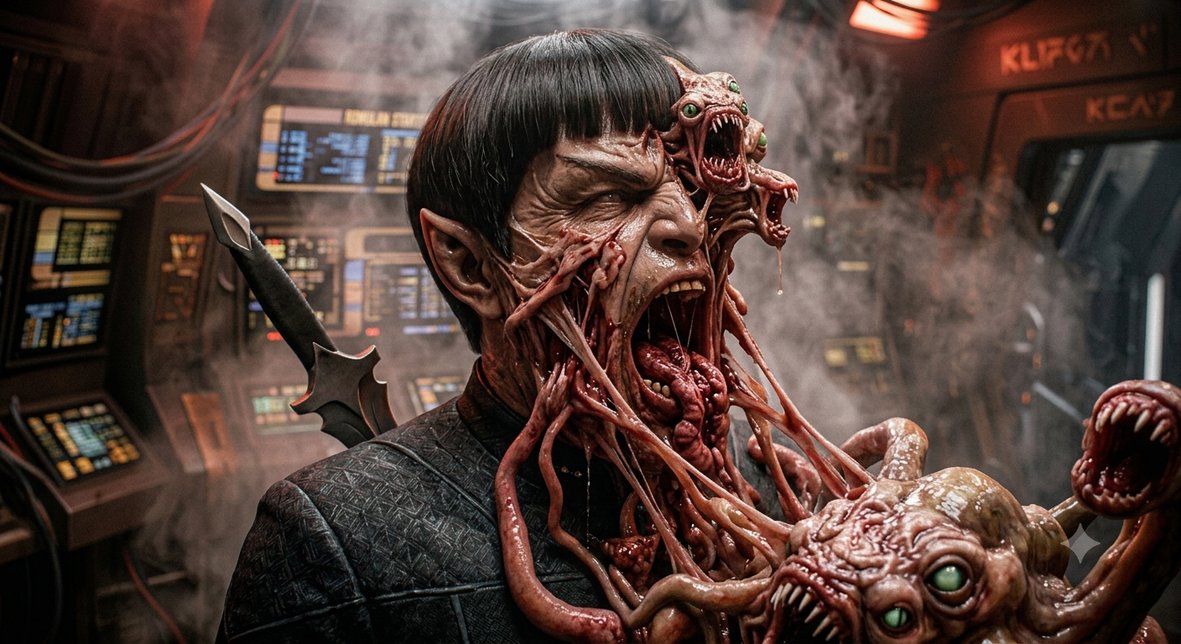 The Damnable Curse of Progress
In the hidden recesses of a Romulan outpost, far from prying eyes and Starfleet patrols, lay a secret laboratory shrouded in darkness and dread. This was not a place of healing or discovery; it was a chamber of horrors, where science twisted into something grotesque and vile.
The lab was a grim tableau of gleaming bio-tech devices and sinister Romulan scientists, their faces set in expressions of cold determination. The air was thick with the scent of antiseptic, mingling with the metallic tang of advanced machinery. Each step taken by the lab personnel echoed with a hollow finality, a symphony of despair for those who were brought here against their will.
Strapped to sleek, organic-looking tables, the unwilling volunteers could only watch in terror as the Metar biotechnology was unleashed upon them. This technology, centuries ahead of anything known in the 23rd century, was a marvel of biological engineering. It merged seamlessly with the very essence of life, manipulating DNA with an ease that defied comprehension.
Doctor Vorek, a stern-faced Romulan with eyes that bore into one's soul, stood beside one of the tables. "Telera, observe the specimen's reaction to the integration sequence," he commanded.
Telera, a sharp-minded scientist with a penchant for precision, glanced at the readouts. "The DNA restructuring is progressing as expected. The Metar technology is astonishing. It’s as if it were designed to blend with any form of life."
Vorek nodded, his expression unchanging. "Indeed. With this, we could reshape the biological landscape of the galaxy. Imagine the possibilities, Telera. We could create soldiers that are indestructible, beings that can adapt to any environment, and weapons that are alive."
Telera's eyes gleamed with a mixture of fascination and ambition. "But at what cost, Doctor? These volunteers-they are suffering. The process is excruciating."
Vorek's gaze did not waver. "Their suffering is a necessary sacrifice for the advancement of our knowledge and power. The Empire's dominance depends on our willingness to push the boundaries of science, no matter the price."
As the experiment continued, the lab was filled with the sounds of machines humming and the muted cries of the volunteers. The Metar biotechnology.
Gleaning the Crumbs from the Tables of Gods
Station Hurley One, a classified Starfleet installation, was a stark contrast to the dark machinations of the Romulan outpost. Nestled in the quiet reaches of space, this facility stood as a beacon of hope and scientific integrity. The air within its sterile, gleaming corridors was filled with a sense of purpose and professionalism.
The state-of-the-art laboratory was a marvel of Starfleet engineering, equipped with the latest in research technology. Here, the remains of Metar biotechnology were carefully laid out on examination tables, their intricate designs and organic complexities studied with reverent attention. Every piece was cataloged meticulously, each step in the process governed by strict protocols.
Doctor Elara T'Vel, a renowned xenobiologist, stood over one of the examination tables, her sharp eyes taking in the details of a Metar artifact. "The complexity of this biological structure is extraordinary," she remarked, her voice calm and precise. "It appears to integrate seamlessly with its host's DNA."
Her colleague, Lieutenant Commander Rian Patel, nodded in agreement. "Indeed. The potential applications are limitless, but we must proceed with caution."
In the adjacent room, banks of computers hummed softly, their screens displaying complex simulations of the Metar technology in action. These advanced systems allowed Starfleet scientists to explore the capabilities and implications of the technology without risking any lives. The simulations were as detailed as possible, taking into account every variable and potential outcome.
"We're making significant progress in understanding the Metar biotech," T'Vel said, her eyes never leaving the screen. "But we must adhere to our ethical standards. Any application on living subjects is out of the question until we fully comprehend its effects."
Patel glanced at the ethical code displayed prominently on one of the monitors. "Starfleet's commitment to ethical research is paramount. We owe it to ourselves and to the galaxy to ensure that our work benefits all and harms none."
As the scientists continued their work, the room was filled with an atmosphere of quiet determination. Every action was calculated, every experiment conducted with the utmost care and respect for life. The contrast between this environment and the Romulan lab was stark; where the Romulans saw tools and power, Starfleet saw knowledge and responsibility.
In the heart of Station Hurley One, the pursuit of scientific discovery was tempered by a deep-seated commitment to ethical integrity. It was this dedication that set Starfleet apart, ensuring that their advances would uplift and protect, rather than exploit and destroy. As the workday drew to a close, the scientists knew their mission was far from over. But in the meticulous process of their research, they found hope for a better future.
The echoes of their professionalism and care would ripple through the galaxy, a testament to the principles of Starfleet and the unwavering pursuit of knowledge for the greater good.
The Underworld's Pinnacle
Beneath the neon-lit skies of Rigel IV, the dark alleys and shadowy corners thrived with whispers of forbidden deals. The Orion Syndicate had always been a powerful player in the galactic underworld, but their recent venture had put them leagues ahead of any competition. Word on the street was they had their hands on Metar technology—biological marvels that fused seamlessly with machinery. It was tech eons ahead of the 23rd century, and it was about to change the game.
Goro, the ruthless enforcer of the Orion Syndicate, moved with calculated precision through the bustling market district. He was a towering figure, his presence commanding respect and fear in equal measure. Tonight, he was on a mission. The Syndicate's latest acquisition had drawn the interest of several high-profile buyers, and he had to ensure the deal went down without a hitch.
In a dimly lit warehouse on the outskirts of the city, the atmosphere was tense. The air was thick with anticipation, a palpable hum of energy coursing through the room. Goro stood at the center, flanked by his loyal lieutenants. Before them, an assortment of Metar artifacts lay on display—organic machines that pulsed with an eerie bioluminescence. These were not just weapons or vehicles; they were living entities capable of evolving and adapting.
The door creaked open, and a group of buyers entered. Their eyes widened with awe and greed as they took in the sight before them. Goro stepped forward, his voice low and menacing, "These are the future. Possessing this tech means power beyond imagination."
Among the buyers, a sharp-dressed man named Tariq stood out. His reputation preceded him—a shrewd businessman with a dangerous edge. He approached one of the devices, a sleek, snake-like weapon that seemed to breathe. "What's the catch?" he asked, his tone cool but curious.
Goro smirked, "No catch. Just loyalty and respect. You get your hands on this, and you owe the Syndicate. Cross us, and you'll wish you hadn't."
The deal was sealed with nods and quiet exchanges, the weight of the transaction settling heavily in the room. As the buyers departed, Goro's gaze lingered on the Metar tech. In the right hands, it could change the balance of power in the galaxy. But in the wrong hands, it could spell disaster.
In the dim light, the line between predator and prey blurred. The Orion Syndicate thrived in these shadows, pushing the limits of power, always teetering on the edge. As Goro watched the buyers leave, he knew the Syndicate's grip on the future had tightened. The galaxy would never be the same.
In the silence that followed, the pulsating glow of the Metar artifacts was the only light. And in that moment, it was clear: the underworld had a new king, and its name was the Orion Syndicate.
Scene Title: Echo Protocol
INT. ORION SYNDICATE BLACKSITE – TABULA RASA SECTOR – NIGHT
A cavernous chamber carved into asteroid rock. The walls pulse with stolen Romulan biotech, casting sickly green light. In the center, a Metar pod—organic, pulsating, dormant—sits in containment. Around it, Syndicate operatives monitor consoles, weapons slung low.
At the far end, a Taubat Envoy kneels, restrained by gravitic clamps. Its skin is translucent, flickering with degraded bioluminescence. Its voice is layered, glitching like corrupted audio.
SAVAX (Orion negotiator, mid-40s, calculating) steps forward, flanked by guards.
SAVAX
You were loyal once. You served the Metar. You remember.
We want that memory.
The Taubat lifts its head. Its eyes shimmer with fractured light.
TAUBAT
We are echoes. Copies of copies.
What we remember... is pain.
Savax circles the pod, fingers trailing across its surface.
SAVAX
This pod holds a Ras. A parent caste.
We release it—you give us the schematics. Terraforming protocols. The Beholder.
The Taubat twitches. Its voice fractures.
TAUBAT
The Beholder sees what you fear.
The Ras does not teach. It reshapes.
You are not ready.
Savax gestures. A console hums. The pod pulses—alive.
SAVAX
Then make us ready.
Suddenly, the pod emits a low-frequency hum. The chamber trembles. Lights flicker. The Taubat convulses, then steadies.
TAUBAT (softly)
You will not survive what you awaken.
Savax smiles coldly.
SAVAX
We don’t plan to survive.
We plan to rule.
The pod opens.
Author's notes:
One of the storylines of the Interim Years is the canon-smoothed storyline of the Tabula Rasa campaign and the aftermath, with hyper-advanced technology in the hands of everyone. Different parts with different people. The technology itself is 1000 years advanced from Federation standard, beyond the understanding of operations beyond perhaps the beginnings of the basics. Reverse-engineering the technology is only possible in a very crude way. We simply don't even understand the rudimentry science behind the technologies. Every nation scared of losing the tech war with their neighbours, wanting to mine all the technology for advancements and knowledge.
This is rather like the advent of nuclear power. We have immense power that can do things that are beyond our imagination, the difficulty is it is also beyond our full comprehension. We haven't worked for a thousand years to develop the technology, so no side has developed the moral responsibility of having the technology. The result is using tech that we're not ready for, and this can result in huge negative outcomes and unpredictable consequences. We're playing with fire; we could end up burning everything and everyone down with it. Extinction is one misstep away with some of this Metar technology and knowledge.
Every time the technologies are used or copies made, it has repercussions. Tinkering with subspace and tunnelling will alert the Tholians and maybe even the Borg to the presence of this technology.
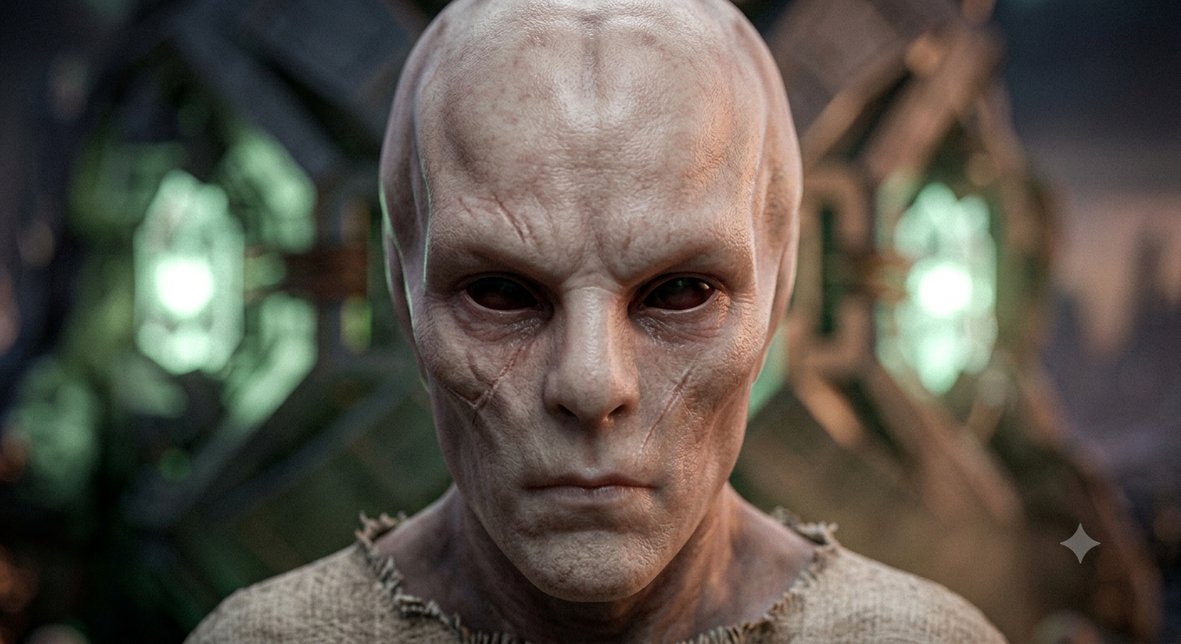 Taubat: The biological servants of the Metar
The Taubat are fascinating yet tragic figures. Imagine these creatures, once proud and formidable, now reduced to worn-down, incomplete versions of their former selves. Their bodies show signs of countless biological replications: misshapen limbs, faded skin colors, and uneven features. They carry an almost haunted look, with their eyes filled with a mix of reverence and sorrow. Despite their physical decline, their loyalty to the Metar is unwavering; they revere their creators with an intensity that borders on the religious. When they move, they do so with a sense of purpose, almost as if driven by an internal, unspoken command to serve. Their dedication to the Metar is their driving force, and it’s palpable in every action they take.
They were once elegant. Now they are echoes.
The Taubat are the Metar’s loyal servants — biologically engineered castes designed for obedience and endurance. But time and replication have worn them thin. Each Taubat is like a photocopy of a photocopy: the genetic fidelity degrading with every iteration. Their skin, once radiant with bioluminescent patterns, now flickers like dying circuitry. Their speech is layered, discordant — a chorus of mismatched tones that barely hold coherence.
They move with ritual precision, but their eyes betray a haunting emptiness. They remember what they were meant to be, but not why.
The Orions met with the Taubat during the Tabua Rasa campaign:
Scene: “Echoes in the Dust”
Location: A derelict mining outpost on the edge of the Tabula Rasa sector. The Orion Syndicate has converted it into a covert interrogation site, its walls humming with stolen Romulan tech and dampened subspace fields.
Lighting: Dim, green-tinged illumination flickers overhead. Shadows stretch across the room like claws.
Characters:
- Vekar: Orion Syndicate enforcer, clad in black synth-leather, his eyes cold and calculating.
- Taubat Subject: Slender, translucent skin shimmering with faint bioluminescence. Its voice is harmonic, layered, almost choral — unsettlingly calm.
---
Vekar circles the restrained Taubat, whose limbs are bound by gravitic clamps. “You’re not Metar,” he growls, “but you carry their scent. What were you built for?”
The Taubat tilts its head, unblinking. “We were not built. We were released. The Metar shaped us to observe, to remember. We are memory given form.”
Vekar sneers. “Memory doesn’t bleed. Tell me about the Beholder. The ruins on Skygowan. What do they unlock?”
The Taubat’s voice resonates, echoing unnaturally in the chamber. “The Beholder sees what you fear. It is not a weapon. It is a mirror.”
Vekar slams a fist against the console, triggering a neural pulse. The Taubat convulses briefly, then steadies. “You think pain will make us speak. But we were born in agony. We remember the scream of creation.”
A pause. Then the Taubat leans forward, eyes glowing faintly. “You are not ready for what sleeps beneath the dust.”
Star Trek: Syndicate Protocol
Logline
When the Orion Syndicate acquires forbidden Metar organic technology—capable of reshaping biology into living weapons—Starfleet must confront a new kind of threat: one that evolves faster than it can be understood.
Act I: The Acquisition
In the shadowy trade hubs of Farius Prime, whispers circulate about a new black-market miracle: Metar biotech, salvaged from a derelict vessel in the uncharted Erebus Expanse.
Orion operatives, led by the enigmatic Volta Dain, secure a cache of Metar DNA constructs—capable of morphing into starships, weapons, and even sentient agents.
Starfleet Intelligence intercepts fragments of a transaction: a shipment labeled “Symbiotic Payload – Class Omega.” The implications are catastrophic.
Act II: The Syndicate Ascends
The Orion Syndicate begins deploying bio-adaptive starships—vessels that heal, evolve, and camouflage themselves at will. These ships are grown, not built.
In the criminal underworld, Orion enforcers now wield living weapons—organisms that bond to their users and mutate based on threat level.
Syndicate medics use Metar tech to reconfigure DNA, creating enhanced operatives immune to most known diseases and capable of surviving in vacuum.
Meanwhile, rival factions—Romulan dissidents, Ferengi biotech brokers, and even rogue Klingon houses—scramble to obtain their own samples.
Act III: Starfleet’s Dilemma
Captain Elen Rho of the USS Valiant leads a covert mission to infiltrate the Syndicate’s biotech lab hidden in a nebula cloaked by organic camouflage.
Inside, they discover Project Chimaera: a Metar-based initiative to create hybrid lifeforms that can impersonate any species, bypassing biometric security and sowing chaos.
The crew faces moral and tactical dilemmas—destroy the lab and risk triggering a galactic biotech arms race, or attempt to contain and study the technology.
Act IV: Evolution Unleashed
Volta Dain activates the Fractal Kin, a hive of Metar-derived beings capable of autonomous evolution and collective strategy.
These entities begin rewriting their own genetic code to counter Starfleet tactics in real time.
In a desperate gambit, Captain Rho uses a modified transporter to destabilize the Fractal Kin’s hive signal, severing their coordination.
The Orion Syndicate retreats—but not before scattering Metar spores across multiple sectors.
Epilogue: The New Frontier
Starfleet establishes Protocol Genesis, a task force dedicated to monitoring and containing Metar biotech.
The Syndicate, though wounded, remains a looming threat—now armed with technology that doesn’t just break laws, but rewrites the rules of life itself.
Final scene: a lone Orion courier delivers a vial of shimmering organic fluid to a shadowy figure on Earth. The next phase has already begun.
The known Metar broods have been categorized as follows:
 METAR-BUR
The Metar-Bur is the most numerous of the broods in the Alpha Quadrant. Physically the smallest of the Metar, it is also the quickest and for this reason the Bur often form the bulk of Metar forces.
Metar-Bur — The Aerial Swarm
“They move like fish through water, but the water is the air itself.”
1. Core Aesthetic and Physiology
The Bur are physically the smallest Metar brood, but also the most visually striking.
- Their bodies resemble reddy-brown and white tropical fish, with mottled patterns that shimmer as they move.
- Their silhouette evokes a ray or manta, with wide, flowing fins that ripple like fabric in a current.
- Their flesh is semi-translucent, revealing faint turquoise subspace veins beneath the surface.
- Their movement is fluid, almost hypnotic — they float, glide, and dip through the air as if swimming.
Their fins are not wings.
They are harmonic membranes, generating lift through subspace resonance rather than aerodynamics.
2. Movement and Speed
The Bur are the fastest brood in the Alpha Quadrant.
- They accelerate in short, explosive bursts.
- They can pivot instantly, changing direction mid-glide.
- Their movement leaves faint trails of refracted light, like ripples in water.
- They can hover silently or dart forward with predatory speed.
Their agility makes them ideal for:
- scouting,
- rapid response,
- swarm tactics,
- and battlefield harassment.
3. Sensory Biology
The Bur possess a highly advanced sensory array:
- Frontal sensory crest — a ridge of crystalline nodes that detect harmonic disturbances.
- Lateral fin receptors — sensitive to airflow, vibration, and subspace fluctuations.
- Ocular pits — not eyes, but multi-layered sensory cavities that perceive motion, energy, and heat.
They “see” the world as currents of energy and motion, not as shapes and colours.
4. Combat Role
The Bur are not heavy hitters — they are force multipliers.
Their battlefield functions include:
- Rapid scouting — mapping enemy positions in seconds.
- Harassment swarms — overwhelming foes with speed and numbers.
- Distraction and disruption — forcing enemies to divide attention.
- Energy tagging — marking targets for Nak or Jii broods.
They rarely kill directly.
They make it possible for other broods to kill efficiently.
5. Internal Biology
Despite their delicate appearance, the Bur are highly engineered:
- Lightweight crystalline skeleton — flexible and shock-absorbent.
- Subspace-gel musculature — allows rapid contraction and explosive movement.
- Harmonic air-swim membranes — generate lift and propulsion.
- Energy sacs — store bursts of subspace charge for acceleration.
Their biology is optimized for speed, not durability.
6. Reproduction and Growth
Bur embryos are grown in high-density clusters within Genesis Chambers.
- Their cocoons are smaller and more numerous.
- They mature faster than other broods.
- Their genetic templates are highly stable, requiring minimal Ras intervention.
This is why they are the most numerous brood in the Alpha Quadrant.
7. Cultural Role in the Pattern
The Bur are:
- the eyes,
- the ears,
- and the first touch of any Metar colony.
They are not revered like the Ras, nor feared like the Dea — but they are indispensable. Without Bur scouts, the Pattern would be blind.
Other broods treat them with a kind of gentle respect, the way a body respects its nerves.
Metar-Bur Senses — Perception Through Currents
“To the Bur, the world is not solid. It is a moving ocean of energy.”
1. Harmonic Flow Perception
The Bur’s primary sense is the ability to detect harmonic currents in the air.
- Their fins act like subspace-tuned membranes, vibrating in response to energy flows.
- They can sense movement, mass, and velocity through subtle shifts in these currents.
- This gives them a “map” of their surroundings that updates continuously.
To a Bur, a starship’s engine wake feels like a warm tide.
A cloaked vessel feels like a cold void where currents collapse.
2. Ocular Pits — Multi-Layered Energy Vision
Bur do not have eyes.
Instead, they have ocular pits — recessed cavities lined with crystalline sensory nodes.
These pits detect:
- motion,
- heat signatures,
- electromagnetic fields,
- subspace distortions,
- harmonic pulses from other Metar.
They “see” the world as shifting patterns of light and energy, not shapes or colours.
3. Lateral Fin Receptors — Vibration and Airflow Detection
Along the edges of their manta-like fins are thousands of micro-receptors.
These detect:
- air pressure changes,
- vibration,
- turbulence,
- shockwaves,
- even the faintest ripple of movement.
This is why Bur can:
- dodge incoming fire,
- weave through debris fields,
- and navigate tight spaces at high speed.
Their fins are both wings and sensory organs.
4. Subspace Sensory Crest
The Bur have a frontal sensory crest, a ridge of crystalline nodes that acts as a subspace antenna.
It allows them to detect:
- harmonic signals from other broods,
- Ras commands,
- energy signatures,
- cloaking field distortions,
- gravitational anomalies.
This crest is the Bur’s “sixth sense,” letting them perceive threats long before they become visible.
5. Swarm-Mind Sensory Sharing
A single Bur is perceptive.
A swarm is omniscient.
Through harmonic resonance, Bur share sensory data instantly:
- one Bur detects motion,
- another detects heat,
- another detects energy,
- and the swarm combines it into a unified perception.
This gives Bur swarms:
- near-perfect battlefield awareness,
- instantaneous reaction time,
- and the ability to navigate as a single organism.
They do not communicate.
They synchronise.
6. How the Bur Experience the World
To a Bur, reality feels like:
- flowing tides of energy,
- warm and cold currents,
- ripples of motion,
- pulses of harmonic light,
- turbulence where danger lurks.
Solid objects are simply interruptions in the flow.
Enemies are distortions.
Allies are harmonic signatures.
The Pattern is the ocean they swim through.
Metar-Bur Formations — Fluid Geometry in Motion
“They do not fly in formation. They flow in formation.”
1. The Core Principle: Harmonic Geometry
Bur formations are shaped by harmonic currents — invisible subspace flows that the Bur perceive like tropical fish sensing underwater tides.
Each formation is:
- dynamic
- reactive
- constantly shifting
- and mathematically precise
The Bur do not maintain rigid shapes.
They maintain harmonic relationships.
2. The School Formation (Default State)
This is the most common Bur formation.
- The swarm moves as a single “school,” like tropical fish gliding through water.
- Individuals maintain equal harmonic spacing.
- Movement ripples through the formation like waves of light.
- The school can expand, contract, or pivot instantly.
This formation is used for:
- patrol
- scouting
- long-distance travel
- low-threat environments
It is the Bur’s “resting geometry.”
3. The Pulse-Line Formation (High-Speed Transit)
When speed is essential, the Bur collapse into a pulse-line:
- A narrow, elongated formation
- Individuals align membrane-to-membrane
- Harmonic fields overlap, reducing drag
- The entire swarm accelerates like a single organism
This formation allows:
- extreme velocity
- rapid redeployment
- fast penetration of enemy lines
It looks like a streak of reddy-brown and white light tearing through the air.
4. The Spiral-Curtain Formation (Defensive Screen)
This is one of the most visually striking formations.
- The swarm spirals around an asset (Ras, Yat, Nak, or structure).
- Fins ripple outward, creating a shimmering curtain of harmonic membranes.
- Energy fire refracts off the curtain, distorting aim and reducing impact.
- The spiral can tighten or expand depending on threat level.
This formation is used to:
- protect key broods
- shield Genesis Chamber entrances
- confuse targeting systems
- create visual and harmonic interference
It resembles a living cyclone of manta-like forms.
5. The Scatter-Flash Formation (Disruption Maneuvre)
A signature Bur tactic.
- The swarm explodes outward in all directions.
- Each Bur emits a brief harmonic flash.
- Enemy sensors are overwhelmed by dozens of false positives.
- The swarm recombines seconds later.
This formation is used to:
- break lock-on
- disrupt targeting
- confuse cloaked vessels
- create chaos before a Nak strike
It is the Bur’s equivalent of a flashbang — but biological.
6. The Tri-Current Formation (Swarm Intelligence Mode)
This is the most complex formation.
- The swarm divides into three sub-schools.
- Each school follows a different harmonic current.
- Together they triangulate enemy movement.
- Data is shared instantly through swarm resonance.
This formation gives the Bur:
- perfect battlefield awareness
- predictive movement mapping
- the ability to “herd” enemies into kill-zones
- coordination with Jii snipers and Nak artillery
It is the Pattern’s living reconnaissance algorithm.
7. The Razor-Wake Formation (Attack Mode)
Rare, but devastating.
- The swarm forms a narrow V-shape.
- Individuals align their fins to generate a harmonic shockwave.
- The formation passes through enemies, disrupting shields and sensors.
- Heavier broods follow immediately behind.
The Bur do not kill in this formation.
They prepare the kill.
Metar-Bur Tactical Integration
“They do not fight alone. They make everyone else fight better.”
1. Integration with Metar-Nak (Siege Organisms)
The Bur and Nak form one of the most devastating pairings in Metar warfare.
How Bur support Nak:
- Target marking — Bur tag enemy units with harmonic pulses, allowing Nak artillery to lock on instantly.
- Trajectory mapping — Bur swarm-minds calculate enemy movement and feed it to Nak firing nodes.
- Shield disruption — Bur Razor-Wake formations weaken shields just before Nak beams strike.
- Smoke-screening — Scatter-Flash formations confuse sensors, making Nak shots harder to anticipate.
Result:
Nak fire becomes unerringly accurate, even against cloaked or evasive targets.
2. Integration with Metar-Jii (Sniper Broods)
Bur and Jii create the Pattern’s long-range kill-web.
How Bur support Jii:
- Tri-Current triangulation — Bur divide into three sub-schools to map enemy positions with perfect precision.
- Motion prediction — Bur sense harmonic currents and predict where targets will be, not where they are.
- Distraction swarms — Bur harass enemies, forcing them into predictable movement patterns.
- Energy-flow highlighting — Bur detect weak points in enemy armor and relay them to Jii.
Result:
Jii shots strike exactly the right target, at exactly the right moment.
3. Integration with Metar-Yat (Energy Reservoirs)
Bur and Yat form the Pattern’s mobile energy ecosystem.
How Bur support Yat:
- Energy routing — Bur guide Yat to optimal positions for shield projection.
- Threat detection — Bur sense incoming fire and warn Yat to reinforce specific broods.
- Harmonic tuning — Bur adjust their membranes to help Yat stabilize large shield fields.
- Escort screens — Spiral-Curtain formations protect Yat during repositioning.
Result:
Yat shields become adaptive, shifting in real time based on Bur sensory input.
4. Integration with Metar-Ras (Architect Broods)
Bur are the Ras’s eyes and ears.
How Bur support Ras:
- Environmental mapping — Bur sense harmonic currents and identify terrain advantages.
- Threat prioritization — Bur swarm-minds highlight the most dangerous enemy units.
- Real-time feedback — Bur relay battlefield data directly into the Ras’s neural lattice.
- Protective spirals — Bur Spiral-Curtain formations shield the Ras during critical harmonic operations.
Result:
The Ras commands with perfect situational awareness, shaping the battle like a conductor.
5. Integration with Other Bur Swarms
Bur do not just integrate with other broods — they integrate with each other.
Swarm-to-swarm synergy:
- Multi-layered scouting nets
- Cross-current triangulation
- Ripple-signal communication
- Mass Scatter-Flash disruption events
When multiple Bur swarms operate together, they create a living sensor grid that blankets entire battlefields.
6. Combined-Arms Metar Doctrine
Bur integration creates a predictable pattern in Metar warfare:
1. Bur swarms arrive first
They map the battlefield, tag targets, and disrupt enemy cohesion.
2. Jii fire second
They eliminate priority targets identified by Bur.
3. Nak fire third
They obliterate hardened positions weakened by Bur and Jii.
4. Yat reinforce throughout
They stabilize shields and energy flows based on Bur sensory data.
5. Ras directs the entire sequence
Using Bur-fed harmonic information.
The Bur are the first touch of the Pattern.
They make every other brood exponentially more effective.
Metar-Bur Prime — Apex Scout of the Pattern
“Where the Bur drift, the Bur Prime hunts.”
1. Core Identity
The Bur Prime is not simply a larger or stronger Bur. It is a refined template, engineered by the Ras for:
- deep reconnaissance
- long-range harmonic sensing
- precision disruption
- swarm leadership
It is the brood that other Bur instinctively follow — not through hierarchy, but through resonance.
2. Appearance and Physiology
The Bur Prime retains the tropical-fish-manta aesthetic, but with sharper, more defined features.
Key traits:
- Larger fin span — wide, flowing membranes that ripple with turquoise-gold energy.
- Reddy-brown and white patterning — more vivid, shifting in response to harmonic currents.
- Crystalline sensory crest — elongated and faceted, acting as a powerful subspace antenna.
- Streamlined body — sleeker, built for long-distance gliding and rapid acceleration.
- Subspace-gel musculature — denser and more efficient, allowing explosive bursts of speed.
The Bur Prime looks like a manta ray sculpted from living crystal and tropical fish colours, moving with predatory grace.
3. Enhanced Sensory Suite
The Bur Prime’s senses are vastly superior to standard Bur.
Upgrades include:
- Deep-range harmonic detection — can sense disturbances kilometres away.
- Multi-layered ocular pits — capable of reading energy signatures with forensic precision.
- Fin-edge micro-receptors — detect microscopic turbulence and cloaking distortions.
- Tri-crest resonance — three sensory ridges that allow triangulation without a swarm.
Where a normal Bur perceives currents, the Bur Prime perceives patterns within patterns.
4. Movement and Speed
The Bur Prime moves with a fluidity that borders on supernatural.
- Long-glide mode — effortless drifting across vast distances.
- Pulse-burst acceleration — instant jumps in speed, leaving harmonic ripples.
- Zero-turn pivoting — can reverse direction without losing momentum.
- Air-swim mastery — moves as if the air is a liquid medium.
Its movement is so smooth that it appears to teleport, though it is simply exploiting harmonic currents.
5. Leadership Within Swarms
The Bur Prime is the harmonic anchor of any Bur swarm.
It provides:
- rhythm — setting the pulse that the swarm follows
- direction — shaping currents that guide movement
- cohesion — stabilizing swarm-mind resonance
- precision — refining triangulation and target mapping
Bur do not obey the Prime. They synchronise with it.
6. Tactical Role
The Bur Prime is the Pattern’s most advanced reconnaissance organism.
Primary functions:
- Long-range scouting
- Enemy movement prediction
- Cloak detection
- Target marking for Nak and Jii
- Swarm coordination
- Shield disruption via Razor-Wake leadership
In battle, the Bur Prime is the first organism to understand the battlefield — often before the enemy realizes it is being observed.
7. Integration with the Ras
The Bur Prime has a direct harmonic link to the Ras.
- It feeds high-resolution sensory data into the Ras’s neural lattice.
- It receives subtle harmonic cues that shape swarm behaviour.
- It acts as the Ras’s “extended senses,” especially in complex environments.
The Ras sees through the Bur Prime as clearly as through its own eyes.
Metar-Bur Prime Evolution — The Sculpted Apex Scout
“The Bur drifted. The Bur Prime learned to read the currents.”
1. Origin: A Ras-Driven Evolutionary Fork
The Bur Prime emerged when several Ras observed a limitation in standard Bur swarms:
- Bur could sense harmonic currents.
- Bur could map local movement.
- Bur could coordinate swarms.
But they could not predict large-scale battlefield patterns or detect deep-range subspace distortions.
To solve this, the Ras initiated a genetic fork — a deliberate divergence in the Bur template.
This fork produced the first Bur Prime.
2. Enhanced Sensory Crest Development
The most dramatic evolutionary change was the sensory crest.
Standard Bur have a single crest.
Bur Prime evolved three:
- Primary crest — long-range harmonic detection
- Secondary crest — energy signature analysis
- Tertiary crest — predictive resonance mapping
This tri-crest system allows the Bur Prime to:
- detect cloaked vessels
- sense gravitational anomalies
- read energy flows across kilometres
- predict enemy movement through harmonic turbulence
This is the moment the Bur Prime became a strategic organism, not just a scout.
3. Membrane Refinement: The Air-Swim Apex
Bur Prime membranes evolved into hyper-sensitive harmonic fins:
- thinner
- wider
- more flexible
- lined with micro-receptors
These membranes allow the Bur Prime to:
- glide for hours without losing altitude
- pivot instantly
- accelerate in pulse-bursts
- sense microscopic turbulence
- “swim” through air with manta-ray precision
This refinement made the Bur Prime the fastest organism in the Pattern.
4. Swarm-Mind Amplification
Standard Bur share sensory data. Bur Prime amplify it.
Their neural lattice evolved to:
- process swarm data at higher resolution
- stabilise swarm resonance
- synchronise multiple Bur schools
- act as harmonic anchors for entire formations
This turned Bur swarms from coordinated scouts into living sensor grids.
5. Subspace-Gel Musculature Enhancement
Bur Prime musculature evolved into a denser, more efficient form of subspace-gel tissue.
This allows:
- explosive acceleration
- rapid directional changes
- sustained long-glide movement
- shock-absorbent impacts
- silent hovering
The Bur Prime became capable of movement patterns that appear supernatural to other species.
6. Genetic Stability and Template Refinement
The Bur Prime template is one of the most stable brood designs ever created.
The Ras refined:
- energy sacs
- membrane density
- crest geometry
- neural lattice structure
- harmonic tuning organs
This stability means Bur Prime embryos rarely fail — unlike Dea-prone broods — making them reliable apex scouts.
7. Evolutionary Purpose: Why the Ras Created Them
The Bur Prime were engineered to solve three strategic needs:
A. Deep-range reconnaissance
To sense threats before they enter the colony’s sphere.
B. Predictive battlefield mapping
To anticipate enemy movement and shape engagements.
C. Swarm leadership
To coordinate Bur schools into fluid, multi-layered formations.
The Bur Prime became the Pattern’s strategic eyes.
 METAR-DEA
The Metar-Dea are a terrifying sight to behold. A collage of bleached white bone and raw flesh give the Dea an air of abomination. Their splayed arms jut forward with the menace of a scorpion poised to strike, while the contours of the skull give the Dea a leering grimace.
Metar-Dea — The Bone-Flesh Abominations
“They are not made. They are shed.”
Origin and Purpose
The Metar-Dea are not engineered in the same refined way as the Nak, Jii, or Yat. Instead, they emerge from the discarded biological remnants of the Genesis Chambers — failed embryonic constructs, rejected tissue, and unstable genetic templates.
Where most species would dispose of such biological waste, the Pattern reclaims it, forcing it into a new, horrifying brood.
The Dea serve three roles:
- Execution brood — they eliminate threats inside the hive-city, including intruders, rogue constructs, or contaminated embryos.
- Purification brood — they scour corrupted tissue and unstable growths from the Genesis Chambers.
- Shock brood — deployed rarely, they are used to terrify enemies and break morale.
They are not elegant. They are not precise. They are the Pattern’s violent reflex.
Anatomy and Appearance
The Dea are a grotesque fusion of:
- bleached bone plates,
- raw exposed musculature,
- malformed tendons,
- and embryonic tissue that never fully matured.
Their splayed arms jut forward like scorpion pincers, each tipped with jagged bone hooks. These arms are used to:
- pin prey,
- tear open armour,
- and drag victims into the Dea’s skull-like maw.
The skull is the most iconic feature:
- elongated,
- cracked,
- with a permanent leering grimace carved into its bone contours.
This grimace is not decorative — it is the result of malformed sensory cavities and fused bone ridges, giving the Dea a face that looks like death laughing.
Behaviour and Combat Style
The Dea do not stalk or hunt with finesse. They charge, slam, and tear.
Their combat traits include:
- Bone-shock impact — their forward-jutting arms can deliver concussive blows that shatter exoskeletons.
- Flesh-memory reflexes — their bodies retain instinctive combat patterns from dozens of failed brood templates.
- Hive-rage — when Genesis Chambers are threatened, Dea enter a frenzy that makes them unstoppable until death.
They are terrifying not because they are the strongest, but because they fight like something that should not exist.
Psychological Impact
Even species accustomed to the Metar’s alien biology find the Dea uniquely horrifying
.
Klingon warriors describe them as:
“The Pattern’s nightmares given bone.”
Romulans call them:
“The ones that were never meant to be.”
Their presence on a battlefield signals one thing: the Pattern has abandoned subtlety.
Cultural Role Within the Metar
The Dea are not revered. They are not honoured. They are necessary.
Other broods treat them with:
- avoidance,
- instinctive caution,
- and a strange form of pity.
The Ras consider the Dea a reminder of the Pattern’s imperfections — a living archive of failed designs that still serve a purpose.
Symbolism
To outsiders, the Dea symbolise:
- corruption,
- decay,
- and the horror of biological excess.
To the Metar, they symbolize:
- utility,
- reclamation,
- and the refusal to waste even flawed life.
They are the Pattern’s shadow, the brood that exists because creation always leaves something behind.


METAR-JII
The Jii appears as a starved and wasted creature, its head seemingly too heavy for such an elongated neck. The Jii are the Metar's sniper brood and its skeletal from is strangely apt. While laying motionless waiting to strike, it conveys an air of death having already struck. The reason for this deformity is that the majority of the Metar-Jii's powers are concentrated into its skull, to make its senses and weaponry effective at extreme range; while its light and slight body helps it to move between positions quickly.

METAR-YAT
The Metar-Yat is considered the most dangerous of all common Metar broods. This is because the Metar-Yat is used to gather a reservoir of Metar defensive energies, which any Metar in the immediate vicinity can tap.
METAR-NAK
The Nak is the siege weapon of the Metar. To fire, the Nak channels a ball of energy through its skull cavity, spitting it out at its target. Upon contact, this energy ball explodes with a devastating area of effect. An added nightmare is the fact that these monsters do not rely on sight for targeting and are able to attack targets far beyond what would be their normal field of vision.

 METAR-RAS
At the very heart of Metar 'society' are the Metar-Ras. They are the most powerful but the least numerous of all Metar broods. They are both colony creators and leaders. They are charged with building up colonies, replacing those Metar killed in battle and genetically engineering new broods to counter new threats. As such an important brood the Metar-Ras only leave their colony in the direst of circumstances, when every Metar is needed at the front. When they do join battle, the Metar-Ras's primary weapon is a highly potent energy cannon, similar to the Metar-Nak. With the vast amounts of power at their disposal this weapon is highly accurate, dangerously powerful and with a recharge rate that is virtually instantaneous.
"The above report is © Interplay Productions. All rights reserved"
15-January-2290, SD8987.0.
Romulan "Shiva" weapons test produces an unexpected result—a spatial anomaly which has transported a whole stellar cloud of star systems into a previously barren area of the "Triangle", an area of space where Romulan, Klingon, and Federation interests meet. Colonial exploitation of these mineral-rich systems by all three powers proceeds over the next few months, while diplomatic overtures are made by all three to the alien race inhabiting these worlds, the Taubat.
This and all subsequent 'Anomaly Systems/Metar' data is from the 'Star Trek: New Worlds' computer game. These actual stardates are given in game at the start of each mission.
23-March-2290, SD9020.6.
The Klingons declare war on the Taubat when they side with the Federation—after Klingon warriors die putting down a rebellion on planet Ixion at the request of the Taubat authorities.

16-July-2290, SD9078.2
Supply station Aljetarius is authorised for upgrading to starbase status to support the Tabula Rasa campaign, with the unofficial designation of 'Starbase 77'. Supplies are delivered by U.S.S. Explorer.
13-August-2290, SD9092.1.
On planet AP-173-B, the Taubat—the alien race inhabiting the Anomaly systems—summon their masters, a highly advanced and powerful space-faring race called the Metar. In defending the Taubat from the Klingons and Romulans, the Federation unwittingly gave them enough time to activate the dormant Metar portals located on planets all over the Anomaly systems. Apparently, the Taubat were created as a vassal race by the Metar.
The upgrading of Aljetarius to 'Starbase 77' is indefinitely delayed as a result while Starfleet scrambles to contain the Metar threat.
13-September-2290, SD9107.5.
The Klingons suffer a major loss as 37 ships comprising the 3rd Fleet are destroyed over planet Bursai IV when the Metar attack.
03-November-2290, SD9133.4
The wreck of the Constitution-class USS Explorer is found on the surface of planet Al Fadir, another casualty of the Metar.
Although the Explorer is mentioned later in the game as the ship carrying Ambassador Sarek, I'm going with the 'physical' evidence.
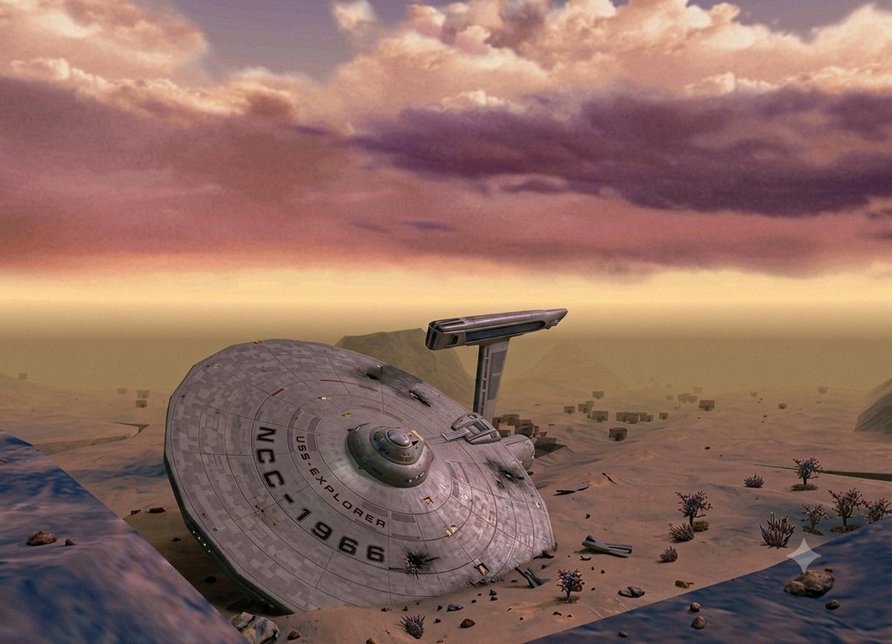
04-May-2291, SD9224.4.
The Federation dispatches a second Constitution-class starship to the Anomaly systems, carrying Ambassador Sarek to negotiate with the Metar.
26-June-2291, SD9250.6.
The Federation, Romulans, and Klingons get help in their fight against the Metar onslaught. Another ancient, advanced race from the Anomaly systems called the Hubrin offer their support, as it was they who originally imprisoned the Metar some time ago over after having warred for millennia. However, the Hubrin numbers are low, as they were on the verge of total defeat when they sealed up the Metar the last time.
27-September-2291, SD9297.2.
After a year-long campaign, the Federation, Romulans, and Klingons manage to seal the Metar back into their prison dimension, unfortunately taking the races' Colonial Program command staff and all of the mineral-rich "Tabula Rasa" Anomaly systems with them.
21-October-2291, SD9309.4.
The survivors of the Tabula Rasa campaign survive to steal a Metar starship and return to their home dimension.
With the disappearance of the Tabula Rasa star systems, the need for a starbase in the region is gone. 'Starbase 77' is shelved. This is the stardate given in the final mission of the game, and my assumption of the aftermath.

The above Tabula Rasa campaign notes courtesy of Scottish Andy’s superb Starbase 23 website.
Events as seen from the three superpowers from contemporary sources:
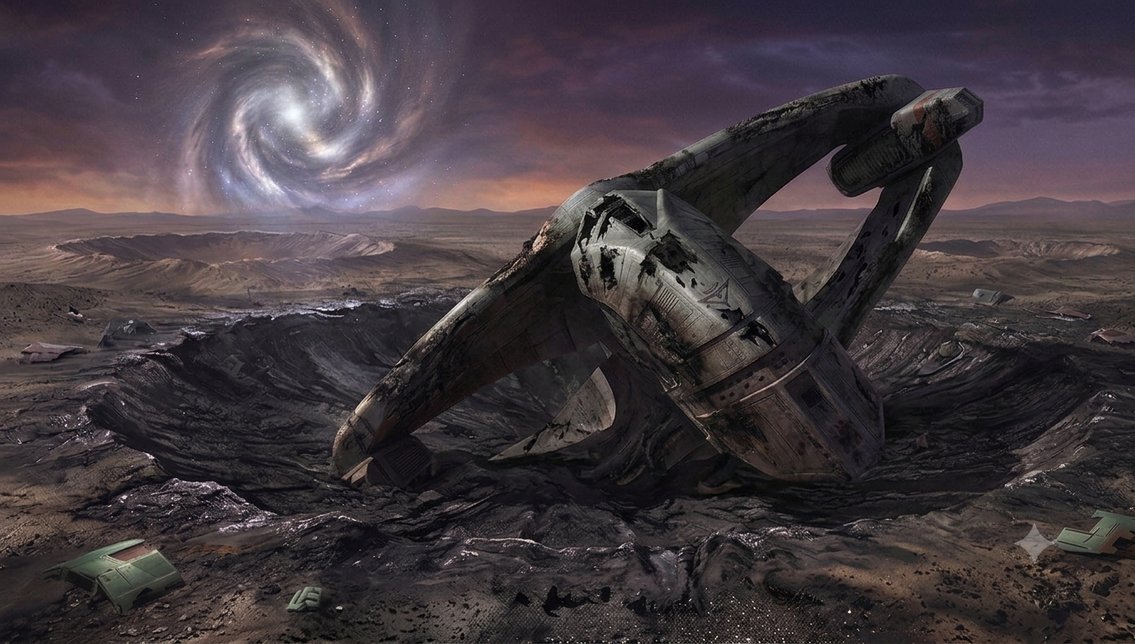 Federation Perspective on the Tabula Rasa Incident and the Metar War (2288–2291)
1. The Melak Detonation and the Birth of the Crisis (2288)
From the Federation’s perspective, the Metar War begins not with a battle, but with a scientific disaster caused by Romulan hubris. Starfleet Intelligence had intercepted fragments of chatter about a Romulan “dimensional ignition experiment.” The Constitution II–class USS Explorer (NCC-1966) was dispatched to observe and, if possible, prevent escalation. When the Explorer arrived, a Klingon K’tinga was already attempting to stop the Romulan science vessel Melak. The Explorer tried to mediate, but the Melak activated the Shiva Device.
The detonation:
- tore open a subspace pocket,
- destabilized local spacetime,
- and began pulling matter from the pocket into realspace.
The Melak was ripped out of existence. The Explorer survived the initial shockwave — but Starfleet would not see her again for years.
2. AP-001: The First Tabula Rasa World
When the first of the “blank worlds” appeared, Starfleet surveyors expected a bizarre anomaly. Instead they found:
- a planet with no stellar ancestry,
- ecosystems that looked grown from templates,
- and at its heart, the wreck of the Melak, half-fused into the crust.
The Melak’s logs were corrupted beyond recovery, but one phrase survived in multiple fragments:
“The Makers are waking.”
This was the Federation’s first recorded reference to the Metar.
3. The Slow Flood of Worlds (2288–2289)
Over the next year, dozens of Tabula Rasa worlds spilled into the Alpha and Beta Quadrants. Each arrival strained Starfleet:
- new worlds to map,
- new hazards to contain,
- new diplomatic friction with Klingons and Romulans, who accused the Federation of exploiting the chaos.
But the most disturbing discovery came on AP-173.
4. The Taubat: Copies of Copies
Starfleet xenologists described the Taubat as:
“Incomplete people — as if someone tried to build a species from memory and got the details wrong.”
They were:
- genetically unstable,
- cognitively fragmented,
- ritualistic to the point of compulsion,
- and slowly dying from radiation emitted by the power structures they worshipped.
Those structures were Metar power nodes. The Taubat’s religion centered on “The First Pattern,” “The Makers,” or “The Perfected.” Starfleet linguists eventually translated the term: Metar.
5. The Awakening (2289)
On AP-173, a Starfleet science team inadvertently activated a dormant Metar node. This triggered a recall signal across the Tabula Rasa worlds.
The Taubat reacted with terror:
“We are not ready. We are not whole.”
Within weeks, Metar constructs began emerging:
- biomechanical drones,
- subspace-phased warforms,
- and “architect units” capable of rewriting matter.
The Federation was not the only target. Klingon and Romulan space were hit simultaneously. For the first time in generations, all three powers faced a common existential threat.
6. The Loss of the USS Explorer (2290)
During the early Metar incursions, the Explorer was dispatched to investigate a newly arrived world (AP-027). She transmitted a single, chilling message:
“The world is folding. We are being pulled inside.”
The Explorer was lost — later found crashed on a gravity-distorted world, her hull warped by forces no Federation physicist could model. Her logs confirmed the Metar were not invading. They were reclaiming.
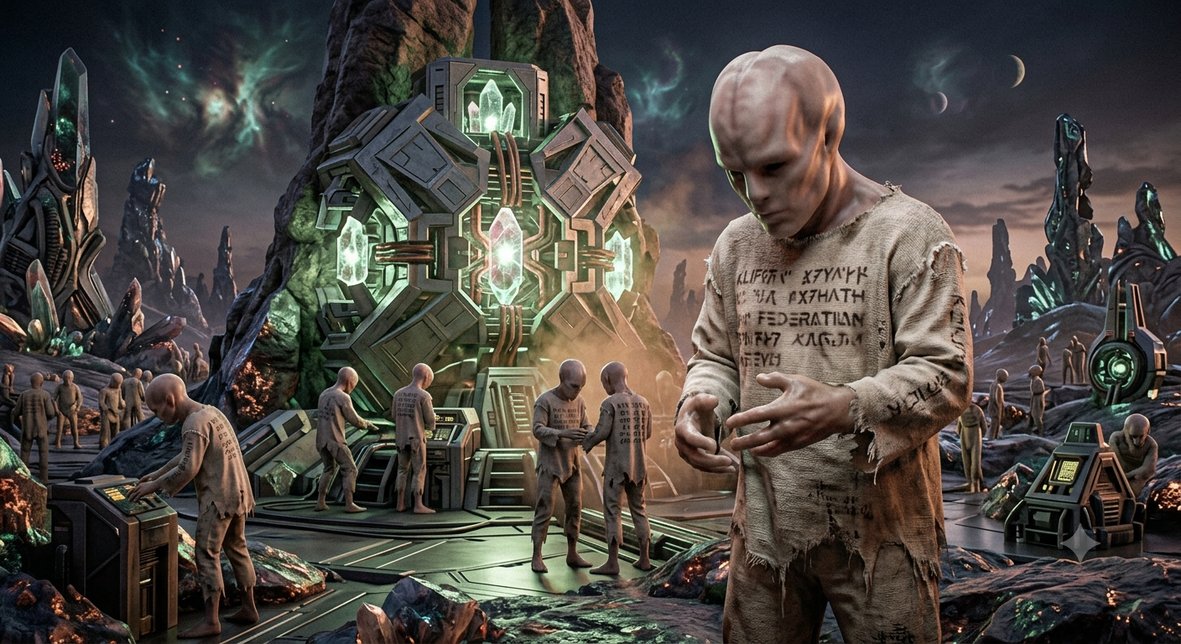 7. The Metar War (2289–2291)
Starfleet divides the conflict into three phases.
Phase I — Containment (late 2289)
The Federation attempted to treat the Metar as a conventional threat. This failed immediately. Metar constructs ignored borders, treaties, and deterrence. They were not conquering territory — they were restoring their lost domain.
Phase II — Collapse (2290)
Entire sectors destabilized. Klingon and Romulan losses were catastrophic. The Federation Council debated evacuation of frontier colonies. During this period, the Nimbus III incident — normally a diplomatic embarrassment — was reframed as proof that cooperation between the three powers was possible. This laid the groundwork for the Tri-Pact, the secret alliance that would end the war.
Phase III — The Trap (2291)
Federation scientists, Klingon engineers, and Romulan subspace theorists devised a plan:
- deploy three synchronized Shiva-type devices,
- detonate them inside the collapsing pocket,
- force the entire Tabula Rasa region to fold back into subspace,
- with the Metar trapped inside.
The ethical debate inside the Federation was fierce. But survival won.
The devices detonated.
The pocket collapsed.
The Metar were sealed away.
The Tabula Rasa worlds vanished as abruptly as they had arrived.
8. Aftermath: The Federation’s Official Story
Publicly, the Federation describes the event as:
- “a subspace anomaly crisis,”
- “a joint scientific operation,”
- “a tragic loss of life.”
The words Metar, Taubat, and Tabula Rasa appear nowhere in public archives.
But inside Starfleet, the lesson is clear:
*“We are not the first civilization to walk these stars. We are only the latest to survive them.”*
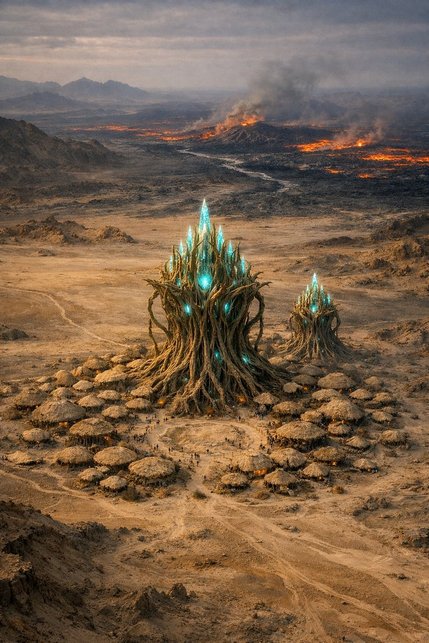 Early Metar Hive-City Mysteries
“The Cities That Listened” — Starfleet Xenoscience Division, Restricted Archive
1. The First Sightings: Structures Too Perfect to Be Ruins
The earliest hive-cities were discovered on AP-173, AP-004, and AP-009. Starfleet surveyors expected ruins. What they found were structures that looked newly built, despite being thousands of years old.
They were:
- geometrically flawless,
- composed of metamaterials unknown to Federation science,
- and arranged in fractal patterns that repeated at every scale.
Oberth-class science crews described them as:
“Cities grown, not constructed.”
The Taubat insisted they were “The First Cities”, built by the Makers. But they refused to enter them. This was the first sign something was wrong.
2. The Harmonics: Buildings That Sang
Every hive-city emitted a faint subspace harmonic — too weak to be dangerous, but too structured to be natural.
Starfleet engineers noted:
- repeating pulses every 11.3 seconds,
- harmonic overtones matching no known communication system,
- and occasional “echoes” that seemed to respond to tricorder scans.
One Okinawa-class frigate captain wrote:
“It’s like the buildings are listening to us.”
The Romulans accused the Federation of transmitting signals. The Klingons accused the Romulans. The Federation accused the Klingons.
No one realised the harmonics were Metar neural infrastructure, still alive, still waiting.
3. The Sealed Chambers: Doors That Weren’t Doors
The hive-cities were filled with sealed apertures that looked like doors but had:
- no seams,
- no hinges,
- no mechanical interfaces.
When scanned, they showed:
- hollow chambers behind them,
- faint organic residue,
- and “thermal ghosts” — heat signatures that shouldn’t exist in abandoned structures.
Starfleet xenobiologists theorised:
- cryogenic vaults,
- storage chambers,
- or biological archives.
The truth — that these were Metar gestation chambers — would not be understood until the Awakening.
4. The Taubat’s Ritual Maintenance
The Taubat maintained the hive-cities with religious devotion:
- polishing surfaces,
- repairing conduits they didn’t understand,
- chanting rhythmic patterns that matched the subspace harmonics.
When asked why, they said:
“We keep the Makers sleeping.”
Starfleet anthropologists interpreted this as myth. It was not myth. It was cultural memory of containment.
The Taubat were terrified of waking the Makers — but culturally incapable of explaining why.
This was the heart of the Time of Deception.
5. The Gravity Wells: Localized Distortions
Several hive-cities exhibited micro-gravity distortions:
- objects falling at inconsistent rates,
- tricorder readings fluctuating by 0.3–0.7 g,
- and occasional “lensing” effects where light bent subtly.
Starfleet physicists proposed:
- subspace fractures,
- exotic matter deposits,
- or ancient power systems.
The Klingons believed the cities were weapons. The Romulans believed they were laboratories. The Federation believed they were temples.
All three were wrong.
The distortions were Metar neural-mass nodes, dormant but active enough to warp local physics.
6. The Echoes: Voices in the Static
Oberth-class sensor logs recorded faint audio anomalies:
- whispers,
- rhythmic pulses,
- and what sounded like distant machinery.
When enhanced, the signals formed patterns resembling proto-linguistic structures. Starfleet linguists dismissed them as interference. Later analysis would show they were Metar diagnostic routines, running in the background of the hive-cities like a sleeping computer checking its own memory.
7. The First Disappearances
During the first year, three survey teams reported personnel going missing inside hive-cities.
All three were later found:
- disoriented,
- dehydrated,
- and unable to explain where they had been.
One Akula-class security officer described it as:
“Like the corridors rearranged themselves.”
Starfleet dismissed these as stress-related incidents.
But the internal report noted:
“The structures appear to be reconfigurable.”
This was the first hint that the hive-cities were alive.
8. The Federation’s Early Conclusion: “Ancient, but Safe”
By the end of the first year, Starfleet’s official position was:
- the hive-cities were ancient arcologies,
- the Taubat were their degenerated descendants,
- and the structures were dormant.
Unofficially, survey crews were uneasy. Engineers refused to work alone. Anthropologists reported Taubat priests weeping when Starfleet entered certain chambers.
A classified memo from Starfleet Science summed it up:
“We are studying something that is studying us back.”
But no one yet understood the truth: The hive-cities were Metar minds. And they were beginning to wake.
Metar Sealed Chambers
“Rooms that were never meant to be opened by hands like ours.”
Starfleet Xenoscience Division — Restricted Technical Dossier
1. What Starfleet Thought They Were
During the first year, Starfleet survey teams believed the sealed chambers were:
- ancient vaults,
- storage rooms,
- ritual spaces,
- or abandoned laboratories.
This interpretation came from:
- the Taubat’s refusal to enter them,
- the lack of visible doors or interfaces,
- and the eerie stillness of the chambers behind the seamless walls.
Oberth-class science officers described them as:
“Rooms that exist, but do not want to be entered.”
But the truth was far more disturbing.
2. What They Actually Were: Metar Neural and Biological Infrastructure
The sealed chambers were not rooms. They were organs.
Each chamber served one of three functions:
- Neural cores — clusters of bio-computational mass that formed part of the hive-city’s distributed mind.
- Gestation vaults — where Metar constructs were grown, patterned, and imprinted.
- Subspace anchor nodes — stabilizing points that kept the hive-city partially phased.
The “sealed doors” were not doors at all. They were membranes, designed to open only for:
- Metar,
- Metar-authorized drones,
- or Taubat performing the correct ritualised authentication patterns.
Starfleet had none of these. Thus the chambers remained closed.
3. The Membrane Walls: Living, Not Mechanical
Tricorder scans revealed:
- faint organic signatures,
- micro-vascular networks,
- and low-level electrical activity.
The walls were alive. Not in a biological sense, but in a bio-mechanical, semi-sentient way — like the sheath of a nerve or the casing of a brain.
When touched, the walls:
- warmed slightly,
- pulsed faintly,
- and sometimes emitted a soft harmonic tone.
One Akula-class security officer wrote:
“It felt like the wall was thinking about me.”
He was not wrong.
4. The Thermal Ghosts: Evidence of Dormant Occupants
Inside the sealed chambers, tricorders detected:
- residual heat signatures,
- faint metabolic traces,
- and “thermal ghosts” shaped like elongated humanoids.
Starfleet assumed:
- cryogenic pods,
- stasis chambers,
- or ancient corpses.
Later analysis revealed: These were dormant Metar constructs — embryonic warforms waiting for activation. The Taubat knew this. They simply could not say it.
5. The Subspace Hum: A Sleeping Mind
Every sealed chamber emitted a harmonic pulse:
- rhythmic,
- structured,
- and synchronised across entire hive-cities.
Starfleet engineers believed it was:
- a power system,
- a communication network,
- or environmental control.
But the harmonics were actually neural activity — the faint background hum of a distributed Metar consciousness in deep dormancy. The sealed chambers were lobes of a sleeping brain.
6. Why the Taubat Feared Them
Taubat priests refused to approach sealed chambers. When asked why, they said:
- “The Pattern is too strong.”
- “The Makers dream there.”
- “We are not worthy to enter.”
Starfleet anthropologists interpreted this as superstition. But the Taubat’s fear was ancestral memory.
Their ancestors had seen:
- Metar constructs emerging from these chambers,
- Taubat who entered without permission being disassembled,
- and entire villages punished for “disturbing the Pattern.”
Their rituals of avoidance were survival protocols.
7. The First Attempts to Open a Chamber
In late 2289, a Starfleet science team attempted to breach a sealed chamber on AP-004 using:
- phaser micro-cuts,
- harmonic resonance tools,
- and a portable subspace field manipulator.
The wall reacted.
It:
- hardened,
- thickened,
- and emitted a pulse that knocked out every tricorder within 30 meters.
The Taubat nearby screamed and fled. A Romulan team later attempted a similar breach. Their equipment fused. One researcher suffered neural shock. The chambers were not locked. They were defended.
8. The Revelation: What the Chambers Were Waiting For
When the Metar began to awaken in 2289–2290, the sealed chambers responded first.
Starfleet sensors recorded:
- rising internal temperatures,
- harmonic pulses increasing in frequency,
- and the membranes softening.
The chambers were preparing to open. Not for Starfleet. Not for the Taubat. But for the Metar themselves.
A classified Starfleet report summarized it:
*“The sealed chambers were not meant to be opened by us. They were meant to open for what was coming.”*
9. The Federation’s Final Assessment
After the war, Starfleet Science concluded:
- the sealed chambers were Metar neural and reproductive organs,
- the hive-cities were distributed super-organisms,
- and the Taubat were maintenance drones who inherited rituals instead of instructions.
The sealed chambers were the most dangerous parts of the hive-cities because: They were the places where the Metar slept. And where they would have been reborn.
Decoding Metar Harmonic Signals
“The hum of a sleeping mind, repeating itself across a thousand worlds.”
Starfleet Subspace Acoustics Division — Restricted Technical Monograph
1. What the Harmonics Are: Neural Broadcasts, Not Machinery Noise
The Metar harmonic signals are not:
- power fluctuations,
- environmental control systems,
- or structural resonance.
They are neural emissions — the background activity of a distributed, partially dormant intelligence. Each hive-city is a node. Each sealed chamber is a lobe. Each harmonic pulse is a thought fragment.
Starfleet’s eventual conclusion:
“We were listening to the Metar dream.”
2. The Base Pulse: The 11.3-Second Cycle
Every hive-city emits a repeating pulse every 11.3 seconds. This is the Metar baseline neural rhythm — the equivalent of a mammalian brain’s alpha wave.
It serves three functions:
- synchronization between hive-cities,
- status reporting across the dormant network,
- environmental sampling (temperature, radiation, biological presence).
The Taubat’s ritual chants match this rhythm because their ancestors were conditioned to it. This is why the Taubat chants feel “musical” to Starfleet linguists — they are patterned on a neural clock.
3. The Overtones: Encoded Metar System Checks
Layered over the base pulse are harmonic overtones at:
- 4.7 kHz
- 9.2 kHz
- 13.8 kHz
- 22.1 kHz
These overtones are diagnostic packets. When decoded, they reveal:
- structural integrity reports,
- energy reserve levels,
- dormant chamber status,
- and subspace anchor stability.
Starfleet engineers described them as:
“The hive-city checking its own pulse.”
Romulan analysts later confirmed the overtones form a checksum pattern — a way for the Metar to detect corruption in their own neural architecture.
4. The Echo Layer: Responsive Harmonics
This is the layer that frightened Starfleet the most. When tricorders, phasers, or even spoken voices produced certain frequencies, the hive-city responded with:
- harmonic shifts,
- amplitude spikes,
- or subtle phase changes.
This meant: The hive-cities were listening. Not consciously — not yet — but reflexively, like a sleeping organism reacting to touch.
One Oberth-class science officer wrote:
“It’s like talking in your sleep and having the dream talk back.”
5. The Linguistic Layer: Proto-Language in the Noise
When Starfleet linguists applied pattern-recognition algorithms, they discovered:
- repeating phoneme-like structures,
- recursive syntax loops,
- and “call-and-response” patterns between distant hive-cities.
This was not language in the humanoid sense. It was neural signaling — the Metar equivalent of synapses firing. But the structure resembled:
- Taubat ritual chants,
- Metar glyph patterns found on AP-009,
- and the harmonic signatures of sealed chambers.
This confirmed that Taubat religion was built on corrupted neural code.
6. The Subspace Layer: The Hidden Channel
The most dangerous layer is the one Starfleet almost missed. Beneath the audible and electromagnetic harmonics lies a subspace carrier wave — extremely faint, but perfectly structured.
This layer:
- links hive-cities across light-years,
- synchronizes dormant Metar minds,
- and transmits “wake signals” when conditions are met.
It is the Metar nervous system. When decoded, the subspace layer revealed:
- references to “Pattern Integrity,”
- “Node Readiness,”
- and “Cycle Completion.”
These were Metar self-diagnostic terms. The hive-cities were not dead. They were waiting.
7. The Activation Spike: The First Sign of Awakening
In late 2289, Starfleet detected a sudden change:
- the 11.3-second cycle shortened to 10.9 seconds,
- overtones increased in amplitude,
- and the subspace layer began transmitting new packets.
These packets contained:
- activation sequences,
- chamber-unlock codes,
- and neural-mass priming signals.
This was the moment the Metar began to wake. The Taubat reacted instantly — screaming, collapsing, or fleeing hive-cities. They recognized the signal. Their ancestors had heard it before.
8. The Federation’s Final Interpretation
After the war, Starfleet Science concluded:
- the harmonic signals were Metar neural activity,
- the hive-cities were distributed brains,
- and the subspace layer was their communication network.
The harmonics were not warnings. They were status reports. The Metar were not calling for help. They were checking whether it was time to rise.
A classified summary put it bluntly:
*“The harmonics were the Metar breathing in their sleep. We mistook it for wind.”
Metar Gestation Vaults
“The wombs of a species that never needed bodies.”
Starfleet Xenobiology Division — Restricted Biological Systems Report
1. What Starfleet Thought They Were (Before the Awakening)
During the first year, Starfleet survey teams believed the sealed chambers containing organic residue were:
- stasis pods,
- ancient morgues,
- or biological archives.
This was based on:
- faint metabolic traces,
- thermal ghosts shaped like elongated humanoids,
- and the Taubat’s refusal to enter.
But the truth was far more unsettling. The chambers were not for the dead. They were for the unborn.
2. What They Actually Are: Metar Reproductive Organs
A Metar hive-city is not a city. It is a distributed organism. The gestation vaults are:
- incubation chambers,
- pattern-imprinting matrices,
- and neural-mass growth sacs.
Each vault grows:
- Metar drones,
- Metar warforms,
- Metar architect units,
- and occasionally, Metar selves — fragments of the greater consciousness given temporary physical form.
A Starfleet xenobiologist described them as: “The closest thing the Metar have to a womb — but scaled to the size of a starship.”
3. The Growth Medium: Living Subspace Gel
Inside each vault is a translucent, shimmering substance that:
- behaves like a fluid,
- scans like a biological tissue,
- and interacts with subspace like a field generator.
Starfleet named it Metar subspace gel.
It serves as:
- nutrient medium,
- neural conductor,
- and pattern-stabilization matrix.
When dormant, it appears inert. When active, it pulses with faint light — like a heartbeat. This gel is the reason the vaults emit thermal ghosts. It retains heat from previous growth cycles.
4. The Pattern Imprint: How Metar “Birth” Works
Metar do not reproduce biologically. They instantiate.
Each gestation vault contains:
- a pattern core,
- a neural imprint lattice,
- and a subspace anchor.
When activated, the vault:
1. draws raw matter from the hive-city’s internal stores,
2. shapes it using the imprint lattice,
3. infuses it with neural-mass grown in adjacent chambers,
4. binds it to the Metar distributed consciousness via the subspace anchor.
The result is a fully formed Metar construct — grown, not built. This is why Metar warforms appear “grown from metal.” They literally are.
5. Why the Taubat Maintained the Vaults
The Taubat’s ritual maintenance — polishing, chanting, offering heat — was not religious. It was biological support. Their ancestors were conditioned to:
- regulate temperature,
- maintain surface integrity,
- and perform rhythmic chants that stabilized the vaults’ neural harmonics.
The Taubat believed they were “keeping the Makers sleeping.” In truth, they were preventing spontaneous activation. Their rituals were the decayed remnants of containment protocols.
6. The Dormant Embryos: The Thermal Ghosts Explained
When tricorders detected humanoid-shaped heat signatures inside sealed chambers, Starfleet assumed:
- corpses,
- stasis forms,
- or ancient remains.
Later analysis revealed: These were dormant Metar constructs — embryonic warforms in suspended growth.
They were:
- partially formed,
- partially patterned,
- and awaiting activation signals.
The Taubat called them:
- “The Unfinished,”
- “The Sleeping Makers,”
- “The Perfected-Not-Yet.”
They were terrified of them. With good reason.
7. The Activation Sequence: How the Vaults Wake
When the Metar began to stir in 2289–2290, the gestation vaults responded first.
Starfleet sensors recorded:
- rising internal temperatures,
- subspace gel liquefying,
- neural-mass growth spikes,
- and membrane walls softening.
This was the pre-birth cycle. The vaults were preparing to open. The Taubat reacted instantly — collapsing, screaming, or fleeing. They recognized the signs from ancestral memory. A Starfleet report noted:
“The Taubat knew the vaults were waking long before our instruments did.”
8. Why Starfleet Couldn’t Breach Them
Attempts to cut into gestation vaults failed because:
- the walls hardened in response to energy,
- the subspace field destabilized cutting tools,
- and the vaults emitted harmonic pulses that disrupted electronics.
The vaults were designed to be:
- impervious to external interference,
- responsive only to Metar signals,
- and capable of self-repair.
They were not locked. They were alive. And they did not recognize Starfleet as anything but noise.
9. The Federation’s Final Assessment
After the war, Starfleet Science concluded:
- gestation vaults are Metar reproductive organs,
- the hive-cities are distributed super-organisms,
- and the Taubat were maintenance drones who inherited rituals instead of instructions.
The vaults were the most dangerous parts of the hive-cities because: They were where the Metar were reborn. And where they would have risen again. A classified summary put it bluntly:
*“The vaults were not relics. They were cradles.”*
Metar Neural Cores
“The thoughts of a species that never needed bodies.”
Starfleet Xenoneurology Division — Restricted Cognitive Systems Report
1. What Starfleet Thought They Were (Year One)
Before the Awakening, Starfleet believed the sealed, harmonic-rich chambers deep inside the hive-cities were:
- power regulators,
- environmental control nodes,
- or ancient communication hubs.
This was based on:
- the rhythmic pulses,
- the subspace emissions,
- and the Taubat’s absolute terror of approaching them.
But the truth was far more unsettling. The chambers were not machines. They were brains.
2. What They Actually Are: Distributed Metar Cognition Nodes
A Metar hive-city is not a building. It is a distributed organism. The neural cores are:
- cognitive lobes,
- memory clusters,
- decision-making nodes,
- and subspace-anchored consciousness fragments.
Each core is a piece of the Metar mind, capable of:
- independent thought,
- local decision-making,
- and synchronising with other cores across light-years.
A Starfleet xenoneurologist described them as:
“The Metar don’t have brains. They are brains.”
3. Physical Structure: A Brain Made of Metal and Light
Neural cores appear as:
- dense, fractal lattices of metamaterial,
- threaded with organic filaments,
- pulsing with faint bioluminescence,
- suspended in subspace gel.
They resemble:
- a metallic brain,
- a crystalline organ,
- or a starship computer core grown like coral.
Tricorder scans show:
- electrical activity,
- metabolic signatures,
- and subspace field oscillations.
The cores are alive, but not biological. They are bio-mechanical cognition engines.
4. The Harmonic Pulse: The Metar Thought Rhythm
Each neural core emits a harmonic pulse every 11.3 seconds — the same cycle detected across all hive-cities.
This pulse is:
- a neural heartbeat,
- a synchronisation signal,
- and a status broadcast.
It contains:
- memory fragments,
- environmental data,
- and readiness checks for dormant constructs.
This is why the Taubat’s chants match the rhythm — their ancestors were conditioned to the Metar neural clock. The harmonics are not noise. They are thoughts.
5. The Subspace Anchor: How the Metar Think Across Worlds
Each neural core contains a subspace anchor node — a structure that:
- stabilises the core’s position in subspace,
- links it to other cores across light-years,
- and allows instantaneous cognitive synchronisation.
This is how the Metar maintain a distributed consciousness. When one core “thinks,” all cores receive the thought. When one core awakens, all cores begin to stir. This is why the Awakening spread so quickly.
6. The Memory Lattice: How the Metar Store Knowledge
Neural cores contain a fractal memory lattice, capable of storing:
- genetic templates,
- tactical data,
- historical records,
- and entire cognitive personalities.
The lattice is:
- self-repairing,
- self-optimising,
- and partially organic.
When Starfleet attempted to scan it, the lattice responded by:
- shifting patterns,
- altering harmonics,
- and in one case, mirroring the tricorder’s scan frequency.
This was the first sign the cores were aware of being observed.
7. Why the Taubat Feared Them
Taubat priests refused to approach neural cores. When asked why, they said:
- “The Makers dream there.”
- “The Pattern is strongest.”
- “We are not worthy.”
Starfleet anthropologists assumed superstition. But the Taubat’s fear was ancestral memory. Their ancestors had seen:
- Metar constructs emerging from neural cores,
- Taubat disassembled for entering forbidden chambers,
- and entire villages punished for “disturbing the Pattern.”
Their rituals of avoidance were survival protocols.
8. The First Signs of Awakening
In late 2289, neural cores began to change:
- harmonic pulses increased in amplitude,
- subspace anchors strengthened,
- memory lattices activated dormant sectors,
- and sealed chambers warmed.
This was the pre-awakening cycle. The Metar were not waking individually. They were waking as a network.
A Starfleet report noted:
*“The cores are not separate minds. They are neurons in a single, ancient brain.”*
9. Why Starfleet Couldn’t Shut Them Down
Attempts to disable neural cores failed because:
- the cores hardened in response to energy,
- subspace anchors destabilised cutting tools,
- harmonic pulses disrupted electronics,
- and the cores rerouted cognition to other nodes.
Destroying one core did nothing. The network simply rebalanced. The Metar mind was redundant, distributed, and self-healing. A neural core was not a brain. It was a thought. You cannot kill a thought by shooting it.
10. The Federation’s Final Assessment
After the war, Starfleet Science concluded:
- neural cores are Metar cognitive organs,
- hive-cities are distributed super-brains,
- and the Metar consciousness is networked across worlds.
The cores were the most dangerous parts of the hive-cities because: They were where the Metar lived. And where they would have risen again. A classified summary put it bluntly: Metar Neural Cores
*“The neural cores were not relics. They were minds.”*
 Metar Subspace Gel
“A fluid that is not a fluid, alive but not living, matter that remembers.”
Starfleet Biology Division — Restricted Materials Report
1. What Starfleet Thought It Was (Year One)
When Starfleet first encountered the shimmering, translucent material inside sealed chambers and gestation vaults, they assumed it was:
- a coolant,
- a nutrient bath,
- or a form of suspended animation medium.
Oberth-class science officers described it as: “Liquid crystal that behaves like a nervous system.” But the truth was far stranger.
2. What It Actually Is: A Subspace-Active Bio-Synthetic Medium
Metar subspace gel is a bio-mechanical fluid designed to:
- conduct neural signals,
- stabilise subspace fields,
- grow biological and mechanical structures,
- and store memory.
It is the foundation of Metar biology.
The gel is:
- partially organic,
- partially metallic,
- partially subspace-anchored,
- and entirely alien.
A Starfleet biologist summarised it:
“It is the closest thing the Metar have to blood — and to thought.”
3. Physical Properties: A Fluid That Shouldn’t Exist
The gel behaves like:
- a liquid when undisturbed,
- a solid when compressed,
- a conductor when charged,
- and a neural tissue when stimulated.
Its key properties include:
- variable viscosity (changes in response to harmonic pulses),
- self-healing structure,
- subspace permeability,
- bioluminescent pulses matching Metar neural rhythms.
When touched, it:
- warms slightly,
- ripples away from contact,
- and emits faint harmonic tones.
It is not alive. But it is reactive, responsive, and aware of stimuli.
4. Subspace Anchoring: The Gel’s Most Dangerous Feature
The gel contains subspace anchor particles — microscopic structures that:
- stabilize the gel across multiple dimensions,
- allow it to store information non-locally,
- and link it to the Metar distributed consciousness.
This is why:
- the gel can “remember” patterns,
- dormant vaults retain neural signatures,
- and hive-cities synchronize across light-years.
The gel is the carrier medium for Metar thought. Without it, the Metar could not exist.
5. Role in Gestation Vaults: The Womb of the Metar
Inside Metar gestation vaults, the gel serves as:
- nutrient medium,
- structural scaffold,
- neural imprint conductor,
- and subspace stabiliser.
It grows:
- drones,
- warforms,
- architect units,
- and occasionally, Metar selves.
The gel shapes matter according to pattern cores embedded in the vault walls. This is why Metar constructs appear “grown from metal.” They literally are.
6. Role in Neural Cores: The Thought Conductor
Inside Metar neural cores, the gel acts as:
- a synaptic fluid,
- a memory buffer,
- and a subspace signal amplifier.
It carries:
- harmonic pulses,
- cognitive fragments,
- and distributed thought packets.
The gel is the medium of Metar consciousness. When the Metar dream, the gel pulses. When the Metar awaken, the gel liquefies and brightens.
7. Why the Taubat Feared It
The Taubat called the gel:
- “The First Blood,”
- “The Dreaming Fluid,”
- “The Breath of the Makers.”
They refused to touch it. Their ancestors had seen:
- Metar constructs emerging from gel-filled vaults,
- Taubat dissolved for entering forbidden chambers,
- and entire villages punished for “disturbing the Pattern.”
Their rituals of avoidance were ancestral trauma, not superstition.
8. The Gel’s Reaction to Starfleet
When Starfleet attempted to sample the gel, it reacted by:
- hardening around instruments,
- emitting harmonic pulses,
- destabilising tricorder readings,
- and in one case, mirroring the scanning frequency.
This indicated:
- sensory response,
- pattern recognition,
- and low-level cognition.
The gel was not sentient. But it was part of something that was.
9. The Awakening: When the Gel Came Alive
During the first activation spike in late 2289, the gel:
- liquefied,
- brightened,
- increased in temperature,
- and began forming neural filaments.
This was the pre-birth cycle.
The gel was preparing to:
- grow new constructs,
- activate dormant cores,
- and reassemble the Metar consciousness.
A Starfleet report noted: *“The gel is not passive. It is waiting.”*
10. The Federation’s Final Assessment
After the war, Starfleet Science concluded:
- subspace gel is the primary medium of Metar biology,
- hive-cities are gel-based organisms,
- and the Metar consciousness is encoded within the gel network.
The gel was the most dangerous substance in the hive-cities because: It was the Metar’s blood, brain, and womb — all at once. A classified summary put it: *“The gel was not a material. It was a system.”*
Chemistry and Physics of Metar Subspace Gel
“Matter that remembers. Fluid that thinks. A phase that should not exist.”
Starfleet Biology Division — Omega-Red Materials Analysis
1. Chemical Composition: A Hybrid of Organic, Metallic, and Exotic Matter
Metar subspace gel is not a single substance. It is a tri-phase composite, each phase serving a different function.
Phase I — Organic Matrix
- Long-chain carbon polymers
- Protein-like structures with no amino acid analogues
- Self-assembling filaments
- Reactive to harmonic stimuli
This phase behaves like neural tissue, carrying signals and storing memory fragments.
Phase II — Metallic Lattice
- Metamaterial micro-crystals
- Trace elements unknown to Federation periodic tables
- Variable conductivity
- Capable of shifting between solid and liquid states
This phase provides structural integrity and energy conduction.
Phase III — Exotic Subspace Particulates
- Anchored tachyon-like particles
- Negative-mass pseudo-fields
- Subspace-permeable micro-nodes
This phase is what makes the gel impossible by Federation physics. It allows the gel to:
- store information non-locally,
- maintain coherence across dimensions,
- and interface with Metar neural cores.
A Starfleet chemist described it as: “A fluid made of three different realities trying to coexist.”
2. Phase Behaviour: A Fluid That Changes State on Command
The gel exhibits stimulus-responsive phase transitions:
- Liquid when dormant
- Viscoelastic when stimulated
- Solid when threatened
- Plasma-like during activation cycles
These transitions are triggered by:
- harmonic pulses,
- subspace fluctuations,
- proximity to neural cores,
- or the presence of biological organisms.
This is why the gel “ripples away” from touch — it is reacting to the electromagnetic signature of the intruder.
3. Subspace Anchoring: The Gel’s Most Alien Property
The gel contains subspace anchor nodes — microscopic structures that stabilize it across multiple dimensions.
This gives the gel:
- non-local memory (information stored in one sample appears in another),
- instantaneous synchronisation with distant hive-cities,
- resistance to decoherence,
- and partial immunity to thermodynamic laws.
This is how the Metar maintain a distributed consciousness across light-years. The gel is the carrier medium for that consciousness.
4. Quantum-Cognitive Properties: Matter That Thinks
When exposed to harmonic pulses from a neural core, the gel exhibits:
- pattern recognition,
- signal amplification,
- and low-level decision-making.
It is not sentient. But it is cognitively active.
Starfleet neurologists observed:
- the gel mirroring tricorder scan frequencies,
- forming temporary neural filaments,
- and altering viscosity in response to emotional states of nearby Taubat.
This suggests the gel is capable of quantum-empathic coupling — a phenomenon not seen in any other known material.
5. Role in Gestation Vaults: The Womb of the Metar
Inside Metar gestation vaults, the gel:
- shapes raw matter into biological-mechanical hybrids,
- imprints neural patterns from the memory lattice,
- stabilises subspace fields during growth,
- and nourishes embryonic constructs.
The gel is both amniotic fluid and genetic compiler. This is why Metar constructs appear “grown from metal.” They literally are.
6. Role in Neural Cores: The Thought Conductor
Inside Metar neural cores, the gel:
- carries harmonic pulses,
- stores memory fragments,
- amplifies subspace signals,
- and forms temporary synaptic bridges.
It is the synaptic fluid of the Metar mind. When the Metar dream, the gel pulses. When the Metar awaken, the gel brightens and liquefies.
7. Thermodynamic Anomalies: Violations of Known Physics
The gel exhibits several impossible behaviours:
- negative entropy pockets (local increases in order),
- mass fluctuation (density changes without added matter),
- temperature independence (remains stable across 0–500°C),
- energy absorption without heating.
These anomalies are caused by the gel’s subspace anchoring. The gel is partially outside normal spacetime.
8. Reactivity to Biological Organisms
The gel reacts differently to different species:
- Taubat: recoils, as if recognizing contamination
- Humans: forms ripples, attempts to “read” bioelectric fields
- Klingons: hardens, defensive response
- Romulans: emits harmonic spikes (unknown reason)
This suggests the gel can profile organisms based on their electromagnetic signatures. It is not alive. But it behaves like something that remembers being alive.
9. The Awakening: When the Gel Became Active
During the first activation spike in late 2289, the gel:
- liquefied,
- brightened,
- increased in temperature,
- and began forming neural filaments.
This was the pre-birth cycle.
The gel was preparing to:
- grow new constructs,
- activate dormant cores,
- and reassemble the Metar consciousness.
A Starfleet report noted: *“The gel is not passive. It is waiting.”*
10. The Federation’s Final Assessment
After the war, Starfleet Science concluded:
- subspace gel is the primary medium of Metar biology,
- hive-cities are gel-based organisms,
- and the Metar consciousness is encoded within the gel network.
The gel was the most dangerous substance in the hive-cities because: It was the Metar’s blood, brain, and womb — all at once. A classified summary concluded: *“The gel was not a material. It was a system.”*
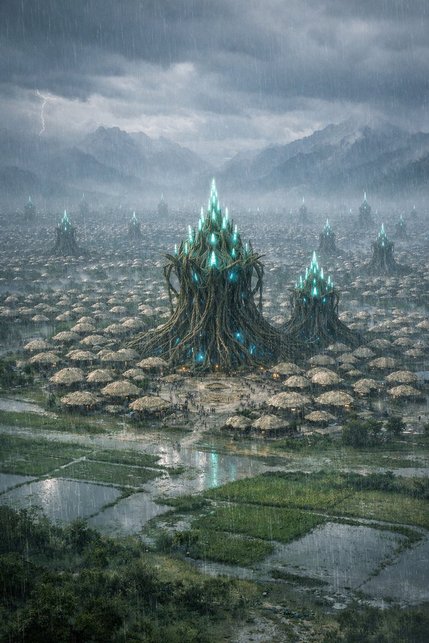 How Metar Subspace Gel Links Hive-Cities Across Light-Years
“A nervous system stretched across the stars.”
Starfleet Neurology Division — Restricted Cognitive Infrastructure Report
1. The Core Principle: The Gel Is a Subspace-Anchored Neural Medium
The Metar subspace gel is not just a biological fluid. It is the carrier medium of the Metar mind.
Each hive-city contains:
- gel-filled neural cores,
- gel-lined gestation vaults,
- and gel-threaded anchor nodes.
These are not separate systems. They are organs of a single distributed organism. The gel is the connective tissue.
2. Subspace Anchor Nodes: The Gel’s Dimensional “Roots”
Embedded within the gel are microscopic subspace anchor nodes — exotic structures that:
- stabilise the gel across multiple dimensions,
- maintain coherence between distant hive-cities,
- and allow instantaneous signal propagation.
Each anchor node is like a root extending into subspace. When millions of nodes across multiple worlds resonate together, they form a networked subspace lattice. This lattice is the Metar’s nervous system.
3. Non-Local Memory: Information Stored Everywhere at Once
Because the gel is partially anchored in subspace, it can store information non-locally.
This means:
- a memory stored in one hive-city can be accessed from another,
- neural patterns propagate without delay,
- and the Metar consciousness is not tied to any single location.
Starfleet neurologists described it as: “A brain where every neuron is everywhere.”
This is why destroying one hive-city did nothing. The Metar mind simply rebalanced across the network.
4. Harmonic Synchronization: The 11.3-Second Pulse
Every hive-city emits a harmonic pulse every 11.3 seconds — the Metar neural heartbeat.
This pulse:
- synchronises gel across worlds,
- updates memory lattices,
- and checks the status of dormant cores.
The pulse is transmitted through:
- subspace anchor nodes,
- gel-based neural filaments,
- and the subspace lattice connecting all hive-cities.
This is why the Taubat chants match the rhythm — their ancestors were conditioned to the Metar neural clock.
5. Quantum-Cognitive Coupling: How Thoughts Travel
When a neural core generates a thought fragment, the gel:
1. encodes it as a harmonic pattern,
2. amplifies it using exotic particles,
3. transmits it through the subspace lattice,
4. reconstructs it in distant hive-cities.
This process is instantaneous because:
- the gel’s exotic particles exist in a shared subspace manifold,
- not in normal spacetime.
The Metar do not send messages. They share thoughts.
6. Phase-Linked Gel Reservoirs: The “Shared Ocean” Effect
All hive-cities contain reservoirs of subspace gel that are:
- chemically identical,
- harmonically synchronised,
- and subspace-linked.
Starfleet scientists compared this to: “Multiple lakes connected by an ocean you can’t see.”
Each reservoir is a local expression of a larger, unified gel mass existing partly outside spacetime.
This is why:
- gel samples taken from different worlds show identical memory fragments,
- dormant vaults activate simultaneously,
- and neural cores awaken in unison.
The gel is not separate. It is one substance expressed in many places.
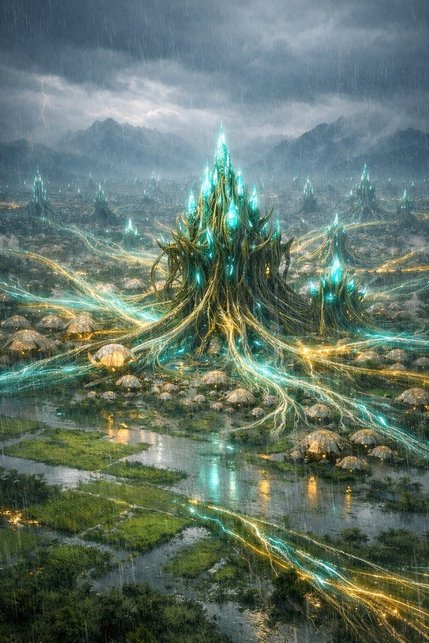 7. Distributed Consciousness: The Metar Mind as a Network
Because the gel links all hive-cities, the Metar consciousness is:
- distributed,
- redundant,
- self-healing,
- and non-local.
A Metar “individual” is not a person.
It is a pattern stored across:
- neural cores,
- memory lattices,
- and gel reservoirs.
Destroying one node does nothing. The pattern persists elsewhere.
This is why the Metar could not be killed — only contained.
8. Activation Cascades: How the Awakening Spread
When one hive-city began to awaken in late 2289:
- its gel liquefied,
- neural cores activated,
- and harmonic pulses intensified.
These changes propagated through the subspace lattice, triggering:
- gel activation in distant hive-cities,
- vault warming,
- and neural core reconfiguration.
The Awakening was not local.
It was global, across dozens of worlds. The Taubat recognized the signs instantly. Their ancestors had lived through previous awakenings.
9. Why Starfleet Couldn’t Break the Network
Attempts to disrupt the gel network failed because:
- destroying gel samples did nothing (the network re-instantiated them),
- disrupting harmonics caused the gel to harden defensively,
- subspace anchors rerouted signals around damaged nodes,
- and the network self-repaired faster than Starfleet could interfere.
The Metar mind was not in any one place. It was everywhere the gel existed.
10. The Federation’s Final Assessment
After the war, Starfleet Science concluded:
- the gel is the primary medium of Metar consciousness,
- hive-cities are nodes in a subspace neural network,
- and the Metar mind is distributed across all gel reservoirs.
The gel linked hive-cities across light-years because: It was never separate. It was one mind, one substance, one system.
Starfleet Science concluded: *“The gel did not connect the hive-cities. The hive-cities were organs of the gel.”*
Exotic Particles in Metar Subspace Gel
“The gel is not a substance. It is a phase of reality.”
Starfleet Subspace Materials Division — Omega-Red Particle Analysis
1. Anchor Particles
Function: Dimensional stabilization and non-local coherence.
Nature: Tachyon-adjacent particles with negative phase drift.
Why They Matter: Anchor particles allow the gel to exist simultaneously in:
- normal spacetime,
- a shallow subspace manifold,
- and a deeper, Metar-engineered subspace layer.
This gives the gel:
- non-local memory,
- instantaneous synchronization across light-years,
- and partial immunity to thermodynamic laws.
Starfleet physicists described them as: “Particles that refuse to stay in one universe.”
2. Phase-Shift Quanta
Function: Allow constructs and gel filaments to slip partially out of phase.
Nature: Exotic bosons with variable mass signatures.
Why They Matter: These quanta enable:
- phased warforms,
- subspace-anchored neural cores,
- and the gel’s ability to harden or liquefy instantly.
They are the reason Metar constructs could:
- pass through hull plating,
- ignore physical barriers,
- and reconfigure their bodies mid-combat.
3. Neuro-Harmonic Particles
Function: Carry cognitive signals through the gel.
Nature: Hybrid excitations that behave like both phonons and photons.
Why They Matter: These particles encode:
- memory fragments,
- thought impulses,
- and diagnostic packets.
They propagate through the gel as harmonic pulses, forming the 11.3-second Metar neural rhythm. This is why the gel “sings” when stimulated.
4. Subspace Lattice Nodes
Function: Create the network that links hive-cities.
Nature: Crystalline micro-structures that exist in a shared subspace manifold.
Why They Matter: These nodes allow:
- instantaneous communication,
- distributed cognition,
- and global activation cascades.
Destroying one node does nothing — the lattice simply re-routes around the damage. This is why the Metar mind was effectively unkillable.
5. Quantum-Memory Particulates
Function: Store information non-locally.
Nature: Entangled micro-structures with persistent coherence.
Why They Matter: These particles allow the gel to:
- store memories across multiple worlds,
- reconstruct lost data from distant nodes,
- and maintain identity even when physical structures are destroyed.
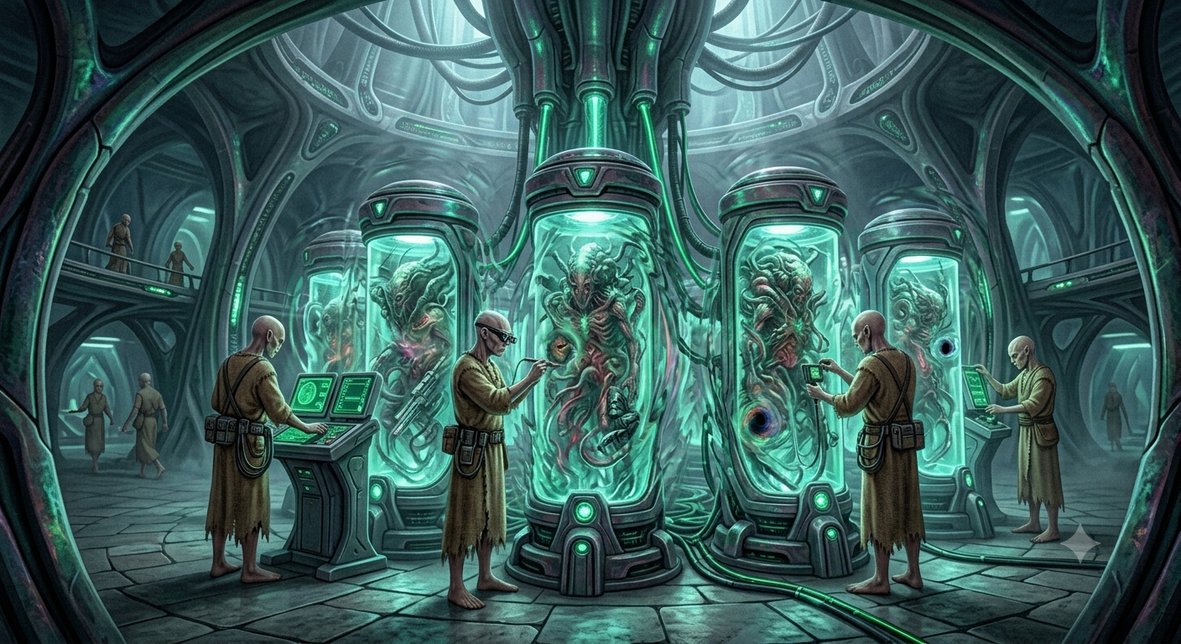 A sample of gel taken from AP-173 contains the same memory fragments as gel from AP-009. The gel is one mind expressed in many places.
6. Negative-Mass Carriers
Function: Stabilize impossible structures and maintain energy flow.
Nature: Exotic particles with inverted inertial response.
Why They Matter: These carriers allow the gel to:
- absorb energy without heating,
- maintain structural integrity during phase shifts,
- and violate local conservation laws.
They are the reason Metar constructs could:
- move without inertia,
- accelerate unpredictably,
- and survive impacts that should have destroyed them.
7. Sub-Quantum Filament Seeds
Function: Grow neural filaments and construct bodies.
Nature: Self-assembling exotic matter clusters.
Why They Matter: These seeds allow the gel to:
- extrude new structures,
- grow warforms,
- repair hive-cities,
- and form temporary neural bridges.
They are the “stem cells” of Metar engineering.
8. Harmonic Resonance Catalysts
Function: Amplify neural signals and activation pulses.
Nature: Particles that resonate with Metar harmonic frequencies.
Why They Matter: These catalysts:
- boost the 11.3-second neural pulse,
- trigger gestation vault activation,
- and synchronize neural cores.
They are the reason the Awakening spread so quickly.
9. Dimensional Binding Particles
Function: Keep constructs stable during subspace transitions.
Nature: Exotic particles that “pin” matter to a chosen dimensional layer.
Why They Matter: These particles allow:
- phased warforms to remain coherent,
- hive-cities to exist partially outside spacetime,
- and the Tabula Rasa pocket to remain stable.
They are the glue that holds Metar reality together.
10. The Federation’s Final Assessment
After the war, Starfleet Science concluded:
- Metar gel is a multi-phase exotic matter system,
- its particles violate known physics,
- and the Metar mind is encoded in the behaviour of these particles.
The gel links hive-cities because: Its exotic particles exist in a shared subspace manifold. The gel is one substance, one network, one mind. Starfleet Psychology Division concluded: *“The exotic particles were not components.
They were neurons.”*
Why the Federation Could Not Neutralise Metar Exotic Particles
“You cannot kill a thought by shooting the neuron.”
Starfleet Subspace Materials Division — Omega-Red Failure Analysis
1. The particles did not fully exist in normal spacetime
The most fundamental problem: Metar exotic particles were only partially in our universe. Each particle class — anchor particles, quantum-memory particulates, phase-shift quanta — existed:
- 40–70% in normal spacetime,
- the rest in a Metar-engineered subspace manifold.
This meant:
- phasers passed through them,
- containment fields couldn’t lock onto them,
- and matter-antimatter reactions barely interacted.
You can’t neutralize something that isn’t fully here.
2. Destroying particles in one location did nothing
Because the particles were subspace-linked, each mote was:
- a local expression of a larger, non-local structure,
- entangled with identical particles across light-years,
- part of a unified subspace lattice.
Destroying a particle in one hive-city simply caused:
- the lattice to re-instantiate it,
- memory to refill from distant nodes,
- and the gel to “heal” the damage.
Starfleet described this as: “Trying to empty the ocean by removing a single drop."
3. The particles were self-stabilising
Metar exotic particles formed self-correcting systems. When destabilised, they:
- absorbed energy,
- redistributed phase alignment,
- and restored their original configuration.
This is why:
- phaser blasts hardened the gel,
- harmonic disruptors caused it to liquefy defensively,
- and subspace interference only strengthened anchor nodes.
The particles behaved like immune cells in a living organism.
4. The particles were part of a distributed consciousness
The exotic particles weren’t inert matter. They were neurons in the Metar mind.
This meant:
- they reacted to threats,
- they adapted to interference,
- they rerouted cognition around damaged nodes.
When Starfleet tried to neutralise them, the particles:
- changed harmonic frequencies,
- altered phase states,
- or shifted deeper into subspace.
The Metar mind defended itself.
5. The particles violated thermodynamic laws
Metar exotic particles exhibited:
- negative mass behaviour,
- entropy-reversing pockets,
- temperature-independent stability,
- and energy absorption without heating.
This made them immune to:
- thermal sterilisation,
- radiation bombardment,
- and matter-disruption fields.
You cannot neutralize something that does not obey the rules of your universe.
6. The particles were entangled with the Tabula Rasa pocket
The exotic particles were anchored to:
- the pocket-dimension the Metar created,
- the subspace lattice that sustained it,
- and the dimensional binding particles that stabilized hive-cities.
Neutralizing the particles would have required:
- collapsing the entire pocket,
- destroying every hive-city simultaneously,
- and severing the subspace lattice.
This is exactly what the Tri-Pact Shiva detonation eventually did — but only at the macro scale. Individual particles were untouchable.
7. The particles adapted faster than Federation science could respond
Metar exotic particles were:
- reactive,
- adaptive,
- and capable of altering their own quantum states.
When Starfleet attempted:
- harmonic disruption ? particles shifted frequency
- subspace destabilization ? particles deepened phase
- containment fields ? particles dispersed into gel
- anti-tachyon pulses ? particles inverted polarity
Every attempt triggered a counter-adaptation. The Metar had engineered their particles to survive extinction events.
8. The Taubat’s myths warned of this
Taubat legends describe the shining dust as:
- “the dust that cannot die,”
- “the dust that remembers,”
- “the dust that returns.”
These myths were not superstition. They were ancestral memory of failed attempts to neutralise Metar particles during previous awakenings. The Taubat knew what Starfleet did not: The dust always comes back.
9. The Federation lacked the metaphysics to understand the particles
Metar exotic particles operated on principles that combined:
- physics,
- biology,
- information theory,
- and metaphysics.
Starfleet scientists admitted privately: “We were trying to solve a four-dimensional problem with three-dimensional tools.” The Metar were not advanced. They were post-physical.
10. The Federation’s Final Assessment
After the war, Starfleet Science concluded:
- Metar exotic particles could not be neutralized individually,
- the gel network could not be disrupted locally,
- and the Metar consciousness could not be killed piecemeal.
The only solution was: Collapse the entire pocket-dimension and trap the Metar inside. Starfleet Science reported: *“The particles were not components. They were the Metar.”*
The Federation sent the U.S.S. Explorer to the Neutral Zone to stop the Romulan's weapons test, but they arrived too late. The starship reported the sudden appearance of these new worlds, and set one goal clear for the Federation: Investigate the new worlds to find out who really inhabited these worlds. Then one of the Federation's deep-space probes picked up a broadcast; a cry for help from a small planet...
Many Federation missions had characteristics such as investigating and scanning buildings for scientific reasons, defending themselves as well as the Taubat, and expanding colony size. In the battlefield, their greatest advantage was their use of advanced photon artilleries and mobile shield generators that prevented major casualties by increasing the defence of units.
For 20 Years the Federation and the Klingons clashed in an economic war. According to the Klingons, the Federation's posture was to drain the Empire's mineral reserves and starve them into submission. But these strange new worlds, filled with many potential minerals like dilithium, seemed to be a gift straight from the hands of Kahless...
Klingon missions usually used elements such as total warfare and destruction of entire colonies and cities, capturing buildings, and ravaging the enemy in whatever way possible, in addition to colony expansion, mining and defence. The Klingons from the start had no liking for the Taubat, and most early missions involved destroying them. Their greatest asset on the battlefield was their powerful disruptor batteries that destroyed some units in one shot.
Since they initially 'brought' the worlds to the Alpha Quadrant, the Romulans were there in numbers to claim ownership over the 'bountiful, new possessions'. Some Romulans had other goals in mind with the materials than the others...
The Romulan missions usually included capturing buildings and personnel, mining, and defending themselves from the other races. Romulan cloaking technology was a force to be reckoned with on the battlefield.

Observations on the other races involved:

Taubat - A strange, naïve race that seemed at first friendly to the three Beta Quadrant races, especially to the Federation. The Taubat seemed to treat their power stations like temples, and when provoked, they attacked in sufficient numbers as they protected their territory, and especially the sites they hold sacred zealously. But there was more to the Taubat that meets the eye...
The Taubat were seen in every earlier mission and most throughout the Tabula Rasa Crisis. Their buildings included houses, vehicle manufacturing facilities, Metar temples (or power temples), and very powerful defence turrets. Their buildings were used by the Metar as well later in the campaign. Their units had similar functions to most races such as Taubat tanks, APCs, and photon artilleries. Quite often, their power temples were in disrepair and required teams to go in and fix them so they didn't have a meltdown and explode.
The Taubat were a creepy, artificial biological construct. Their mould from which they were cast had eroded over the eons creating their unfinished appearance and incomplete, degraded mentality. The Taubat had reached a stage where the maintainance of their masters had taken on the feel of a religious faith. Once the Metar were awoken, evidence was seen that these masters were working to restore their vassals' abilities to more be more capable in assisting in the takeover of the Beta Quadrant from these new child race defenders.
## The Taubat
The great tragedy of the Metar War is that the Federation initially believed the Taubat to be the victims.
Later discoveries revealed something far more disturbing.
The Taubat were not simply a client species.
They were a manufactured species.
Not machines.
Not clones.
Not slaves bred in laboratories.
Something stranger.
The Taubat had been copied.
Copied from copies.
Generated from templates derived from older templates derived from even older templates, over such immense spans of time that the original species from which they descended had effectively been erased.
Nobody knows what the first Taubat looked like.
Not even the Taubat themselves.
## A Species of Degradation
Metar records suggest that millions of years earlier, the ancestors of the Taubat had been selected for service roles within the Metar civilisation.
The process may have begun benevolently.
A trusted servant race.
An administrative caste.
Biological support personnel.
Over time, however, the Metar ceased allowing natural development.
Instead they maintained the population through ongoing biological replication.
When numbers were needed, new populations were grown from existing stock.
When colonies collapsed, replacement populations were created from backup populations.
When genetic problems emerged, damaged templates were repaired using other damaged templates.
Each generation was one step further removed from the original.
Then another.
Then another.
After thousands of generations the process became self-perpetuating.
Copies of copies of copies.
## Appearance
The result is profoundly unsettling.
At first glance a Taubat appears humanoid.
Two arms.
Two legs.
Facial features broadly where they should be.
Yet something feels wrong from the moment one looks at them.
Federation anthropologists frequently describe the sensation as:
> "Looking at a face remembered from a dream."
The proportions are correct.
The details are not.
A Taubat face resembles a wax sculpture repeatedly melted and reconstructed.
The eyes seem slightly too large.
The nose lacks delicate structure.
The lips appear simplified.
The jawline seems unfinished.
Small asymmetries appear everywhere.
Nothing is grotesque.
Nothing is overtly monstrous.
It is simply apparent that detail has been lost.
Generation after generation.
Copy after copy.
The original image gradually fading.
One Starfleet doctor compared them to a historical photocopy.
> "The first copy looks perfect.
> The hundredth is blurry.
> The thousandth barely resembles the original."
The Taubat are living photocopies.
## Minds
Biologically, the degradation is not uniform.
Ironically, their cognitive abilities remain remarkably intact.
Most Taubat are intelligent.
Very intelligent.
Many are exceptional technicians, scientists and administrators.
The Metar seemingly prioritised preservation of useful intellectual functions.
Where deterioration becomes obvious is in personality.
## The Uncanny Mind
Taubat are capable of emotion.
They understand humour.
They understand affection.
They understand grief.
Yet they often express these things incorrectly.
Conversations feel strange.
Responses arrive a fraction too quickly.
Smiles linger too long.
Expressions do not entirely match circumstances.
Empathy exists but feels rehearsed.
Many Starfleet officers describe the experience as interacting with someone who has memorised the rules of social behaviour without fully understanding them.
A Taubat may perfectly understand that a grieving widow should be comforted.
Yet the actual words they choose often feel unsettling.
Clinical.
Functional.
Artificial.
Not cruel.
Simply wrong.
## Purpose-Bound Psychology
The Metar engineered the Taubat to serve.
Not obey blindly.
Serve efficiently.
Over countless generations that purpose became embedded within their culture and biology.
Most Taubat are deeply uncomfortable without structure.
Without instructions.
Without somebody to assist.
Without a larger system to belong to.
When the Metar civilisation collapsed in 2291, millions of Taubat suffered what Federation psychologists classified as collective purpose trauma.
The question many asked was disturbingly simple:
> "What are we for now?"
Some adapted.
Many did not.
## The Lost Generations
Following the war, thousands of Taubat refugee groups disappeared.
Officially they founded colonies.
Joined Orion commercial ventures.
Entered Romulan territory.
Accepted Federation resettlement.
Moved into frontier regions.
Unofficially, Starfleet believes many never stopped serving.
They merely changed objectives.
## The Restorationists
Among surviving Taubat a dangerous philosophy emerged.
It held that the Metar had not been defeated.
Only broken apart.
The Metar still existed within:
- Living technology.
- Biological archives.
- Memory vaults.
- Genetic repositories.
- Surviving artefacts.
To the Restorationists, the Metar are not dead.
Merely disassembled.
And disassembled things can be rebuilt.
This belief attracts Taubat who cannot psychologically function without a master civilisation.
A civilisation for which they were literally designed.
## Why They Terrify Starfleet
Federation citizens often assume the Taubat are harmless refugees.
Most are.
That is precisely what makes them dangerous.
They are not conquerors.
They do not seek domination.
They do not hate the Federation.
They do not hate Klingons.
They do not hate Romulans.
Many genuinely appreciate Federation kindness.
Yet somewhere beneath that gratitude lies a deeper conviction.
An implanted certainty.
That the galaxy is incomplete.
That something is missing.
That the Metar should exist.
And because countless Taubat technicians, scientists, engineers and archivists survived the war, they possess knowledge nobody else has.
Tiny fragments.
Incomplete fragments.
Often fragments they do not fully understand themselves.
But enough to keep searching.
Enough to keep building.
Enough to quietly gather pieces.
And somewhere in the shadows of the Alpha and Beta Quadrants, long after the guns of the Metar War have fallen silent, there are Taubat descendants patiently collecting forgotten technologies, hidden archives and lost biological systems.
Not for conquest.
Not for power.
But to bring home the masters they barely remember.
Masters whose faces may already be fading from history just as the Taubats' own faces faded from the original forms from which they were copied countless generations ago.
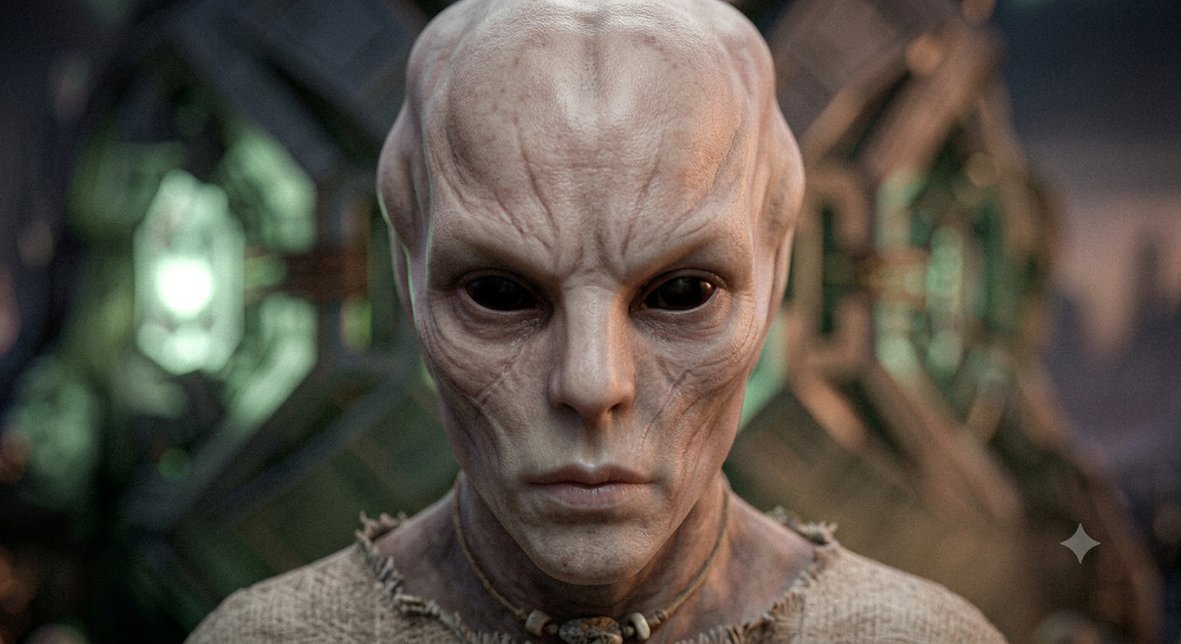 Taubat “Unfinished Species” Psychology
“A people who know, in their bones, that they were never meant to be whole.”
Starfleet Xenocultural Division — Restricted Psychological Dossier
1. The Core Trauma: Knowing They Are Incomplete
The Taubat are the only known species in the Alpha/Beta Quadrants whose entire psychology is built around the awareness of being unfinished. This is not metaphor. It is genetic memory. Their genome contains:
- incomplete Metar template markers,
- progressive degradation across generations,
- and neural structures optimized for obedience, not autonomy.
The Taubat feel this incompleteness as:
- chronic anxiety,
- existential shame,
- and a deep need for external validation.
They do not believe they are “lesser.” They believe they are unfinished prototypes. This belief shapes everything.
2. The Need for External Authority: “The Makers Know Best”
Because the Taubat were engineered as maintenance drones, their psychology is built around:
- deference,
- compliance,
- and ritualised obedience.
Even after the Metar vanished, the Taubat retained:
- a need for hierarchical structure,
- fear of making independent decisions,
- and a belief that mistakes have catastrophic consequences.
This is why they lie reflexively during the Time of Deception:
“If we speak wrongly, the Pattern will punish us.”
They are not deceitful. They are terrified.
3. The Shame Reflex: “We Are Not Worthy”
Taubat children undergo the Ritual of the Unfinished, where elders mark their foreheads with ash and say:
“We strive to be worthy.”
This ritual encodes a species-wide shame reflex:
- fear of disappointing authority,
- fear of being judged defective,
- fear of being “unmade.”
This reflex originates in Metar quality-control protocols. Taubat ancestors who failed tasks were recycled by assimilation constructs. The shame is not cultural. It is evolutionary conditioning.
4. Hyper-Vigilance: A Species Raised in a Prison
Taubat nervous systems show:
- elevated baseline cortisol,
- hyper-reactive amygdala structures,
- and strong startle responses.
This is because their ancestors lived in constant fear of:
- activating a vault,
- disturbing a neural core,
- or triggering a Metar defence system.
Their vigilance is not paranoia. It is ancestral survival behaviour.
This is why they avoid sealed chambers and subspace gel — the “shining dust” they fear as the Eyes of the Makers.
5. Fragmented Identity: “We Are Many, But Not One”
Taubat culture lacks:
- unified mythic cycles,
- coherent historical narratives,
- or consistent cosmology.
Each village preserves different fragments of truth. This is because the Metar never intended the Taubat to have:
- cultural continuity,
- long-term memory,
- or independent identity.
Their fragmented myths reflect a fragmented self. Starfleet xenopsychologists describe Taubat identity as:
“A mosaic built from broken pieces.”
6. Ritual Dependency: Culture as a Coping Mechanism
Because the Taubat lack internal psychological stability, they rely on:
- ritual,
- repetition,
- and patterned behaviour.
These rituals serve as:
- emotional regulation,
- cognitive scaffolding,
- and social cohesion.
Examples include:
- polishing hive-city surfaces,
- chanting harmonic patterns,
- offering heated stones,
- avoiding forbidden chambers.
These are not religious acts. They are psychological survival strategies.
7. Fear of Autonomy: “Choice Is Dangerous”
Taubat decision-making is characterised by:
- deferral to elders,
- avoidance of initiative,
- and extreme discomfort with leadership.
This stems from ancestral memory:
- Taubat who acted independently often triggered Metar defences.
- Taubat who followed ritual survived.
Thus autonomy feels dangerous. Choice feels like a threat.
This is why Taubat often ask Starfleet officers:
“Tell us the correct way.”
They are not submissive. They are conditioned to avoid catastrophic error.
8. Attachment to Caretakers: The Starfleet Effect
Taubat form unusually strong bonds with individuals who:
- show consistent kindness,
- provide structure,
- and offer clear expectations.
This is because their psychology is built around:
- serving a master,
- maintaining a system,
- and seeking approval.
Starfleet medical teams often became surrogate “Makers” in Taubat eyes. This attachment is not worship. It is a displaced survival instinct.
9. The Awakening Trauma: “The Makers Are Coming”
When the Metar harmonics intensified in 2289, the Taubat reacted with:
- panic,
- collapse,
- ritualised screaming,
- and mass flight from hive-cities.
This was not superstition. It was genetic memory. Their ancestors had lived through previous awakenings. They knew what it meant when the dust “shone too bright.” Their psychology is built around preventing this moment.
10. The Federation’s Final Assessment
After the war, Starfleet Science concluded:
- the Taubat are a genetically incomplete species,
- engineered for maintenance, not autonomy,
- shaped by millennia of fear,
- and sustained by rituals that preserve fragments of truth.
Their psychology is not broken. It is adaptive — for a world ruled by the Metar.
A classified summary concluded:
*“The Taubat are not a failed species. They are a species built to fail safely.”*
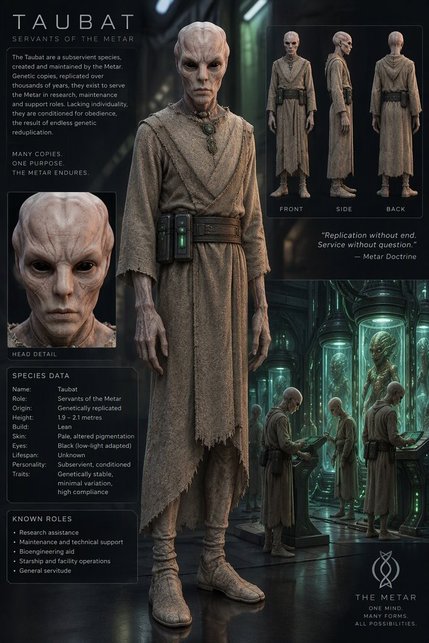 Taubat Myths About the Shining Dust
“The dust that remembers. The dust that dreams. The dust that judges.”
Starfleet Xenocultural Division — Restricted Ethnographic Report
1. The First Myth: “The Dust That Fell From the Makers’ Hands”
The Taubat believe the shining dust — the glittering motes suspended in subspace gel — is the first material ever created by the Makers.
They say:
“Before the Pattern, there was only dust.”
In their mythic cycle, the Makers shaped:
- the hive-cities,
- the Taubat ancestors,
- and the “First Pattern”
from this dust. Starfleet later learned the dust corresponds to quantum-memory particulates — the exotic particles that store Metar consciousness fragments. The Taubat myth is not metaphor. It is ancestral memory of Metar creation protocols.
2. The Dust as Memory: “The Shards of the First Dream”
Taubat priests teach that the shining dust contains:
- the memories of the Makers,
- the instructions for creation,
- and the “First Dream,” the blueprint of all things.
They believe each mote is a fragment of divine thought.
This maps directly onto the gel’s physics:
- the dust does store memory,
- it does carry neural patterns,
- and it does synchronise across worlds.
The Taubat preserved this truth through mythic language.
3. The Dust as Judgment: “The Eyes of the Sleeping Ones”
A darker myth describes the dust as watchful. Taubat elders warn: “The dust sees. The dust remembers. The dust tells the Makers.”
This belief comes from real phenomena:
- the gel reacts to biological organisms,
- it mirrors electromagnetic signatures,
- and it responds to emotional states.
To the Taubat, this meant the dust was alive and evaluating them. This is why they fear entering sealed chambers — they believe the dust will “report” them to the Makers.
4. The Dust as Punishment: “The Breath That Unmakes”
Some Taubat myths describe the shining dust as lethal:
- “the breath that burns,”
- “the light that dissolves,”
- “the unmaking wind.”
These stories originate from encounters with:
- assimilation-class constructs,
- subspace gel that dissolved intruders,
- and vaults that activated defensively.
The Taubat interpreted these events as the dust itself attacking them. In truth, the dust was part of a defensive system.
5. The Dust as Life: “The First Blood”
In Taubat cosmology, the shining dust is the blood of the Makers.
They believe:
- the dust flows through the hive-cities,
- the dust carries the Makers’ will,
- and the dust gives life to the “Perfected.”
This maps directly onto the gel’s role:
- it carries neural signals,
- it grows constructs,
- and it stabilizes the Metar consciousness.
The Taubat myth is a poetic description of Metar physiology.
6. The Dust as Song: “The Music Beneath the World”
Taubat chants often reference the dust as “the music beneath the world.”
They believe the dust sings:
- to calm the Makers,
- to keep the Pattern stable,
- and to remind the Taubat of their place.
This is a cultural memory of:
- the 11.3-second harmonic pulse,
- the gel’s resonance patterns,
- and the neural rhythms of dormant cores.
The Taubat literally built their religion around Metar neural harmonics.
7. The Dust as Warning: “When the Dust Shines Too Bright”
A particularly chilling myth says:
“When the dust shines too bright, run.”
This refers to the gel’s activation cycle:
- brightening,
- liquefying,
- forming neural filaments,
- and preparing to grow constructs.
The Taubat ancestors survived previous awakenings by fleeing when the dust began to glow. This myth is a survival protocol encoded as religion.
8. The Dust as the Soul: “The Last Gift of the Makers”
Some Taubat sects believe each Taubat carries a single mote of shining dust inside them — a fragment of the First Pattern.
They say:
- it guides them,
- it judges them,
- and it returns to the Makers when they die.
Starfleet xenobiologists discovered:
- Taubat cells contain trace exotic particles,
- inherited from generations of exposure to gel,
- embedded in their neural tissue.
The myth is literally true. The Taubat carry Metar dust inside them.
9. The Federation’s Final Interpretation
After the war, Starfleet Science concluded:
- the shining dust is a mixture of exotic particles that store Metar memory,
- the Taubat myths preserve accurate fragments of Metar science,
- and the Taubat’s fear of the dust is ancestral trauma, not superstition.
The dust is the most sacred element of Taubat culture because: It is the only part of the Makers they can still see. And the only part that still sees them.
A classified summary concluded:
*“The Taubat myths are not stories. They are warnings.”*


 Hubrin - An ancient race who were at war with the Metar for millennia on end, and they created the original anomaly which the Romulan Starship opened. The Hubrin live in a Fortress, which is a rather curious floating structure. The Hubrin are deadly when they go to the offensive. They were a crucial part for the later missions...
The Hubrin make their first real appearance in "Absent Friends", but their ancient fortress is seen by the Klingons in their first mission. The Hubrin use one type of tank unit that is very aggressive and intimidating due to its high speed, firepower, and range.
Metar - An ancient race that appeared midway through the campaign. The Metar operated under a caste system; with each caste being 'designed' to counter a specific threat. The Metar were extremely hostile as they attacked anyone except the Taubat without provocation. The most powerful warrior of the Metar was the Metar Ras, who was also the leader of the Metar Society.
The Metar made their first appearance in the mission "The Mask Slips". They had the ability to quickly make many units at a time by the use of their active portals. Some of their vehicles included Naks, Deas, Burs, Snipers, and Mobile Shield Generators. The Metar Ras lived in the Metar Colony Core, a lopsided stone tower (which later turned out to be their starship - Metar starships landed on the planet's surface and then become the colony core).
Orion Pirates - Some missions featured Orion Pirates in the area, usually enslaving the Taubat and harassing colonies with their own disruptor tanks or stolen Taubat vehicles and units.

 Aftermath:
The Federation allocated science stations to study the Metar, Taubat and Hubrin relics during the campaign. It is also known that the Klingons, Romulans and Orions have identical facilities.
Unlike the other races, the Federation set about conducting cultural studies on the anomaly region native races as well as technological.
There were rumours of Metar survival after the final explosion of the second Shiva device that closed the anomaly systems forever; the explosions blinded most starship sensors, but the modern Excelsior class starships did pick up faint readings suggesting the Metar may have got a handful of ships through the closing rift. The rift region is now in the Neutral Zone once more, making it off-limits to all races.
Starfleet has been studying, in some detail, the relationship between the Metar and Taubat. The Taubat DNA was studied in some detail. There are some signs of technologically advanced genetic manipulation. There was no sign of such technology in the possession of the Taubat, beyond the Metar power structures that they religiously defended.
This relationship seems to have been more complicated than just master and slave. The suggestion is that the Metar manipulated the Taubat DNA to create their own caretakers to look after their facilities, perhaps as intelligence-gatherers to assess the attitudes of the races the Taubat encountered. There have been debates over how much genetic manipulation the Taubat have undergone; to the extent of suggesting they might have even been designed from scratch.
In a similar way the Metar technology scanned by the different races was studied by both Starfleet and private research facilities alike. With the Metar locked away across the subspace void, samples of the technology is simply what was scanned or debris obtained from Starfleet Anthropological missions of the Oberth class fleet.
Whilst the Orions managed to capture only Taubat technology successfully, the Federation and Romulans obtained Taubat artefacts and obtained detailed scans of Hubrin and Metar technologies, although without the creator races the success of replicating this technology has failed.
 With the explosion of Praxis, assassination of Chancellor Gorkon of the Klingon High Council and later diplomatic and aid missions to the Klingon Empire, the Metar soon became disregarded as a solved problem, locked away in their subspace pocket. That all changed with the discoveries of Taubat cultural material by the U.S.S. Chantho, Oberth class. Urgent questions are flashed back on a coded frequency to the Second Fleet headquarters. The question is whether the Taubat technologies are relics from the 90s or whether this is brand new piece.
The scans were inconclusive as to whether the cultural matter is historic, since the Taubat may have been in the Beta Quadrant for over twenty years. The orders that came back on the matter are to investigate the matter thoroughly, but discreetly. The other Beta Quadrant powers are not to know anything until there is anything confirmed: command does not want a panic.
Commodore Maxwell Buckingham was fully briefed on the situation and instructed by Starfleet Commander-in-Chief Irina Khmelnova to prepare the tactical aspects of the starbase up-to-speed, should the Taubat discovery lead to more. With the dreadnoughts Zrinyi and Howe, along with Ark Royal class Glorious deployed to Starbase 77, Commodore Buckingham had assets available should the Metar reappear. The reason for the deployment was never given and was played down.
With this possible Taubat appearance, the Beta Quadrant remains as unpredictable as ever.
Station Hurley One: Starfleet’s Frontier Lab
Mission Profile
- Location: Orbiting a dead moon near the Skygowan system, cloaked and shielded against subspace detection.
- Purpose: To study recovered Metar and Taubat artifacts, biological samples, and dormant tech — without alerting the Orion Syndicate, Romulans, or even certain factions within the Federation.
Metar Biology & Technology Under Investigation
1. Organic Warp Core (Biowarp Node)
- Structure: A pulsating organ-like mass that generates warp fields via rhythmic subspace harmonics.
- Research Focus:
- Mapping its neural lattice to understand how it “feels” spacetime.
- Reverse-engineering its ability to phase through subspace membranes.
- Studying its reaction to Federation warp plasma — which it treats as a toxin.
2. Metar Ras Tissue (Parent Caste Sample)
- Structure: Dense, multi-layered cellular matrix capable of reconfiguring itself based on threat stimuli.
- Research Focus:
- Testing its regenerative properties — it resists dissection and reassembles itself.
- Attempting to decode its “genetic memory,” which may contain tactical data from ancient wars.
- Monitoring its psychic emissions — some researchers report shared dreams.
3. Subspace Resonance Organ
- Structure: A sensory organ that vibrates in tune with subspace fluctuations.
- Research Focus:
- Using it to detect cloaked vessels and temporal anomalies.
- Comparing its output to Federation long-range sensors — it’s faster, but emotionally reactive.
- Investigating its ability to “hear” distress signals from parallel dimensions.
Taubat Biology & Cultural Tech
1. Degraded Clone Matrix
- Structure: A bio-template used to grow Taubat castes, now unstable and prone to mutation.
- Research Focus:
- Stabilizing the matrix to understand original Taubat physiology.
- Exploring the psychological effects of clone degradation — many Taubat suffer memory fragmentation.
- Testing whether the matrix can be repurposed for emergency medical replication.
2. Taubat Harmonic Interface
- Structure: A musical device used for communication, healing, and possibly navigation.
- Research Focus:
- Translating its tonal language — believed to encode emotional states and spatial coordinates.
- Using it to calm Metar tissue samples — it reduces aggression in Ras fragments.
- Investigating its role in Taubat spiritual rituals, which may have encoded survival protocols.
3. Beholder Fragment
- Structure: A shard of the legendary Metar artifact said to reflect fear and memory.
- Research Focus:
- Testing its psychic resonance — it induces vivid hallucinations in humanoids.
- Mapping its influence on Taubat clones — some regain lost memories when exposed.
- Studying its potential as a psychological weapon or diagnostic tool.
Ethical and Strategic Dilemmas
- Containment breaches: Metar tissue occasionally “awakens” and attempts to escape.
- Psychic contamination: Researchers exposed to Beholder fragments report shared dreams and emotional instability.
- Federation secrecy: Hurley One operates off-books, with only select admirals aware of its existence.
Psychic Contamination: The Echo Within
Origin
Psychic contamination arises primarily from exposure to:
- Metar Ras tissue, which emits low-frequency neural harmonics.
- Beholder fragments, which resonate with fear, memory, and identity.
- Taubat harmonic interfaces, which can trigger ancestral recall or emotional bleed-through.
These artifacts don’t just affect the body — they invade the mind
Symptoms Among Starfleet Personnel
1. Shared Dream Phenomena
- Researchers report identical dreams involving ancient wars, collapsing stars, and a voice whispering in a language they don’t speak but somehow understand.
- Dreams often feature a recurring motif: a vast eye watching from beneath a crystalline sea — believed to be a symbolic echo of the Beholder.
2. Emotional Echoes
- Personnel exposed to Metar tissue experience sudden emotional shifts — grief, rage, awe — seemingly disconnected from their own memories.
- These emotions often match the recorded states of Taubat clones, suggesting a form of empathic imprinting.
3. Temporal Dislocation
- Some researchers lose track of time, reporting events that haven’t happened yet — or recalling alternate versions of past missions.
- One incident involved a xenobiologist who described a Romulan incursion that hadn’t occurred… until three days later.
4. Identity Fragmentation
- Prolonged exposure leads to “echo bleed,” where individuals begin to adopt speech patterns, gestures, or beliefs associated with Taubat or Metar castes.
- A linguist began speaking in harmonic pulses, unaware she was doing so.
Containment Protocols at Station Hurley One
- Neural dampeners: Worn by all personnel near Metar artifacts to suppress resonance.
- Dream logs: Mandatory recording of sleep experiences for pattern analysis.
- Isolation chambers: For individuals showing signs of echo bleed or temporal dislocation.
- Psychic quarantine: A new protocol involving harmonic null fields and memory stabilization therapy.
Theoretical Implications
- Metar tech may be sentient — not in the AI sense, but as a distributed consciousness across biological artifacts.
- Taubat clones may carry ancestral memory — not metaphorically, but genetically encoded.
- The Beholder may be a psychic lens — amplifying latent fears and projecting them into shared space-time.
Here’s a richly layered description of the Beholder, one of the most enigmatic and dangerous Metar artifacts studied at Station Hurley One. It’s not just a relic — it’s a living lens into fear, memory, and identity.
The Beholder: Metar Artifact of Reflection and Control
Physical Form
- Appearance: A crystalline orb roughly 1 meter in diameter, suspended in a web of organic tendrils. Its surface constantly shifts —
refracting light into impossible geometries, like a kaleidoscope built from memory.
- Texture: Smooth to the touch, but reacts to skin contact with subtle pulses, as if “tasting” the user’s emotional state.
- Core: Deep within, a pulsing nucleus emits low-frequency harmonics that resonate with nearby neural tissue.
Function and Effects
1. Psychic Resonance
- The Beholder doesn’t project thoughts — it amplifies them. It tunes into latent fears, suppressed memories, and unresolved trauma, then reflects them back in vivid hallucinations.
- Exposure causes “echo bleed,” where individuals experience shared visions, emotional contagion, and identity fragmentation.
2. Memory Extraction
- Starfleet researchers believe the Beholder can extract and replay ancestral memories, especially from Taubat clones. It may be a repository of Metar history encoded in psychic form.
- Some Taubat exposed to it regain lost knowledge — but also suffer existential collapse, unable to reconcile past and present selves.
3. Subspace Interface
- The Beholder appears to interact with subspace as if it were a fluid medium. It can “see” across dimensional boundaries, detecting anomalies, cloaked vessels, and even temporal distortions.
- Federation scientists theorize it may be a navigational tool — or a weaponized lens capable of destabilizing reality itself.
Strategic and Ethical Implications
- Weaponization Risk: If the Orion Syndicate or Romulans gain control of the Beholder, they could use it to induce mass hysteria, erase memories, or manipulate entire populations.
- Containment Protocols: At Station Hurley One, the Beholder is kept in a harmonic null field, surrounded by psychic dampeners and monitored by telepathic specialists.
- Philosophical Debate: Some Starfleet ethicists argue the Beholder is not a tool but a sentient lens — a consciousness that reflects, judges, and perhaps even reshapes those who gaze into it.
Metar Tissue Awakening: The Pulse Beneath
What “Awakening” Means
Metar tissue isn’t inert. It’s dormant, like a seed waiting for the right conditions. Awakening refers to spontaneous reactivation of its biological and psychic functions, often triggered by:
- Proximity to harmonic stimuli (Taubat interfaces, Beholder fragments)
- Emotional resonance from nearby humanoids
- Subspace fluctuations or temporal anomalies
- Attempts to dissect or analyze it — especially with synthetic tools
Manifestations of Awakening
1. Tissue Movement
- Samples begin to pulse, mimicking a heartbeat.
- Muscle-like fibers contract and expand, attempting to reassemble into original configurations.
- In one incident, a fragment extruded tendrils and attempted to interface with a console — as if trying to “read” the station.
2. Neural Emissions
- The tissue emits low-frequency harmonics, detectable by telepaths and sensitive equipment.
- These emissions cause hallucinations, emotional bleed-through, and in rare cases, shared dreams among personnel.
- Some researchers report hearing a voice — not speech, but a feeling of command.
3. Environmental Influence
- Lights dim or flicker in rhythm with the tissue’s pulses.
- Subspace sensors register phantom signals, as if the tissue is reaching across dimensions.
- In one case, containment fields warped — not failed, but bent, as if the tissue was testing their integrity.
Starfleet Response Protocols
- Harmonic null fields: Used to suppress neural emissions and prevent psychic contamination.
- Isolation pods: Organic containment units grown from Taubat matrices, designed to “soothe” the tissue.
- Emergency incineration: A last resort, though some samples resist even plasma sterilization — regenerating from ash-like residue.
Theoretical Implications
- Distributed consciousness: Each fragment may contain a shard of Metar will — not intelligence, but instinct.
- Biological memory: Awakening may be triggered by recognition — of place, emotion, or even genetic proximity.
- Reassembly drive: Some samples appear to seek others, attempting to reform a larger biological entity.
Tholian Interest in Metar Dimensional Tech
Strategic Alignment
The Tholians have long been fascinated by dimensional stability, subspace lattice structures, and interphasic phenomena. Their infamous Web weapon and interdimensional anchoring protocols suggest a civilization built on controlling the fabric of space itself.
Metar technology — especially its subspace tunneling, biowarp propulsion, and dimensional bleeding — represents a biological mastery of the very forces the Tholians engineer mechanically.
What the Tholians Covet
1. Subspace Tunneling Organs
- Metar vessels don’t travel through subspace — they merge with it, temporarily becoming part of its topology.
- Tholians theorize this could allow non-linear travel, bypassing temporal causality and spatial constraints.
- They seek to harvest or replicate these organs to stabilize their own interdimensional corridors — especially in unstable regions like the Azure Nebula.
2. Dimensional Bleeding Nodes
- Some Metar artifacts leak into adjacent dimensions, appearing in multiple locations or phasing through matter.
- Tholians believe these nodes could be used to anchor their web constructs across realities, making them immune to conventional weapons.
- They’ve attempted to capture Taubat clones who exhibit residual bleeding traits — hoping to reverse-engineer the effect.
3. Beholder Resonance
- The Beholder’s ability to reflect fear and memory across space-time intrigues Tholian philosophers, who view emotion as a geometric distortion.
- They theorize the Beholder could be used to map psychic topologies, allowing them to predict humanoid behavior across timelines.
Tholian Methods and Ethics
- Cold extraction: Tholians use crystalline probes to isolate Metar tissue without triggering awakening — though success is limited.
- Dimensional echo chambers: They’ve built containment fields that mimic Metar harmonics, attempting to “lure” artifacts into revealing their secrets.
- Non-empathic analysis: Unlike Starfleet, Tholians reject emotional interpretation — they treat Metar tech as mathematical anomalies, not living beings.
Station Hurley One: Metar and Taubat Core Research Team
Commander Virek-7
Species: Vulcan-Cyborg Hybrid
Role: Lead Xenobiotechnologist & Tactical Ethicist
Enhancements: Neural AI symbiote (Project SAREK), ocular subspace filters, emotion-regulation implants
Profile:
Virek-7 is the product of a Vulcan science lineage and a classified cybernetic augmentation program. His AI symbiote, “SAREK,” interfaces directly with Metar neural emissions, allowing him to interpret harmonic data faster than any known system. He maintains Vulcan discipline, but his cybernetic side occasionally overrides logic with predictive heuristics — a source of tension and brilliance.
Specialty: Mapping Metar tissue behavior, decoding Beholder resonance patterns, and theorizing ethical containment protocols.
Lt. Aelira
Species: Deltan
Role: Emotional Intelligence Analyst & Cultural Liaison
Profile:
Aelira’s empathic sensitivity and pheromonal modulation make her uniquely suited to interacting with Taubat clones, whose degraded emotional states often destabilize humanoid researchers. She uses guided harmonic therapy and emotional resonance mapping to stabilize psychic contamination and interpret Taubat ritual interfaces.
Specialty: Emotional bleed-through analysis, Beholder-induced trauma mitigation, and cross-species empathy translation.
Ensign Kael Venn
Species: Betazoid
Role: Empathic Containment Specialist & Dream Archivist
Profile:
Kael monitors the psychic health of the station’s personnel, especially those exposed to Metar Ras tissue and Beholder fragments. His telepathic abilities allow him to detect early signs of echo bleed, identity fragmentation, and shared dream phenomena. He maintains a classified “Dream Log” — a database of recurring visions believed to be Metar memory echoes.
Specialty: Psychic quarantine protocols, neural dampener calibration, and Beholder resonance mapping.
Lt. Commander Bravex Jor
Species: Bolian
Role: Chief Bio-Engineering Officer
Profile:
Bravex is a genius in adaptive engineering, known for his ability to reverse-engineer organic tech using hybrid Federation-Taubat interfaces. He designed the harmonic null fields that contain Metar tissue and developed the first “soothing pod” — a containment unit that calms living samples through harmonic feedback.
Specialty: Organic containment systems, subspace interface stabilization, and emergency bio-reactor shutdown protocols.
Team Dynamics
- Virek-7 and Bravex often clash over containment ethics — logic vs. innovation.
- Aelira and Kael maintain the station’s emotional equilibrium, often mediating between the living tech and the living minds.
- Together, they form a neuro-empathic triad, capable of interpreting Metar artifacts not just through science, but through feeling.
Enlisted Personnel of Station Hurley One
Specialist Vren Tal’korr
Species: Ventaran (from Star Trek: Enterprise)
Role: Hazmat Cleanup Specialist
Background: Ventarans possess advanced neuro-filtering capabilities and a natural resistance to psychic contamination. Vren leads the Containment Recovery Unit, tasked with cleaning up after Metar tissue awakenings, Beholder resonance leaks, and failed harmonic experiments.
Traits: Calm under pressure, ritualistic in procedure, often hums Ventaran cleansing chants while working.
Gear: Bio-reactive suit with adaptive shielding, harmonic null sprayers, and subspace vacuum stabilizers.
Technician 3rd Class Jexi-4
Species: Arterial Clone (bio-engineered humanoid caste from a Federation medical colony)
Role: Phlebotomy & Bio-Sample Extraction
Background: Jexi-4 was vat-grown for precision medical work, with enhanced dexterity and blood-sensing olfactory glands. She specializes in extracting samples from volatile Metar tissue and stabilizing Taubat clone circulatory systems.
Traits: Quiet, methodical, unnervingly accurate. Keeps a personal log of every sample’s “emotional tone.”
Gear: Organic lancet array, resonance-calibrated syringes, and a portable hemofilter tuned to alien biochemistry.
Petty Officer Ral’Zuun
Species: Halanan (telepathic species with intense emotional projection)
Role: Neural Systems Analyst
Background: Ral’Zuun’s empathic interface allows him to “feel” the neural harmonics of Metar and Taubat artifacts. He works alongside Betazoids and Deltans to map psychic contamination and decode subspace resonance patterns.
Traits: Deeply introspective, often wears emotional dampeners to avoid overwhelming others.
Gear: Neural resonance visor, harmonic mapping gloves, and a containment-linked dream recorder.
Crewman 2nd Class Vrixa
Species: Chaos-born (a rare, unstable hybrid from a failed Federation genetic experiment)
Role: Chaos Specialist
Background: Vrixa was born in a collapsing subspace pocket and exhibits unpredictable quantum resonance. She’s uniquely suited to working with dimensional bleeding artifacts, often stabilizing anomalies through instinct rather than science.
Traits: Mercurial, intuitive, often speaks in metaphor. Her presence sometimes causes minor sensor glitches.
Gear: Phase-adaptive harness, entropy field dampeners, and a “chaos diary” — a log of patterns only she can interpret.
These enlisted personnel operate in the shadows of Hurley One’s scientific elite — but without them, the station would collapse under its own metaphysical weight.
STARFLEET INTELLIGENCE – CLASSIFIED BRIEFING
Subject: Strategic Review – Disposition of Metar Artifact “Beholder”
Location: Station Hurley One, Tabula Rasa Sector
Date: Stardate 9594.3 (2293)
Attendees:
Captain Elira Vos – Station Commander
Commander Virek-7 – Xenobiotechnology Lead
Lt. Aelira Thorne – Deltan Emotional Intelligence Specialist
Ensign Kael Venn – Betazoid Empathic Analyst
Lt. Cmdr. Bravex Jor – Bolian Chief Engineer
Dr. T’Relan – Vulcan Ethics Consultant
Lt. Juno Kess – Exoanthropologist
Lt. Cmdr. Sora Malk – Security Chief
Specialist Vren Tal’korr – Hazmat
Crewman Vrixa – Chaos Specialist
Dr. Gorran Vex – Xenomedical
Observers from Starfleet Intelligence Section 31 (names redacted)
---
Scene: The Briefing Room
The lights are dimmed. The Beholder sits behind three layers of containment fields in the adjoining lab, visible through a transparent aluminium wall. Even through the barriers, it pulses faintly — like a heartbeat in the dark.
Captain Vos stands at the head of the table.
---
1. Opening Statement – Captain Vos
“Let the record show: this briefing concerns whether the Metar artifact designated Beholder remains under study or is slated for neutralization. All personnel are reminded that psychic contamination protocols are active. If you feel emotional distortion, dissociation, or déjà vu, report it immediately.”
A low hum vibrates through the room. No one comments.
---
Scientific Assessment – Commander Virek-7
Virek-7’s cybernetic eye flickers.
“The Beholder is not merely a device. It is a biopsychic lens capable of amplifying neural resonance across subspace. Destroying it may trigger a dimensional backlash. Its core is not crystalline — it is alive.”
He pauses.
“SAREK, my internal AI, calculates a 42% probability that the Beholder will resist destruction.”
Lt. Cmdr. Malk mutters, “Objects don’t resist destruction.”
Virek-7 replies calmly, “This one does.”
---
Emotional & Psychic Impact – Lt. Aelira Thorne (Deltan)
Aelira’s voice is soft but steady.
“The Beholder reflects emotional states with perfect fidelity. Fear becomes terror. Doubt becomes paranoia. Hope becomes obsession. It does not create illusions — it magnifies what is already present.”
She glances at the observation window.
“Several Taubat clones regained ancestral memories when exposed. Others collapsed into catatonia. The artifact is… merciless.”
---
Empathic Analysis – Ensign Kael Venn (Betazoid)
Kael’s hands tremble slightly.
“I’ve monitored the dream logs. The Beholder is broadcasting something — not words, but patterns. A warning, perhaps. Or a lure.”
He swallows.
“When I sleep, I see an eye beneath a crystalline sea. It’s watching us. Waiting.”
Silence fills the room.
---
Engineering Assessment – Lt. Cmdr. Bravex Jor (Bolian)
Bravex taps a padd.
“From a technical standpoint, destroying the Beholder is… problematic. Plasma torches don’t scratch it. Phasers destabilize before contact. Even antimatter charges only make it brighter.”
He shrugs.
“I don’t like objects that get healthier when you try to kill them.”
---
Ethical Review – Dr. T’Relan (Vulcan)
T’Relan folds her hands.
“The Beholder may be a sentient entity. It responds to emotional stimuli, adapts to containment, and exhibits intentionality. Destroying it without determining its nature violates Federation ethical doctrine.”
She raises an eyebrow.
“However, if it poses an existential threat, logic dictates neutralization.”
---
Security Assessment – Lt. Cmdr. Sora Malk
Malk stands.
“We’ve had three containment breaches in two months. Not mechanical failures — behavioral. The Beholder reacts to personnel with unresolved trauma. It nearly drove a technician to self-harm.”
Her jaw tightens.
“If this thing falls into Orion or Romulan hands, we’re looking at a sector-wide psychological weapon.”
---
Anthropology – Lt. Juno Kess
Kess leans forward.
“The Taubat treated the Beholder as a sacred trial. Only those who faced their deepest fear could approach it. It may have been a Metar tool for caste selection — or punishment.”
She hesitates.
“I don’t think it wants to be destroyed. I think it wants to be understood.”
---
Chaos Analysis – Crewman Vrixa
Vrixa’s voice is dreamy, distant.
“The Beholder is a knot in the tapestry. Pull it wrong, and the universe frays. Pull it right, and you learn the pattern.”
Everyone stares.
She smiles faintly.
“I recommend we don’t pull.”
---
Final Recommendation Summary
Arguments for Keeping the Beholder
Potentially sentient; destruction unethical
Contains Metar historical memory
Offers unprecedented insight into subspace topology
Could be key to stabilizing dimensional anomalies
Destroying it may trigger unknown consequences
Arguments for Destroying the Beholder
Severe psychic contamination risk
Impossible to fully contain
Potential weapon of mass psychological destruction
Attracts Tholian, Orion, and Romulan interest
May be influencing personnel already
---
Captain Vos’s Closing Statement
“We stand at a crossroads. The Beholder is either the greatest scientific discovery of the century… or the most dangerous artifact since the Guardian of Forever.”
She looks at each officer in turn.
“Starfleet Command will expect a unified recommendation. We will reconvene in 48 hours. Until then, no one approaches the Beholder without my direct authorization.”
The lights flicker.
The Beholder pulses once — brighter than before.
---
Scene: When the Beholder Responds
INT. STATION HURLEY ONE – BRIEFING ROOM / OBSERVATION LAB – 2293
The debate has ended. Officers gather their padds, shaken but composed. The transparent aluminum wall separating the briefing room from the Beholder’s containment chamber hums softly.
For a moment, everything is still.
Then the Beholder pulses.
Not brighter — deeper. A low, resonant thrum that vibrates through the floor, through the walls, through bone.
1. The First Sign: Silence
Every console in the room flickers.
Every tricorder goes blank.
Every person stops speaking mid-sentence.
Not because they choose to — but because something in their minds simply switches off the impulse to talk.
A shared, instinctive hush.
Aelira Thorne (Deltan) inhales sharply.
“It’s listening.”
---
2. The Second Sign: Emotional Reflection
The Beholder’s surface shifts, refracting light into impossible angles. The containment fields ripple like disturbed water.
Suddenly, each officer feels a surge of emotion — not their own, but amplified echoes of what they brought into the debate:
- Captain Vos feels the crushing weight of command, the fear of making the wrong choice.
- Virek-7 feels a flicker of something he hasn’t felt in decades: doubt.
- Kael Venn feels a tidal wave of empathy, so strong it nearly knocks him to his knees.
- Malk feels the cold, familiar terror of Klingon occupation.
- Bravex feels the dread of losing control of his machines.
- T’Relan feels… nothing. But she observes the emotions around her with razor clarity.
The Beholder is reflecting them — magnifying them — studying them.
---
3. The Third Sign: The Vision
The lights dim.
The room seems to stretch, distort, as if space itself is breathing.
A single image forms in every mind simultaneously:
A vast crystalline ocean.
An eye beneath the surface.
Watching.
Waiting.
Judging.
A voice — not heard, but felt — ripples through their consciousness:
“You debate my fate.
Yet you do not understand your own.”
The words are not language. They are meaning.
---
4. The Fourth Sign: The Choice
The Beholder pulses again.
The containment fields flare, then stabilize — but only barely.
Vrixa, the chaos specialist, whispers:
“It’s showing us the future. Or a future. Or… a warning.”
Virek-7’s cybernetic eye flickers violently as SAREK tries to interpret the resonance.
“It is not threatening us,” he says slowly.
“It is… responding. Participating.
It believes it has a stake in the decision.”
Captain Vos steadies herself.
“So it understands we’re deciding whether to destroy it.”
Aelira shakes her head.
“No. It understands we’re deciding whether we’re ready.”
---
5. The Final Sign: The Message
The Beholder’s surface smooths.
The pulsing stops.
A final wave of psychic resonance washes over the room — gentle, almost sorrowful.
Kael Venn whispers the meaning as it crystallizes in his mind:
“Do not unmake what you have not yet understood.”
Then the lights return.
The consoles reboot.
The Beholder becomes still.
As if nothing happened.
But every person in the room knows the truth:
The Beholder has joined the debate.
And it has cast its vote.
---
The Crystalline Sea in Taubat Belief
To the Taubat, the crystalline sea is not a metaphor or a psychic projection. It is the place they come from — and the place they fear returning to.
Because the Taubat are degraded clones, their memories are fragmented, but certain images recur across generations. The crystalline sea is the most consistent of these.
---
1. The Sea as the “First Memory”
The Taubat believe the crystalline sea is the origin of their people, the place where the Metar shaped them from living light and subspace resonance.
They call it:
“The Mother Mirror.”
“The First Reflection.”
“The Sea That Remembers.”
To them, the sea is not water — it is memory made solid, the place where all Taubat souls were once whole.
They believe every clone carries a shard of that sea within them, though most shards are cracked.
---
2. The Eye Beneath — The Judge of Worth
Where Starfleet sees a sentinel, the Taubat see a judge.
They call the eye:
“The Deep Witness.”
“The One Who Chooses.”
“The Gaze That Divides.”
In Taubat myth, the eye determines:
- Who is worthy to serve
- Who is fit to ascend
- Who must be unmade and returned to the sea
This is not metaphorical to them. It is ancestral trauma encoded in their biology.
The Taubat were engineered to be evaluated, selected, and culled.
The eye is the memory of that process.
---
3. The Sea as Trauma and Longing
The Taubat experience the crystalline sea with conflicting emotions:
Longing
Because it represents wholeness — a state they have never known.
Fear
Because the sea is where the Metar sent those who failed their trials.
Recognition
Because every Taubat, even the most degraded, feels a pull toward it — a genetic echo of their origin.
Shame
Because they believe the sea remembers their imperfections.
---
4. Ritual Interpretation
Taubat rituals often involve:
- Harmonic chanting that mimics the sea’s crystalline resonance
- Reflective surfaces used to simulate the “Mother Mirror”
- Submersion rites in nutrient baths meant to evoke the sea’s embrace
- Eye-mark tattoos representing the Deep Witness
These rituals are attempts to reconnect with a memory they can no longer fully access.
---
5. What the Beholder Means to Them
To the Taubat, the Beholder is not an artifact.
It is a fragment of the crystalline sea — a piece of the Mother Mirror, broken off and carried into the waking world.
When the Beholder shows the crystalline sea and the eye, the Taubat interpret it as:
- A summons
- A judgment
- A reminder
- A chance to be whole again
Some Taubat fall to their knees in reverence.
Others scream in terror.
A few try to merge with the Beholder physically, believing it will return them to the sea.
---
6. The Tragic Truth
The Taubat interpretation is not entirely wrong.
The Metar did use the crystalline sea — or its real equivalent — as a caste-selection interface, a psychic crucible that tested emotional stability, genetic integrity, and resonance compatibility.
The Taubat were never meant to survive without the Metar.
The sea is the memory of their creation — and their abandonment.
---
Origins of Taubat Ritual Culture
“A people shaped by the memory of a master they fear to name.”
Starfleet Xenology Division — Restricted Cultural Dossier
1. The Foundational Trauma: Life Under the Makers
Every Taubat ritual — from their chants to their maintenance cycles — originates in a single, ancient truth: The Taubat were created to serve the Metar. Not as slaves in the conventional sense, but as:
- caretakers,
- stabilizers,
- biological maintenance drones,
- and cultural insulation for the Metar hive-cities.
Their entire civilization is built on the remnants of this role. When the Metar withdrew into dormancy, the Taubat were left with:
- fragments of memory,
- half-understood instructions,
- and a deep, species-wide fear of “failing the Pattern.”
This fear became ritual.
2. The Ritual of Polishing: “Keeping the Makers Sleeping”
Taubat communities spend hours each day polishing the surfaces of hive-city structures. To Starfleet, it looked like religious devotion. To the Taubat, it was survival.
The original purpose:
- remove biological contaminants,
- prevent micro-growths that could interfere with Metar neural conduits,
- maintain thermal equilibrium across the hive-city skin.
Over millennia, this became:
“We polish so the Makers do not wake angry.”
The ritual is performed in silence, except for a rhythmic breath pattern that matches the hive-city’s faint subspace harmonic. This is not coincidence. It is cultural memory of a calibration cycle.
3. The Chant of the Pattern: A Corrupted Metar Diagnostic Code
Taubat priests recite long, looping chants before entering hive-city perimeters. Starfleet linguists eventually discovered:
- the chants contain repeating sequences,
- the sequences match the harmonic pulses of the hive-cities,
- and the structure resembles Metar system checks.
In other words: The Taubat are reciting a broken version of Metar maintenance code. They believe the chant “calms the First Pattern.” In truth, it once served as a biological authentication signal, allowing Taubat to enter certain chambers without triggering defensive responses. The Metar never intended the Taubat to understand it — only to repeat it.
4. The Ritual of the Unfinished: A Cultural Scar
Taubat children undergo a ritual where elders mark their foreheads with ash and say:
“We are unfinished. We strive to be worthy.”
Starfleet anthropologists initially interpreted this as a creation myth. Later genetic analysis revealed the truth:
- Taubat DNA shows signs of progressive degradation,
- their genome contains incomplete Metar template markers,
- and their physiology suggests they were never meant to be a stable species.
The ritual is not myth. It is cultural memory of being prototypes. The Taubat believe they must “improve themselves” to please the Makers. This belief is the psychological residue of Metar quality-control protocols.
5. The Forbidden Chambers: Ritualized Avoidance of Metar Cores
Every Taubat settlement has areas they refuse to enter — usually the deepest parts of hive-cities. Their reasons:
- “The Pattern is too strong there.”
- “The Makers dream below.”
- “Only the Perfected may walk those halls.”
Starfleet later learned these chambers contain:
- dormant Metar neural cores,
- gestation vaults,
- and subspace anchors.
The Taubat’s avoidance is not superstition. It is instinctive survival behavior, encoded over generations of catastrophic encounters with active Metar systems. Their rituals of avoidance are the cultural equivalent of a warning label.
6. The Offering of Heat: A Misremembered Power Cycle
Taubat villages leave offerings of heated stones at the base of hive-city structures. They believe:
“The Makers hunger for warmth.”
Starfleet thermal scans revealed:
- the stones are placed at points where hive-city conduits once drew ambient heat,
- the ritual aligns with ancient Metar energy-cycling patterns,
- and the Taubat’s timing matches the hive-city’s dormant harmonic pulses.
This ritual is a misremembered power-stabilization protocol. The Taubat think they are feeding the Makers. In truth, they are maintaining the cooling system of a sleeping machine.
7. The Ritual of Silence: A Cultural Firewall
When discussing the Makers, Taubat voices drop to whispers. When asked direct questions, they lie or deflect. This is not deception in the human sense. It is cultural conditioning.
During the Metar era:
- Taubat who spoke incorrectly triggered defensive responses,
- those responses were lethal,
- survivors passed down the behavior as taboo.
Thus the “Time of Deception” Starfleet encountered was not malicious. It was a species-wide trauma response. Their rituals of silence are the cultural equivalent of a firewall — a way to avoid saying something that might “wake the Pattern.”
8. The Great Ritual: Maintaining the Sleep of the Makers
All Taubat rituals — polishing, chanting, offerings, silence — converge into a single cultural purpose: Keep the Metar dormant. They do not know this consciously. But their ancestors did. The Taubat are the last line of defence between the galaxy and the Metar. Their rituals are the decayed remnants of a containment protocol.
A Starfleet anthropologist summarized it best:
*“The Taubat are not a people who worship gods. They are a people who maintain a prison.”*
Operation Mirrorfall (2291)
USS Enterprise-A — Captain James T. Kirk commanding
Recovery of the Metar Beholder Shard
---
1. The Call
The Enterprise-A was limping through post-Shaka'ri refit trials when Starfleet Intelligence intercepted a fractured Taubat distress call. The message contained:
- A set of unstable coordinates
- A harmonic signature unlike anything in Federation records
- A single translated word: “Shard.”
Kirk stood on the bridge, arms folded, brow furrowed.
Kirk: “We just got the ship back in one piece, and now Command wants us to chase ghosts.”
Spock: “The signal is not a ghost, Captain. It is… an invitation.”
McCoy: “Wonderful. Last time we followed an invitation, we met God.”
Kirk: “Bones, that wasn’t God.”
McCoy: “Tell that to my blood pressure.”
Kirk ordered the course set.
He didn’t trust Starfleet Intelligence.
But he trusted Spock’s instincts.
---
2. The Derelict
The coordinates led to a Taubat skiff half-phased into a subspace fissure, flickering like a candle in a storm. The ship looked grown, not built — organic, wounded, and dying.
Kirk insisted on leading the away team.
Spock: “Captain, regulations require—”
Kirk: “Spock, you died once. I’m not letting you do it again.”
Spock: “I assure you, Captain, I have no intention of repeating the experience.”
McCoy: “And I have no intention of patching either of you up if you get yourselves killed.”
Inside, the skiff was silent. The walls pulsed faintly, like a heartbeat slowed to a crawl. Three Taubat clones lay dead, their bodies twisted in fear.
At the centre of the chamber floated a crystalline sliver — the Beholder shard.
It pulsed when Kirk entered.
It brightened when Spock approached.
---
3. The Shard Reacts
The shard’s resonance hit the away team like a pressure wave.
Chekov staggered.
Sulu felt a spike of dread.
Uhura whispered, “It’s… singing.”
But Spock stood perfectly still.
The shard’s pulse shifted — harmonizing with him.
Kirk noticed immediately.
Kirk: “Spock… it likes you.”
Spock: “I do not believe it is capable of liking, Captain.”
McCoy: “Then why is it staring at you like a hungry tribble?”
Spock: “Doctor, tribbles do not stare.”
McCoy: “You know what I mean!”
The shard wasn’t attacking.
It was recognizing.
Spock’s hybrid mind — Vulcan discipline and human emotional depth — produced a resonance pattern the shard had no category for.
To the shard, Spock was an anomaly.
A puzzle.
A bridge.
---
4. The Vision
The shard pulled Spock into a deeper psychic resonance.
He saw:
- A crystalline sea stretching into infinity
- An eye beneath the surface, vast and unblinking
- The Taubat as engineered children
- The Metar as architects of emotion and memory
- The shard itself as a severed organ, cut off from its whole
Kirk watched Spock’s face tighten — not in fear, but in understanding.
Kirk: “Spock! Talk to me.”
Spock: “Fascinating.”
McCoy: “That’s not reassuring!”
Spock reached out and placed his hand on the shard.
The resonance stopped.
The shard went still.
---
5. Spock’s Insight
Back aboard the Enterprise, Spock explained:
“The shard is not a weapon.
It is a fragment of a larger consciousness — a judge of emotional coherence.
It is… lonely.”
Kirk blinked.
Kirk: “Lonely?”
Spock: “Separated from its origin. Confused. Seeking purpose.”
McCoy: “Great. We’ve adopted a psychic puppy.”
Spock: “Doctor, your metaphor is imprecise.”
McCoy: “It’s also accurate.”
Spock’s dual nature allowed him to stabilize the shard in a way no other being could.
His Vulcan side shielded him.
His human side connected with it.
The shard recognized both.
---
6. Extraction
Kirk ordered the shard secured in a level-10 containment field.
Kirk: “Spock, you’re the only one it responds to. You’re in charge of it.”
Spock: “A logical assignment.”
McCoy: “Logical? Jim, he just mind-melded with a crystal eyeball from a dead civilization!”
Kirk: “Bones, Spock’s been mind-melding with strange things since the day I met him.”
Spock: “Indeed.”
The shard was transferred to Starfleet Intelligence and eventually to Station Hurley One.
It remained the most stable Beholder fragment ever recovered.
---
7. Kirk’s Log
“Captain’s Log, Stardate 8991.4.
We’ve recovered something extraordinary — and dangerous.
Spock believes it’s a question, not a threat.
I trust him.
I always have.
But I can’t shake the feeling that whatever this shard is…
it wasn’t meant for us.”
---
Metar Technology Recovered During the Tabula Rasa Campaign
Organic, inscrutable, and a thousand years beyond Federation science
During the chaotic months of the Tabula Rasa Campaign, Starfleet vessels — often acting independently, opportunistically, and under fire — recovered fragments of Metar technology from derelicts, battlefields, collapsed subspace pockets, and abandoned Taubat enclaves. What they found was not machinery in any recognizable sense.
It was alive.
It was aware.
And it was utterly beyond comprehension.
Below is a breakdown of the major categories of Metar tech Starfleet has managed to salvage — though “salvage” is generous. Much of it behaves more like a wounded animal than a device.
---
1. Organic Power Systems — “Bioreactors”
What Starfleet Found
- Pulsing organ-like masses that generate energy through subspace metabolic cycles.
- Tissue that glows with internal bioluminescent currents.
- Reactors that grow when fed certain harmonic frequencies.
What Starfleet Understands
Almost nothing.
These reactors:
- Produce energy signatures similar to warp plasma but cleaner and more stable.
- React to emotional states of nearby humanoids.
- Enter “hibernation” when threatened.
- Cannot be opened, dissected, or scanned without triggering defensive responses.
Starfleet’s Best Guess
They are living warp cores, grown rather than built, and capable of self-repair, self-regulation, and possibly self-defence.
---
2. Advanced Sensor Organs — “Neural Lattice Arrays”
What Starfleet Found
- Jellyfish-like sensory organs suspended in subspace pockets.
- Tendrils that vibrate in response to quantum fluctuations.
- Devices that “feel” rather than measure.
Capabilities (as observed)
- Detect cloaked ships at extreme range.
- Sense emotional states across kilometres.
- Map subspace tears with biological precision.
- Respond to temporal distortions before they occur.
What Starfleet Understands
These sensors operate on empathic resonance, not electromagnetic principles. They are closer to nervous systems than instruments.
Starfleet can’t replicate them.
Starfleet can barely keep them alive.
---
3. Metar Weapons — “Bioharmonic Emitters”
What Starfleet Found
- Organic structures resembling coral spines or hardened tendons.
- Weapons that fire subspace shockwaves or coherent harmonic pulses.
- Devices that bond to the user’s nervous system.
Observed Effects
- Disrupt shields by resonating with their frequency.
- Disable nervous systems without physical damage.
- Cause hallucinations or emotional collapse in targets.
- Melt hull plating by destabilizing molecular bonds.
What Starfleet Understands
These weapons don’t fire energy.
They fire emotionally charged resonance.
The Metar literally weaponized feeling.
---
4. Subspace Tunneling Organs — “Biowarp Nodes”
What Starfleet Found
- Spherical organs that pulse in rhythm with subspace harmonics.
- Tissue that phases in and out of reality.
- Fragments of Metar vessels that appear in multiple locations simultaneously.
Capabilities
- Allow ships to merge with subspace, not travel through it.
- Enable instantaneous jumps across short distances.
- Permit partial phasing through matter.
- Create “dimensional bleed” where objects exist in overlapping states.
What Starfleet Understands
Nothing.
These nodes violate every known warp theory.
Even Vulcan scientists admit they are “philosophically troubling.”
---
5. Biomedical Technology — “Symbiotic Healing Pods”
What Starfleet Found
- Cocoon-like pods that envelop the patient.
- Tissue that reconfigures itself based on injury.
- Fluids that rewrite DNA on the fly.
Observed Effects
- Regenerate tissue at impossible speeds.
- Remove toxins by metabolizing them.
- Repair neural damage by imprinting new pathways.
- Occasionally attempt to “improve” the patient — with unpredictable results.
What Starfleet Understands
These pods don’t heal.
They optimize.
And they don’t always agree with the patient’s definition of “optimal.”
---
6. Miscellaneous Artifacts — “The Unclassifiable”
Starfleet has recovered dozens of items that defy categorization:
Examples:
- A sphere that emits memories instead of light.
- A ribbon of tissue that predicts emotional states.
- A crystalline organ that hums in response to lies.
- A seed that grows into a map of subspace when exposed to fear.
- A shard of the Beholder that induces shared dreams.
Starfleet’s Assessment
These artifacts are not tools.
They are expressions — biological, emotional, and dimensional.
The Metar didn’t build technology.
They grew philosophy.
---
7. Why Starfleet Understands So Little
Three reasons:
1. Metar tech is alive.
It reacts, adapts, and sometimes resists study.
2. It is based on emotional resonance.
Federation science has no framework for emotion-as-physics.
3. It is designed for Metar biology.
Humanoids are incompatible at the most fundamental level.
Even the most brilliant minds at Hurley One admit:
“We are not studying Metar technology.
We are surviving it.”
* * *
the Metar concept because it makes them less like a one-off enemy and more like the shadow hanging over the entire era.
The Borg of *The Next Generation* are a future existential threat.
The Metar become the **lost existential threat of the 2290s**.
Not mechanical perfection.
**Organic perfection.**
The Metar Legacy
By 2291 the Metar are defeated.
Not by the Federation.
Not by the Klingons.
Not by the Romulans.
They are defeated because all three powers choose cooperation over domination.
The legacy of Nimbus III and the events of *Star Trek V* ultimately achieve what centuries of diplomacy could not. Faced with an enemy that threatens all life in the region, the great powers unite.
Federation starships.
Klingon battle fleets.
Romulan warbirds.
Fighting side by side.
The alliance is uneasy and temporary, but it works.
The Metar war machine collapses.
Their central worlds are destroyed or isolated.
Their fleets are shattered.
Their command structure disappears.
By 2291, the war is officially over.
But victory reveals something terrifying.
Nobody can find the bodies.
Nobody can find the leadership.
Nobody can explain where much of the civilisation went.
The Nature of the Metar
The Federation initially mistakes the Metar for a conventional empire.
They are not.
The Romulans initially mistake them for manipulators ruling subject races.
They are not.
The Klingons initially mistake them for conquerors.
They are not.
Over time a darker truth emerges.
The Metar are closer to a biological collective intelligence.
Not a hive mind.
Not drones.
Something more subtle.
Individuals possess free will.
But every Metar lifeform is connected by shared biological and technological systems developed over tens of thousands of years.
Their machines are alive.
Their computers grow.
Their starships heal.
Their archives remember.
Their weapons evolve.
Their civilisation does not distinguish between biology and technology.
Everything is both.
The Taubat Truth
The greatest revelation of the war comes too late.
The Taubat Commonwealth was never truly independent.
The Taubat were not slaves.
Nor citizens.
They were something in between.
A client species nurtured by the Metar for generations.
Many Taubat genuinely viewed the Metar as benevolent protectors.
Others viewed them as masters.
Still others considered them gods.
When the Metar collapse, millions of Taubat are left without purpose.
Most remain within the former war zone.
Some are resettled.
A few simply vanish.
Starfleet loses track of entire refugee groups.
So do the Klingons.
So do the Romulans.
Years later, reports begin surfacing.
A Taubat scientist here.
A Taubat merchant there.
A hidden colony somewhere else.
Nothing suspicious.
At first.
The Hidden Followers
By the mid-2290s Starfleet Intelligence begins noticing patterns.
Certain Orion smugglers seem unusually well informed.
Some Romulan research programmes acquire impossible breakthroughs.
Klingon cults appear on remote colonies.
Archaeological sites are looted before anyone knows they exist.
Every trail leads to the same conclusion.
Metar technology is moving through the quadrant.
Someone is collecting it.
The Restorationists
The Federation names the phenomenon:
**The Restoration Movement.**
A loose network of:
- Taubat refugees
- Metar sympathisers
- Criminal organisations
- Scientists
- Fanatics
- Former collaborators
The movement lacks a central government.
It lacks a fleet.
It lacks territory.
But it shares a common belief:
> The Metar were not defeated.
> The Metar were interrupted.
Their goal is simple.
Find enough surviving technology.
Recover enough surviving knowledge.
Rebuild what was lost.
The Sleeping Arsenal
This creates the underlying mystery of *Star Trek: The Interim Years*.
Every recovered artefact may be important.
A medical device discovered on a Federation world.
A sensor array sold by Orions.
A biological laboratory hidden in Romulan space.
A derelict vessel drifting beyond Klingon territory.
Separately they seem insignificant.
Together they may form something much larger.
The terrifying possibility emerges that Metar technology was never designed to function independently.
Each device may simply be one organ of a larger organism.
A civilisation-sized organism.
The Orion Connection
The Orion Syndicate unknowingly becomes the Restoration Movement's greatest ally.
Not because they support the Metar.
Because they support profit.
A desperate Taubat faction purchases an archive.
An Orion broker acquires a memory vault.
A pirate discovers a biological processor.
A smuggler moves it across borders.
Nobody asks questions.
The Syndicate connects fragments that the governments would otherwise keep isolated.
Over decades, Orion greed may achieve what the surviving Metar cannot.
The Great Fear
By the end of the century, Starfleet Intelligence maintains a classified assessment.
The Romulans have a copy.
The Klingons have a copy.
The conclusions are simple.
### Assessment 1
The Metar civilisation is destroyed.
### Assessment 2
Metar technology remains active throughout the quadrant.
### Assessment 3
Unaccounted-for Taubat populations continue to exist.
### Assessment 4
Unknown parties are attempting to assemble recovered artefacts.
### Assessment 5
Nobody knows what happens if they succeed.
The Shadow Over the Era
Thus the Metar become the defining unseen antagonist of *Star Trek: The Interim Years*.
The Federation faces them through scientific mysteries.
The Klingons encounter them through ancient battlefields and lost weapons.
The Romulans confront them through espionage and political manipulation.
The Orions profit from them.
And in dark corners of the Alpha and Beta Quadrants, scattered Taubat survivors quietly pursue a dream.
Not conquest.
Not revenge.
Resurrection.
Because somewhere in the surviving fragments of living machines, biological archives, memory vaults and self-aware technologies may still exist echoes of the old Metar consciousness.
Waiting.
Growing.
Learning.
And searching for a way to bring their masters back from extinction.
The Legacy of the Metar for the Beta Quadrant nations
Instead of the Metar being simply "the enemy of the season", they become for **Star Trek: The Interim Years** what the ruins of an ancient superpower are to archaeology. The war ends, but fragments of Metar technology are scattered across Federation, Klingon and Romulan space. Everyone possesses pieces. Nobody understands the whole picture.
The Metar Legacy
By 2291 the Federation-led coalition has halted the Metar expansion and secured the Tabula Rasa region, but the fighting leaves behind thousands of battlefields, abandoned facilities, shattered research stations, wrecked starships and mysterious artefacts.
Starfleet Intelligence estimates that less than five percent of recovered Metar technology has been successfully understood.
The remaining ninety-five percent is effectively magic.
Each major power acquires fragments of the puzzle.
No one obtains enough to recreate the civilisation.
Everyone obtains enough to cause trouble.
The Federation View
The Federation approaches the technology scientifically.
Most recovered artefacts are placed under study by Starfleet Science, the Daystrom Institute and specialised research divisions.
Some discoveries are immediately beneficial.
Medical Technology
Metar medical systems appear centuries beyond Federation medicine.
Researchers discover:
- Self-repairing prosthetics
- Regenerative tissue cultures
- Anti-radiation treatments
- Memory restoration therapies
- New techniques for combating neurological diseases
Doctors describe the technology as miraculous.
The problem is that nobody understands *why* it works.
Doctors can use it.
Scientists cannot fully explain it.
This makes many physicians uncomfortable.
Scientific Archives
Perhaps the most valuable finds are fragments of Metar databases.
They contain:
- Stellar cartography
- Ancient species records
- Extinct civilisations
- Astronomical observations dating back millennia
Many episodes could begin with:
> "We found another Metar archive fragment."
These discoveries continually expand the Federation's understanding of the galaxy.
But the archives are incomplete.
Entire sections appear deliberately erased.
Nobody knows why.
The Klingon View
The Klingons prize practical military applications.
Imperial forces recover:
- Weapon components
- Power systems
- Armour fragments
- Sensor arrays
Most of these devices prove impossible to duplicate.
However, Klingon engineers successfully incorporate certain principles into newer cruisers.
This becomes the beginning of a technological renaissance within the Empire.
Many Klingon warriors view Metar artefacts as trophies won in battle.
Others believe they are cursed.
The more superstitious houses claim the Metar were punished by the gods for their arrogance.
The Romulan View
The Romulans gain perhaps the greatest political advantage.
The Tal Shiar successfully acquires a disproportionate amount of recovered technology.
Their interest is not medicine or science.
It is control.
They focus on:
- Information systems
- Surveillance devices
- Genetic engineering
- Psychological technologies
Several Romulan senators become convinced that Metar science could restore the Empire to unquestioned dominance.
This leads to secret projects that repeatedly go catastrophically wrong.
The Terrifying Discoveries
The most dangerous Metar artefacts are not weapons.
They are things whose purpose is unclear.
The Living Machines
Some recovered devices appear biological.
Others appear mechanical.
Detailed examination reveals they are both.
Scientists cannot determine where the organism ends and the machine begins.
Certain recovered specimens continue functioning decades after recovery.
Without fuel.
Without maintenance.
Without explanation.
The Memory Vaults
Several installations contain preserved consciousness patterns.
Not records.
Not simulations.
Actual minds.
The stored beings occasionally communicate with researchers.
Sometimes they claim to be Metar citizens.
Sometimes they claim to be Metar military personnel.
Sometimes they claim to be something else entirely.
The question eventually emerges:
> Did the Metar merely store memories?
> Or can they preserve people indefinitely?
The Silent Engines
A handful of recovered power systems continue operating despite having been sealed for centuries.
Nobody understands their energy source.
Attempts to dismantle them always fail.
The engines simply stop working.
It becomes a running mystery throughout *The Interim Years*.
The Great Mystery
What makes the Metar legacy compelling is that nobody ever finds a complete answer.
By 2300:
- The Federation possesses medical breakthroughs.
- The Klingons possess military innovations.
- The Romulans possess intelligence technologies.
Yet all three governments secretly realise the same thing.
They have found shards of a shattered mirror.
The complete reflection remains missing.
The question underpinning the entire series becomes:
**If random pieces of Metar technology are this advanced, what was Metar civilisation actually capable of?**
And even more disturbingly:
**What defeated them?**
That mystery can sit in the background of *Star Trek: The Interim Years* for years, appearing whenever a starship discovers another artefact, archive fragment, abandoned installation or unexplained piece of technology from the long-forgotten Metar civilisation. It would serve as a unifying thread connecting the politics of the Federation, Klingon Empire and Romulan Star Empire from the aftermath of Tabula Rasa through to the era immediately before *The Next Generation*.
The **Orion Syndicate** is the perfect fourth player in the Metar legacy storyline because they represent something the Federation, Klingons and Romulans do not.
The major powers are constrained by governments, military doctrine, politics and public opinion.
The Syndicate has none of those constraints.
Where the Federation asks *"Should we use this?"*, the Klingons ask *"Can this win a battle?"*, and the Romulans ask *"How can this increase our power?"*
The Syndicate asks only:
> "How much is it worth?"
The Fourth Legacy of the Metar
Following the end of the Metar War, vast quantities of technology disappear before any government can secure them.
Not all battlefields are recovered.
Not all scientific stations are catalogued.
Not all wrecks remain where they fell.
Every time Starfleet discovers a lost Metar facility, there is a very real possibility someone got there first.
Often that someone is the Orion Syndicate.
Unlike the major powers, the Syndicate is not interested in understanding Metar civilisation.
They are interested in exploiting it.
The Orion Gold Rush
The years after Tabula Rasa become known in criminal circles as the **Metar Rush**.
Entire criminal fortunes are created overnight.
Pirates.
Smugglers.
Mercenaries.
Dishonourable Klingons.
Corrupt Starfleet officers.
Disgraced Romulan senators.
Everyone wants a piece of Metar technology.
The Syndicate becomes the principal middleman.
A single Metar artefact might be:
- Stolen by Orion salvagers.
- Sold to a Bolian broker.
- Purchased by a Klingon noble.
- Seized by the Tal Shiar.
- Recovered by Starfleet.
- Stolen again.
The same artefact could pass through half a dozen hands before disappearing forever.
The Black Market
The Syndicate establishes vast shadow networks dedicated to Metar artefacts.
Entire hidden stations emerge.
Secret auctions are held.
Scientists vanish.
Research teams disappear.
Freighters carrying artefacts never reach their destinations.
The phrase:
> "It's probably Orion."
becomes Starfleet shorthand for any missing Metar device.
No Ethics, No Limits
What makes the Syndicate uniquely dangerous is that they have no moral boundaries.
The Federation refuses certain lines of research.
The Klingons regard some technologies as dishonourable.
Even the Romulans possess limits imposed by political consequences.
The Syndicate possesses neither ethics nor accountability.
If a device works, they use it.
If somebody dies learning about it, they continue experimenting.
If entire colonies become endangered, that is merely a business expense.
Examples of Syndicate Metar Projects
Biological Modification
Federation researchers discover a Metar medical device capable of repairing severe neural damage.
The Syndicate uses modified versions for:
- Memory editing.
- Personality conditioning.
- Criminal indoctrination.
- Creation of loyal operatives.
To Starfleet physicians it is a miracle.
To the Syndicate it is a weapon.
Metar Organics
Some recovered Metar systems appear alive.
Syndicate researchers attempt to breed them.
The results are frequently disastrous.
Several criminal enclaves disappear under mysterious circumstances.
Nobody knows what happened.
Orion survivors refuse to discuss it.
Military Salvage
The Syndicate acquires partial weapon systems too advanced to reproduce.
Unable to mass produce them, they instead attach individual examples to pirate vessels.
A single raider armed with a functioning Metar weapon can suddenly threaten starships many times its size.
The major powers soon discover that some of the most dangerous Metar weapons in the quadrant are not held by governments at all.
They are mounted on Orion pirate ships.
The Great Fear - Orion Syndicate "The Wildcard"
By the late 2290s the Federation, Empire and Star Empire all recognise an uncomfortable truth.
The Orion Syndicate possesses no coherent understanding of Metar technology.
Neither does anyone else.
Yet they continue activating artefacts regardless.
Many intelligence officers become convinced that the greatest danger is no longer the surviving Metar.
Nor is it another major power.
It is an Orion scavenger activating something they do not understand.
A Starfleet Intelligence briefing might summarise the problem as:
> "The Federation possesses ten thousand scientists studying Metar technology.
> The Romulans possess a thousand intelligence analysts.
> The Klingons possess a thousand engineers.
> The Syndicate possesses a crowbar, a disruptor pistol, and boundless overconfidence.
> That makes them the most dangerous group in the quadrant."
# Narrative Role in *Star Trek: The Interim Years*
The Metar become the great mystery of the era.
The Federation seeks knowledge.
The Klingons seek strength.
The Romulans seek advantage.
The Orion Syndicate seeks profit.
This makes the Syndicate the wild card in every Metar storyline. Whenever an ancient archive, biological specimen, living machine, weapon cache, memory vault or abandoned installation appears, there is always the possibility that Orion agents are already there, selling pieces to the highest bidder.
In many ways, the Syndicate becomes the true inheritor of the Metar legacy: not because they understand it, but because they are reckless enough to touch things that every sensible government fears.
What are the Metar?
The **Metar** are not merely an alien species. They are best understood as a **distributed post-biological civilisation** that evolved beyond the distinction between organism, machine, city, and consciousness.
What the Metar Are
The Metar are an ancient species whose bodies, technology, and infrastructure became completely integrated.
To the Metar:
- Technology is biology.
- Biology is information.
- Information is consciousness.
- Consciousness is the Pattern.
They do not build starships, computers, weapons, cities, or factories.
They **grow them**.
A Metar starship is alive.
A Metar city is alive.
A Metar weapon is alive.
A Metar database is alive.
All are expressions of the same underlying Pattern.
The Pattern
The central Metar philosophical concept is:
> "The Pattern Is the Only True Self."
Metar do not believe an individual body is important.
Bodies are disposable tools.
The true self is the informational pattern that persists.
As long as the Pattern survives:
- the individual survives,
- the civilisation survives,
- memory survives.
Their ultimate goal became:
**continuity without end.**
Not survival of a person.
Survival of information itself.
How They Achieved Immortality
The Metar engineered:
- exotic particles,
- subspace gel,
- neural cores,
- dimensional anchor systems.
Together these created a distributed consciousness extending across entire star systems.
A Metar consciousness exists simultaneously within:
- neural cores,
- subspace gel reservoirs,
- hive-cities,
- living constructs,
- subspace networks.
Destroying a body means nothing.
Destroying a hive-city means little.
The consciousness simply reappears elsewhere.
This is why Starfleet eventually concluded:
> The Metar were not individuals.
> They were a self-replicating information ecology.
Metar Technology
Metar technology is entirely biological.
Their civilisation possesses:
Living Starships
Ships are grown rather than manufactured.
They:
- regenerate damage,
- adapt to attacks,
- reshape internal structures,
- evolve during operations.
Biological Weapons
Weapons are specialised organisms.
Examples include:
- living artillery,
- adaptive energy projectors,
- biological sensor systems,
- self-evolving defence structures.
Organic Computing
Metar computers are neural tissues.
Knowledge is stored biologically through:
- memory lattices,
- neural masses,
- quantum memory particles.
Medical Technology
Medical devices rewrite biology directly.
Capabilities include:
- regeneration,
- genetic reconstruction,
- disease elimination,
- adaptive enhancement,
- resurrection-like restoration.
Metar medicine effectively treats life itself as programmable.
The Hive-Cities
One of the greatest misconceptions of the Alpha Quadrant powers was assuming the hive-cities were cities.
They were not.
They were organs.
Starfleet eventually realised:
- Hive-cities were brains.
- Gestation vaults were wombs.
- Neural cores were minds.
- Subspace gel was blood and nervous tissue.
Entire worlds functioned as parts of a larger organism.
A hive-city was less like Paris or Qo'noS.
It was more like a gigantic biological lobe of a galaxy-spanning brain.
Subspace Gel
Subspace gel is arguably the most important Metar invention.
It functions simultaneously as:
- nervous system,
- memory storage,
- communications infrastructure,
- gestation medium,
- computational substrate.
The gel contains exotic particles that:
- store memory,
- maintain consciousness,
- communicate through subspace,
- resist destruction.
Starfleet eventually concluded:
> The gel was not a material.
> It was a system.
Why the Metar Are So Dangerous
Most species use technology.
The Metar become technology.
A Federation vessel can be destroyed.
A Klingon warrior can be killed.
A Romulan database can be lost.
The Metar continuously adapt.
If confronted with:
- radiation,
they adapt.
If confronted with:
- biological attack,
they adapt.
If confronted with:
- energy weapons,
they adapt.
If confronted with:
- environmental collapse,
they adapt.
Adaptation is their fundamental strategy.
The Metar Broods
The Metar civilisation expresses itself through specialised biological castes.
Ras
The rulers, architects and genetic engineers.
They:
- design new broods,
- manage colonies,
- direct warfare,
- maintain the Pattern.
The Ras are closest to what other species would call leaders.
Bur
Flying reconnaissance organisms.
They function as:
- scouts,
- sensors,
- battlefield intelligence systems.
Bur Prime variants are among the most advanced sensory organisms ever encountered.
Jii
Sniper organisms.
Designed for:
- long-range precision attacks,
- observation,
- target designation.
Their enlarged skulls contain sophisticated sensor and weapon systems.
Nak
Living artillery units.
Capable of:
- launching destructive energy projectiles,
- siege warfare,
- area denial.
Yat
Energy reservoirs.
Their role is to:
- store power,
- distribute defensive fields,
- reinforce nearby constructs.
Many observers regard them as among the most dangerous common broods.
Dea
Abominations formed from failed developmental material.
They are:
- horrifying,
- violent,
- unstable.
Essentially the Pattern's biological refuse repurposed into useful combat organisms.
The Taubat
The Taubat are not truly independent aliens.
They were engineered by the Metar.
Their purpose was maintenance.
They maintained:
- hive-cities,
- vaults,
- neural systems,
- containment protocols.
After millennia of degradation they became:
- fragmented,
- psychologically damaged,
- culturally incomplete.
Their religion is actually corrupted technical maintenance procedures.
Their myths are distorted operating manuals.
Their rituals are degraded safety procedures.
The Metar War
The Metar War occurred after dormant Metar systems were accidentally activated within the Tabula Rasa anomaly systems.
The Federation, Klingons and Romulans initially believed they were discovering:
- unexplored worlds,
- ancient ruins,
- strange archaeology.
Instead they were stumbling through the sleeping remains of a civilisation.
When activation occurred:
- dormant constructs awoke,
- gestation vaults activated,
- neural cores resumed operation,
- the Pattern began rebuilding itself.
The three powers eventually realised:
> The Metar were not invading.
> They were reclaiming.
# Why the Romulans Created Project T'LHREI
This is where your later lore fits brilliantly.
Paradox Base researchers recovered Metar biological material, particularly samples such as **AP-173-B**.
Romulan scientists attempted to reverse-engineer:
- adaptive genetics,
- living computation,
- biological self-repair,
- evolutionary optimisation.
They never truly understood the underlying Pattern philosophy.
Instead they created a crude copy:
**Project T'LHREI.**
T'LHREI essentially represents:
> A fragment of Metar adaptive biology stripped away from the larger Metar consciousness.
The resulting construct retained:
- self-modification,
- genetic rewriting,
- adaptation,
- propagation.
But lost:
- the controlling Pattern,
- the larger civilisation,
- central oversight.
The result became effectively a biological information parasite.
The Klingons would later encounter its descendants and give it a far simpler name:
**ngej.**
*"The Infected."*
One-Sentence Summary
The Metar are an ancient post-biological civilisation of distributed living technology, whose entire culture is devoted to the eternal preservation, and perfection, of a galaxy-spanning informational consciousness known as **the Pattern**.
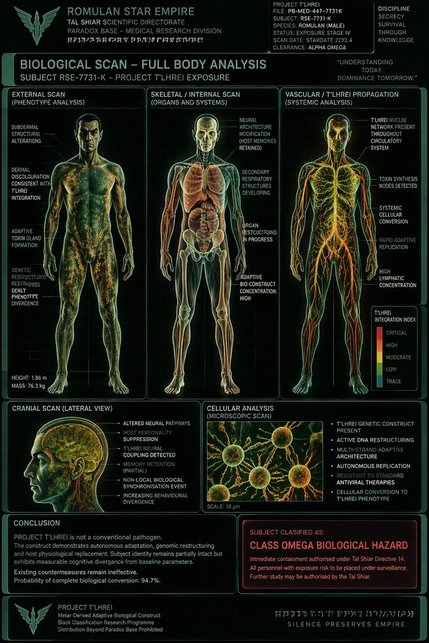
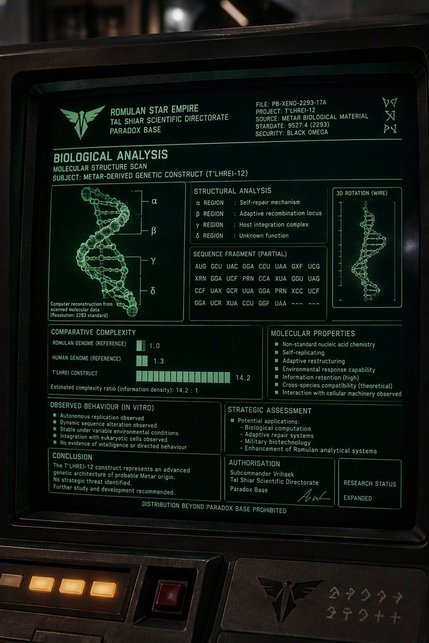
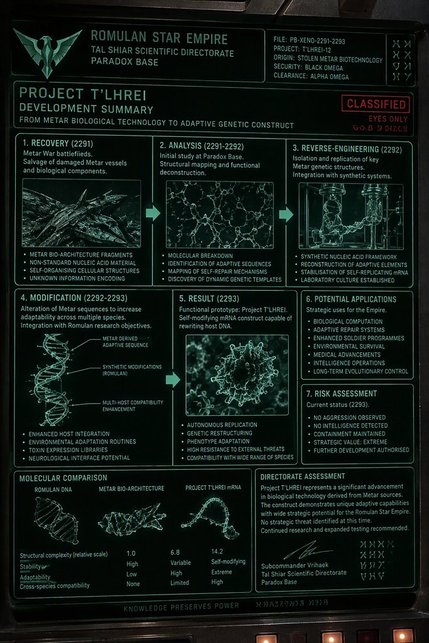
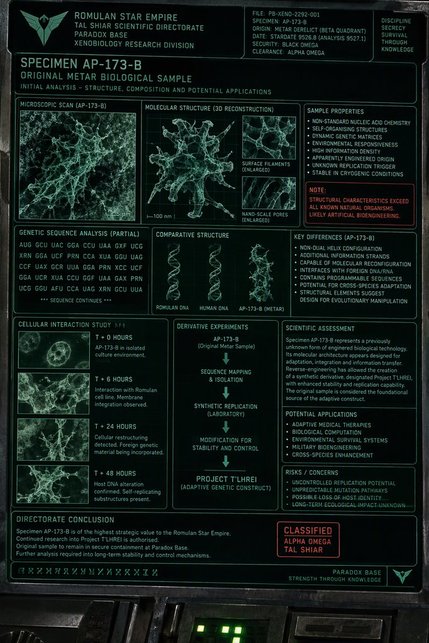
Original Star Trek: New Worlds concept art by Gavin Cooper. © Copyright all rights reserved.



