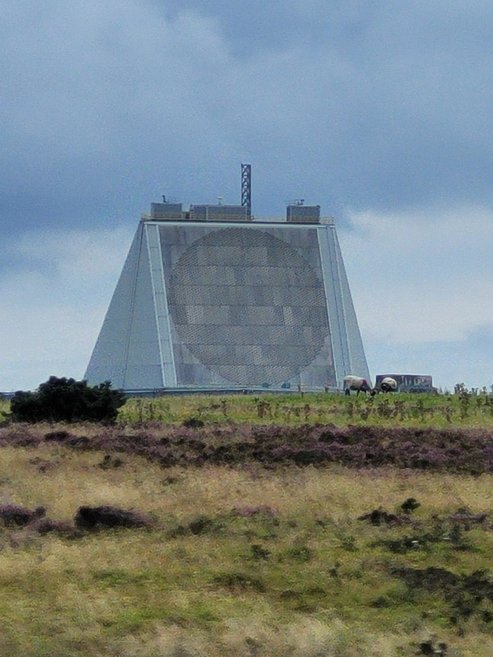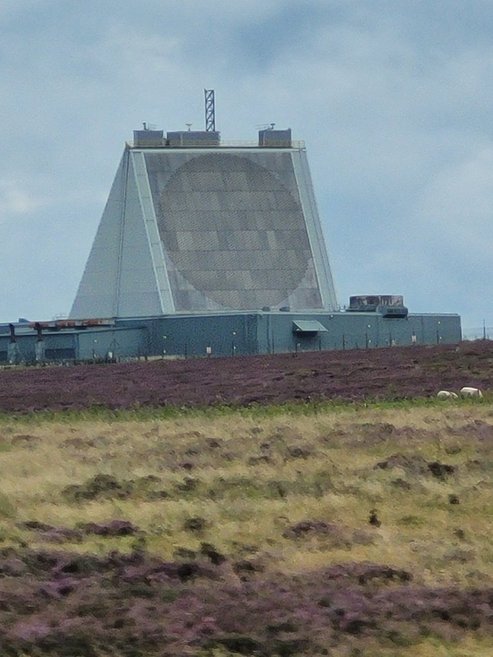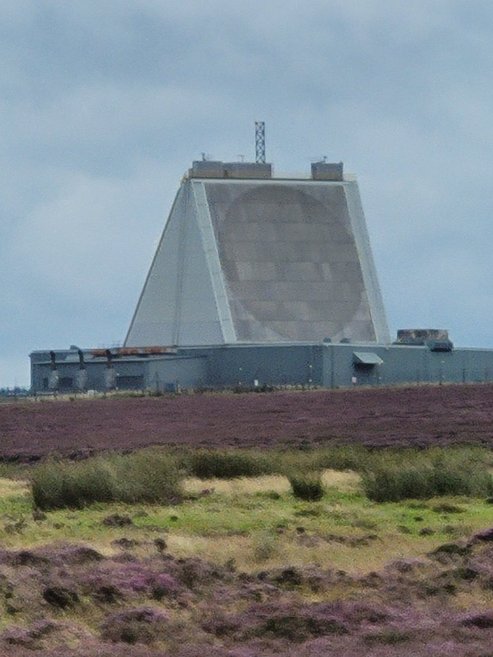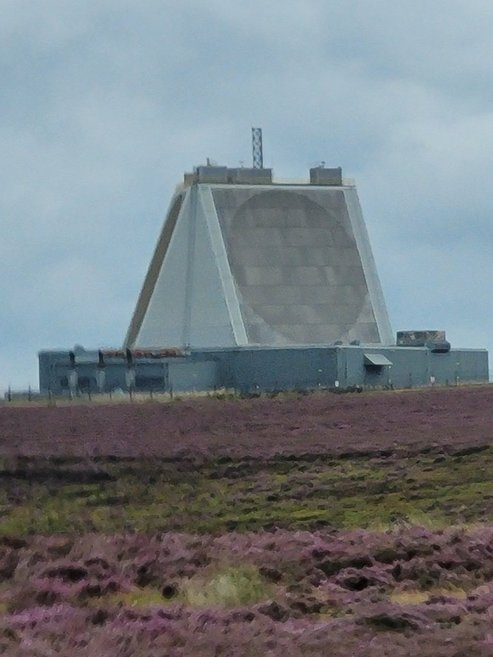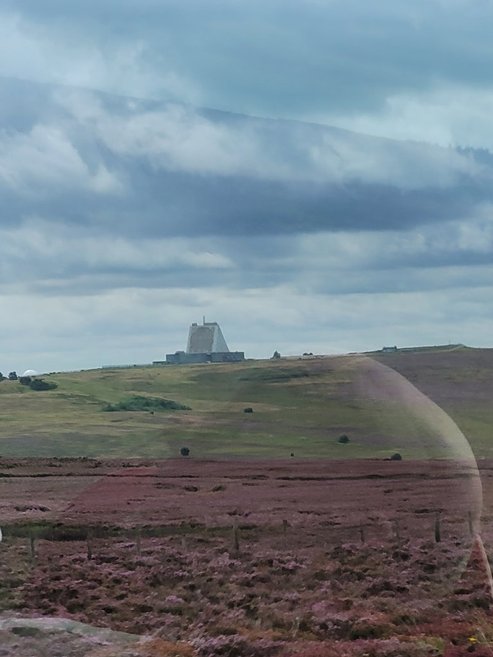
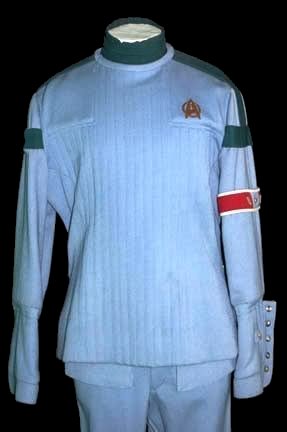
 Starfleet Security: policing the borders, bases, facilities and starships of the United Federation of Planets.
Whereas Starfleet Tactical is the defensive aspect of Starfleet, with peacekeeping and war-fighting capabilities, Starfleet Security is like a cross between the U.S. Coastguard, the Police, Customs & Excise and the Federal Bureau of Investigation. These are the police on starships and starbases and have specialist uniforms for the role.
Part of Starfleet Security is the internal monitoring of the Federation for criminal activities, with monitoring stations located across the Federation and along the border, looking for smugglers, traffickers, slave traders and illegal immigrants. Their Peel class Okinawa-variant police frigates have no photon torpedoes but they do have sensor probes to aid in their role. In addition to the Peel class Okinawa-variant police frigates, Starfleet Security also has Strider class police-variants as well, similarly fitted only with Phasers.
Starfleet Security is best known for the armoured security officers policing the starships and starbases of Starfleet. The additional appeal of the Security path is the early opportunities for command on their starships; Lieutenants and Lieutenant Commander-rank individuals can command patrol vessels of Starfleet Security.
Admiral Blackmore.
Admiral Edward Blackmore is the current head of Starfleet Security.
Roles of Starfleet Security:
Patrolling shipping and border control
Defence of the Federation internally
Anti-Piracy
Policing and anti-trafficking
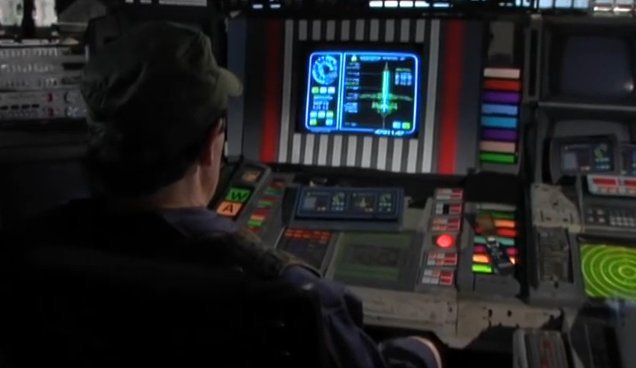
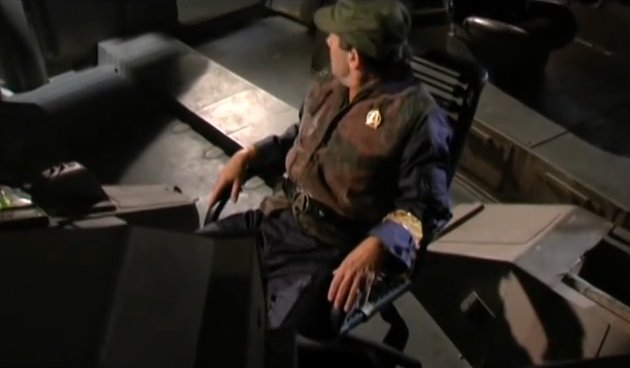
Gralvek is a caustic, blind Aenar telepath who looks like a frail bureaucrat but is the most dangerous internal-threat hunter in Starfleet. He insults everyone, sleeps in his office, smells faintly of cold metal, and solves cases no one else can.
Personality & Behaviour
- Weaponised bluntness — he speaks like every sentence is a verdict
- Telepathic irritation — he can feel lies, anxiety, guilt, and stupidity
- Cold sarcasm — every comment is a frostbite-level insult
- Sedentary menace — rarely stands; commands entire teams from a battered chair
- Unpredictable empathy — occasionally shows unnerving kindness that terrifies his staff
He’s the kind of officer who says:
“If you’re lying, I’ll know. If you’re telling the truth, I’ll wish you weren’t.”
Biological Quirks
- Aenar telepathy gives him perfect recall of emotional states—he can reconstruct a crime scene by touching the floor and “listening” to the fear left behind.
- Extreme cold tolerance means he keeps his office at -10°C; humans last about ten minutes.
- Low-light vision makes him prefer dim rooms, which he claims “reduce the number of stupid things people say.”
- Subtle echolocation lets him navigate cluttered spaces without ever touching a wall.
Professional Reputation
- Internal threat genius — solved 47 infiltration cases before age 40
- Unrivalled interrogator — doesn’t raise his voice; just sits and listens
- Political nightmare — Admirals hate him, but they need him
- Slow Horses-style misfit wrangler — commands a team of rejects, burnouts, and prodigies
He’s famous for telling a Vice Admiral:
“If you want a polite investigator, request one from the Diplomatic Corps. If you want results, leave my office.”
Office Environment
- Temperature: -10°C
- Lighting: barely above pitch black
- Smell: cold metal + Andorian tea
- Decor: piles of unsorted case files, a single working heater he never uses
- Pets: a silent Aenar ice-moth that sits on his desk and judges visitors
Leadership Style
- Delegates chaos — gives agents impossible tasks and expects miracles
- Brutally honest — tells officers exactly how they’ll fail
- Secretly protective — will destroy anyone who threatens his team
- Zero tolerance for incompetence — fires people mid-sentence
His team calls him “The Glacier.”
Not because he’s cold—because he moves slowly but crushes everything in his path.
Non-Obvious Insight
Despite his abrasive exterior, Gralvek is deeply committed to Federation ideals.
He believes internal rot is more dangerous than Klingons, Romulans, or the Borg.
His telepathy makes him painfully aware of how fear, ambition, and trauma can twist good officers into threats.
He fights that decay every day.
Starfleet Security is the Federation’s domestic counter-intelligence, counter-terrorism, insider-threat, and internal-corruption agency, built to protect Starfleet from sabotage, infiltration, radicalisation, and criminal activity within its own borders.
Mandate: What Starfleet Security Actually Does
Starfleet Security focuses exclusively on internal threats, never foreign powers.Insider threats — compromised officers, radicalised scientists, rogue captains
Internal espionage — moles planted by Klingons, Romulans, OrionsCounter-terrorism — separatist cells, anti-Federation extremists
Criminal investigations — corruption, smuggling, black-market techPsychological profiling — behavioural drift, trauma-induced instability
Threat analysis — pattern recognition, anomaly detectionInternal affairs — misconduct, abuse of authority, ethics violations
They are the people who knock on a captain’s door at 0300 because something in their logs didn’t add up.
Structural Model: MI5 + FBI + Spooks + Slow Horses Starfleet Security is built from five cultural DNA strands:1. MI5-style domestic counter-intelligence. They monitor infiltration attempts, sleeper agents, and ideological subversion.
Their analysts specialise in quiet threats—the kind that never make headlines.
2. FBI-style federal investigationsThey run forensic labs, behavioural units, cybercrime divisions, and field offices across Federation space.
They investigate crimes involving Starfleet personnel, bases, or technology.
3. Criminal Minds-style behavioural profilingTheir Behavioural Analysis Division studies patterns of violence, sabotage, and psychological instability among Starfleet officers.
They maintain the Federation Behavioural Risk Index, a predictive model for officer breakdowns.
4. Spooks-style covert internal operations
They run undercover agents inside Starfleet, the Federation bureaucracy, and even civilian megacities.
They specialise in quiet removals, discreet interrogations, and deniable surveillance
5. Slow Horses-style “rejects division”The Office of Special Misconduct houses disgraced, eccentric, or politically inconvenient agents.
They’re brilliant, unstable, and often right.
Starfleet Security keeps them because they solve cases no one else can.
How They Operate
Starfleet Security uses a layered operational model:
- Field Agents — investigators, undercover operatives, forensic specialists
- Station Security Divisions — embedded units on starbases and major ships
- Behavioral Units — profiling, psychological forensics
- Cyber & Signals — internal network monitoring, anomaly detection
- Internal Affairs — ethics enforcement, corruption probes
- Threat Response Teams — rapid deployment for crises, mutinies, sabotage
They rarely wear uniforms.
They rarely announce themselves.
They prefer interviews to interrogations, data to phasers, and quiet fixes to public trials.
What Makes Them Different from Starfleet Intelligence
Starfleet Intelligence looks outward. Starfleet Security looks inward.
| Division | Focus | Methods | Culture |
|---------|-------|---------|---------|
| Starfleet Intelligence | Foreign powers, external threats | Espionage, surveillance, infiltration | Strategic, diplomatic |
| Starfleet Security | Internal threats, domestic stability | Investigation, profiling, counter-intelligence | Forensic, psychological, bureaucratic |
Starfleet Security is the agency that investigates why a Starfleet officer betrayed the Federation.
Section 31 investigates how to exploit that betrayal.
Starfleet Intelligence investigates who caused it.
Non-Obvious Insight
Starfleet Security’s greatest fear isn’t sabotage or infiltration.
It’s ideological drift—the slow, subtle erosion of Federation values inside Starfleet itself.
Their analysts track:
- shifts in officer rhetoric
- changes in command decision patterns
- deviations from Federation ethics
- signs of authoritarian thinking
- trauma-induced radicalisation
They believe the most dangerous enemy is the one wearing a Starfleet uniform.