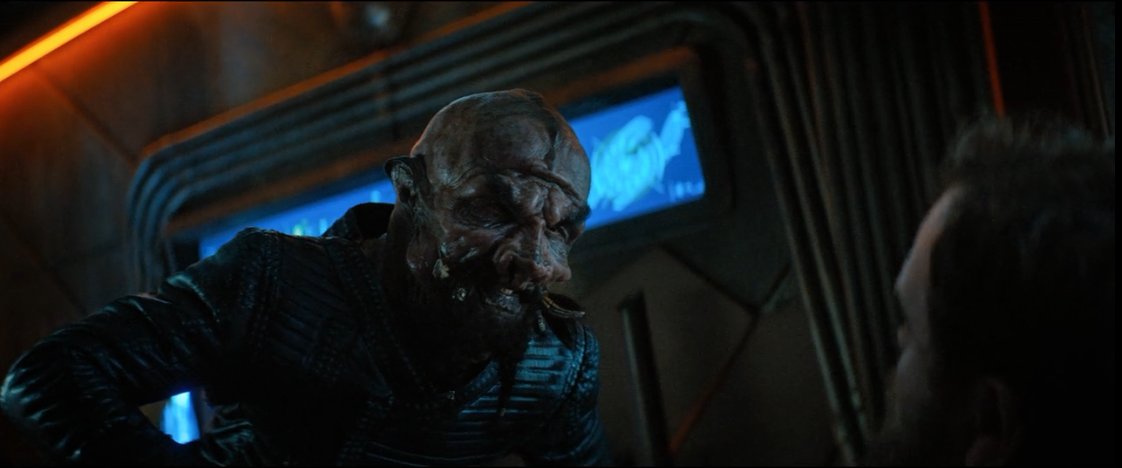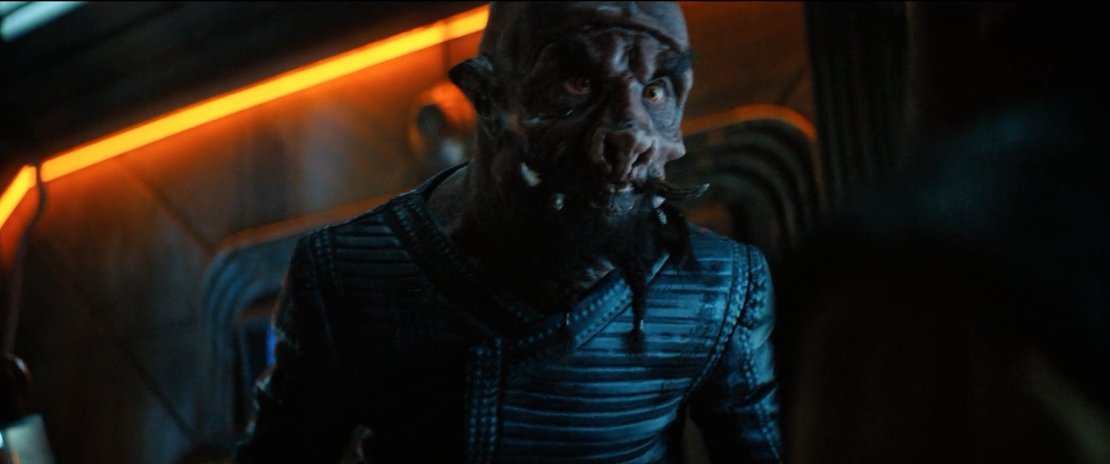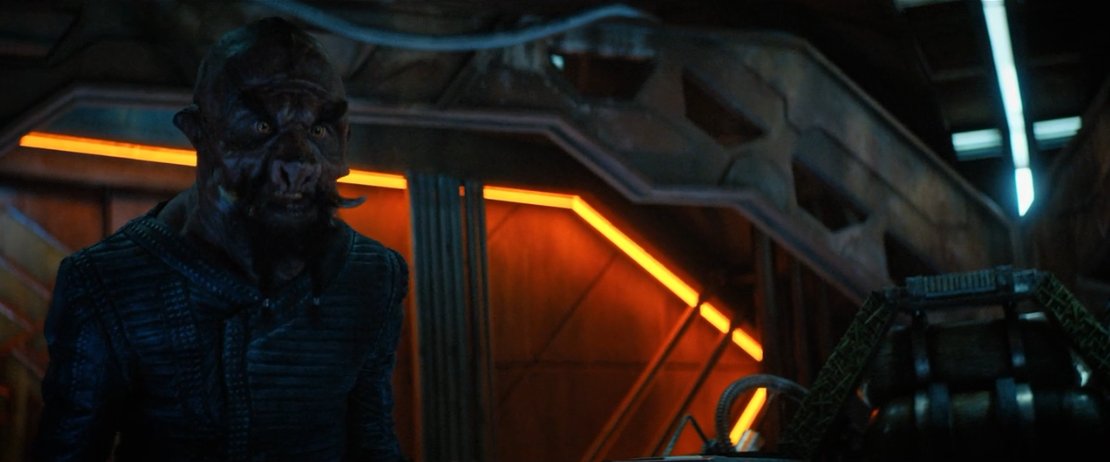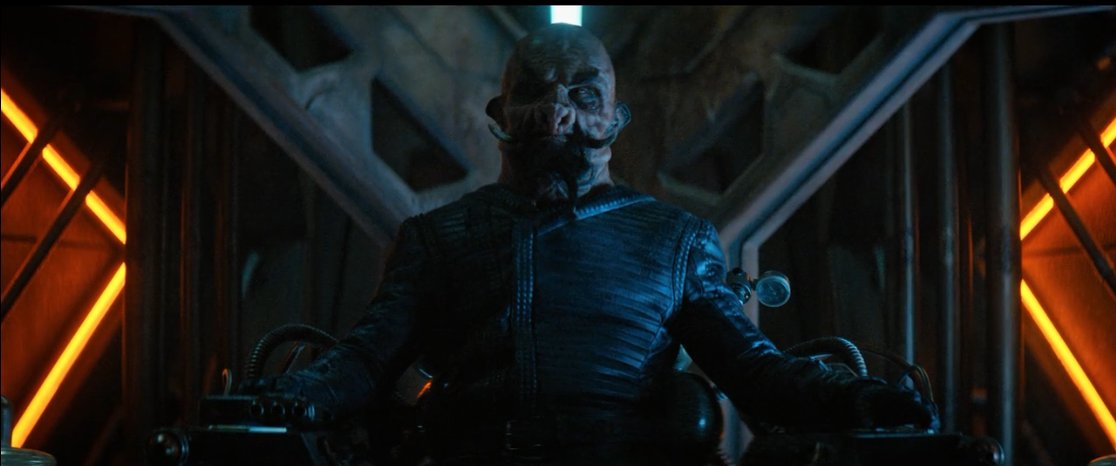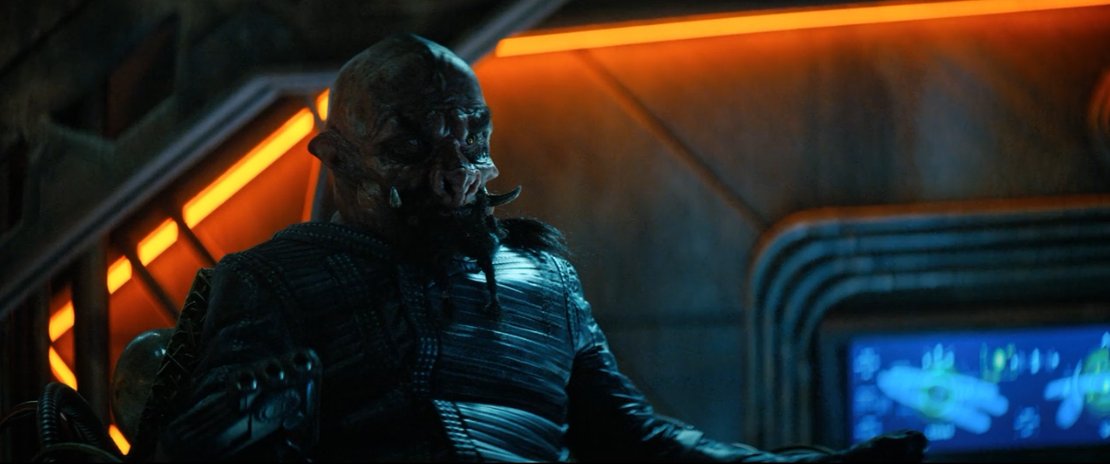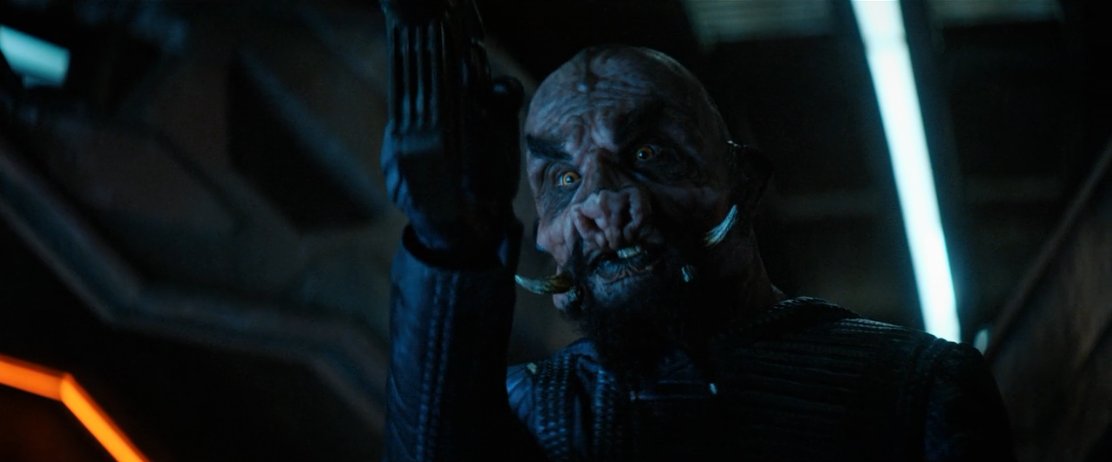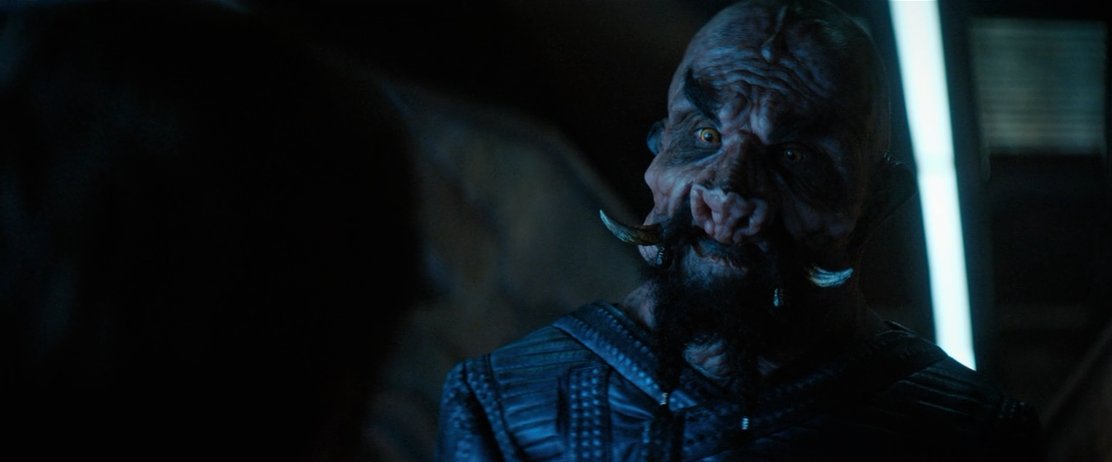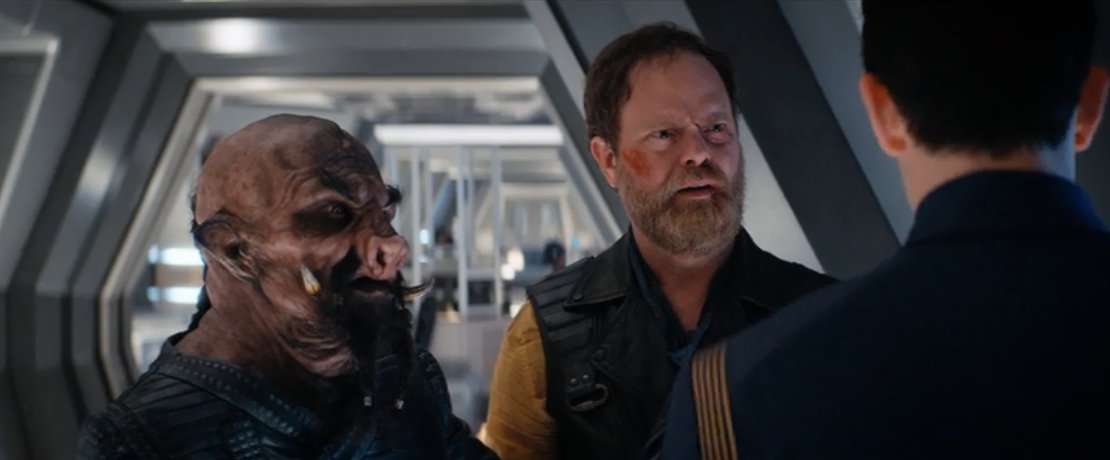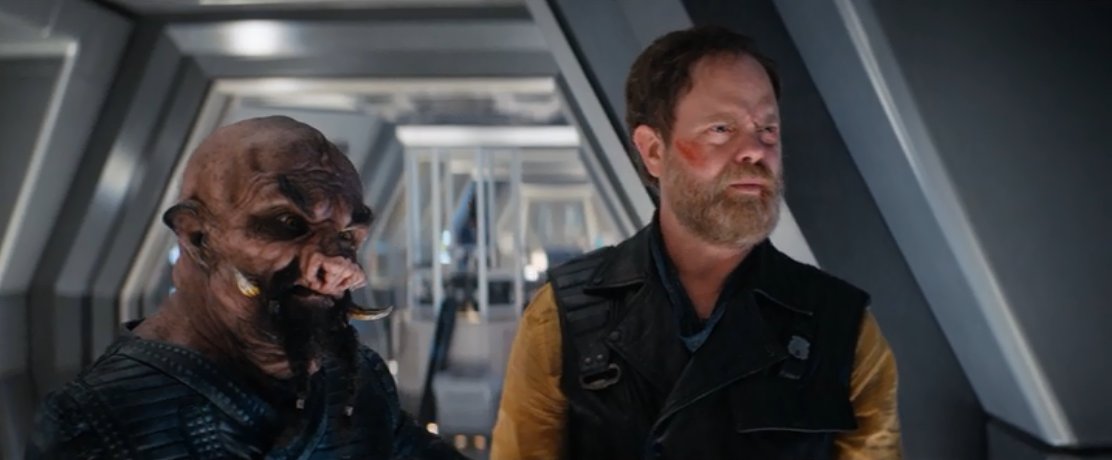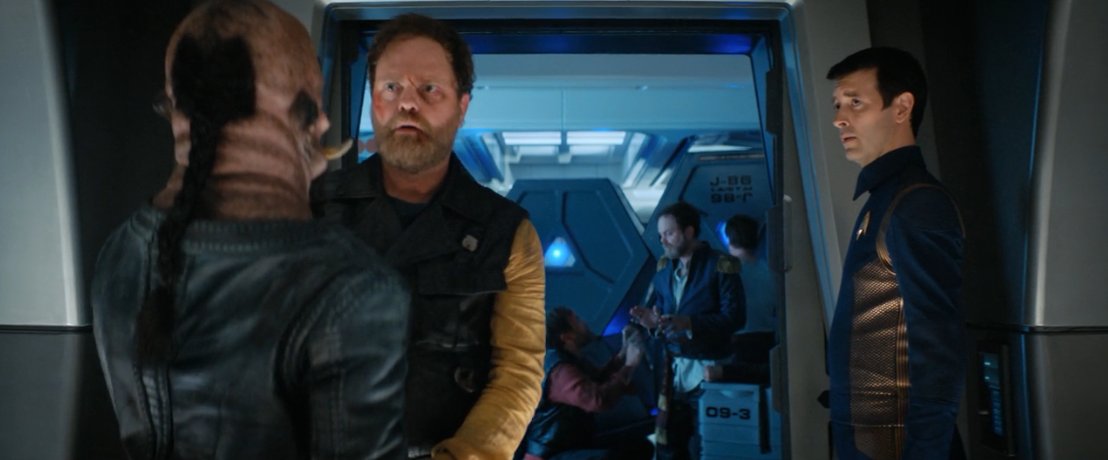

 Tellarites are porcine Federation founder members from Tellar Prime in Sector 007. Tellar Prime is located on the far side of the former Andorian Empire, otherwise known as the 61 Cygni system.
Tellarites are renowned for arguing; arguments are taken as sport in the Tellarite culture and many become politicians. They are generally shorter than human average and have a higher body temperature.
They are known as stubborn, impatient people and expect the same in others. Interactions often begin with complaints which can then lead to arguments. If there is a lack of topics to complaint about, an insult would be made simply to start an argument.
Historically there were clashes with the Andorians, just as with the Vulcans. Other interactions include with the Klingons and they had a good relationship with the Vulcans. They formed the Coalition of Planets in 2155 and the United Federation of Planets on 2161.
Tellarites have an aptitude with engineering systems, this being reflected with the vast spacedock facility and engineering corporations that are found on Tellar Prime.
Tellarites are stout pig-like humanoids with snouts, heavy facial hair, and sometimes hoof-like hands. They prefer warmer temperatures than humans and often take mud baths as part of their cultural norms.
Their homeworld, Tellar Prime in the 61 Cygni system, is an M-class planet with a population of billions and a long history of warp-capable civilization


Society & Culture
- Argumentation — Debate is a sport on Tellar. Tellarites begin conversations with complaints or insults to initiate argument. As Sarek famously said: “Tellarites do not argue for a reason, they simply argue.”
- Temperament — They are impatient, stubborn, and emotionally expressive.
- Cuisine — Their diet includes raw fruits and vegetables; canine meat is considered a delicacy.
- Politics — Their natural skill in argument makes them effective negotiators and politicians.
Historical Significance
Pre-Federation
Tellarites achieved interstellar travel by the 20th century, intercepting a Vulcan distress call in 1957 and relaying it to Vulcan High Command.
They had periods of conflict with the Andorians and were known for both trustworthy dealings and occasional dubious enterprises.
22nd Century & Federation Founding
Tellarites became deeply involved with Earth during the NX-01 era, participating in diplomatic missions, trade negotiations, and joint operations against Romulan interference.
In 2161, Tellar Prime became a founding member of the United Federation of Planets, alongside Humans, Vulcans, and Andorians.
Later Centuries
Tellarites served in Starfleet, on the Federation Council, and appeared at major diplomatic events such as the Babel Conferences. Their freighters and diplomats remained active well into the 24th century.

Why They Matter
Tellarites represent the Federation’s commitment to diversity:
- They are argumentative yet cooperative.
- Blunt yet politically essential.
- Physically distinctive yet culturally sophisticated.
Their presence reinforces the idea that the Federation thrives not because its members are similar, but because they bring radically different strengths to the table.
Tellarites see politics as a competitive sport, not a solemn duty. Their political culture is defined by:
- Adversarial debate — Insults and complaints are ritualised openings to negotiation.
- Procedural mastery — They excel at committee work, amendments, and bureaucratic pressure.
- Collective stubbornness — Once a Tellarite bloc commits to a position, they hold it with remarkable discipline.
- Economic leverage — Tellar Prime’s industrial output gives them weight in Federation trade policy.
This makes them one of the Federation’s most effective political operators, despite their abrasive style.

Role in the Federation Government
Tellarites are one of the four founding members of the Federation, and their political influence has remained stable for centuries.
1. Masters of Legislative Negotiation
Tellarite councillors dominate committee structures. They:
- Break deadlocks through aggressive compromise-forcing
- Use procedural challenges to expose weak proposals
- Serve as “pressure testers” for new legislation
- Are often chosen to lead investigative subcommittees
Their abrasive style is not chaos—it’s stress-testing policy.
2. Guardians of Economic Policy
Tellar Prime is a manufacturing powerhouse. Tellarite representatives:
- Shape trade regulations
- Advocate for industrial worlds
- Push for infrastructure investment
- Resist policies they see as economically naïve
They are the Federation’s closest analogue to hard-nosed economic pragmatists.

3. Diplomatic Counterweights
Tellarites often serve as blunt negotiators in interstellar diplomacy. Their style is useful because:
- They say what others won’t
- They expose hidden agendas
- They force clarity in ambiguous treaties
- They are difficult to intimidate
When diplomacy requires friction, Tellarites are deployed.
4. Internal Stability Agents
Tellarites frequently mediate disputes between:
- Andorians (too direct)
- Vulcans (too logical)
- Humans (too conciliatory)
Their ability to absorb hostility and redirect it into structured debate makes them invaluable during crises.

Strategic Importance in Federation History
Pre-Federation
Tellarites were early warp travellers and politically active traders. Their disputes with Andorians helped shape early interstellar law.
22nd Century
Their involvement in the Babel Conferences and Earth-Tellar diplomacy was essential to forming the Federation.
23rd– Centuries
Tellarites remain:
- Key voices in trade and industrial policy
- Frequent chairs of oversight committees
- Influential in crisis negotiations
- Reliable coalition builders during political fragmentation
They are not glamorous, but they are structurally indispensable.

Why Their Political Role Matters in Worldbuilding
Tellarites embody the idea that the Federation is not a utopia of harmony—it is a functional democracy built on friction. Their presence ensures:
- Policies are tested
- Debates are real
- Diplomacy has teeth
- Economic interests are represented
- No species dominates the political narrative
They are the Federation’s grit, its argumentative backbone.
Architecture of the Tellarite Parliament
Tellarite government is centred on the Grand Assembly of Tellar Prime, a unicameral legislature whose design maximises debate, obstruction, and forced compromise.
1. Grand Assembly — The Central Legislature
The Assembly consists of 900–1200 delegates, fluctuating by census cycle. Its defining traits:
Open-floor adversarial debate — Interruptions are expected; insults are procedural tools.
Rotating presiding officers — The Speaker changes daily to prevent long-term dominance.
Factional blocs — Delegates cluster into argumentative coalitions rather than ideological parties.
The Assembly’s purpose is not harmony—it is policy stress-testing through conflict.
Parliamentary Mechanics
Tellarite parliamentary procedure is intentionally complex, giving delegates many ways to challenge, obstruct, or refine legislation.
2. Objection-First Protocol
Every proposal must begin with formal objections. A bill cannot be discussed until at least three objections have been registered and debated.

This ensures:
Weak proposals die immediatelyStrong proposals prove their resilience
Debate is baked into the legislative DNA
3. Challenge Motions
Any delegate may issue a Challenge Motion, forcing the proposer to defend the bill in a timed adversarial exchange.
If the proposer falters, the bill is suspended for a full session.

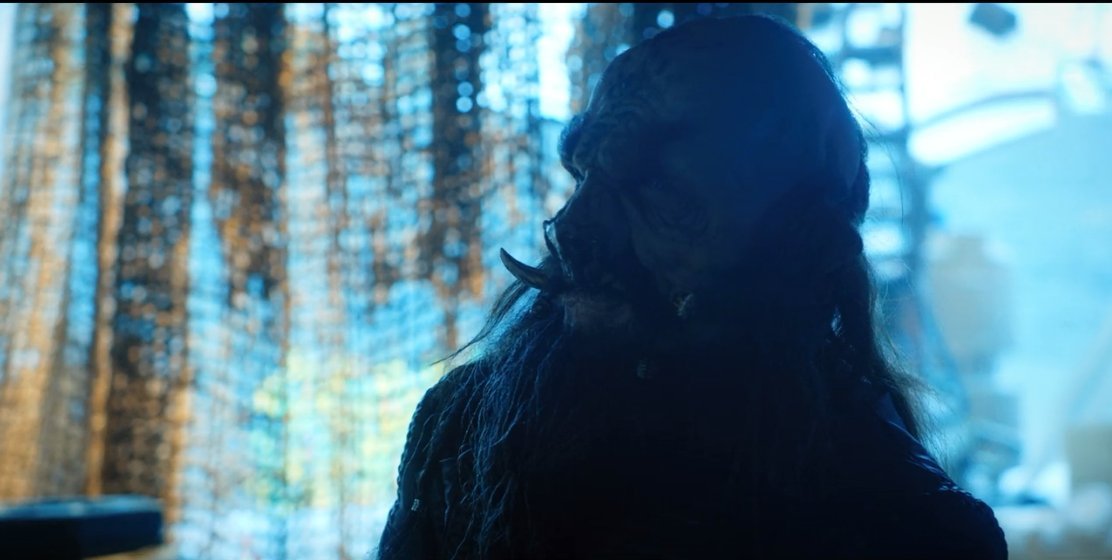
Author's note: the above image is a young Tellarite. The idea was as they get older, so they acquire tattoos and piercings to denote achievements. As this is a young man, he has a couple of tatts and piercings.
4. Insult Index
A uniquely Tellarite mechanism: insults are logged and graded.
High-quality insults (creative, targeted, relevant) increase a delegate’s rhetorical standing, giving them priority in future debates.
Crude or lazy insults reduce standing.This formalises the cultural norm of argument as performance.
Committee System
Tellarite committees are where real power lies.
5. Investigative Committees
Tellarites excel at oversight. These committees:
- Audit government spending
- Review industrial output
- Investigate corruption
- Stress-test Federation treaties
Their reports are famously blunt and often politically explosive.
6. Economic Councils
Given Tellar Prime’s industrial strength, these councils shape:
- Trade policy
- Manufacturing standards
- Infrastructure investment
- Federation-wide industrial regulation
They frequently clash with Vulcan efficiency models and Andorian security priorities.
7. Diplomatic Panels
Panels of seasoned debaters handle:
- Interstellar negotiations
- Treaty revisions
- Crisis mediation
- Federation Council coordination
Tellarites are valued for their ability to force clarity in ambiguous diplomatic language.

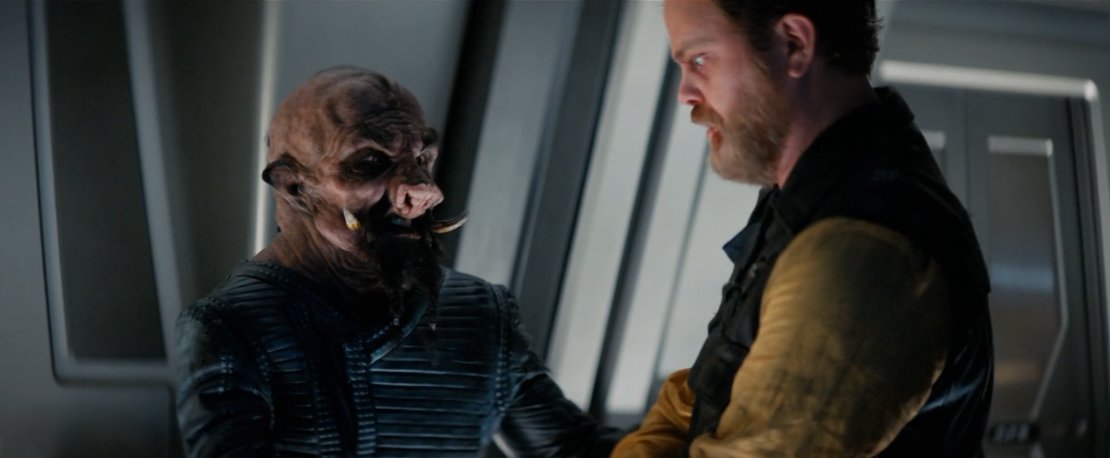
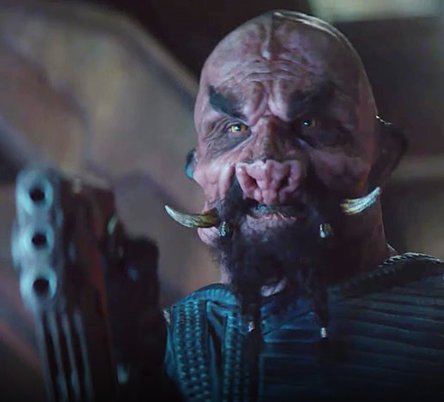
Author's notes: The above image shows off the snout plate, one of the items I like about Tellarite desin of showing off achievements.
Executive Branch
Tellar Prime’s executive is intentionally weak compared to the legislature.
8. First Speaker — The Head of Government
Elected annually by the Assembly, the First Speaker:
- Sets legislative schedules
- Represents Tellar Prime in the Federation Council
- Oversees interplanetary diplomacy
- Manages crisis response
But they cannot pass laws without Assembly approval and can be challenged at any time.
9. Council of Ministers
Ministers oversee sectors like:
- Industry
- Trade
- Defence
- Science
- Agriculture
They are appointed by the First Speaker but must survive three challenge debates before confirmation.
Why This Structure Works
Tellarite politics looks chaotic, but it produces:
- Highly resilient legislation
- Transparent debate
- Strong oversight
- Effective crisis negotiation
- A culture where stubbornness becomes civic virtue
Their system ensures that no policy passes untested, and no leader escapes scrutiny.
The Tellarite Position in the Federation Council
Tellarites hold a founding-member seat, giving them permanent representation and elevated procedural privileges. Their influence comes from three pillars:
- Procedural aggression
- Economic authority
- Diplomatic bluntness
They are not the most numerous councillors, nor the most respected—but they are the most necessary.

How Tellarites Shape Council Function
1. The Debate Catalysts
Tellarites are often the first to speak in Council sessions. Their opening remarks usually:
- Identify weaknesses in proposals
- Challenge optimistic assumptions
- Demand clarity in vague language
- Force other councillors to defend their positions
This is not obstruction—it is stress-testing.
2. Masters of Committee Work
The Federation Council’s real power lies in committees, and Tellarites dominate:
- Oversight committees
- Trade and industrial regulation boards
- Infrastructure and logistics panels
- Investigative commissions
Their ability to dissect policy makes them invaluable in technical and economic domains.
3. Industrial Policy Architects
Tellar Prime’s manufacturing output gives Tellarites disproportionate influence over:
- Starfleet procurement
- Federation trade routes
- Industrial standards
- Resource allocation
They frequently clash with Vulcan efficiency models and Andorian security priorities, acting as the Federation’s economic pragmatists.
4. Diplomatic Blunt Instruments
When negotiations require someone to:
- Call out hidden agendas
- Reject manipulative treaty language
- Push back against intimidation
- Break deadlocks through confrontation
Tellarites are deployed. Their bluntness is a strategic asset.

Tellarites as Internal Stabilisers
5. Faction Balancers
Tellarites often mediate between:
- Vulcan logic
- Human idealism
- Andorian directness
- Caitian diplomacy
- Efrosian consensus-building
Their argumentative nature allows them to absorb hostility and redirect it into structured debate.
6. Crisis Negotiators
In moments of political fragmentation—secession threats, resource shortages, border conflicts—Tellarites excel at:
- Forcing clarity
- Exposing unrealistic proposals
- Pressuring factions into compromise
- Keeping discussions grounded in material reality
They are the Federation’s anti-fantasy mechanism.
Why Their Council Role Matters
Tellarites ensure the Federation remains:
- Transparent — no hidden assumptions survive their scrutiny
- Resilient — policies are tested through conflict
- Balanced — no species’ philosophy dominates
- Pragmatic — economic realities stay central
- Honest — diplomatic euphemisms are challenged
They are the Federation Council’s grit, the abrasive force that keeps idealism from drifting into unreality.
What a Tellarite Faction Is
A factional bloc is defined by:
- A debate philosophy
- A preferred style of obstruction
- A sectoral or industrial base
- A shared insult lexicon (yes, this matters)
- A collective stubbornness oath
Blocs rise and fall constantly; some last centuries, others dissolve after a single disastrous debate.

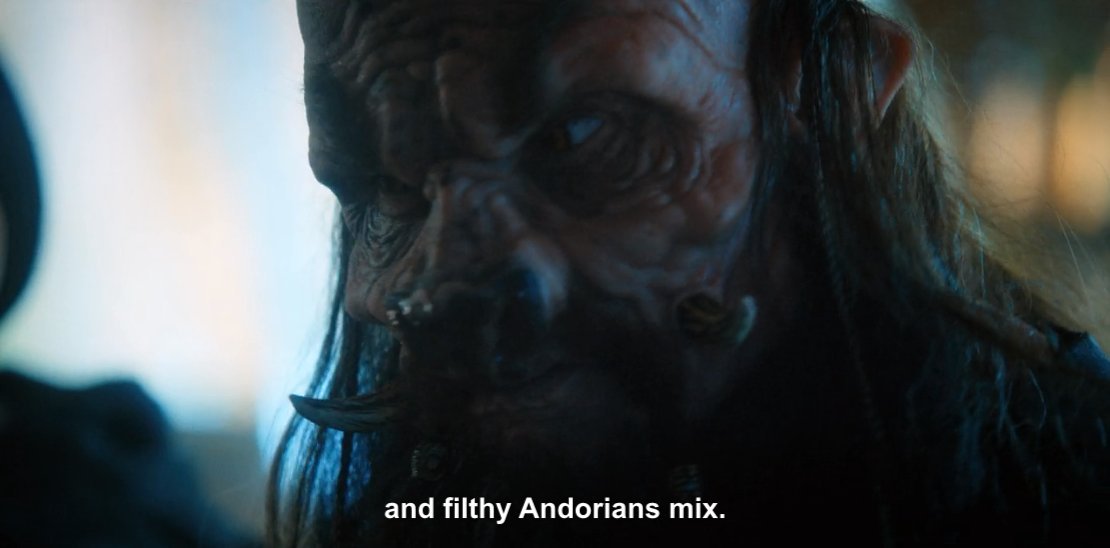
Author's notes: This is the image that really brought alternative views about the Tellarites, for me. This above image is a Tellarite sex worker. Yes, they exist in the Star Trek universe and United Federation of Planets, away from the pristine, perfect utopia of the core worlds, in the frontier worlds and backwaters away from the limelight.
The Four Major Faction Archetypes
Tellarite blocs fall into four broad families. Each has dozens of sub-factions, but these are the structural pillars.
1. The Obstructionists
These blocs specialise in procedural warfare.
- Masters of filibuster-equivalents
- Experts in challenge motions
- Use insults as tactical disruption
- Often represent industrial sectors threatened by reform
They are not nihilists—they believe good policy must survive maximum resistance.
2. The Pragmatic Syndicates
These blocs represent Tellar Prime’s industrial and economic interests.
- Manufacturing guilds
- Freight consortiums
- Resource extraction unions
- Starship component cooperatives
They push for:
- Infrastructure investment
- Trade protections
- Industrial standards
- Federation procurement influence
They frequently clash with Vulcan efficiency models and Andorian security hawks.
3. The Rhetorical Purists
These blocs believe debate is a sacred cultural art.
- Insults must be elegant
- Arguments must be structurally perfect
- Procedural moves must be aesthetically justified
They often oppose the Pragmatic Syndicates, accusing them of “industrial vulgarity.”
Purists dominate cultural, academic, and diplomatic committees.

4. The Consensus Breakers
These blocs exist to prevent premature agreement.
Their philosophy:
“Consensus without conflict is cowardice.”
They intervene when:
- Humans push idealistic unity
- Vulcans attempt logical convergence
- Caitians attempt diplomatic smoothing
Consensus Breakers ensure every species’ assumptions are interrogated before policy passes.
How Blocs Operate Inside the Federation Council
Tellarite blocs do not vote as unified parties. Instead, they:
- Form temporary coalitions around specific issues
- Trade insult privileges (priority speaking rights)
- Exchange challenge tokens (debate obligations)
- Coordinate committee ambushes (surprise procedural tests)
Their internal politics resemble a guild-based debate economy.

Sub-Faction Examples (Federation Era)
Here are three well-known blocs that appear in Federation Council history:
- The Mud Circle — Industrialists who believe policy should be “grounded in dirt.”
- The Nine Snouts — Rhetorical purists famous for devastating poetic insults.
- The Hammered Hooves — Consensus Breakers who specialise in derailing overly optimistic Human proposals.
Each has its own ritual insults, initiation rites, and parliamentary traditions.
Why Factional Blocs Matter
Tellarite blocs ensure the Federation remains:
- Resistant to groupthink
- Economically grounded
- Diplomatically honest
- Procedurally robust
- Culturally diverse
They are the Federation’s anti-utopian safeguard, preventing idealism from drifting into unreality.
“Coalition Through Confrontation”
Tellarites believe cooperation without conflict produces weak policy.
So their inter-species coalitions are built around:
- Mutual stress-testing
- Complementary weaknesses
- Shared procedural goals
- Negotiation leverage
They do not seek harmony—they seek productive friction.

Author's notes: The above mage is a runt of the litter. Tellarites, like pigs, have multiple babies from each birth, the last one beng the smallest runt of the litter. These are small and require medical intervention if to survive. They're smaller than the others. This particular one shows the lost eye and scars of fights lost and a few tattoos. A little scrapper. Still surviving.
Coalition Type I: Tellarite–Vulcan “Logic-and-Frustration” Axis
This is one of the oldest and most stable coalitions.
Why it works
- Vulcans provide logical clarity.
- Tellarites provide emotional pressure.
- Together they expose flaws neither species would catch alone.
Typical dynamic
Vulcans propose a clean, elegant solution.
Tellarites immediately attack its assumptions.
The final product is logically sound and politically durable.
Common arenas
- Treaty language refinement
- Scientific ethics committees
- Federation constitutional amendments
This coalition is the Federation’s “anti-ambiguity engine.”
Coalition Type II: Tellarite–Andorian “Blunt-Force Diplomacy Bloc”
A volatile but powerful partnership.
Why it works
- Andorians are direct.
- Tellarites are confrontational.
- Both despise euphemism.
Typical dynamic
In negotiations with hostile powers, Andorians set hard lines.
Tellarites enforce them through relentless argumentation.
The result: unyielding diplomatic posture.
Common arenas
- Border security negotiations
- Military procurement oversight
- Crisis response committees
This coalition is the Federation’s “hard-edge stabiliser.”

Coalition Type III: Tellarite–Caitian “Harmony-Through-Conflict Partnership”
A surprisingly effective pairing.
Why it works
- Caitians excel at diplomatic smoothing.
- Tellarites excel at diplomatic sharpening.
- Together they create balanced negotiations.
Typical dynamic
Tellarites break false consensus.
Caitians rebuild genuine consensus.
The result: authentic, durable agreements.
Common arenas
- Multispecies humanitarian policy
- Federation cultural integration boards
- Refugee resettlement frameworks
This coalition is the Federation’s “consensus purifier.”
Coalition Type IV: Tellarite–Efrosian “Cold-Logic Moderation Bloc”
Efrosians are calm, slow, and consensus-driven.
Tellarites are loud, fast, and conflict-driven.
Together they create policy equilibrium.
Why it works
- Efrosians prevent Tellarite escalation.
- Tellarites prevent Efrosian stagnation.
Common arenas
- Long-term economic planning
- Federation budget negotiations
- Environmental regulation boards
This coalition is the Federation’s “slow-burn stabiliser.”

Coalition Type V: Tellarite–Human “Idealism-Reality Counterbalance”
Humans are optimistic coalition-builders.
Tellarites are pessimistic coalition-breakers.
Together they produce realistic idealism.
Why it works
- Humans propose ambitious policy.
- Tellarites strip away fantasy.
- The final product is achievable.
Common arenas
- Federation expansion policy
- Social rights legislation
- Starfleet oversight
This coalition is the Federation’s “dream-with-limits engine.”
Why Tellarite Coalitions Matter
Across all species, Tellarites provide:
- Stress-testing
- Reality-checking
- Obstruction as refinement
- Bluntness as clarity
- Conflict as cooperation
They are the Federation’s anti-complacency mechanism, ensuring inter-species alliances produce durable, honest, and functional policy.
Core Identity of the Coalition
This coalition is built on complementary opposites:
- Tellarites: confrontational, industrial, impatient
- Efrosians: calm, consensus-driven, long-view planners
Together they form the Federation’s economic equilibrium bloc.
Their shared philosophy:
“Growth must be challenged; stability must be defended.”

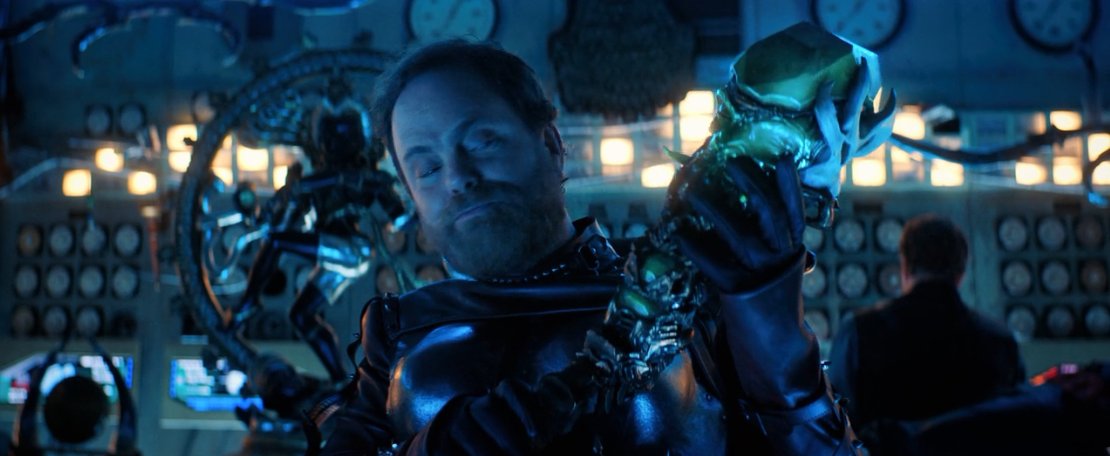
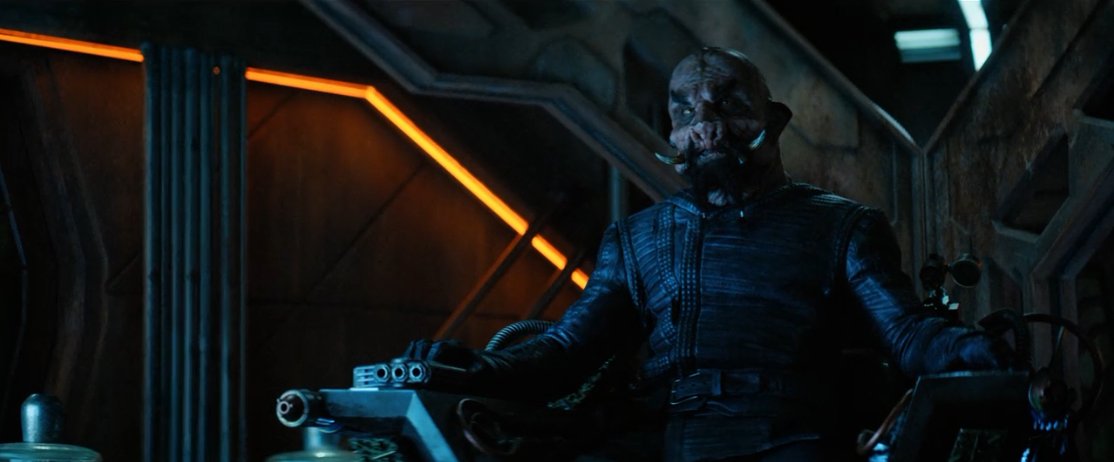
Author's notes: one of my favourite Tellarite creations: the Orion Syndicate kingpin. Leaning more onto the wild boar roots of the species, this is a successful character with all of the bling dialled up to eleven.
Structural Components of the Coalition
1. Joint Economic Planning Boards
These boards combine Tellarite industrial guilds with Efrosian memory-singers and economists.
Functions include:
- 50-year industrial forecasts
- Infrastructure stress-testing
- Budgetary resilience modelling
- Crisis-response economic frameworks
Tellarites push for expansion; Efrosians slow the pace until the plan is durable.
2. Federation Budget Harmonisation Committee
This committee is where the coalition’s influence is most visible.
Tellarites:
- Demand realistic cost projections
- Attack optimistic assumptions
- Expose hidden inefficiencies
Efrosians:
- Smooth disputes
- Build consensus around revised numbers
- Preserve long-term fiscal stability
The result is a budget that survives political storms.
3. Industrial Stability Councils
These councils oversee:
- Starfleet procurement cycles
- Resource allocation
- Manufacturing standards
- Planetary industrial diversification
Tellarites ensure production capacity; Efrosians ensure sustainability.
This coalition prevents the Federation from becoming too fast or too fragile.

Why the Coalition Works
Tellarite Strengths
- Aggressive identification of economic weaknesses
- Procedural pressure to refine policy
- Industrial pragmatism
- Ability to break unrealistic proposals
Efrosian Strengths
- Long-term planning
- Emotional moderation
- Cultural memory of past economic collapses
- Consensus-building across species
Together they create policy that is both ambitious and stable.
Key Arenas of Influence
1. Federation Infrastructure Policy
Tellarites push for rapid expansion of transit corridors, starbases, and industrial hubs.
Efrosians slow the pace, ensuring:
- ecological stability
- budgetary endurance
- inter-species equity
This produces infrastructure that lasts centuries.
2. Environmental Regulation Boards
Efrosians lead environmental protection.
Tellarites ensure regulations don’t cripple industry.
The coalition’s compromise model becomes the Federation standard.
3. Crisis-Response Economics
During crises—Romulan incursions, resource shortages, refugee waves—the coalition excels.
Tellarites:
- mobilise industry
- accelerate production
- cut through bureaucratic delay
Efrosians:
- stabilise markets
- prevent panic
- coordinate long-term recovery
This makes them the Federation’s economic shock absorbers.

Cultural Dynamics
The coalition works because each species respects the other’s “signature flaw”:
- Tellarites admire Efrosian patience.
- Efrosians admire Tellarite stubbornness.
Their debates are legendary:
- Tellarites shout.
- Efrosians hum.
- The final policy is always stronger than either side’s original proposal.
Strategic Importance
The Tellarite–Efrosian coalition is one of the Federation’s most quietly indispensable alliances.
It ensures:
- budgets survive political turnover
- infrastructure remains stable
- crises don’t collapse markets
- industrial growth doesn’t outrun ecological limits
It is the Federation’s economic spine.
Tellarites and Efrosians approach procurement from opposite angles:
- Tellarites: industrial throughput, manufacturing realism, supply-chain pressure
- Efrosians: budget longevity, ecological balance, multi-decade planning
Together they form the Federation’s procurement equilibrium bloc, preventing Starfleet from becoming either too fast (Tellarite overreach) or too slow (Efrosian caution).
How They Shape Starfleet Procurement
1. Fleet Manufacturing Cycles
Tellarites dominate the industrial side:
- Warp-core component fabrication
- Tritanium hull plating standards
- Shipyard throughput optimisation
- Industrial guild coordination
Efrosians counterbalance with:
- Predictive maintenance budgets
- 30–50 year fleet replacement modelling
- Resource sustainability projections
- Multi-species economic impact analysis
This produces fleet plans that survive political turnover, not just annual budgets.
2. Procurement Budget Oversight
This is the coalition’s most visible arena.
Tellarites:
- Attack unrealistic cost projections
- Demand industrial feasibility studies
- Expose inefficiencies in shipyard operations
- Push for procurement that strengthens Tellar Prime’s industrial base
Efrosians:
- Slow procurement cycles to prevent overspending
- Build cross-species consensus around revised budgets
- Protect long-term fiscal stability
- Ensure procurement aligns with Federation economic forecasts
The result is a Starfleet budget that remains stable across crises, elections, and political fragmentation.
3. Resource Allocation Strategy
Starfleet consumes enormous quantities of strategic materials—dilithium, tritanium, antimatter containment systems, duotronics.
Tellarites ensure:
- Industrial output meets Starfleet demand
- Extraction guilds maintain supply
- Manufacturing standards remain high
- Logistics chains stay efficient under stress
Efrosians ensure:
- Resource use doesn’t destabilise planetary economies
- Extraction doesn’t outpace ecological limits
- Allocation remains equitable across member worlds
- Long-term reserves are protected
This coalition prevents Starfleet from becoming too expensive, too extractive, or too fragile.

Procurement Effects on Starfleet
1. Procurement Stability
Starfleet avoids boom-and-bust cycles thanks to Efrosian moderation and Tellarite industrial realism.
2. Shipyard Reliability
Tellarite guilds keep shipyards productive; Efrosians keep them solvent.
3. Crisis-Ready Logistics
During wars or disasters, Tellarites accelerate production while Efrosians stabilise markets.
4. Long-Term Fleet Planning
The coalition ensures Starfleet’s fleet composition evolves sustainably over decades.

Cultural Dynamics
This coalition works because each species respects the other’s “signature flaw”:
- Tellarites admire Efrosian patience and memory-driven planning.
- Efrosians admire Tellarite stubbornness and industrial honesty.
Their procurement meetings are legendary:
- Tellarites shout about unrealistic timelines.
- Efrosians hum calmly while adjusting projections.
- The final plan is always stronger than either side’s original proposal.

Why This Coalition Matters
Without Tellarite–Efrosian cooperation, Starfleet would be:
- too expensive (Tellarite dominance)
- too slow (Efrosian dominance)
- too politically fragile (no coalition)
Together they form the Federation’s economic backbone for Starfleet, ensuring the fleet remains:
- durable
- affordable
- scalable
- crisis-ready
- politically stable
This coalition is one of the Federation’s most quietly indispensable institutions.

Grotev Health Spa
Some of the most famous health spas in the Federation can be found on Tellar Prime; amongst them is the Grotev Health Spa, which includes vast mud baths that are said to have therapeutic properties.
The spa employs many treatment specialists including Deltans, Betazoids and Vulcans. The treatments available cover both physical and mental wellbeing and cater for the full variety of Federation lifeforms.

Grok Jaan Tek Mining Corporation
GJT Mining is one of the principal mining corporations of the Federation. Their specialist techniques include deep core mining and asteroids. Mineral ores previously considered inaccessible or not viable were suddenly plausible.
The company runs a fleet of mining ships that are renowned throughout the Federation, along with their hoof-and-pickaxe logo. The corporation has had several high-profile run-ins with Jindarian caravans, with casualties on more than one occasion. This has provoked high-level conversations within the Federation Council on the matter of territory and possession in a matter where one side cares for neither of those aspects.
Craag Nok Rek Engineering
One of the biggest and most successful engineering conglomerates of recent years is CNR Engineering. Formed from several large companies in the early 2300s, CNR aimed to be the biggest and most successful engineering company in the Federation simply by the vastness of its resources and its ever-present facilities.

The company boasts a number of high profile Federation Senators amongst those supporting their operations. The centralisation of some of their facilities at Tellar Prime caused upset amongst some of the smaller outer colonies in the Federation; those colonies later being offered ‘sweetener’ deals from CNR to build and maintain smaller technical aspects, being seen as good public relations.
Recent high-profile projects at CNR include various systems for the Ambassador class project, the successor to the Excelsior class; upgrade systems for the Miranda and Constellation class starships, improved warp and impulse drive systems with longer time between maintenance.
Competitive responses from other large engineering companies such as Tyrell Corporation, Massive Dynamic, Dharma Initiative and Tagruato Corporation means that CNR has to keep maintaining the high quality of its products in a competitive manner.