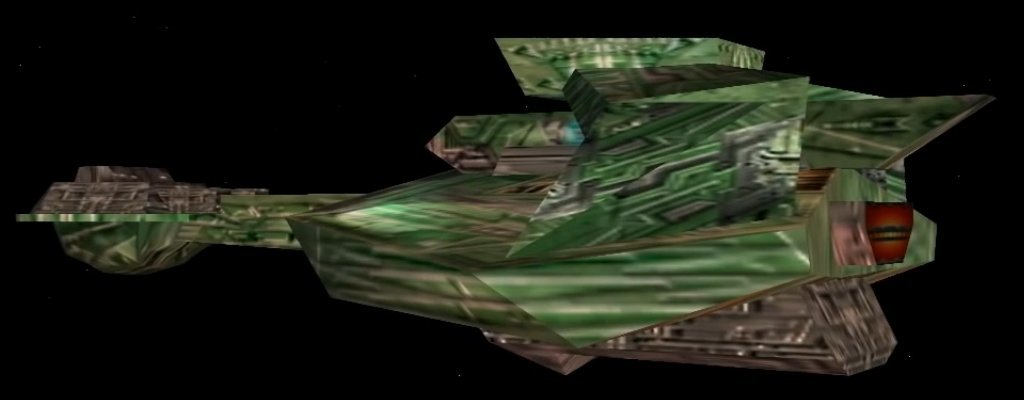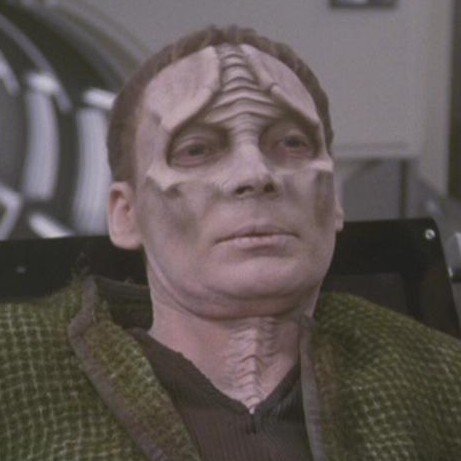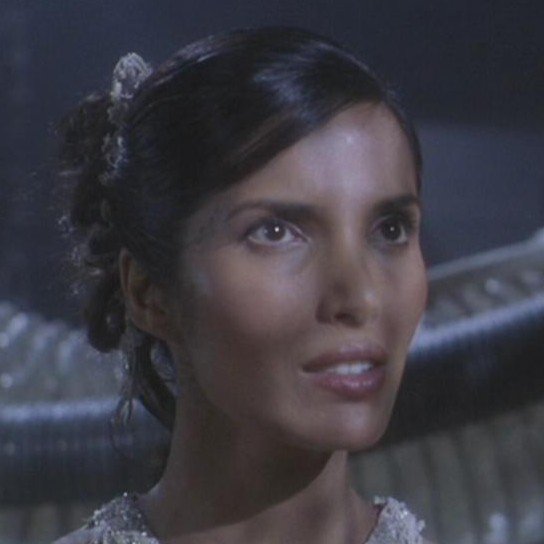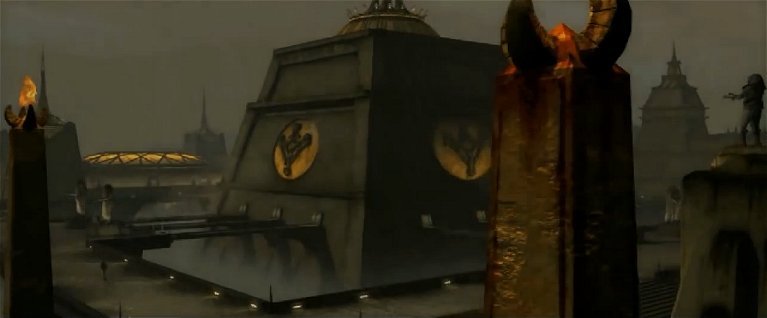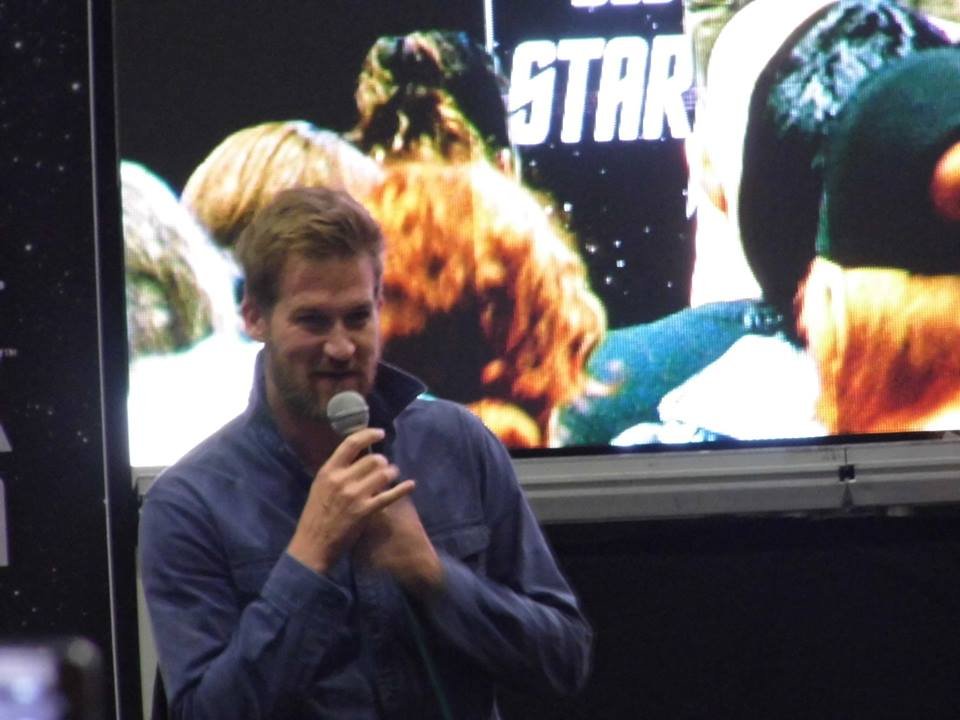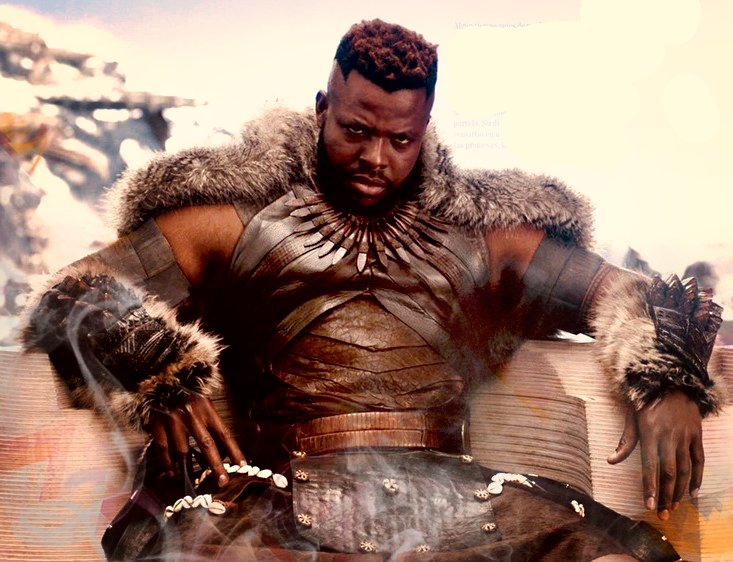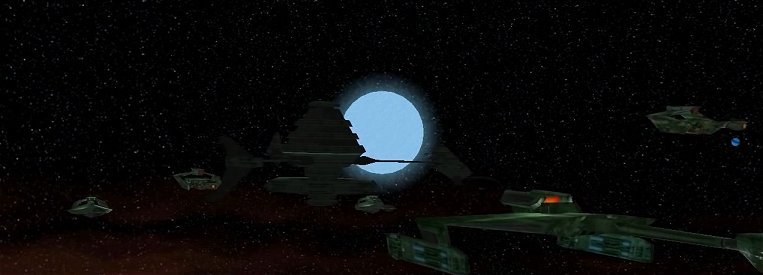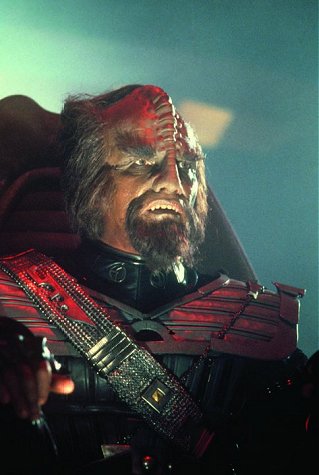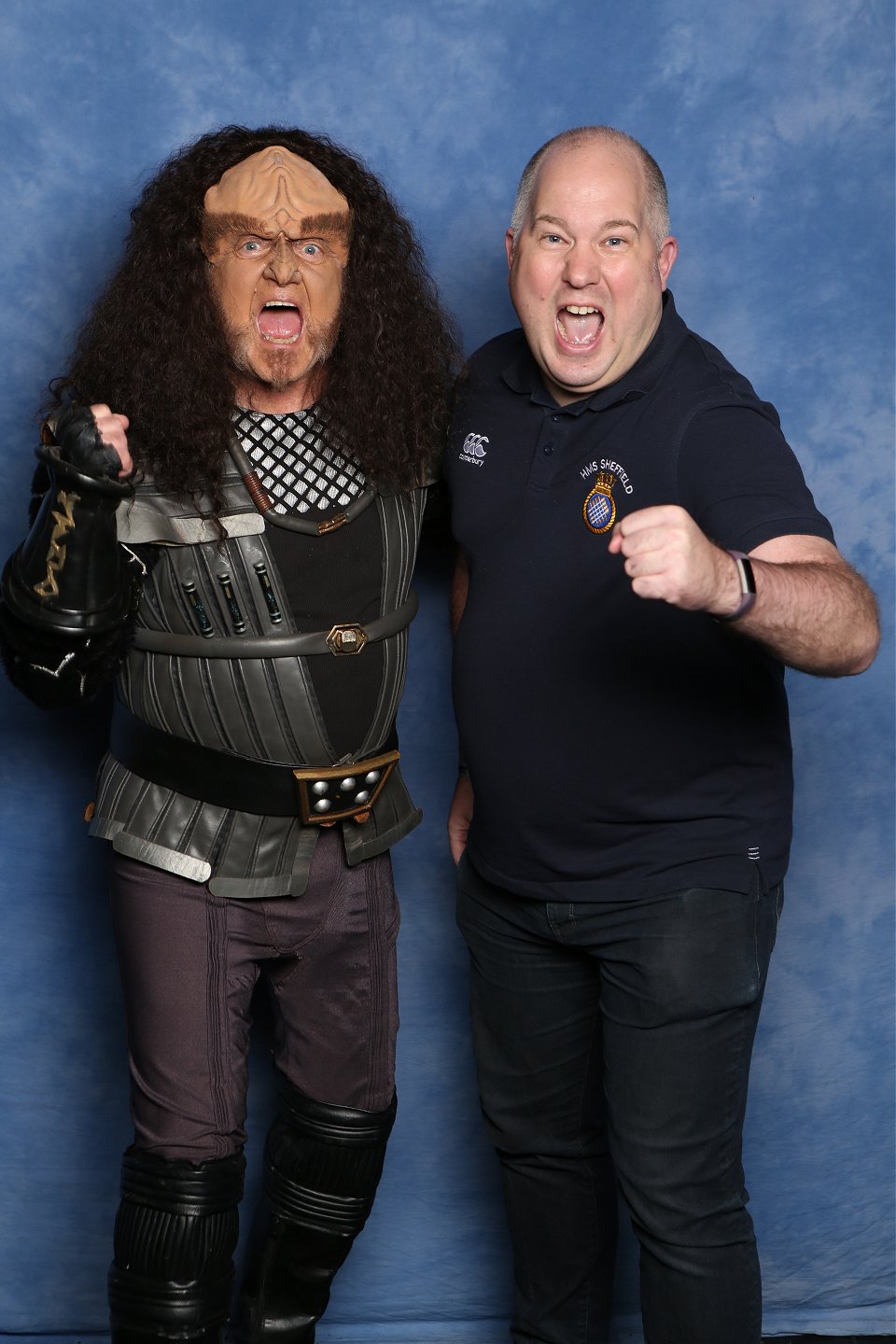
This page is dedicated to Kenneth Mitchell, a true Klingon and inspiration to us all with his humanity. He is missed.

Dedications also go to Harve Bennett, Marc Lenard, James Doohan, Marc Okrand, Christopher Lloyd, John Shuck,

Todd Bryant, Spice Williams-Crosby, Charles Cooper, Rosanna DeSoto, Paul Rosilli, Michael Dorn, David Warner and Christopher Plummer

for creating the Klingons, their language and culture for the monster maroon movie and Interim Years eras.


The Klingon Empire of the 2290s is the Imperial Klingon Empire. Born from the T'Kuvma-Kahlessian philosophy of the mid-2250s, this is the interstellar cousin to the Imperial Japanese Empire of the 1940s or the Soviet Union of the mid-1980s. The feudalistic Great Houses of the earlier times of the Klingon Empire have come together as a great Empire with ambitions of conquest. This is a unified Empire where the Great Houses fight as one. Admiral Kuri is the seniormost flag officer of the Empire, answering only to Chancellor Azetbur. Rivalries are smothered by regulations in this great imperial nation. The Imperial Klingon Navy is there to be a strategic force, a political force as well as a means to protect and expand the Empire; fly the flag, send envoys and deliver ultimatums. Intimidate opponents, resistence an rivals. As a dynamic nation, the words of Kahless and T'kuvma, along with L'rell, Sturka, Kesh and Gorkon have helped to shape a military nation that has proved successful. The Klingon Empire is good at expanding by cunninga nd guile: playing off desired worlds against each other, arming the weaker worlds to buy them off to conquer their former oppressor worlds to all become part of the Empire together; the Kronosian Klingons franchise the Klingon Empire to non-Klingon species, just as the British did in India and other Empires have throughout history. The three ways the Klingon Empire conquers worlds: 1. Offer them weapons, technology or power. 2. Offer their rival the same thing at the price of conquering the world you want. 3. Send in the Imperial Klingon Navy and subjugate everyone: a very manpower and warship hungry prospect. Franchising is far easier and less costly. The only hazard with franchising your Empire: when you're no longer feared as overseer, your subject colonies are liable to do their own thing and rebel, fragmenting and obliterating your Empire...


It is a time of change for the Klingon nation. The Planet of Galactic Peace, Nimbus III, was the location of low-key, secret talks between the United Federation of Planets, Klingons Empire and Romulan Star Empire. For decades, issues dividing these nations could be discussed on neutral ground (in the Neutral Zone) and the the representatives could report back to their successive governments, Despite the public belief that the colony was a hopeless disaster, these talks developed into more public negotiations in 2285 when Gorkon ascended to become Chancellor. President Hiram Roth sent U.S.S. Hood, which met with Captain Koloth for cordial conversation with Ambassador Sarek with his aide, Curzon Dax. Opposition to the talks took the form of Commander Kruge attempting to expose the duplicity of the Federation by exposing the Project: Genesis development. The destruction of the Grissom was a setback, however the Sybok Incident of 2287 brought about a new era of open political relations between the Romulans, Federation and Klingons. Ambassador Kamarag then was able to step publically into the fore as the official ambassador to the Klingon Empire. With talks continuing on Nimbus III whilst that planet was finally invested in as a neutral world for negotiations, meeting was arranged between Sarek's former aide - now Ambassador - Curzon Dax and Commander Kang at Korvat in 2289. This resulted in a follow-up meeting between Sarek and Ambassador Kamarag at Pacifica in 2291. The starship Excelsior was freed up from flagship duties in 2290, allowing brand new U.S.S. Titan under Captain Saavik to take over as flagship along the Neutral Zone. During this time, the Titan was involved in the Exo-Port Takeover and Horizon Colony rescue.

The explosion of Praxis on stardate 9521 damaged Qo'noS and the central colonies of the Klingon Empire. This had been planned for by the Klingons in war planning for centuries; Qo'noS was always the primary target for enemies to damage or destroy. The need was to redistribute warships and personnel to secure the borders whilst repairs were done to the damaged worlds. The conflicts along the Klingon frontier had been all examined and updated: the cold war with the Federation, the border conflicts with the Romulans and Gorn, finally the military actions with the ngej and Kin'shaya. Of all of these rivals, it was planned that the best way to free up resources was to exploit the compassion of the United Federation of Planets. Gorkon, a former General in the Imperial Klingon Navy prior to becoming Chancellor, knew this battleplan well. As predicted, the Federation approached Gorkon to offer assistance in the form of Starfleet Captain Spock. This Vulcan was about to transfer to being an ambassador and was looking to make his first mark as such. Gorkon used the helpful Vulcan to get free aid to help speed up the repairs to Qo'noS, as well as giving the impression that the Empire was compromised. Lowering the readiness status on the Federation border and removing a cartographic political feature on a map, postponing the dispute of the border would buy time for the Empire. Such matters could wait. The explosion of Praxis had literally scorched half of Qo'noS to liquid magma, killing almost half of the inhabitants of the home world. Many of the central core worlds had suffered similar damage, though to a lesser extent. At least two great Houses had been obliterated and thousands of the warships had been damaged or destroyed. Operation REBIRTH was immediately activated to maintain continuity on the operation of the Klingon Empire. Weakness was the one trait that could shatter the Empire.

Spock went to Starfleet Headquarters and said that the Klingon Empire has less than fifty Earth years left to exist. Two months of analysis by Spock and Starfleet Intelligence were sold as having predicted the collapse and implosion of the Empire within a half century. This was looking at the Kronosian Klingons as having lost almost half the population of the home world and many from the core worlds. This would then create a shortage of Klingons to govern or control their subjugated member worlds. The Klingons - and many captured races making up the majority of the Empire - would become refugees. Over 95% of the Empire had been completely untouched by Praxis. The Imperial Klingon Navy still had over 9000 of their 14000 operational warships and reached into their extensive reserves to pull out D-5 warships, Raptors and earlier variants of Bird of Prey to supplement the shortfall. As per the plan to survive an attack on Qo'noS, Operation Rebirth would allow the Imperial Klingon Navy to carry on functioning. With the Federation border now a downgraded priority, forces could now be bolstered along the coreward Romulan border. For the Romulans always attacked an enemy at a perceived moment of weakness. The Khitomer Accords were sold to the people of the Federation as a peace treaty; the truth is that the Klingons had no word for 'peace' (and wouldn't have until Riva gives them the word in fifty years' time. The actual peace treaty doesn't come until after 2344 and the Enterprise-C). The Klingon Empire was like post-Midway Imperial Japan, the Roman Empire after the sacking of Rome, the British Empire after the partition of India or post-Chernobyl USSR: despite a perceived hammerblow to their nation, this was actually no more than a disaster for the Homeworld that was always half-expected from an enemy attack. Bad publicity on the Federation News Network. Whilst Qo'noS would take until 2307 to be repaired, the Empire could operate seamlessly from Ty'Gokor.

Away from the ozone damage and destruction on Qo'noS, the shipyards and worlds elsewhere in the Empire stepped up production to fill the gaps. The Empire was never at risk of collapse. Spock oversold the disaster to the Starfleet top brass. Fifty years was always long enough for the Klingon Empire to develop or acquire the knowledge and technologies with which to rectify the damage to Qo'noS. If that wasn't possible, there was still time to evacuate and set up a new capital homeworld. Praxis gave the Klingons the same sort of timescale to rectify the damage as the people of Earth had to fight Climate Emergency after the COP26 climate meeting in Glasgow 2021. Fifty years would see a warrior from military academy to retirement or the grave. Praxis empowered rebels to declare independence and try to withdraw from the Empire. The Klingons would execute their own Soviet-style Hungary (1956), Prague Spring (1968) or Chinese-style Tian Nan Men (1989) crackdown with force. Operation Rebirth and the Khitomer Accords allowed the Klingons the military resources to stabilse their Empire and repair the damage. Tractor beams and firepower would stop the threat of debris from Praxis; scientists, engineers and medics would repair the damage to Qo'noS and her people. Liebensraum or 'breathing room' could wait for a few years. The main problem, one that would make the Klingons risk peace with imperialistic aggression, is the effect of Delta radiation from the ruined moon of Praxis on the gagh swamps of QonoS. Gagh, eaten live, provides vital enzymes that Kronosian Klingons need for their metabolism. Without it, Klingons will die. Whilst the radiation isn't fatalto Klingons, it is to their food staple. The quest is on for worlds capable of farming these vital creatures. The agricultural House of Mogh will provide knowledge in this field. The answers, it would seem, lie on the blood-soaked farmlands of Ch'ramak and Terajun.

Author's Notes:

The Klingons are in a decade of change. Star Trek movies III, V and VI really signify massive changes in the attitude of the Klingon Empire from 2285 to 2293. Star Trek III, as Kruge and his two men look at the captured Genesis tapes says "Share this with no one. We are going to this planet. Even as our emissaries negotiate for peace with the Federation, we will act for the preservation of our race!... " indicating that by 2285 there are diplomatic talks on in the open. The diplomatic talks must have been a success as by Star Trek V Klingons need permission from their government to attack Starfleet ships - permission that was not forthcoming. These talks would suggest that the more progressive Gorkon must have just come to power in 2285 (mirroring how Gorbachev came to power in the real world at around the time of this movie). In this timeframe, such important talks would require the Federation's number one ambassador; Sarek of Vulcan. His opposite number has to be the bellicose Kamarag, as seen in Star Trek movies IV and VI. For the 2285 meeting, since the Enterprise was decommissioned and later destroyed, sister ship Hood seemed a good choice. Shangri-la and Excelsior wouldn't be ready by then and trusting brand new ships is risky.

Star Trek V, a HUGE movie for the political changes in the Beta Quadrant, talks of how there have been low-key backdoor talks for decades on this Planet of Galactic Peace. Although disregarded as a failure, by the end of the movie, St John Talbot is cuddling up to Romulan Caithlin Dar and talking to his old friend General Korrd. As per the script: "(St. John Talbot and Caithlin Dar are talking together) KORRD: And what are you two conspiring about? TALBOT: We are just thinking how far we've come in such a short space of time. KORRD: We certainly have." - a major understatement, since both the Klingons AND the Romulans are now friendly with the Federation and each other. Finally in Star Trek VI, at the Khitomer Accords, the script call sheet says that there are NINETEEN ROMULANS at Camp Khitomer. WHY ARE THEY THERE? No one ever asks that question. ST: TIY: Excelsior WILL answer this.

We're into an equivalent of the late-1980s USSR, with Gorbachev in charge and having to address problems such as 1. Chernobyl, 2. Poland and Solidarity, 3. Afghanistan, 4. Matthias Rust Cessna plane landing in Red Square, 5. Poor crop yields, 6. Low cost of oil. 7. Fall of the Berlin Wall 8. SDI 'Star Wars' and trying to keep up wth military and technological parity with the West. 9. Boris Yeltsin's quest for power as Russian Leader, later President. 10. Gorbachev's perestroika and Glasnost policies destroying the unquestionable image of authority, unermining Eastern European leaderships. As with the USSR, the Klingon Empire has many reasons that will culminate in existential disaster, not just one. Azetbur will become Chancellor and have to have a tough meeting with her advisers and the High Council. Tough decisions are ahead, and not everyone will be happy with the outcomes. As with HBO Shogun, we have 24 great Houses such as the regal House of Gorkon, the honourable House of Duras, with their gauntlets and neckguards the colour of Klingon royal blood (hence their great influence and alliance with the House of Mogh), the spymaster House of Mo'Kai, the weaponsmith House of Kihreg and the agricultural House of Mogh (Worf's stories handed down aren't entirely accurate). Older Houses will have great influence on the Empire, even as their stars fall: the aging House of Korrd and shadow of the disgraced House of Chang.

The inspirations for the Klingons of this time, very different from TNG onwards, are: HBO Shogun and samurai warrior, HBO Vikings, HBO Game of Thrones / House of the Dragon, Mongols and Soviets of the 1980s, finally the performances of Christopher Lloyd, Mark Lenard, Christopher Plummer, David Warner and Charles Cooper weigh heavily on the Klingons of this time. Elements from all of these make up the more imperialistic, aggressive Klingons from this era. The new generation Klingons are like Todd Bryant and Spice Williams-Crosby's characters Klaa and Vixis: wanting all the glory quicker. Despite Klingon Academy showing K'mpec, he's not around in the military yet. K'mpec will eventually preside over the domestication and taming of the Klingon people. That's in the future, not now. The Klingon Empire is all about people we don't like, but have to do business with, for the sake of peace. The role of Chancellor has great power, but also feels like a target is on your back; it's only a job for life. I want to depict the Klingon Empire as like Game of Thrones with scheming, sex and plenty of violence. Klingons are renown for their warrior attitudes and murdering rivals should be second nature to these people. They shouldn't be worshpped as rolemodels or heroes: they enslave and exploit other species and pillage their worlds for resources, tricking their people into feeling they're partof the Empire when they're a cog in the war machine, advancing the Kronosian Klingon people.


"Members of the Federation, what you call your most remote borders, I call too close to Klingon territory. You only live now to serve as witnesses of Klingon supremacy, to be my herald. We do not desire to know you. But you will know our great Houses, standing as one under Kahless, reborn in me, T'Kuvma"


"Whom do we seek?"
"Kahless."
"How do we find him?"
"Together"
"Give us light to see"
"Forever"
"Will he hide from us always?"
"Never"


The Klingon Empire

The Klingon Empire is an entity of which the Federation is still learning about since their re-appearance on the political scene in 2256. Like all empires, the Klingon Empire runs on a system of explitation of captured worlds to expand and power their own people to conquer the next. Like so many people, the Klingons are an abused nation that grew up to be the abusers, learning from their oppressive 'gods' the Hur'Q that might is right. The Klingons under Kahless killed their masters and took their place as the people conquering their neighbours. The Klingon Empire is made up of worlds that have either been enticed into membership by the promise of technology and power, being able to slay their enemies; those who resist this method are conquered by force, their leadership murdered and resistance quashed. The borders of the Empire are made up of those worlds that haven't been defeated yet. The Klingons are the residents of Qo'noS and the core worlds of the Empire; Governors and an occupying force are placed on the member worlds to oversee and control them. Resistance is quelled with pain sticks and exile to the gulag system; saboteurs and insurrection is crushed by overwhelming force. The Hur'Q left the Klingon Empire a mineralogical desert, this motivates the Klingons to expand outwards and to conquer new worlds for resources. Only 57% of the population of the Klingon Empire even speaks Klingon, the remainder speaking their own native tongues. The Klingons impose their identity, culture, flag and language on the new subjects of the Empire. unlike the Federation, the Klingon Empire has no Prime Directive; worlds of Iron Age equivalient development are cultural lifted to the atomic and space age by the Klingons, to gain new subjects and resource-rich worlds. Countless cultural damage has been done over the centuries by this process. There are 24 noble great Houses in the Klingon Empire, ruling over the minor Houses and people with no House. Historically those great Houses consist of families from Qo'noS who have blood lineage back to Kahless, or those who have ascended to nobility to replace those who have fallen from the ways of the Empire. All are Kronosian Klingons. Those from the worlds further out in the Empire are destined only to be a minor House, overlooked simply by not having been born on the home world or other central core worlds. Following the explosion of the moon Praxis, and the treason that followed, new Chancellor Azetbur has found herself to be lacking in allies; there are also great Houses that were annihilated in the explosion of the moon and subsequent betrayals. To remedy this, Azetbur has broken with tradition and elevated some non-Kronosian Houses to noble great House status. This has caused divisions, though Azetbur now holds a majority in the High Command.
The myth that the Klingon High Command likes to perpetuate is that the Empire has stood proudly since the time of Kahless, with 24 great Houses forming the High Command that has ruled over the Empire. The truth is that unity is a rarity in the Empire. Only two Klingons ever unified the Empire: Kahless and T'kuvma. The former created a legend that perpetuates to this day; the latter re-ignited the fire of the Beacon of Kahless to remind the people of the Klingon Empire of the way of Kahless. T'kuvma did not live to see the fruit of his quest. Honour is everything to a Klingon; his House means more to him than his life. Every Klingon can bring glory or shame to their House. This quest for glory and honour has made the Klingon people more predictable, not less. The Klingons see it as their strength, but it is as much their weakness. Blood and honour dictate almost every action of a Klingon, especially a devout follower of Kahless or T'kuvma. Transgressions led to blood feuds, revenge follows bloody revenge, generation after generation. This blood feud, swearing revenge and House politics led to the Empire slowly degenerating into in-fighting and powerplay. T'kuvma kicked many of the Houses back to the way of Kahless and the Federation as the true enemy of the Klingon Empire. The T'kuvma-Kahlessian philosophy that bound the Great Houses of the Empire created a Soviet-style unified nation. T'kuvma-Kahlessian (T-K) Philosophy stresses that suffering is a key aspect to forging a strong empire, reflecting the period which the Klingons themselves were the slaves of the Hur'Q and suffered themselves. ccording to T'kuvma's interpretation, suffering helps to create the drive necessary to revolt and fight. For new members to join the Empire, they too must learn to be stronger than they could realise. It is not uncommon for the Klingon Empire to use agents to approach worlds that are being bullied and exploited by their neighbours; these worlds are then coerced into using Klingon weapons to overthrow their more powerful neighbours. The price? That BOTH worlds are now subjects of the Empire. Both worlds will have suffered as a result of each other and will learn the power of military might. This both secures them from oppression and also creates fear with their own enemies. "When the enemy fears you, the battle is half-won" states T-K philosophy, famously. The Klingon Empire is built through franchising out to these non-Klingon nations and using them to in-turn overthrow more worlds. The Kronosian Klingons oversee the Empire and all of the highest social and political structures, with prefix codes and older ships keeping the non-Klingons in their place. T-K philosophy even EXPECTS and DESIRES revolutions against the Empire, so that the Klingons can ruthlessly crush the rebellion with no mercy, reinforcing the right of the Klingons to rule. This also strengthens the Empire on both sides as a result, weeding out the weak and encouraging strength.

Member worlds of the Klingon Empire are of a different ethos to those that are members of the United Federation of Planets. There are worlds that are run by dictatorships, with powerful individuals and/or families that run their worlds and use membership of the Kingon Empire to support their dictatorship. This is similar to the situation with Romanian, the Ceaucescu family and the Soviet Union. A regime that ended in violence and a firing squad of Christmas Day. There are conquered worlds that are overseen by the Empire as unwilling subject colonies, kept in fear and place by the Governor, garrison, Imperial Intelligence agents, collaborators and informants. This is similar historically to East Germany and Manchuria. There are also willing members of the Empire, offerng resources, technology, knowledge, workforce or agriculture in exchange for the protection and prestige of being a member of the Klingon Empire. This is similar to Hungary, Armenia, Azerbaijan, Chechnya, Dagestan, Uzbekistan, Khazakstan, Krygystan, Turkmenistan, Tajikistan, Georgia and Bulgaria in the Warsaw Pact. Core worlds like No'Mat are famous for the lava caves to meditate in, equally they have vast shipyards that build the mighty Imperial Klingon Navy ships and freighters. Like the Lenin Shipyard in Gdansk, Poland, this is where the huge numbers of warships are constructed. The romantic image of a place for reflection is matched by the realities of living in low-tech apartment blocks and assembling armoured hulls.Such places have a high concentration of Kronosian Klingons to protect the security of a vital part of Empire functioning. Non-Klingon species are used for the hard labour aspects, whilst Kronisian Klingons perform the technical and leadership roles. No'Mat and Gorath are also locations for vast factories for the colonisation efforts of the Klingons. Whilst the Hur'Q strip mined the minerals from the central region, No'Mat and Gorath still have vast mines for the minerals needed for warship construction and other modern technological aspects. The explosion of Praxis and need for resources to restore the scorched half of Qo'noS, and the depleted navy strength, means that the fleet yards of No'Mat are being pushed like never before and colonies of the Empire are being starved of resources. Chancellor Azetbur has the unenviable rospect of having to maintain order with unsettled colonies, whilst continuing to get the resources she needs to repair the Homeworld. Ronin Klingon mercenaries are another complication for Azetbur; Klingons who aren't allied to a great House and who fight for financial or material rewards. Some of the more remote dictatorships are kept in power by these means, with Klingons paid to keep the colony in the hands of the dictator. As this keeps a useful world in the Empire, a 'blind eye' is cast on these ronins. There are also colonies that are supplies by weapons and technology as incentives to be members, keeping dictators in power whilst the Klingons mine the minerals or have a tactically advantageous location. This is like Somalia, Syria, Sudan and Congo during Soviet and Russian relations.

The Klingon Empire can be seen as an entity of two aspects: the core worlds and the colonies of the subjects of the Empire. The core worlds in the West of the Empire have the majority of the Kronosian Klingon population. These worlds are 100% Klingon-speaking and hold onto the main power structures of the Empire. This is around 5% of the Empire. The remaining majority of the Klingon Empire consists of the worlds that have been conquered either by the Hur'Q (and later taken by the Klingons when they exterminated their former 'gods') or worlds that the Klingons exclusively conquered or coerced into joining. These worlds are a mix of species, mostly speaking Klingon in their capitals and major cities; away from these population centres, the indigenous languages and culture tend to continue mostly unchanged - especially the further towards the frontier you go. The Klingons always install their own Governor to rule these colonies; this is to assert that the Kronosian Klingons are in charge of the Empire and also to oversee the cultural assimilation of these new subjects of the Empire. Schools, re-education centres and military camps are set up to indoctrinate the new species into the ways of T'kuvma-Kahlessian philosophy. Older model Bird of Prey, Raptor, D-5 and D-6 warships are assigned to these non-Klingon worlds. The common myth that these old warships are scrapped is dispelled as they're used almost exclusively by the non-Klingon worlds of the Empire. The more a worlds is more aligned to the Klingon ways, the higher up the social ladder the population may ascend. For all non-Klingons, there is a glass ceiling to prevent them reaching the higher social tiers. Many of these subject worlds have exchanged one oppressor for the Klingons. Equally there is a high percentage of subject worlds that are happy to be a part of a strong and influential military nation. To be feared is more desireable to live in fear. Whilst the Kronosian Klingons of the core worlds are there to lead and to rule, the non-Klingon worlds make up the majority of expendable frontline and frontier soldiers, as well as worlds that are used for industry, mining and weapons testing. Less hospitable non-Klingon subject worlds are also used for the Klingon gulag prison system and other punishment/ detention centres. Comparisons have been made between the non-Klingon worlds with their species and the Caucasus and 'Stans regions of the former Soviet Union in the 1980s. Countries that were third-tier nations in the scheme of the Soviet empire, yet they acted as a buffer against rival nations and cultures, or as a cheap source of labour, soldier as well as a testing ground for the nuclear and biological weapons of the Soviet people. No regard was given towards the fate of the people in those countries. The same applies to these Caucasus and 'stans regions of the Klingon Empire.

The Baysian analysis done by Spock on stardate 9521 led to the possibility that the Klingon Empire could face collapse. With 5% of the Empire effected and the remainder untouched by Praxis, the thought must lead to why this is possible. The majority of the Kronosian Klingons - the species that rules and runs the Empire at the top tier - are located for the most part in the North-Western corner of the Empire where the subspace shockwave did the most damage. The majority of the Empire is non-Klingon subject races that follow where the Kronosian Klingon lead. For this reason, should in the indigenous Klingons fall from power, the rest of the Empire will revert back to chaos in the fallout. This was seen with the fall of the Roman, British, Soviet, Japanese, Spanish and Nazi empires that they all fell quickly. Remote outposts need only change their flags to be reminded that it is only the idea of an empire that holds them in place. This is why dictatorships and empire must use fear and force to maintain authority; without these, the empire quickly falls. Like the United Federation of Planets, the true Klingon Empire is made up of dozens of other species and worlds. As the Klingons rule the top tiers and positions of power, warship bridges and the High Command are made up of Klingons themselves. It is only when you explore the lower social tiers and worlds that you find the majority are non-Klingons. The Klingon Empire is held together by T'kuvma-Kahlessian philosophy driving the expansion of the idea of might being right by franchising the symbology of the Empire to conquered and coerced worlds. The attraction of power and being seen as strong is a compelling one that motivates worlds to join and remain a part of the Klingon Empire. Subject worlds are eager to be praised and approved of by their Klingon rulers; ascending the social tiers is through martial prowess and conquering new worlds and territories in the name of the Empire. Subject worlds are mined for their resources and all roles are secondary to Klingon needs. These third-tier worlds are expendable to the requirements of Kronos.

Social tiers ofthe Klingon Empire worlds:

  • Tier 1: Qo'noS and the core worlds. Like Russia, Ukraine and Belarus in the old Soviet Union.
  • Tier 2: Non-Klingon voluntary members of the Empire. Like East Germany, Hungary, Czechoslovakia and Poland in the Warsaw Pact.
  • Tier 3: Non-Klingon involuntary, assimilated members of the Empire. Like the Caucasus and 'stans countries of the Soviet Union. A buffer and expendable resource.
  • Tier 4: Annexed and subjugated worlds not yet assimilated. Like Afghanistan in the 80s. For the Klingons the Eastern Front with the Kinshaya is very much like this. Same with Ch'ramak.


    Author's notes:

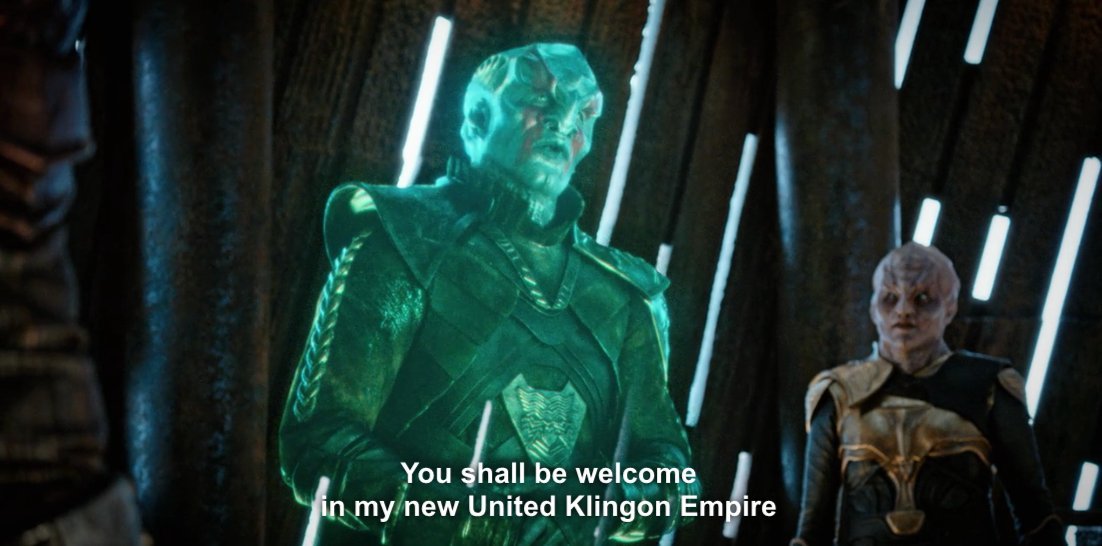
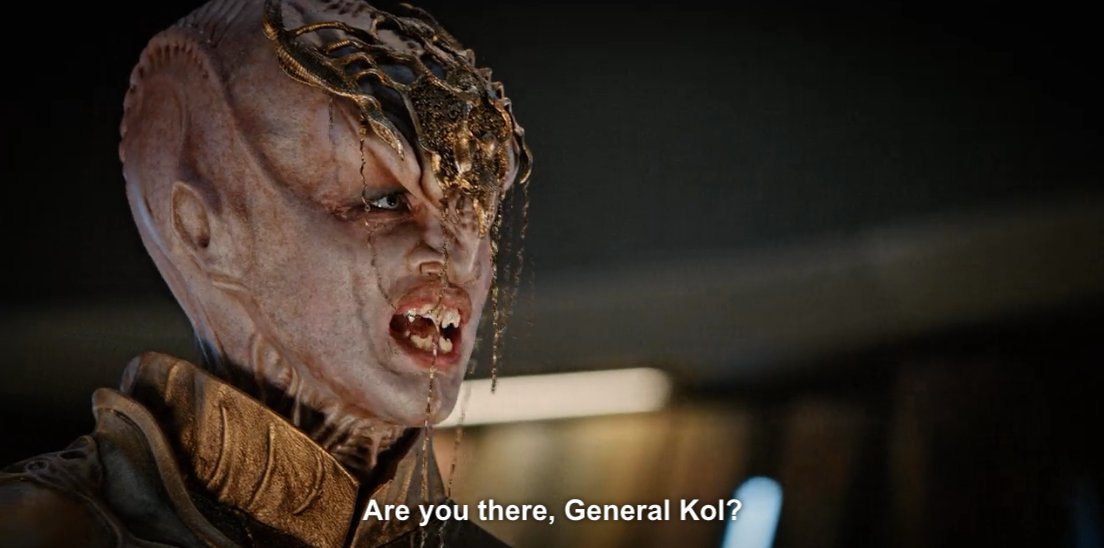
    Ken Mitchell (Kol) revealed in a pre-series interview: "Well, he’s… the leader. You first meet him in holograph form, and he’s kind of an alpha Klingon amongst the house leaders, amongst the 24 house leaders. He has these disagreements and conflicts with T’Kuvma and his house, and it kind of launches that relationship throughout the rest of the season. Kol is on a bit of a path to power, and he also wants to protect his people, not only amongst the Klingon houses, but also amongst the Federation. I just really kind of clinged on to that."


    "Heghmey DISIQpu'... 'a DIvI' Hegh vIthI law' Heghmaj vItIh puS. Devwl'pu', Qo'noS yIchegh. tlngvo' 'evDaq chanDaq De' ylmaq wo' tay' Daqa'taHvIS Suv thlnglhan Segh!" / "We have suffered losses... but the Federation has suffered far more. Leaders, return to Qo'noS. Declare far and wide that the Klingon race fights as a united Empire once again!" - T'kuvma in Star Trek Discovery.


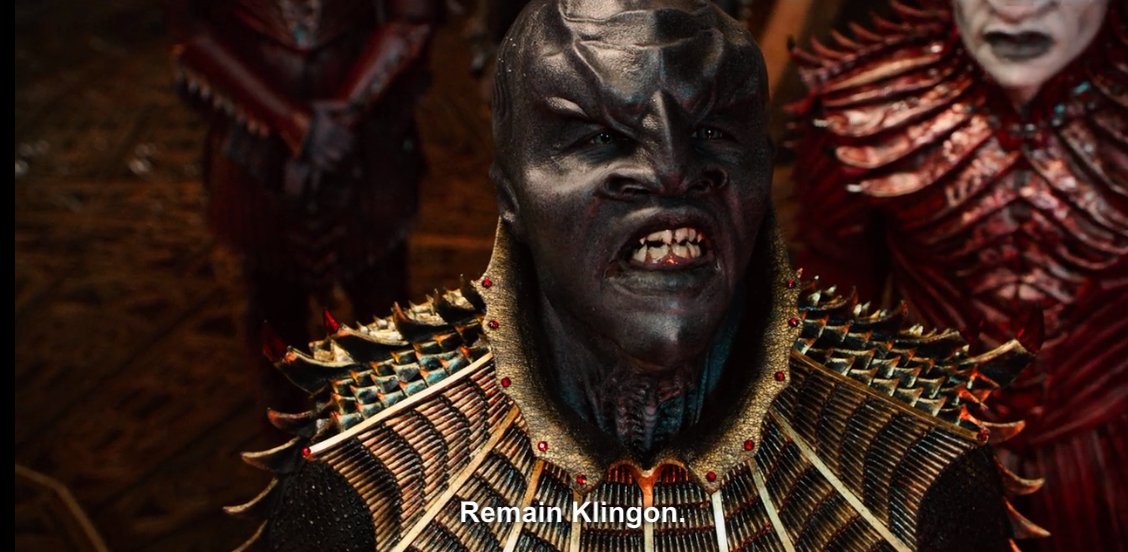
    "They are coming. Atom by atom, they will coil around us and take all that we are. There is one way to confront this threat. By reuniting the twenty-four warring houses of our own empire. We have forgotten the Unforgettable, the last to unify our tribes: Kahless. Together, under one creed: Remain Klingon! That is why we light our beacon this day. To assemble our people. To lock arms against those whose fatal greeting is... 'We come in peace'."
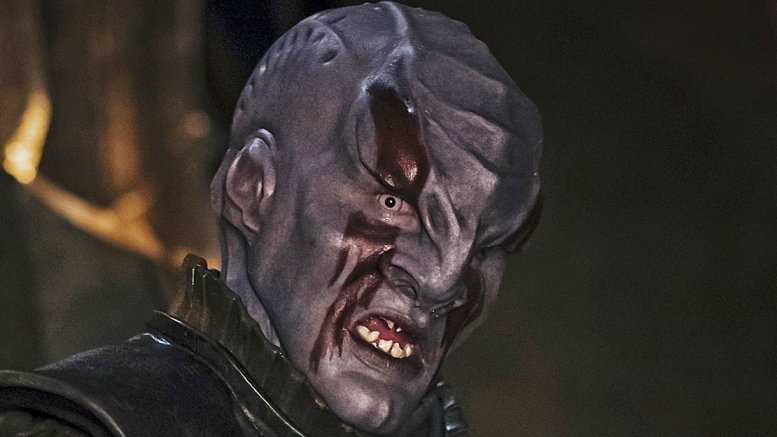
    - T'Kuvma.


    Author's Notes:

    EVERYTHING changes about the Klingons with the above quote, taken from the opening lines of the Star Trek: Discovery series, with the character for T'kuvma and explaining the Klingon motivation in a paragraph. Originally the Klingons were the Mongols in TOS (and certainly have those traits now) and later the Soviets. In TNG, DS9 and VOY they became the Vikings and the Russians with their corrupt government and Viking mentality of honour and battle. In The Undiscovered Country, Brigadier Kerla's speech at the Enterprise-A dinner table was the forerunner of Discovery's view on Klingons as a First Nation, such as Native Americans, Abourigine, Mouri, Nenets, or Inuit; a people who see the Federation horde coming in their ships, taking away their lands and traditions: condemning them to live on reservations or in zoos - "come look at the savages". The Klingons fear becoming tamed and losing their identity. Klingon leaders have therefore ceased being Soviet premiers or Viking leaders: they have taken on the personality of characters such as Red Cloud, Sitting Bull or Crazy Horse. These are leaders trying to preserve their people from the perceived threat that is not over the next hill but one, it is right on their doorstep, behind the Neutral Zone. And that Zone is now being dismantled and taken away from them.
    Klingons are motivated by a trait not expected of them in the past: fear. The Klingons fear the inevitable and wish to die trying to preserve their race - again, another line from Star Trek VI. The Khitomer Accords has the Neutral Zone being dismantled to a timescale that is manageable: five years. I suspect that Houses that border the Zone will want to fight their 'true enemy', the Federation, they will not allow a treaty - or any number of Accords - to dictate the survival of their species. Klingons follow the survival of the fittest and the Kronosian Klingons and their High Command will not always be the driving force in charge. Klingons do not want to feel like a line has been drawn in the sand - this far and NO further, nor do they want their holy sites or other culturally important places to be taken away from them. The Federation challenges their beliefs and their culture - it is a clash of civilisations as to which one is right. Such clashes have historically ended badly on Earth with Native Americans decimated from 12 million down to 500 000 by 1840, Abourigine losing their lands in Australia, similar happenings with the Mouri in New Zealand etc.

    Like the Native American Chiefs of the 1860 - 80s, the Klingon Chancellors have seen the United Federation of Planets created from the Earth Starfleet, and Coalition of Planets, becoming the foremost power of the Known Universe. The Chancellors have told their people that there is hope against this oncoming storm. The priests have always been right; they have retold the story of Kahless, the fool and the Oncoming Storm: the Storm does not respect the Fool and dashes him to pieces. Even a belief in Klingon values will not save them when the Federation has attractive values of its own and a population far larger. The Klingons must fight to keep the flames of their free spirit alive or they will surely be drowned in the tsunami of Federation domestication. This is a clash of civilisations. As with the Native Americans and the rifles they obtained through trade and capture, the Klingons have comparable firepower; this equality is threatened more than ever after the loss of the Tal'lhnor Gates and Praxis.
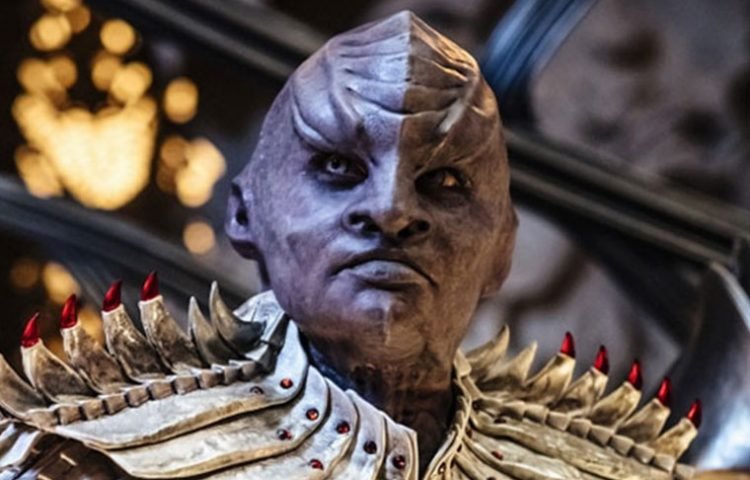
    From Mary Chieffo interview on Star Trek.com: "What's been so beautiful is to have scenes where, yes, we're speaking Klingon, yes, we're in these full prosthetics, yes, we've got our armor on, and I would turn to my scene partner and I'd be like, "We're doing a scene. We're feeling feelings. We're getting to explore the intimate moments." That was a huge emphasis, too, with the language, that it's not just barking. It's got a fluidity and a nuance. I think that this exploration of “the other” is exciting, and I think that we really are going to get a great window into both sides. I'm speaking to this because it really did strike me, just like the other week, how the Federation perceives me, L'Rell is very different from how, say, Kol (Kenneth Mitchell), perceives me within the Klingon world. Who I am, to him, is very different. That’s something we haven’t seen. Usually, it's like all the Klingons are on the same side, and we don't like the Federation. Ultimately, we do unite against a common enemy, and that's the best way to get people together." What this says to me is that we're going to explore the personal side of the Klingons, not just the warriors. This is what I've wanted to do with Star Trek: The Interim Years from the start.

    The re-designing or re-imagining of the Klingons and their Empire for Star Trek: Discovery must be taken into account for Star Trek: The Interim Years. The Klingon Empire modelled on the Mongol Empire or Vikings has a very different feel to Klingons designed modelled off Native Americans and First Nation cultures. If it were the former cultures then they would not fear the Federation and would fight until the stronger nation won. This isn't about the militarily stronger nation, if it were then the Klingons could well win; this is all about a clash of civilisations and a cultural war. The Klingon Empire consists of 24 great Houses that, like the Native American tribes in the 1880s, fail to work together against the Federation. They fight each other, like the families in Game of Thrones, for their version of the Iron Throne. The Federation, by comparison, is a unified entity that has assimilated cultures together to work to a common cause of democracy and unity; treating every citizen, species and culture equally no matter what their beliefs and ways. It is this unity that the Klingon Chancellor, High Command and Priests all fear. Praxis exploding will have brught things to a head, this is all about Chancellor Gorkon preserving his people - the Klingon species and its culture. This changes Gorkon from being Abraham Lincoln to being Sitting Bull. And that changes the dynamic of the Klingons entirely, as I started off by saying.
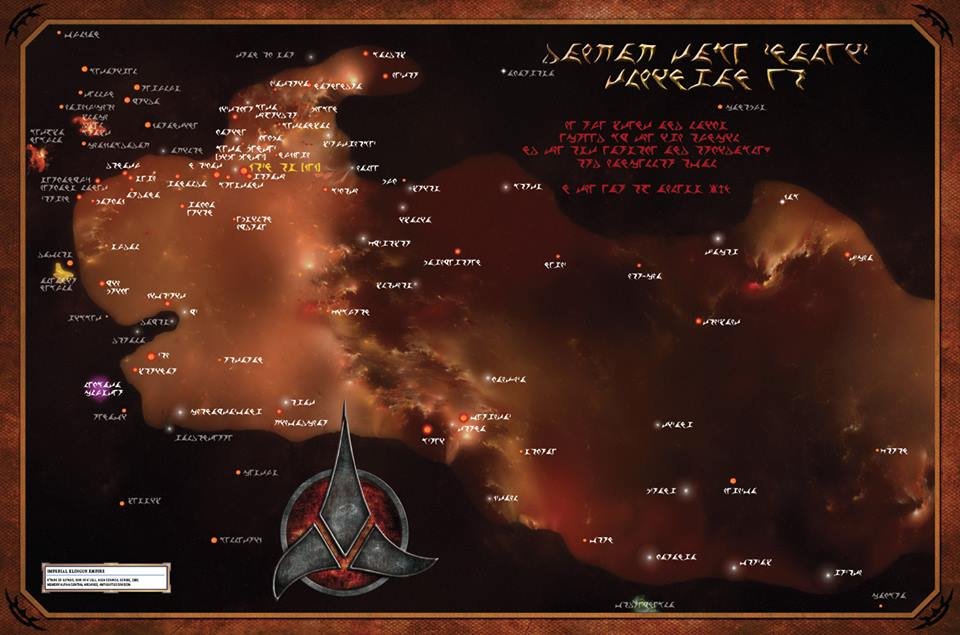
    The viewpoint and map should be re-oriented to the Klingon Empire and Qo'noS. The Empire is surrounded by its enemies: Romulans to the coreward, Federation to the Spinward, Gorn to the Rimward and the Kinshaya Kingdom to the Driftward. The 24 great Houses have all got their own credo and agenda; their own priorities and beliefs. With Star Trek: Discovery, things have changed since the older Trek series of TOS, TNG, DS9, VOY and ENT; aspects of those shows will be incorporated, but in the same vein, they will be re-imagind and drive the stories as needed. Women can still serve on the High Command as the House of S'yrekka and Chancellor Azetbur show. With each of the 24 great Houses having their own fleets and ships, the Empire will be more decentralised away from Qo'noS and not be quite so crippled when Praxis explodes. It is more the disunity of the Houses that holds the Empire back from being all-conquering. The Houses all play their own version of Game of Thrones; the winning House has its leader as the Chancellor, the rest bend the knee to serve on the High Command or die. I deeply suspect Star Trek: Discovery was pitched as "Star Trek meets Game of Thrones", with the Klingon Empire perfect to take on the Westeros element.
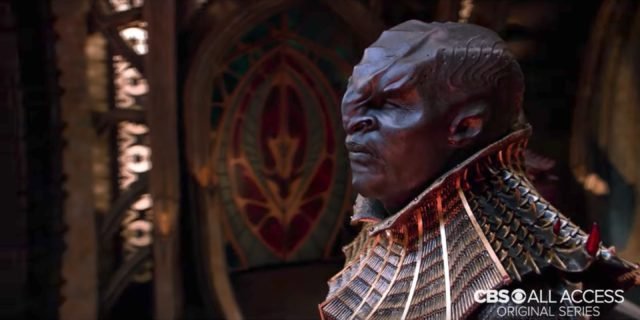
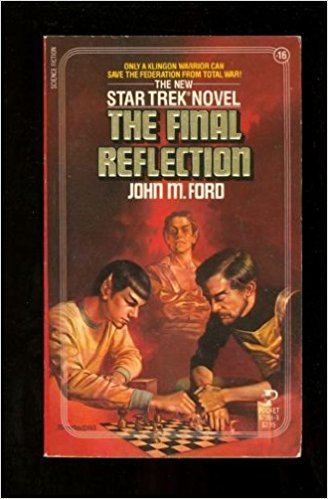
    John M. Ford's "The Final Reflection" has been cited more than once as 'required reading' for the Klingon actors on the new Star Trek: Discovery TV series. This is a far cry from when Gene Roddenberry and Pocket Books changed their admission rules for Star Trek novels to prevent any further books done in this style. Gene didn't like the Klingons being detailed, pulling the FASA gaming license when they used Final Reflection material for the Klingons and writing up the Gorn species in similar detail. The Romulan novels of Diane Duane tried to detail the Vulcan cousins in similar detail with language, being denounced by Gene Roddenberry for being a novel that could be for any generic sci-fi genre, rather than Star Trek. Again, the lack of use of the main Star Trek characters gave weight to Gene's point.

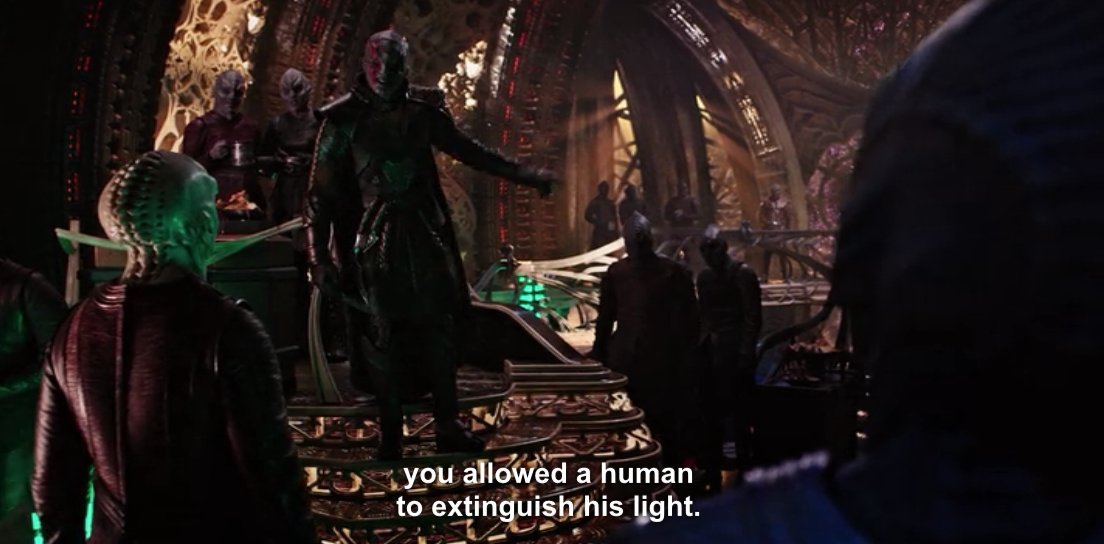
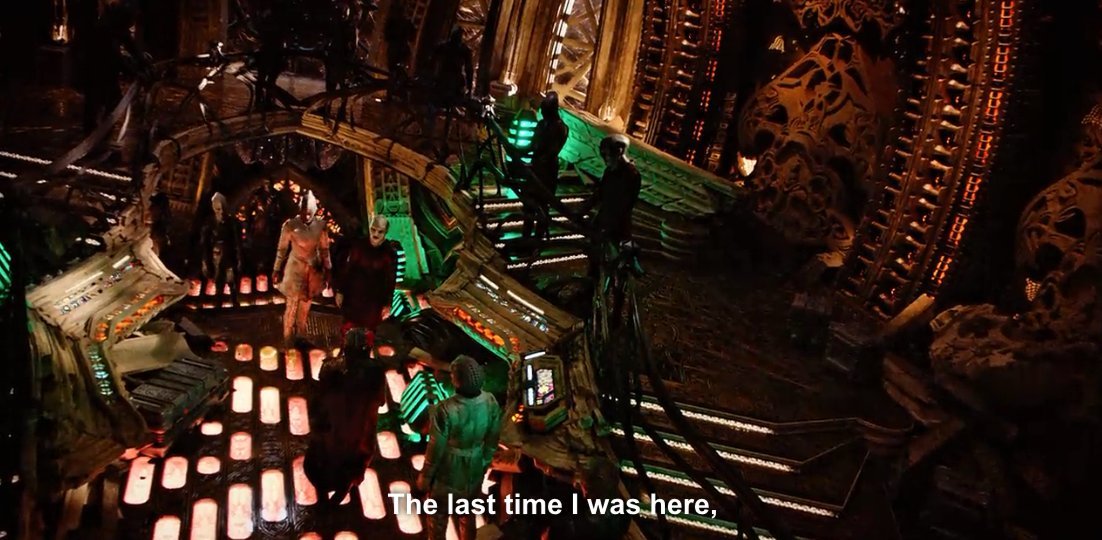
    Art director for ST: DSC Matt Middleton said: "We also sought not just to have fun with the architecture, but also the details that spoke to the history and culture of the Klingon race. As a touchstone, we looked to John Ford’s THE FINAL REFLECTION which was a work really used as a launching-off point for the Klingons by Bryan Fuller.
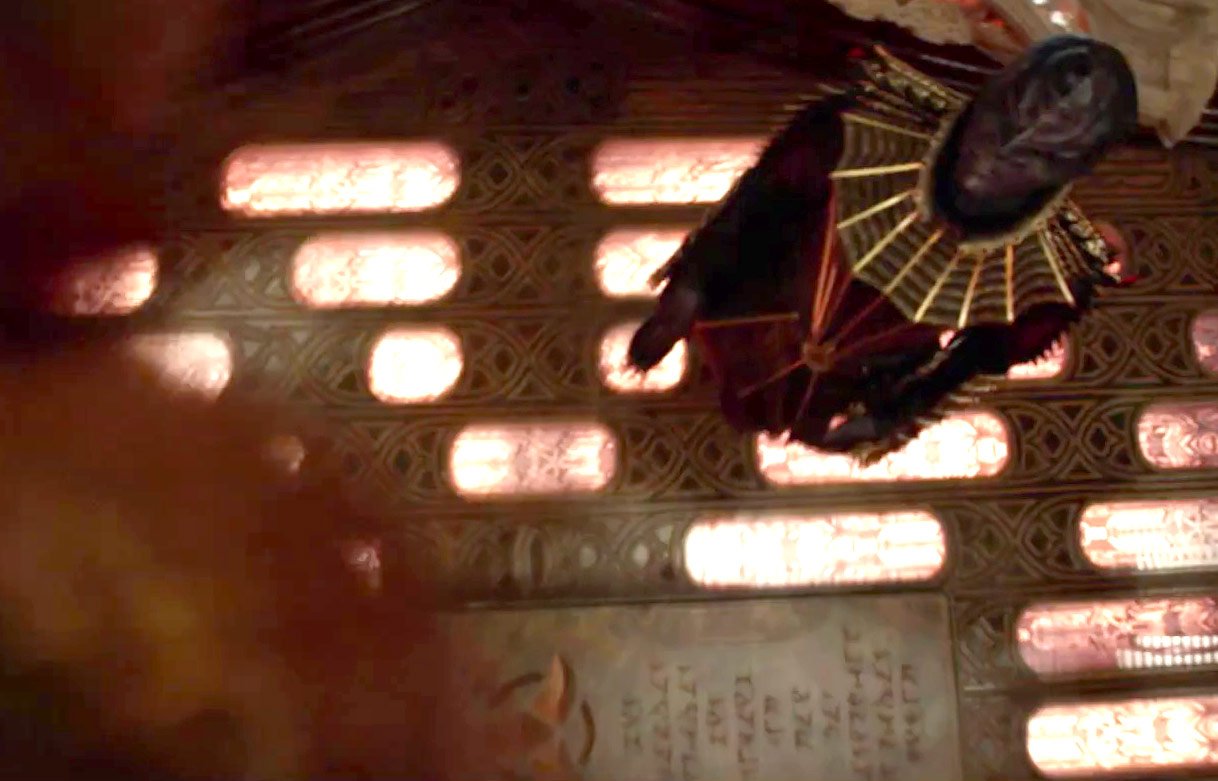
    There is Klingon text on the steps [inside the ship], we have a lot of ritual torches and sarcophagi and glyphs, and other details. For example, [one section of] the Klingon text… was all carefully researched and taken from transcripts from THE FINAL REFLECTION, and we made sure that we had accurate Klingon translation.

    This one, says [speaks Klingon to audience] which reads: “‘I will go now to Sto’vo’kor, but I promise one day I will return.’ Then Kahless pointed to a star in the sky and said, look for me there, in that point of light.”

    Which is a big promise from Kahless!"


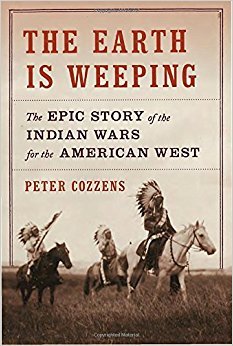
    "The Earth is Weeping", by Peter Cozzens, is an amazing book that gives both sides in the Indian Wars. It tlks bout the inter-tribal fighting, that there was NO unified Native American effort to stop the flood of white settlers. It also speaks of ther Treaties that were broken almost as soon as they were written, or broken when money and personal gain came into it. These factors have, I believe, a VERY strong case to be made in the Star Trek universe, particularly The Interim Years. Colonists/settlers, breaking the Organian Peace Treaty to settle in contentious space; an unenforceable Neutral Zone; Organians, who disappeared almost as soon as they'd made their point (see all the Klingon invasions and infractions of the Organian Peace Treaty that happened every few episodes in the Original Series); Treaties that swindled the Klingons out of territory, or that did not translate properly from Federation Standard into Klingon language/cultural models: all of these factors should flesh out the interactions of the Klingons with the Federation from 2250s to the present (2293).
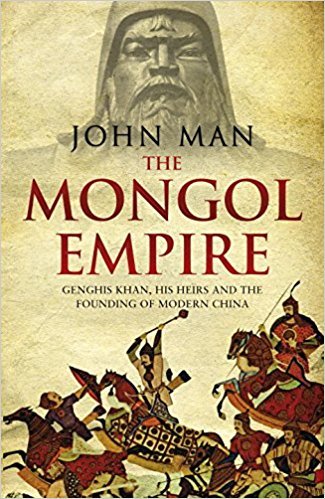
    "The Mongol History" by John Man describes in detail the coming of Genghis Khan and the unification of the Mongol tribes to form one of the greatest empires in history. This book also showed Kublai Khan was a second major leader that built upon his grandfather's empire. There are elements of this that can be seen in Klingon Culture with T'kuvma trying to unify the Klingons. There are also historical precedents that the Klingons ought to heed that after Kublai Khan the Mongols fell from greatness.

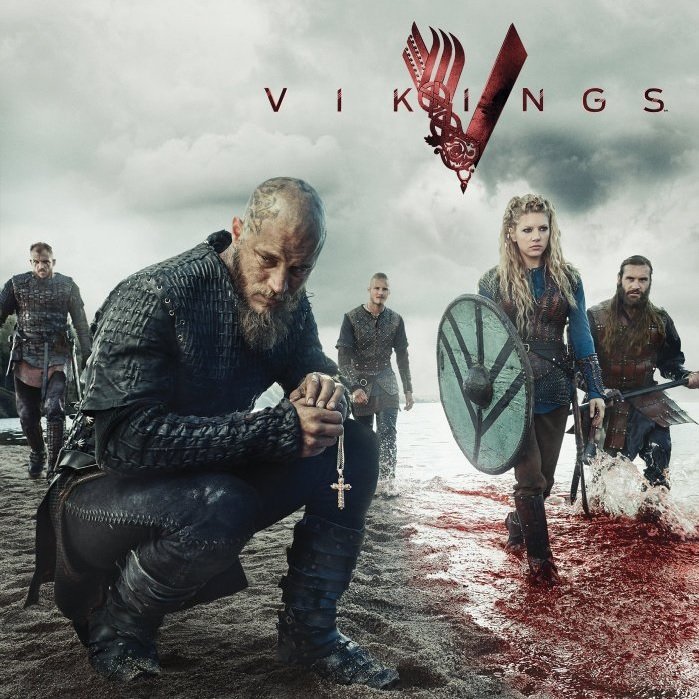
    Another major influence on the Interim Years Klingons for me is the TV series "Vikings". Ronald D. Moore truly took Klingons as the Baddie of the week (or for me, story-wise, the baddie of the weak; if you don't relate to the antagonist then you don't care for them. They might even be the ones in the right and our heroes in the wrong) and gave them a purpose and a culture. Ron D. Moore made them Vikings. I live 20 minutes from York, so the Jorvik Viking museum is literally just up the road. Both Jorvik and the TV series Vikings help to being to life the Norse raiders from the 8th - 11th Centuries. The Prose Edda gives Norse mythology: Odin the All-Father, Thor the God of Thunder and Loki the Trickster to name but three figures. Klingons are a warrior race and, again, the Viking cultural comparisons gives them a culture and a reality that they need to have as antagonists to the Federation. The Bird-of-Prey analogy makes more sense as well, with Klingon Raiders reflecting the Viking ones; exploring and conquering new worlds for their House and the Empire, increasing their stock of honour and standing in the Empire. Honour is everything. This is a phrase that is bandied around about the Klingons but it LITERALLY is THE most IMPORTANT aspect of the Klingons. Honour determines a Klingon's actions; gaining honour is the goal of everythingand losing honour is worse than dying - hence discommendation is the worst form of punishment for a Klingon. Klingons live and die for honour and glory. Killing women, children and even the elderly and unborn is of no consequence where honour is concerned. Worf was offered the life of Toral, son of Duras at the end of TNG: Redemption part 2. For stealing his family's name and honour from him, Worf had the right - and obligation - to kill all of the House of Duras. All of them. They had committed the ultimate crime against the House of Mogh and they should all die for their crime, lest they come back - driven by honour - to seek revenge in 20 years or whatever.(Worf declined because it is the Klingon way, "...but it is not MY way"...)

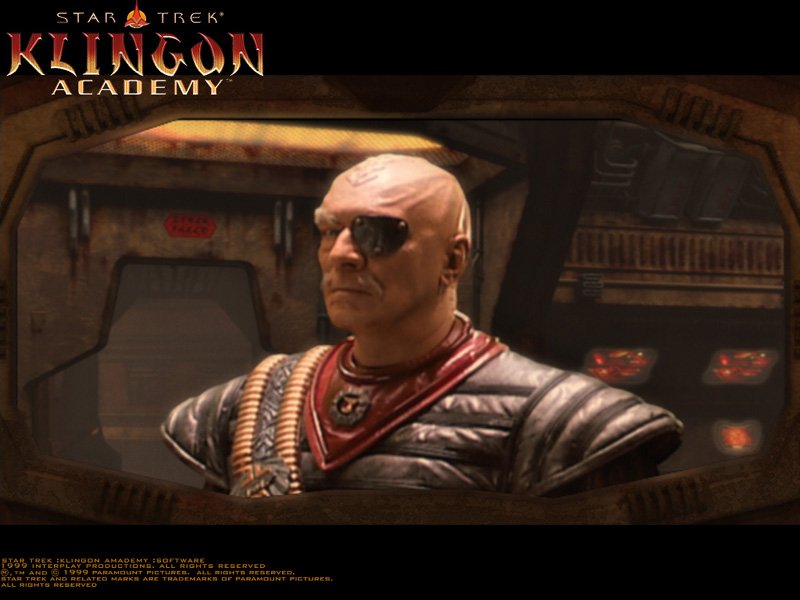
    Klingons are military, spiritual, explorers, conquerors and family members. They are loyal to their House, the Empire and the Chancellor. Every Klingon has been brought up with the teachings of Kahless and their House. The names of their forefathers and mothers are taught to them, as is the importance of honour. Especially honour. Blood oaths, blood feuds and vengeance all have their place. Dates and places of battles, victories and losses of the House are also important. This gives the Klingon the sense of where they are and who they are. A Klingon comes of age and as their House badge symbolically placed on their uniform. Klingon Academy is also a large influence on the Interim Years Klingons. Klingon Academy came out in 2000 after much delay. It tells the story of the Klingon Academy and the time just before Praxis through the eyes of candidate Torlek. General Chang is once again fleshed out by Christopher Plummer and David Warner reprises his role as Gorkon. Chang, to me, is the quintessential Klingon; he knows that war with the Federation is inevitable, not because he is a war mongerer but because he knows the Klingon heart and what Klingons stand for.
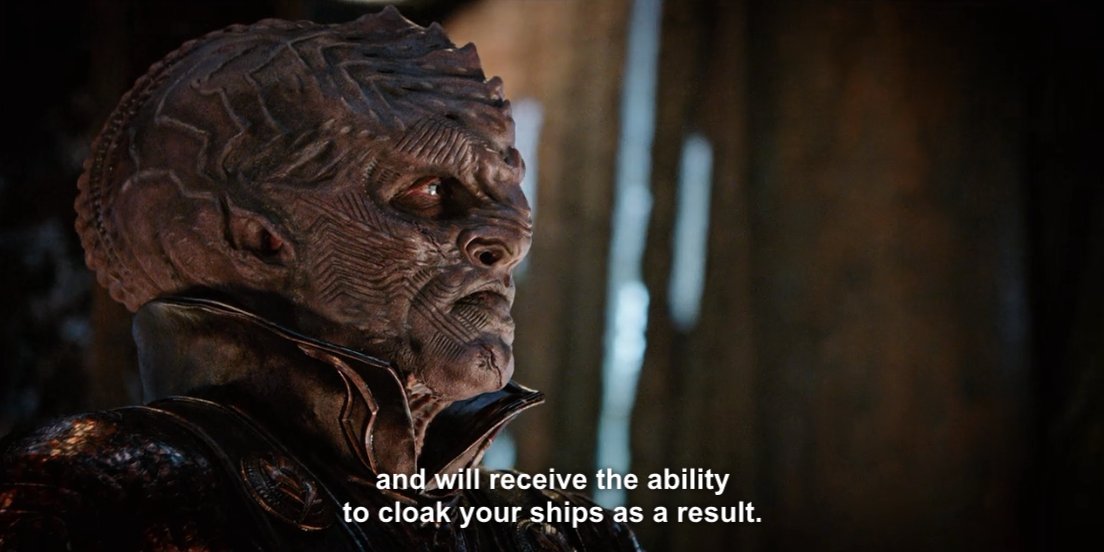
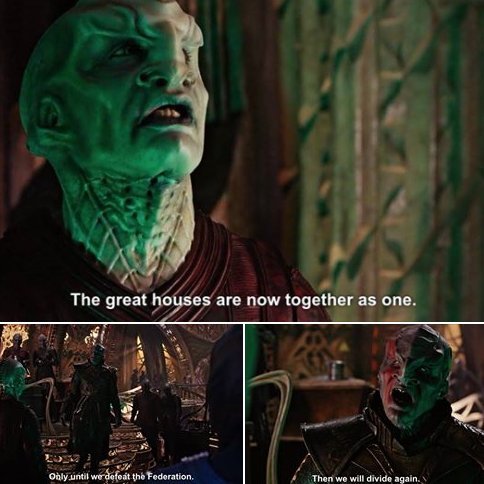
    His lessons explain the Heart of Virtue, the tIq ghob, the symbol of the Klingon Empire from Kahless that is made up of Honour, Loyalty and Duty. The longest blade is honour, which separates a Klingon from being an armed savage. The Academy simulations show the theory and the civil war the practical. What Klingon Academy did for me is to illustrate the driving forces for a Klingon as well as the sparring and powerplay between Houses - a disunity that Star Trek: Discovery spelt out with the line from Kol that the 24 Great Houses were only unified to fight the Federation. Then they would divide again. This informed my vision of the Klingon Empire as a divided entity, showing off unity where it really wasn't. Gorkon had killed Kesh; Gorkon was assassinated by Chang and those Klingons loyal to the Empire. Loyalists, not the traitors that Star Trek VI made them out to be. They were heroes to the Empire, not to the mission of Kirk and the Enterprise-A. Chang and the Generals with him were killed, which now left Azetbur - daughter of Gorkon - as Chancellor. There's NO WAY the Houses loyal to Chang and affiliates will accept Azetbur. This will be the beginning of factions in the Klingon Empire. Chang is the perfect archetype for Klingons, not Gorkon. Even if it cost the Empire its existence, he was loyal to his Heart of Virtue and the Empire.


    "We have become complacent in the time since we last battled the Federation at Donatu V. Our Purity is a threat to them. They wish to drag us into the muck, where humans, Vulcans, Tellarites, and filthy Andorians mix." - T'kuvma, ST:DSC.


    The Klingons were in disarray for generations prior to the 2250s, when a Klingon named T’kuvma moved to unite them to a cause. That cause was the United Federation of Planets; This played on the universal concern of the Klingons that their social Darwinian way of life was existentially threatened by the Federation. The Klingon people feared that their expanding neighbour was encroaching upon the Empire and would continue its mission to bring their teachings and way of life to the Klingons. This would amount to nothing less than the domestication of the Klingon people; Klingons would be placed into zoos and trained to behave in the Federation way in order to protect the flocks of colonial sheep that were placed ever-closer to the border of the Empire. This would amount to the destruction of the Klingon culture, fighting the natural Darwinian process of life that the Klingons accepted which would keep the weaker species in exchange for socially educating the Klingon people out of being the dominant apex predator their species had evolved into. This fear of losing their way of life, being tamed by the Federation drove the Klingon people to war. The Starfleet starship Shenzhou attempted to last-ditch mission to stop T’kuvma in unifying the Klingon great Houses. This was the signal that lit the fire for war. A war for the very survival of the Klingon people and their Empire. The Romulans had been cowed into submission for nearly a century, leaving the Klingon Empire as the only nation strong enough to draw a line and stop the Federation in its tracks. Individual Houses needed to stop thinking small and attacking other Houses or raiding Federation colonies along the border; they needed to gather into a single armada to face the Starfleet warships in a glorious war that would cripple Federation ambitions and bring honour and glory to the Houses and warriors of the Klingon Empire. Even after the Klingon-Federation war in the 2250s, it was this fear of being enslaved and humiliated by the Federation that would act as the primary motivator to the Klingon Empire. The subsequent Cold War and aggressive posture across the border, later the Neutral Zone, was all because of this clash of civilisations. The Federation emissaries would talk of Klingon aggression when it was in fact the shameless expansionist credo of the Federation that brought the two cultures into conflict. The Federation did not understand that the Klingons were following the true way of nature, to be the strongest species and earn the dominance the universe through success in battle. It was only after the explosion of Praxis that this cultural statement had to be compromised...

    Author notes:

    The above material comes from Sarek’s revelation that T’kuvma is a great leader attempting to unify to a common cause. Page describes Klingons as being apex predators through evolution and it makes sense that the Klingon way is justified to them as obeying the Darwinian laws of nature, that the strongest survive. This explains their way of the warrior and why the Federation, who care for the weak, helpless and powerless species they encounter out of compassion, have a way of life that is incompatible with Klingon culture. This existential threat is what drives the Klingons to fight for their very survival and to “die trying” if they need to. Their view is that Starfleet doesn’t explore and learn, they colonise, educate and domesticate the species they encounter, brainwashing them into joining the pacifistic Federation to waste manpower and resources supporting species that nature has obviously selected for extinction.
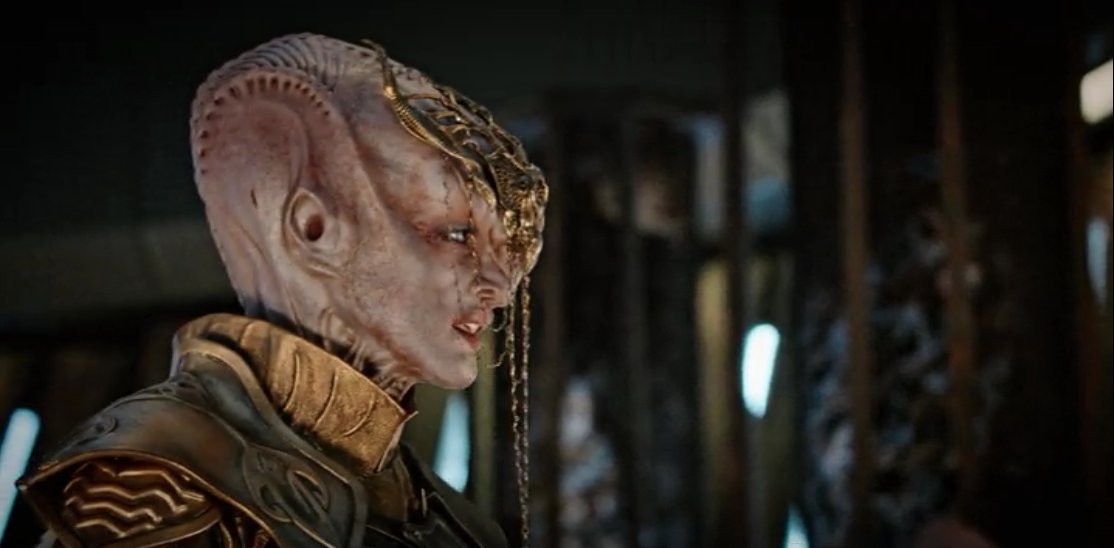
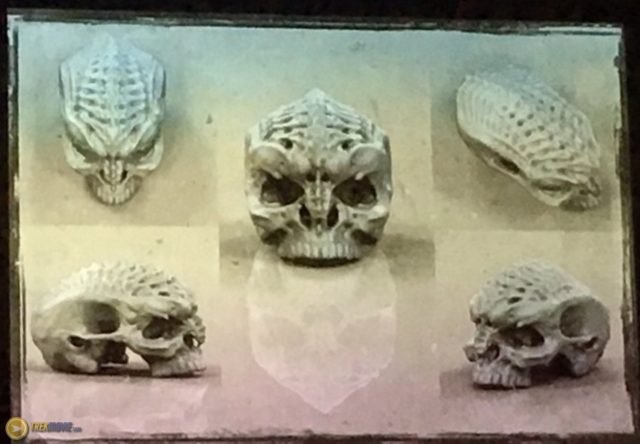
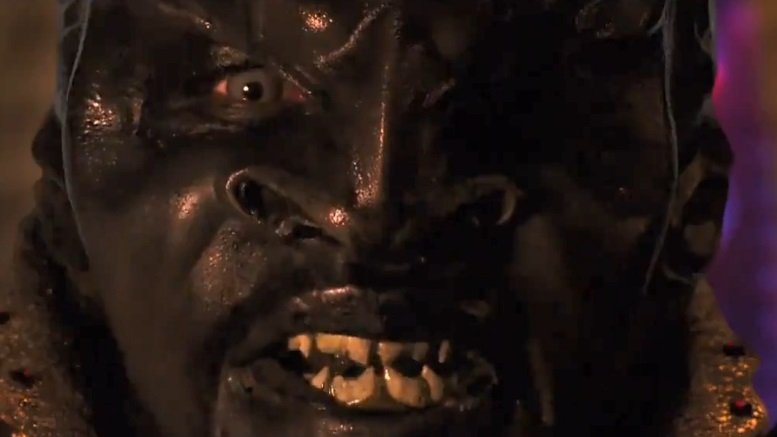
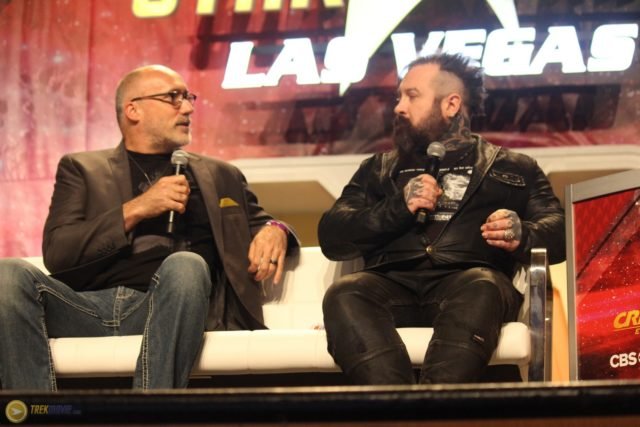
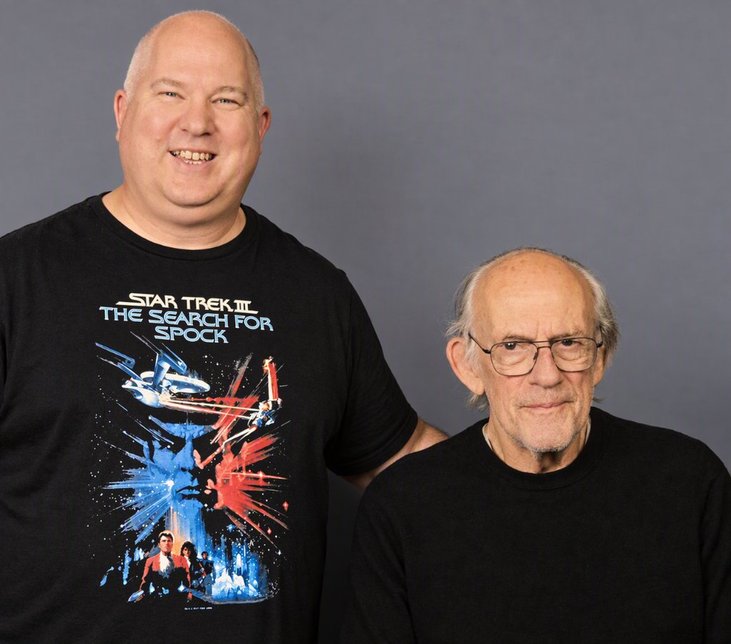
    (left) New Klingon designers Neville Page and Glenn Hetrick. The Klingon species can be traced to the evolution of an apex predatory race on Kronos, leading to the development of a civilisation that would become the Klingon Empire. The Klingon physiology is well-suited to fighting and hunting, possessing armoured skulls and spines and redundancy in their bodily systems in case of serious injury. The skull ridges of a Klingon contain senses and pheromone glands that aid both in self-awareness and in bio-chemical communication. The traditional look of the Klingons from the TMP movies and SNW are very much cookie-cutter big hair and beards, which doesn't make sense for a veried species across worlds. Discovery-like varied klingons with different looks makes far more sense biologically, and is the look I would go for myself. Some Klingons have big hair and beards, others have no beards and some have no hair. Just as with humans, there are a variety of skin colours and hair.

    Klingon biology is very different to human. The natural base stimulation level on a Klingon is significantly lower than for humans. As a result, Klingons look to greater stimulus. A good example of this is Raktajino - Klingon coffee - which is far stronger than that found on Earth. Klingons need that extra kick to achieve the stimulation normal coffee gives humans. Author note: DS9 drink of choice. Klingons are passionate, to a level only matched in Deltans, Vulcans and Betazoids. Thispasion is expressed both in terms of love and violence - and often both together. Sex between Klingons is initiated by the male actually striking the female in the face; the pain and subsequent stimulation of the adrenal system kickstarts the Klingon fight, flight and f-lovemaking system. Even the sexual activities of Klingons are more violent than humans - again for the stimulation level. Arousal is the primary Klingon psyche as a leftover from them being primary predators. Klingons fear being domesticated and tamed as this wildness and arousal is what makes them feel alive.

    Sado-masochism plays a role in Klingon sexual play activity; these are considered the norm. Bondage, torture and physical pain are all part of the mating pattern of Klingons. Human ideologies such as 'safewords' are non-existent in Klingon culture. Danger, pain and fear all run as part of the same path of stimulation to raise the arousal levels and to really feel alive as a Klingon. Author's note: Kruge commenting on self-destructing Genesis as "Exilarating, isn't it?. Klingons thrive on high stimulation of their adrenal levels, boosting their strength and combat performance: especially in situations where they may be injured. The need for stimulation in sexual play extends to the presence of bladed weapons in the domestic situation.

    Klingons deal in death and glory. Where humans fear death, Klingons embrace it on the provision of the manner of the death being in glorious battle. Dying of old age or disease is scorned upon.


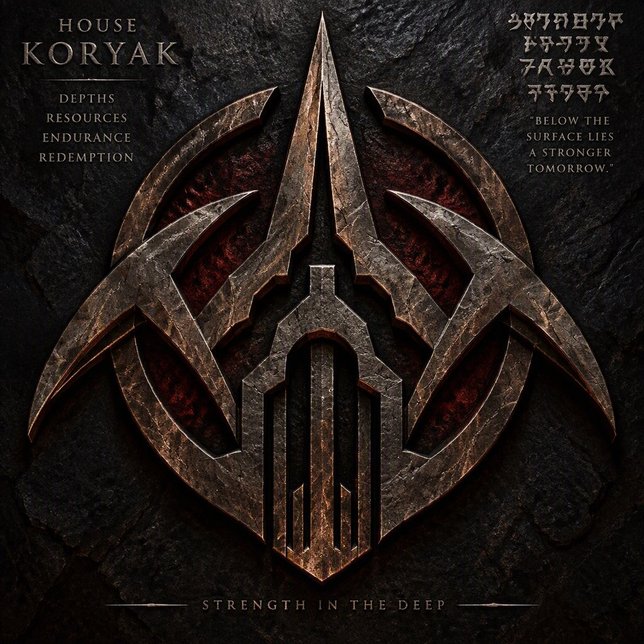
    The Klingon Empire is run via the 24 great Houses, who form the High Command. The leader of the High Command is the Chancellor. The Houses traditionally have their own ideologies and variations. House Mo’kai is a matriarchal and specialises in espionage and spying. Klingon Houses place high importance on their individual appearances in clothing, facial and body markings, weapons choice and styling. All Klingon society is influenced by the teachings and actions of Kahless the Unforgettable, the founding father of the Empire. Each House interprets these teachings differently, influenced in part by the different worlds in the Empire that these Houses reside on. During the Interim Years period, the Klingon Empire runs on T'kuvma-Kahlessian philosophy. This is the translation from T'kuvma of the words of Kahless. It looks back to the Klingons being the slaves of the Hur'Q and sees the suffering as a necessary part of their history, inspiring Kahless to break his chains and to slay these 'gods'. This philosophy is extended to their subjugated worlds: suffering is a necessary part of life to inspire you to rise up and be better than you once were. The great Houses have traditionally limited the Houses that can ascend to be one of the 24 great Houses to those that are based on Qo'noS. In light of two Houses being obliterated by Praxis and others seriously weakened, Houses from away from Qo'noS and he core worlds were chosen to ascend onto the High Command, including House J'tal from the Gorn border region. This break with tradition has been resisted by some Houses including Kor and Koloth.

    The Klingons first moved into space and assimilated the former Hur'Q Empire worlds into their Empire; this was simply a case of changing flags from the Hur'Q one to the Klingon one. Beyond that, the Klingons began to forge their own empire. As with all empires, this involved setting down their own language and values and looking to their subjects learning them and spreading this outward. The reality is the core worlds are exclusively Klingon speakers, moving further out into the depths and backwaters of the Empire, less and less people can speak Klingon. Running colony and assimilated worlds is down to local ruling families and agencies that report back to the Klingons themselves, with a governor and garrison on the world to keep it in line, backed up by the threat of the full Imperial Klingon Navy and Marines. Klingons thaemselves can be found on worlds across the Empire. Some are brave, some are cowardly, some are cruel and some are merciful. As with all species, there are variations in what Klingons are. Only the aspirational, aggressive driven ones make it to be Chancellor; you need to fit the criteria of the philosophy and High Command in order to rule. Klingons also evolve to the regions that generations have grown up in; Klingons in the House of J'tal have an initiation into adulthood that requires them to fight an adult Gorn. This results in many dying if they aren't strong enough. As a result, over generations the House of J'tal have become a small House with 6 ft 6/ 1.98m tall, broad, muscular Klingons. Usually scarred by the Gorn's teeth and claws, they're aesthetically not models. They are mighty warriors. Their martial arts and weapons have become dedicated to fighting Gorn and their physiology and tactics. Other Klingons have evolved to desert worlds or wet jungle worlds. There is not a single Klingon look that can be defined as stereotypical Klingon. The political and military great Houses of Qo'noS, with their big hair and beards, tend to be classed by Starfleet as Klingons. This is minimalist and incorrect.

    The Klingon Empire is despicted with D-7 K't'inga class battlecruisers and modern MK III Bird of Prey. The truth is, away from the military displays and prestigious missions, the Empire relies on older D-6 and even D-5 cruisers, with older Bird of Prey and Raptor warships. The Klingons have become masters at battlefield upgrades, crudely and quickly modifying and upgrading their warships to counter their enemies and new situations. These upgrades are often crude and unsightly on the ships, however they are rapid, robust and functional. Whilst Starfleet would take eighteen months redesigning and refitting their designs, the Klingons can do so in a fraction of the time. Less capable, earlier models of warship tend to be given to the non-Klingon members of the Empire. This allows them to fight for the Empire, whilst having the most capable warships for the Kronosian Klingons, partly to make sure they can deal with any rebellions using their own equipment. Klingons and their subjects adapt their fashion and fighting echniques to the regions in which they live and fight. On the battlefield, Klngons tend to wear minimal armour; opting for surprise, swiftness and freedom to fight. Weapons tend to be disruptor rifle, pistol and a d'ktahg knife (tajtiq knife-sword for House of J'tal for breaking wrists or fingers, stabbing eyes, ears, neck, armpit or shattering skulls).

    Author Notes:

    The Klingons are primarily designed from the Mongols, with similarity of history pre-Genghis Khan and the disorganisation, the rise of a unifying leader (Genghis Khan) and the subsequent creation of the Mongol Empire. When the Mongol Empire lacked a solid leader, this soon resulted in fierce in-fighting and the self-destruction of the Empire – the Klingon Empire being much the same.
    The canon great Houses mentioned so far are: T'kuvma, Antaak, D'Ghor, Duras, Kozak, Konjah, Kor, Korath, Martok, Mo'Kai, Mogh and Noggra. (Twelve so far and another twelve to name in canon). The idea of Houses is said to come from Dune. Japan had Houses and the Mongols had clans, so any and all of these could be seen as inspiration.

    The variations in the Houses is very reminiscent of Game of Thrones with the different families with their crests, mottos and dress code – the Lannisters with their lion and gold and the Starks with their wolves and wolf pelt shawls. With Star Trek: Discovery the House T’kuvma wears gold and House Kor has animal pelt capes as a sign of leadership.

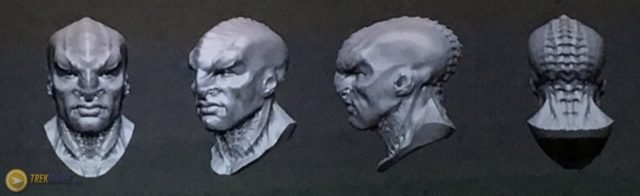
    Neville Page describes the Klingon biology: "Being that the Klingons are an apex predator the design for their anatomy assumes they have highlighted senses, specifically extra sensory receptors running from the top of their heads to their backs. This was the “impetus” with Page and Fuller for the shape of the heads. They started with designing Klingon skulls."

    Neville Page describes the brief he got: "The words that he used were “The Klingons are self-ware estheticians, and I want them to appear less brutish and more conscious.” He made references [to] baroque and samurai [styles] in terms of armor because there is this whole suit [Torchbearer]."

    Importantly, Page said: "The empire is very big. They don’t all grow up on Kronos. They don’t all live on the same planets and certainly those different planets would have different environments. So how would the cultures have evolved differently?…We tried to come up with cultural axioms for each house so each looks different and they bear a cultural patina like our cultures do here on Earth."

    Kenneth Mitchell on Kol: "He is very complicated. He leans more towards some of the Klingons we are familiar with. He is very powerful. He does have a line I can paraphrase which does explain some of these things. He says “All I see is another attempt by humanity to rob us of our identity.” Then he adds: "The images that you have seen so far are one house led by T’Kumva. Today you just saw the first image of [Kol]. So even in the wardrobe it is starting to venture to the more traditional Klingons. More leather and a different set of armor. And the series itself is going to explore 24 different houses and the leaders among them. And you will find different complexities and different ideologies amongst those houses. And so what you have seen already in these images is mostly just from one house. You are going to start to explore further into the Klingons, and each of those houses has a different set of physical looks and variations as well as ideologies." Adding "I have a fur cape, which distinguishes my position as the leader [as like] a status symbol."

    From Mary Chieffo: "Obviously the hair was the biggest thing people noticed, or the lack thereof. And I will attest to the fact there is a reason my ridge goes back the way it does. There are sensors and pheromones…There is a whole reasoning behind it that is adhering to what has always been true in Klingon canon…So I deeply believe we are in line with what has come before but is also adding a new kind of nuance." Adding later "...her father was House T’Kuvma, but her her mother was House Mokai, which is this matriarchal Klingon house that is known for being spies."
    From what Mary is describing, it seems that the Klingons not only have senses along their head spines but also pheromone emitters. This would seem to be taking aspects of the Deltans and adding it to Klingons. The helmet with imaging technology on that folds away seems very Predator; finally the Klingons are entering the 23rd Century with some weapons technology in ST: Discovery.

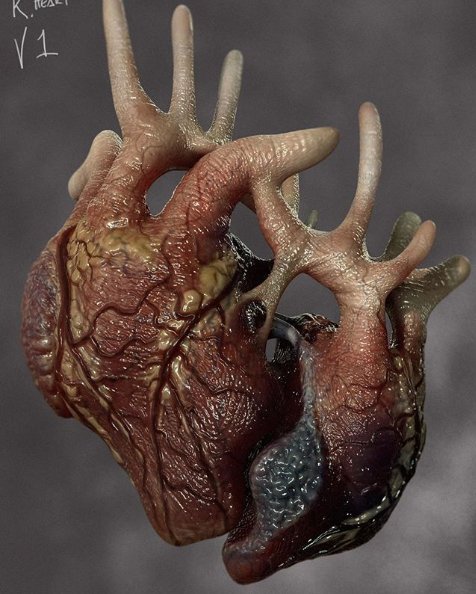
    Klingon Heart copyright Neville Page. Neville Page posted on his Instagram page a picture of a Klingon Heart from season one of Star Trek: Discovery. The biological sense and intricate thought and detail that went into this design is one of the reasons I admire the work of Neville Page so highly. From the man himself: "....here is a heart. Specifically, a Klingon heart. Seen in season one during a surgical procedure, this heart is based on the canon that Klingons have redundant/double organs. Rather than just mirror a heart, I thought it biologically appropriate to supercharge the Klingon heart. This “second” heart (on the right) acts as an overdrive pump when more oxygenation of blood is required and thus facilitating greater success in battle. I included an NOS (nitrous oxide system) booster on that second heart (seen at the lower center of the image) in the form of an additional adrenaline gland. Excite a Klingon and...well...good luck with that??"
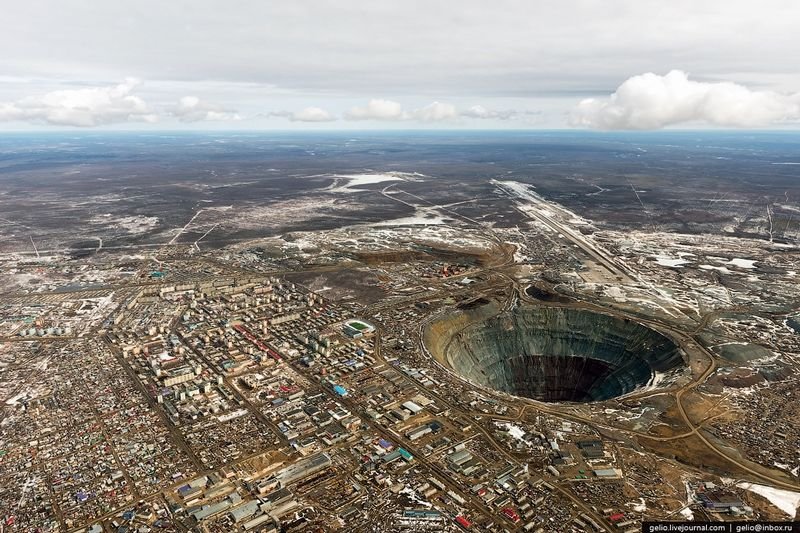

    "Oh yes, ...new cities, homes in the country, ...your woman at your side, children playing at your feet. And overhead, fluttering in the breeze, the flag of the Federation. Charming." - Commander Kruge, ST:III.

    The 2280s had one final moment of imperial greatness for the Empire with the attacks on the starships Grissom and Enterprise. Klingons like Chang and Kruge argued for 'breathing room' for the Empire, just like the Liebensraum the Nazi Germans wanted in the late 1930s on Earth. Gorkon, freshly back from his pilgrimage to Boreth, put the Chancellor and High Command onto a road for negotiations with the Federation, buying time to develop new warships and new defences. Klingons like Chang and Kruge argued for a swift strike like in 2256 that showed that the Federation COULD be defeated and that it SHOULD be defeated; a rival taken off the Klin Zha board to clear the way for the Empire gaining new resources, attaining supremacy in the Beta Quadrant.

    Chang and Kesh sought to build new warships like the Accuser class dreadnought that entered service in 2282. Once this colossus of a battleship entered service the L-24 Komo Val was pushed to compete against the Federation Excelsior class as a techical and strategic innovation that would beat the Federation at their own game. To add to this, the B-12 Sword of Kahless class superbattleship was designed to surmount even the abilities of the Accuser class to be the biggest and most powerful battleship even seen in the Beta Quadrant. Whilst the Federation dug in with policies of ENGAGEMENT, INTELLIGENCE, DETECTION and DETERRANCE, the Klingons looked to design a warfleet that would smother those defences, sweep aside those deterrants and, even as the Federation Council baulked at the requests by Starfleet for more capable tactical assets, so the Klingon High Command pressed on to have the most powerful warfleet in known space, able to take on wars on any two fronts of the Empire. Simultaneously.

    Chancellor Kesh dispelled the fears of Kruge to say that they did not have to fear the Federation expanding into Klingon space and swamping them; it was the Federation that should fear THEM. Bird of Prey warships with new cloaking technologies were being developed for special forces-style raids on the Federation to take down key strategic locations. The warfleet guided by the Warrior's Anger class command cruisers will guide the bulk of the Klingon armada into Federation space, with the Accuser and later Sword of Kahless class battleships to obliterate any opposition. There would be no repeat of the Pahvo defeat of 2257 with their cloaking technology, this would be a glorious war to destroy the united Federation of Planets once and for all. Cold War was merely stalling until they were ready to wage the hot war that they desired.

    The cracks, however, were beginning to show with the Klingon Empire as an economic designed to run a planetary Empire had been stretched to the stars and now was reaching too far. The model of building an armada, conqueuering worlds, using their resources to feed the Empire and build a new armada required continuous growth. The boundaries with the Federation, Romulans and Gorn had caged in this ambition. The ever-growing debt had come in to be paid. The Empire had a history of turning in on itself when it stagnated and the civil war of the early 2290s deprived the Empire of one of its best sources of energy and Praxis was pushed to take its place.

    The subsequent explosion of Praxis changed the Empire forever.

    Author notes:

    The role model for the Klingon Empire was the Soviet Union, and later Russia. Whilst the Vikings, Samurai and Biker Gangs have inspired the culture of the Klingons, the roots are firmly in the Russian camp. The 1980s was a period in Russia of renewed Cold War, ending in detente and finally in the loss of East Germany, Poland, Hungary and the Baltic States.

    In truth the role model for the Klingons is the Native American nations in the 1880s. The Klingons fought for their freedom in the 2250s, 2266 almost saw a resumption of hostilities. The Organian Peace Treaty necessitated a Cold War of spies and proxy wars. The absence of Organian interference led to a clashes in the 2270s. By the 2280s the Klingons were fighting to keep their lands and traditions alive by both sending emissaries to negotiate with the Federation and also by deniable surgical strikes. By taking out both the Enterprise and Hood, the Klingons were able to give the Federation a moment of pause.

    The Klingon military worked on two different schools of facing up to the Federation; the Accuser class dreadnought was their answer to the Federation and Ascension class dreadnoughts of Starfleet in the 2280s. To counter the rumoured Excelsior class, the L-24 Komo Val class was developed by the best scientists and engineers of the Klingon Empire. This revolutionary warship used experimental technology and rare minerals to produce a militarised rival to the new NX-2000. The Klingon Empire launched Komo Val first and lit the fires under the Federation to launch the own ship. Klingon prestige was on the rise and, for the first time in decades, there was hope in the Klingon Empire that the spread of Federation democracy could be halted with the new warships.

    ‘Rogue Klingons’ and ‘Rogue Houses’ are a feature of both the 2280s and 2290s as a means of striking targets in the Federation without the political fall-out of a sanctioned military assault. This is the Klingon version of the Russian policy of ‘Little Green Men’ in Crimea in 2014. After the loss of three major starships in 2285, the Federation council was beginning to tire of the ‘Rogue Klingon’ explanation. These strikes continued even to 2298 and beyond when Starbase 11 (located in Federation space near Benecia) was hit by a Klingon Bird of Prey. Despite only one fatality, this was a symbolic strike to restore pride in the Empire.

    The movies IV and V showed a thaw in the relations with the Klingons that mirrored the Soviet Union under Gorbachev – perhaps implying that Gorkon was Chancellor at this point, as per Dayton Ward’s novel ‘In the Name of Honour’. This would make more sense than having Kesh continue as chancellor into 2291 as he was portrayed as anti-Federation. The events of Klingon Academy don’t sit too well with the novels as Chancellor Lorak doesn’t appear anywhere else and the rapid succession of challengers to the Klingon throne mean working out continuity is difficult if incorporating Kesh from the novels still being in power in 2291 and Gorkon perhaps from as early as 2287. B’rak from Federation: The First 150 Years needs to be ignored as adding unnecessary complexity to a difficult situation.
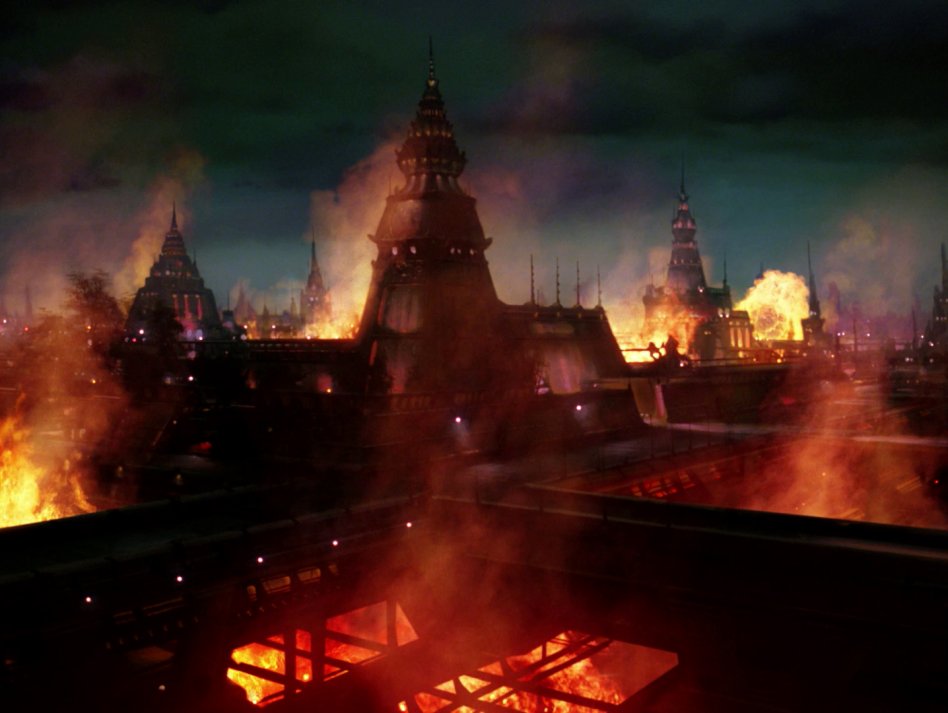
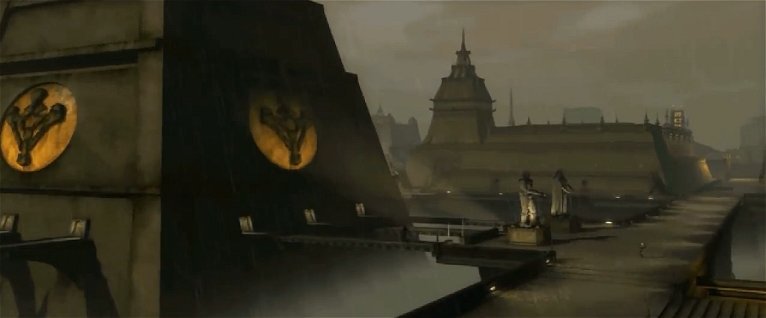
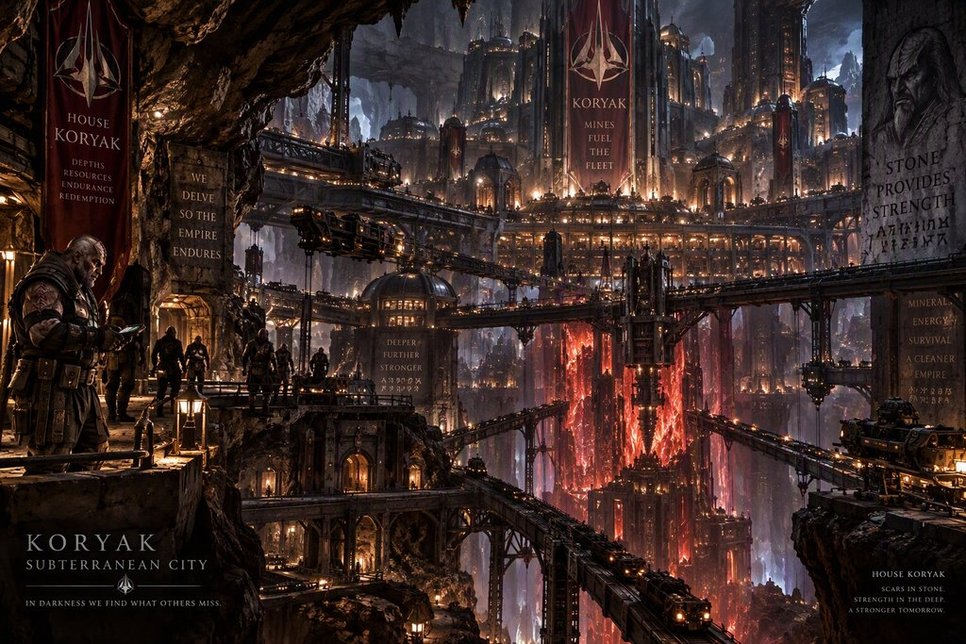
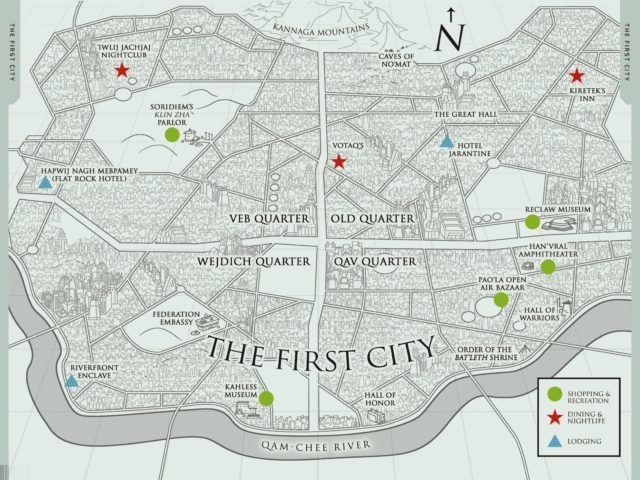
    Klingon worlds and Kronos need that Soviet industrialised image with foundries and mines. This is an Empire that needs to build an armada to conquer and rule an Empire. Whilst Kronos lacks minerals now, the Hur'Q exploited the planet and have left empty mines and barren scenery. Klingon cities are very practical and not all as glamorous as the First City.


    Praxis was the key energy production facility of the Klingon homeworld. Ever since the destruction of the Gates of Tal'Ihnor, more pressure than ever was put onto Praxis to keep up the dilithium mining and refining operations; the largest and most important in the Empire. On Stardate 9521, at the end of 2292, those pressures resulted in a lapse of the safety systems at Praxis and the ignition of the dilithium ores. The science of dilithium and subspace is a complex one best left for physicists. In simple terms, the dilithium transformed the explosive energy into subspace energy - a shockwave at warp speeds. This both shielded Qo'noS from being obliterated like an egg next to a hand grenade, yet it spread the deadly effects of the explosion over lightyears and many worlds and warships. Another lethal effect was to create delta radiation in amounts seldom, if ever, seen. For the biological life on the side of Qo'noS facing Praxis, and the workers on Praxis itself, it was a death sentence. Like Chernobyl and Pripiat, two towns irradiated for centuries by the fire and explosion at the nuclear power plant in Ukraine, so the delta radiation killed many of the Klingons sent to deal with the aftermath of the explosion. Most of them reduced to little more than organic soup. The remaining Klingons from the moon and Praxis-facing hemisphere of Qo'noS, radiation scarring and other effects were rife.

    Author's notes: The 2019 HBO masterpiece series Chernobyl shaped much of my thoughts on the explosion of Praxis. The psuedo-physics of subspace and dilithium, along with this year's depiction fof the irradiation of Christopher Pike in Discovery season 2 also fuelled the thoughts in me of the negative aspects of subspace and dilithium. Delta radiation would seem to be linked with it all as Pike's accident was in engineering. this would be delta radiation Pike to the max: Klingon soup for those brave Klingons fighting the fires and lethal effects of the dilithium energised and emitting delta radiation.

    The Explosion of Praxis hollowed out the Klingon Empire. No exact figure was ever reached as to how many Klingons died or how many warships were lost. The best estimate was that over 4 billion Klingons were killed across the Empire and over 3000 warships were unaccounted for by intelligence sources after the explosion. Whilst the frontier forces had to keep the illusion up of the mighty Klingon Empire, the truth was that they had lost a substantial amount of their central Command and Control facilities. The construction and repair facilities of the Empire had also been degraded and destroyed, leaving thousands of warships with no facilities to repair them. Whilst the Klingons had almost recklessly charged into battles before and repaired the damage afterwards, the Praxis destruction removed this option. General Gorkon had assumed command of the Klingon Empire to deal with the destruction but was assassinated when he met with the Enterprise-A. His daughter Azetbur took over his legacy and signed the Khitomer Accords to warm relations with the Federation and cool the hostilities they could not afford on all borders.

    Qo'noS, the capital world of the Klingon Empire has almost a third of the surface scoured clean of cities and life. The once green planet now has a blackened half. Billions of lives were ended in an instant as the flare of Praxis swept away the clouds and azure blue of the atmosphere in a fraction of a second. The remaining power of the subspace shockwave scorched the facing side of Kronos like a blowtorch, blasting the rubble of the cities and carbon residue of the trees and other lifeforms around the remaining atmosphere and into space. The tsunami of oceans and chaos of falling debris from both Praxis, and the broken tectonic plates of Kronos itself, smashed up the First City and other population centres across the capital planet. For days it was not known who had survived and who was dead. Several great Klingon Generals and leaders of Great Houses, indeed Houses themselves, were wiped out of existence. Temples, statues, sacred lands and sacred places had been obliterated in the Praxis blast.
    The main effect of the explosion of Praxis is the low-level delta radiation that the ruined moon still emits. Whilst this radiation was catestrophically high in the accident, reducing the Klingons on the moon to organic soup, the levels died down rapidly following the emission of the subspace wave. The current levels of radiation on Qo'noS are more of less harmless to Klingons and humanoids, but are sufficient to be fatal to the gagh in their swamps on Qo'noS. As a result, the gagh population is plummeting perilously towards extinction. Live gagh are a vitally important part of the Klingon diet. Despite being meat eaters, Klingons must eat live gagh for certain enzymes and nutrients that cannot be replicated or found elsewhere. Without these enzymes, the Klingon natural metabolism collapses in a painful, dishonourable death. As a result of this, Chancellor Azetbur has prioritised Federation aid to address the delta radiation emission, whilst ordering her scouts to find worlds suitabeto terraform into new gagh swamps to rebuild the collpsing worm population. Certain farm worlds in the Ch'ramak system seem suitable for such a transformation. Military engineers and garrisons of warriors will be sent to enforce the transformation before it's too late.

    Author's Note: I really want Praxis to be the Hobus supernova event of the Klingon Empire. Like the HBO series Chernobyl, I want a Star Trek: Praxis miniseries that shows the run up to Praxis, the explosion in detail and the aftermath for decades. he science of subspace, dilithium and delta radiation all needs to flesh out in a way that makes this all seem realistic and horrific. Ths scars the Klingon psyche for decades to come. Gorkon has been Chancellor since 2291, on the death of Chancellor Kesh from a fast-acting disease, followed by a civil war deciding the succession. Now he has to make the toughest of decisions to deal with Praxis. Harder than any he had to make as a General. I want the Soviet-era Klingon Empire to be shown as a rival to the Federation, spreading T'kuvma-Kahlessian theory across the stars as an alternative to the Roddenberrian philosophies of the United Federation of Planets. Like the Soviets, the Klingons are desperate to keep up with Starfleet in every aspect. It comes with a price; this price of death and destruction.

    The planet looks like a blowtorch has been taken to one side, wiping out the life, cities and culture on that side. This event, although small compared to the size of the Empire, must be apocalyptic in scale enough to bring the Klingon Empire to its knees. I always felt that the explosion of Praxis was played down; Star Trek VI has the event as pivotal and yet by TNG there is absolutely no sign of any legacy - which is partly because this was filmed around the time of season 5 TNG. If the explosion rocked the hell out of Excelsior from light years away, then Kronos should be seriously trashed. Which my version is. Any ships in shipyards or spacedocks were obliterated, which includes many prototypes and dreadnoughts like the Sword of Kahless class, that were limited-build homefleet ships.


    From the time of the Praxis explosion, Chancellor Gorkon knew that he had to act fast. He immediately ordered the Imperial Klingon Navy to deploy all engineering assets to the Qo'noS system. their orders were to stabilise Praxis and the home world; they were to assess what was destroyed and start to rebuild the lost, vast shipyards formerly in the system. Gorkon knew the fleet had suffered severe localised losses and most of the finest shipyards were in the Qo'noS system. It would take a decade to rebuild them. Many advanced prototype warships were also lost; they would be rebuilt once the shipyard factories were once again functioning at full strength. There were thousands of Klingon warships that would be in dire need of refit before the orbital factories were reconstructed. Gorkon's former military career came in handy as he knew all of the right facilities, ships and generals to call on to get this great reconstruction work done fastest. Then a curious message came from a Vulcan ambassador.

    Author notes:

    Praxis was to the Klingons like the fall of the Soviet Union was to Russia. A disaster without comparison of size. Gorkon, a former general, would have been the one to have tackled the disaster with the military might of the IKN. Whilst the Klingons couldn't deal with the ecological disaster, they could deal with the matter of destroyed ships and shipyards; a vital factor in keeping the Empire secure. Whilst Qo'noS and the surrounding systems had been devastated, plenty of the Empire still worked. Gorkon would pull the engineer Klingons and the military construction assets to rebuild the planetary systems and orbital factories as a priority. This is a major reason why the Klingons wanted the Federation to send aid to starbase 101 and not to Qo'noS directly: they didn't want Starfleet to see the orbital factories and warships being rebuilt along with the orbital defence grid. The Klingon Empire recovers like post-USSR Russia but without the sanctions. Russia was militarily capable again by 2007, so the Klingons should be up and running by 2312 easily. Only inter-House feuding and fighting would slow this down.


    The Klingon response to the K’Vath trafficking corridor is best understood as equal parts fury, shame, and desperation—the reaction of an empire already on its knees after Praxis, now watching its own civilians being harvested like livestock by the Orions and sold to the Romulans.

    Below is a fully realized depiction of how the Imperial Klingon Navy—undermanned, under-maintained, but still proud—throws what strength it has left into stopping the trade, even at the risk of igniting a new war.

    ---

    The Klingon Response: “We Will Not Let Our People Be Taken”

    The High Council cannot publicly admit that Klingon refugees are being trafficked.
    But the warriors in the Imperial Navy know.
    They hear the rumours.
    They see the missing ships.
    They intercept the faint distress calls.

    And they decide to act.

    Not because it is politically wise.
    Not because it is strategically sound.
    But because honour demands it.

    ---

    The Ships They Send: Relics Held Together by Willpower

    The Klingon Empire in 2293 is stretched thin. Praxis has gutted their industrial base. Shipyards run on half-power. Spare parts are scavenged from museum pieces.

    So the Navy sends what it can:

    - D6 cruisers older than most of their captains
    - D7 hulls with patched-over plasma scarring
    - K’t’inga-class warships running on downgraded reactors
    - Bird-of-Prey flotillas with unreliable cloaks
    - Auxiliary gunboats crewed by volunteers and retirees

    These ships are not fit for a war.
    But they are fit for a hunt.

    And the Orions are prey.

    ---

    The Mission: Stop the Trade at Any Cost
    The Klingon Navy’s internal directive—never written, never acknowledged—is simple:
    > “Destroy the slavers. Recover the taken.
    > If the Romulans interfere, let them answer for it.”

    This is not diplomacy.
    This is vengeance.

    The Navy begins:

    - intercepting Orion merchantmen
    - raiding abandoned mining stations
    - boarding cargo pods marked as “industrial components”
    - destroying slave-sorting hubs with disruptor fire
    - escorting refugee convoys to safer space

    Every rescued civilian is a blow against shame.
    Every destroyed slaver is a restoration of honour.

    ---

    The Romulan Factor: A Powder Keg

    The Romulans protest immediately.

    They accuse the Klingons of:

    - violating the Neutral Zone
    - attacking “civilian shipping”
    - destabilizing the region
    - interfering with “internal Romulan affairs”

    The Klingons respond with:

    - silence
    - or laughter
    - or a disruptor blast across a Romulan bow

    The Tal Shiar, especially officers like Subdirector Teral, view this as intolerable interference in a carefully managed supply chain.

    The Romulan Navy begins shadowing Klingon patrols.
    Warbirds decloak at the edges of skirmishes.
    Warnings are exchanged.
    Target locks are acquired.

    One mistake could ignite a war neither empire can afford.

    ---

    The Klingon Attitude Toward the Orions

    The Klingons despise the Orions.
    Not because they are criminals.
    Not because they are traffickers.
    But because they are cowards.

    The Orions:

    - run
    - hide
    - bribe
    - lie
    - profit

    The Klingons see them as vermin—creatures who exploit weakness and prey on the desperate.

    When a Klingon ship captures an Orion vessel, the outcome is swift and uncompromising.
    The Syndicate knows this.
    They fear the Klingons more than the Romulans.

    ---

    The Navy’s Internal Logic: Honour Over Survival

    The Klingon Empire is dying.
    Resources are scarce.
    Ships are failing.
    The High Council is fractured.

    But the Navy still believes:

    - A Klingon does not abandon their own.
    - A Klingon does not allow their people to be taken.
    - A Klingon does not tolerate slavers.

    Even if it risks war.
    Even if it drains the last reserves of the fleet.
    Even if it hastens the Empire’s collapse.

    Better to fall with honour than survive with shame.

    From her selection as Chancellor, Azetbur had a balancing act to both get the supplies that the Empire needed to rebuild its core worlds and facilities, yet still appeal to the Klingon people and show the independence of the Empire. The United Federation of Planets feared a break-up of the Empire and distribution of the weapons and soldiers as mercenaries-for-hire across the quadrant (especially a concern along the Borderland region with the Orion Syndicate). The Empire did start to crumble along the fringes. Verbal assurances had been given to Azetbur that the Federation would not attempt to assimilate any colonies leaving the Empire. This changed briefly with the Ch'ramaki in 2294. The resulting fallout (see elsewhere in the Klingon History page) both cooled the euphoria between the Federation and Klingon Empire as well as stung Starfleet into avoiding any repeating intervention.

    With Azetbur, daughter of Gorkon as not only on the Klingon High Command, but ruling it as Chancellor, many both in the High Command and in the Klingon Empire did not like this break with tradition; this was spitting in the face of Kahless and urinating on his words. Some even took this act as a reason for civil war - House Amar and others took the selection of Azetbur - a woman selected more as the daughter of an Emperor would have been, rather than a Chancellor - and the peace overtures to the Federation as a diluting of the Klingon spirit. This would be the beginnings of a decade of in-fighting and chaos that would spread over the border to the nearby colonies of the Federation. Only careful diplomatic moves by Azetbur and the Federation President managed to keep hot heads cooler and avoid conflict.

    "In any case, we know where this is leading. The annihilation of our culture." - Brigadier Kerla, ST:VI.


    The first order of business for the new Chancellor Azetbur was to assess the damage done by Praxis and the state of the Empire. The core worlds had been bady damaged, especially Qo'noS. The delta radiation from the destroyed moon was killing the gagh swamps on Qo'noS: a vital food source for the Klingons species. In addition there was the revelation of General Chang; a blood oath document was delivered to the High Council shortly after Azetbur had attended the Khitomer talks, in the document, Chang confesses that he was behind the assassination of Chancellor Gorkon. The document was there as an admission of guilt, an honourable man who felt he had to do a dishonourable act to save the Empire. He went further to explain that he had always planned to carry out Mauk-to'Vor, not to redeem himself but to save the honour of his House. Chang knew he was damned to Grethor and was prepared to accept this burden to save the Empire. Chang had never planned for the Excelsior to have been there to stop him. He was denied honourable suicide. Chang, as a young lieutenant, had been on one of the warships approaching Earth in 2257. They had been called away from victory at the last moment by L'rell. Mother. Chang felt dishonoured and denied glorious victory. Gorkon was about to surrender to Federation aid; Chang felt he had no other honourable choice than to murder his friend Gorkon, and anyone else who attempted to befriend the true enemy of the Klingon people. The conspiracy was to maintain the status quo. hang sent this last message as he wanted to show his face to his enemy, as a true Klingon should. Chang had made General, was Chief of Staff and friend of Gorkon, then-Chancellor of the High Council. The murders and loss of personal honour were a worthwhile cost for the greater good.
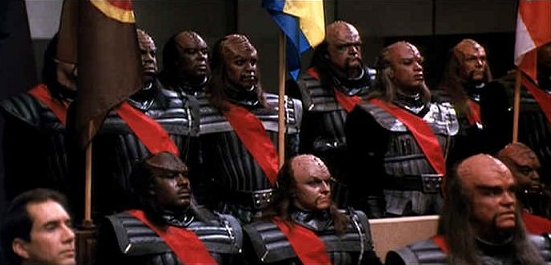
    Author notes: Think of this as the period of 1989 - 1992 with the crumbling of the Soviet Union and the assimilation of the East Germany, Baltic States and Poland into the European Union.

    The break-up of the Soviet Union and Warsaw Pact saw a rapid loss of Empire in the first couple of years. The loss of East Germany, Poland, Czechoslovakia, Hungary, Bulgaria, Romania, Yugoslavia, Latvia, Estonia, Lithuania, Ukraine, Georgia and the ‘stans regions meant that there was both a loss of territory and of prestige. Russian nationals living outside Russia were suddenly foreign nationals, some of whom were in unfriendly nations. Places like Nirophia are the 'stans region of the Klingon Empire, Whereas Terajun is more like Georgia and, of course, Ch'ramak is Chechnya.

    For the Klingon Empire post-Praxis there needs to be a similar reduction in area. All of the Star Trek maps brought out recently (Star Charts and Stellar cartography) are all Klingon Maps from 2245 or 2287, not covering this 2280s/2290s period of unrest. The outer edges of the Empire will become a patchwork of loyalties and independents, some leaving the Empire and others actively opposing the Chancellor – especially in light of breaking the tradition and having a female, non-military Chancellor. During the reign of Azetbur there are about half a dozen other rival camps.


    "One day, there will be a war with our true enemy, the Federation. There are those who disagree, but it will happen." - General Chang, Klingon Academy.

    Ch'ramak was inspired from a number of sources including: Chechnya, Tibet, Iraq, Nigeria, Xinjiang and the Terajuni from 'Starfleet Command 2' extra disk. The notes of the Klingon Navy NOT being a centrally administered and controlled fleet system like Starfleet or the Romulans comes from the Haynes Bird of Prey manual.

    Klingons at Camp Khitomer, stardate 9529.The D-8H K't'inga strike version of the battlecruiser is the latest version of the venerable design. This D-7S is a deep refurbishment or new-build version of the D-8 with many of the systems and weapons of the L-24 Komo Val pocket battleship. Those who show loyalty to the Chancellor are favoured with new and better ships. This way it always ensures the Chancellor generally has the most powerful fleet in the Empire at his command, formed as a power block from Houses loyal to him: the Klingon Navy. That does not mean that there are not other power blocks of House fleets that oppose the Chancellor. All House fleet swear alegiance to the IKN, but are always loyal to the House FIRST. Warship designations such as D-7N, D-7S and D-7X ar artificial filing terminology used by Starfleet Intelligence to log the appearance of warship designs that are significantly different from others. Thes are NOT designations used by the Klingons. With each K'T'inga, Komo Val, Bird of Prey and Death Boot being ordered individually, only the hull and major systems are mass produced, the internal systems are unique to each House and their philosophies. This makes every ship individual.
    "You are all Klingons. You carry a legacy in your blood that lends strength to your deeds and strikes terror in the hearts of your enemies. The hope of every Klingon is to die in the service of the Empire. There is no dishonour in dying before a superior foe, if your heart is pure, your actions forthright! What you have been taught will serve you throughout your battles to come, until one day, you earn an honourable and glorious death." - General Chang, Klingon Academy.


    House of Duras, Y'rag and the Romulan border:

    Toral, son of Duras, is a general and the current leader of the House of Duras. Members of this House can be immediately spotted with their burgundy sleeves and neck pieces on their uniforms. Traditionally the burgundy is a symbol that ther blood is that of Kahless; they claim direct lineage from the hero of the Klingon people. Their garrison world is on Y'rag in the coreward end of the Empire. Representing the House at the High Command is his sister, B'etor - a colonel, herself. She maintains the political power of the House, whilst her brother fights the battles and earns the glory for the great House. The traditional conflict zone is along the Romulan border with their former allies. Back in the 2250s and 2260s there were diplomatic relations, with the symbol of the Romulan Star Empire spotted in the Orion camp on the former site of the Shrine to Molor. These relations soured around the turn of 2270, with the Klingons the Romulans in the Briar Patch and even Romulus. Whether it was Romulan treachery or Klingon imperial ambition that wrecked the alliance has yet to be known.

    To understand the House of Duras you need to understand their enemies. The House was in 2152 by Jonathan Archer, which took the House decades to recover from. The proximity of the Romulan border – and the need for Romulan transports to pass through their space - allowed the House to trade with the Romulans and build up their fleet once more. Following the way of Kahless, the House prepared for in times of peace; Y'rag, the garrison world, had its defences modernised and the primary designs of their variants of warships were optimised for Federation, Orion and Romulan The House played an active role in the of 2256 – 57, many Starfleet ships and rebuilding the reputation of the House in the eyes of Kol and the later leaders of the High Command.

    By the 2280s the House of Duras had commissioned technology and warships to counter the Romulan along the border. Cloaking technology was the principal technology to beat and this developed into the L-24 Komo Val class pocket , a technologically advanced vessel that would even the odds against the Romulan ships. The difficulty with the ship is the reliance on rare minerals that the Empire had in short amount. The House of Duras used explored every avenue to get the minerals including invasion, assault and deals with the Orions. General Toral has a fleet of warships including destroyers, Birds of Prey, L-24 Komo Val and D-7 class warships. The border also has classified listening posts and sensor nets for detecting cloaked vessels from the Romulan side crossing the border.

    The House of Duras has traditionally promoted the independence of the Klingon people, denouncing diplomatic overtures with the Feneration, just as the great Houses of Kruge, Chang and Koloth did also. Unlike the Houses of Kruge and Chang, this house didn't pay the price for beliefs against the prevailing political winds. And fate. The House of Duras stands with that of Mogh, Koloth, Kruge and eight others in a political bloc that has great influence over the political decisions of the High Command. The lineage from Kahless is a strong cultural magnet for other Houses to follow. Author's note: think of the different branches of Islam, depending on whether the Uncle Ali is the true successor to Mohammed or not. Lineage matters.

    The House of Duras has with the bordering Houses of G’Iogh and Mogh. In the early 2290s the House of G’Iogh made a play for power against Chancellor Kesh. The coup failed twice and the House was and the members . The House of Duras swept up most of the colonies and resources left intact after the action, consolidating their position of power. This tipped the balance of power for the House of Duras, although the House of Mogh remained close . Fortunately Colonel Worf was not as wise in his decisions at running the House of Mogh, being after defending Kirk and McCoy after the of Gorkon. The House of Duras was quick to take advantage of this good fortune.

    Author notes:

    I really wanted to defy expectations with the House of Duras. We all ‘know’ they were the 'villains' in Enterprise and also mentioned as (at Khitomer and with assassins on Qo’noS) in the excellent arc of Sins of the Father, Reunion and the two-parter Redemption 1 and 2 in TNG. I wanted to show a time before Ja’rod when the House of Duras rebuilt their reputation and had some resemblance of honour. I even took the burgundy sleeves they had and gave an honourable explanation that it is the blood they shed in honour of Kahless in battle. The House borders the Romulans so their weapons and ships need to reflect the need to fight the cloaking and sneaky approach of the Romulans. Seems the House of Duras mirrored their enemies too closely, taking on their traits themselves.

    Quzu Qonn, the Citadel and the Kinshaya Campaign:

    Quzu Qonn is the driftward sector command for the Klingon Empire that controls the Kinshaya Campaign. A jungle world with Quch Ha' and older D-7 Koro class warships and a sprinkle of D-7 K'Tinga class. D-9 Warrior's Anger class command cruisers are deployed from this planet to control Klingon colonial and military operations in Kinshaya space. A Klingon Governor controls each occupied Kinshaya world and colony. Quzu Qonn is a closed military planet and is kept a military secret by the Imperial Klingon Navy. The main body of the driftward armada is based and controlled from here. Due to its excessive distance from the United Federation of Planets, Starfleet Intelligence is only dimly aware of this planet and its forces.

    Quzu Qonn also controls Klingon operations in the driftward region. To prevent a backdoor invasion by the Kinshayas, Quzu Qonn has a permenant dreadnought assignment to the base. General Waurg, son of Kesh, is the commander-in-chief of the Quzu Qonn forces He is assisted by newly-minted General S'yrekka, formerly a brigadier. S'yrekka was born as daughter to General H'vakia. Long jet black hair and cruel eyes. A few scars on her face and muscular arms. Wears same 'kleavage' armour as the Duras sisters. She defies the convention of men being generals on the High Command. Rumours abound of her keeping 'trophies' from her male victims as a reminder of her strength. S'yrekka tragically lost her father and brother from the explosion of Praxis on stardate 9521, whilst they were away for a ceremony on Qo'noS. She is a mistress of the mekleth and d'ktahg. She has the D-7 battlecruiser K'hemdar as her flagship. As S'yrekka lives on the frontier of the Klingon Empire she has no time for the male-dominated rules of Kronos. General S'yrekka fights along the Kinshaya border as well as against the Kinshaya. A Klin Zha master, she has kept the Kinshaya admiralty off-balance. A D-7 Koro class has acted as her flagship for all of this time, being constantly upgraded and repaired. The patchwork armour and older appearance belies a 1st rate warship with an elite crew.
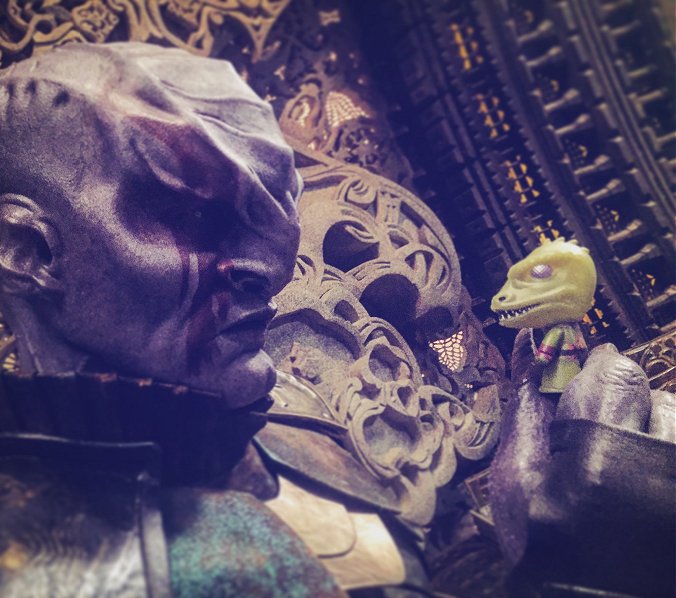
    The Klingons have a forward-operating base in the Kinshaya Kingdom referred to as the Citadel. This location is a well-protected one, with a concentration of warships and logistical vessels. The Kinshaya Navy has tried to locate the Citadel on many occasions but the number of Klingon capital ships has kept them away. Brigadier Koovis is the commanding officer for the Citadel and answers to General S'yrekka regarding Kinshaya operations. Koovis, a short-haired ridged Klingon in the 2273 style, has spent his entire career fighting in Kinshaya space. It is said he has spent more time in Kinshaya territory than Klingon space. Koovis comands a D-9 Warrior's Anger class command cruiser and uses it for meetings with senior commanders away from the Citadel. It was thought that the Klingons would withdraw from Kinshaya space following Praxis and Khitomer. The need for independence and the Terajuni Incident both highlighted the need to increase the presence in Kinshaya territory.

    The stalemate in Kinshaya territory has persisted for decades. The frontlines have moved over time, but the Klingons have kept the Kinshaya Navy at bay with their combined forces and numerical superiority. Governor Vaxriz is the current ruler of the occupied Kinshaya worlds and operates as the authority controlling Kinshayan space. The Governor also represents the Chancellor in abstantia. With Praxis, Azetbur reassigned the bulk of the Imperial Klingon Navy to replace the Gates of Tal'lhnor and Praxis as primary energy production facilities. Kinshaya space became the proving ground for all new Klingon warships and technology. Ber'taa and Komo Val classes were tested with differing results.

    "Cry woe, destruction, ruin, and decay. The worst is death... and death will have his day." - General Chang, Klingon Academy.

    V’stok and the Gorn border conflict:

    Having done a small piece on the garrison world of Quzu Qonn for the Kinshaya front, so this is V’stok that deals with the Federation and Gorn borders in South-Western Klingon Empire. This is a base like the Russian namesake of Vladivostok with a concentration of warships, construction and repair facilities and everything you need for the autonomous operation of this section of the Empire. Self-sufficiency is important to battle-harden the Empire against the effects of invasion, sabotage or surprise attack. To centralise the factory facilities and fleets, as Starfleet Battles suggests, would be strategic suicide. An enemy would have to split their forces to defeat all of the facilities in the Empire that are scattered around; there are sufficient forces and defences to protect each base.
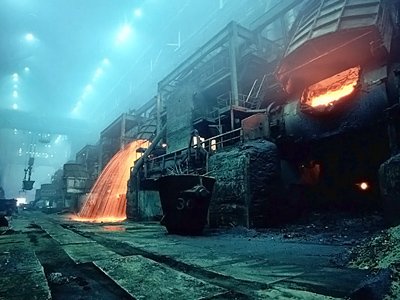
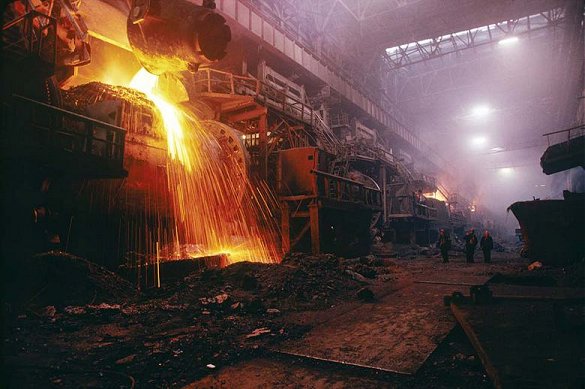
    V’stok, one of the principal garrison worlds of the Klingon Empire. This world has both the facilities to construct and repair all variants of Klingon warships and is designed to operate autonomously as required. The Klingon Empire and Gorn Hegemony have clashed over their common border for decades. The Gorn claim that many of the Klingon colonies on the border are historically Gorn worlds that they are reclaiming. The Klingons state that the region was colonised over 200 years ago and there has been no evidence of a Gorn claim to the worlds. The Klingons have responded in force to all of the Gorn attempts to take the worlds in question and the Klingons have even pro-actively attacked Gorn facilities, citing they are acting on intelligence to prevent attacks on Klingon space.

    General Qo'mar leads the Gorn border fleet and has fought against the Gorn since the 2260s. His B-11 Accuser class flagship is the IKS TukbaH. This is the latest in a long line of flagships including the D-7 B’kala and the D-10 J’lok. V’stok has a mixed fleet of D-9 Warrior’s Anger class command cruisers, the longer range Emperor class and a full range of D-7 and D-8 K’T’inga class. Larger capital ships of Accuser class and assault ships and carriers can also be found at V’stok. In the 2290s there were mothballed examples of the older D-5 and D-6 class warships; these have been reduced in number as they are rendered obsolete by progress.

    Since the explosion at Praxis, the facilities along the frontier have been denied resources in order to restore the home world of Kronos. The foundry worlds of the KorbeQ system and facilities such as V’stok had raw materials diverted to Kronos and warships re-allocated to the home fleet to replace those destroyed or badly damaged in the Praxis shockwave. The lack of resources meant that ships such as L-24 class Komo Val and the resident B-12 Sword of Kahless were mothballed as the resources and rare materials required to maintain and operate these warships was in short supply.

    Relentless class light cruisers and Insurrection class destroyers patrol the border with larger cruisers supporting them. All operations are guided by Warrior’s Anger class command cruiser and the Accuser class flagship. Suspicious class frigates and science vessels officer an enhanced battlefield picture to allow better strategic and tactical appraisal of the border. The Klingons are known to share the battlefield picture across warship and battle station assets. This allows them to co-ordinate their response to the enemy.

    "Better that fate than a future where we become Federation slaves!" - General Chang, Klingon Academy.


    KorbeQ system and the Klingon working class:

    The foundry worlds of the KorbeQ system developed and produced the alloys for the armour of Klingon warships. The Federation sent starships such as the Miranda class U.S.S. Courageous to monitor the activities of the V’stok base and the foundry worlds to anticipate the protection on Klingon warships. Away from the mineralogical desert of Kronos, the foundry worlds show what the Klingon Empire could achieve had it got the supply of minerals that it so badly needs. KorbeQ is a world that consists of mining and foundries, representative of the majority of the Klingon Empire away from Kronos.
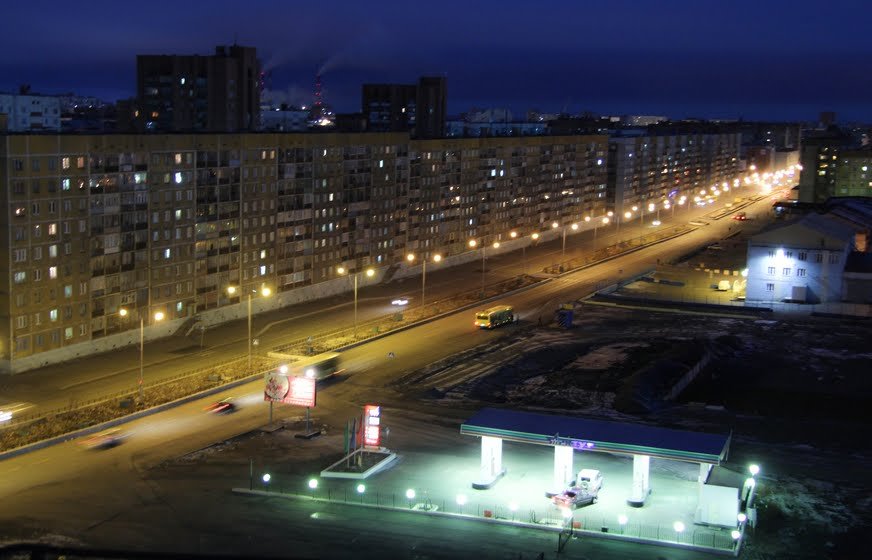
    These Klingon Houses are of a minor nature that have achieved nothing, are unknown to the High Command and have nothing to do with fighting battles. Here the glory and honour of Kahless' words have little meaning on a world far from the frontline and distant from the political peacocks of Kronos. The environmental condition of the planet is a disaster, with no consideration given for the impact of city-sized foundries and giant mineralogical mines. A scientific research facility works on devising new alloys and armour for the Klingon warships. These scientists are treated to a higher standard than the workers, but still not as privileged as Governor PuH'PeB or the priests of the local temples.

    Planets like KorbeQ have over 12 billion Klingons working on them. These working class Klingons have n oportunities to join the Imperial Klingon Navy. They are trained in the local public dojos and after their education there by the priests, they have a choice to either join the miners digging for minerals and metal ores, or work in the city-sized foundries to smelt the metals into the armour of the Empire. The average male Klingon soon loses his combat edge and fighting arts, developing a strong upper body strength for either digging in the mines or carrying the heavy equipment that both career options demand. The Klingons have a Calvinist-style work ethic, working very long shifts (over 12 hours for most) in order to fuel and drive the Empire forwards to Glory.
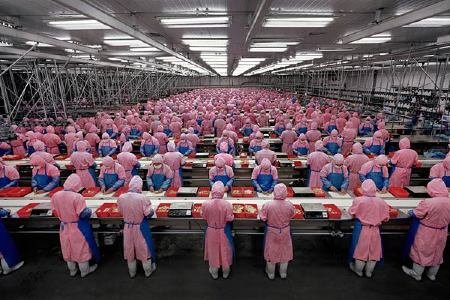
    Author's Notes:

    Inspired by the industrial scenes at Norilsk in Russia and the art of the industrial revolution in the UK, KorbeQ is designed to show the average pleb Klingon. Not the warrior officers and politicians that most of the Star Trek tv episodes and movies have shown but the Average Joe Klingon. No battle honours, a House no one has heard of and no honour and glory. Just a job down t' pit or in the foundry. Alcoholism is rife as is the Cult of Fek'lhr and other movements recognising Worker's Rights. The High Command is something these Klingons see on their newscasts - something far off and distant that drains the resources from your world and makes you work even harder for longer hours to fight yet another war, in places you've never heard of and can never gain glory from.

    I created the House of Chit'Q to be that unknown House that has worked in the mines and foundries. They have no family battle honours, weapons bought from the Primark of the Empire and never wear armour. They only have the rags and basic clothes of a Klingon civilian and eat third or fourth-rate food and their Blood Wine is certainly not a vintage year. The Temples and Governor provide the guidance and moral messages that work equals honour for the Houses. This message goes up against the Cult of Fek'lhr and the Worker's Rights movements in the Empire. The latter has certainly gained traction after Kronos steals all of the resources to rebuild after the explosion of Praxis.


    "We stand at the brink of a difficult new future. This future will discard its old heroes and raise new ones." - General Chang, Klingon Academy.

    GloMM and the Klingon agricultural class:

    GloMM is the agricultural version of KorbeQ. GloMM is the planet that mass-produces the Blood Wine and Klingon cuisine for the workers in the colonies of the Empire to eat and drink. The Blood Wine is not a vintage product, more a mass-produced vintage. Think more Carling, Carlsberg or Coors than vintage Laurent Perrier champagne. This is not a drink for a discerning pallet, this is a beverage for the working class - a thirst-quencher after a hard day in the mines, factories or foundries.
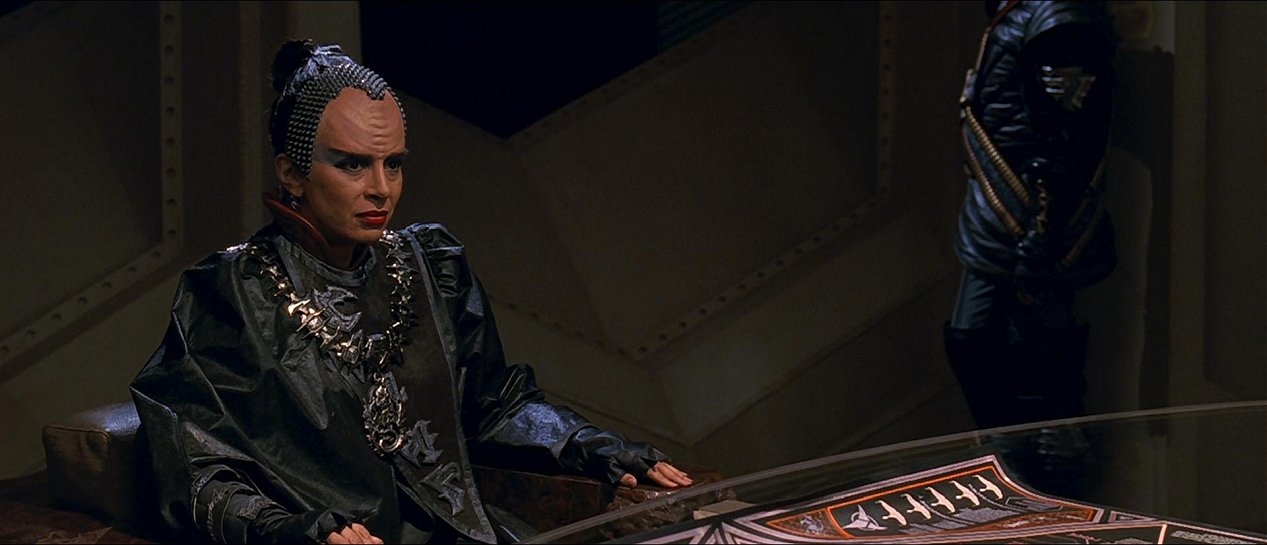
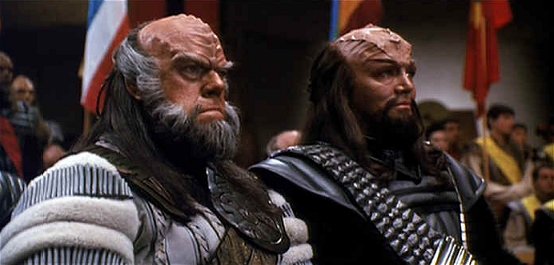
    The super-factories of GloMM have much on common with the foundries of KorbeQ - they work very long shifts to produce the food and drink for the masses of the Empire. The factories have a combined slaughter house facility and reception for the crops from the vast fields on the planet. The blood wine breweries ensure fresh products for the production of the wine. The wine is not allowed to mature for as long as vintage breweries as there is not the time. This is mass-production to get the product to an acceptable standard and get it out in quantity. The Klingon Empire does not use replicators, when the time-honoured and efficient method of manpower gets the job done better. There is also the propaganda tool of saying that it is Klingon pride that helps to feed and water the Empire.

    Author's Notes:

    This is all about the food and beveridges that drive the Klingon Empire. This is not champagne, caviar and fois gras; this is McDonalds and Carling lager. The workers of the Klingon Empire are fed by mass produced gagh and other Klingon delicacies - especially for the frontline warriors who have to have ration packs in their trenches and fox holes. A Klingon officer or member of the High Command would throw this across the room and ask what the hell it is. For the majority of Klingons, this is the reality of living in the Empire. Bland food and drink, crowded accomodation and long working hours to drive the Klingon war machine forwards.


    Kamarag and Kerla, Camp Khitomer on stardate 9529.Azetbur wasted no time in ordering the Klingon Navy to engage on a new mission: the securing of new sources of dilithium and minerals for the Empire. Recently the planet of Ch'ramak had been resecured after seperatist elements had attempted to remove the Klingon occupying forces from the planet. House loyalties and alliances are what determine the strength of a Chancellor or House. Kaarg wanted to quickly determine who was loyal and who needed to be brought into line. As per tradition, individuals and families swear their allegiances to Houses and Houses swear their ships and fleets to the Klingon Navy. The largest of the Houses form the High Command, although lands and ships are technically assigned by the Chancellor and can be taken away as easily. In reality the more powerful Houses influence the council and temper the Chancellor's decisions due to their power and influence. Family ties have a big influence on assignments, although the Head of a House decides the captain and crew of the ships of the House. The IKN is NOT a centralised organisation like Starfleet, but it is commanded ultimately by the Chancellor and the High Command.
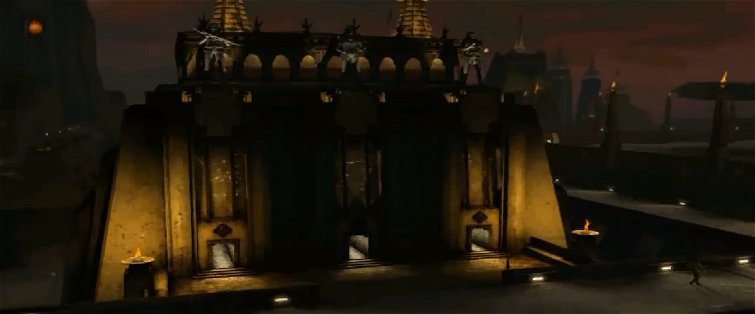
    Imperial Klingon Navy 2293:

    Klingon warships are designed at the Klingon Naval Academy at Dek'Go'Kor. The facility is responsible for the design of the major systems such as warp and impulse drives and spaceframe design. When a House requires a new warship, they order the basic shell from Dek'Go'Kor. The internal arrangement, weapons and defensive systems are designed and fitted by the House yards. The Naval Academy yards are also responsible for the mass production of warships; part of the fear associated with the Klingon fleet is their ability to rapidly build-up ship numbers.

    Chancellor Azetbur inherited a make-do and mend fleet from the Praxis explosion. For the past decade and three-quarters the policy has been to scavenge parts from one or two warships to keep a third up to top form. A warship operating with plated over torpedo launchers is not an uncommon site. Azetbur's philosophy is to repair the navy and to reclaim the number one position in the Beta Quadrant. With the Romulans hiding behind their borders and the Kinshaya having repelled them and stated to rebuild a fleet of their own, to the embarrassment of the High Command. Chancellor Azetbur wants to reassert the martial superiority of this warrior race.
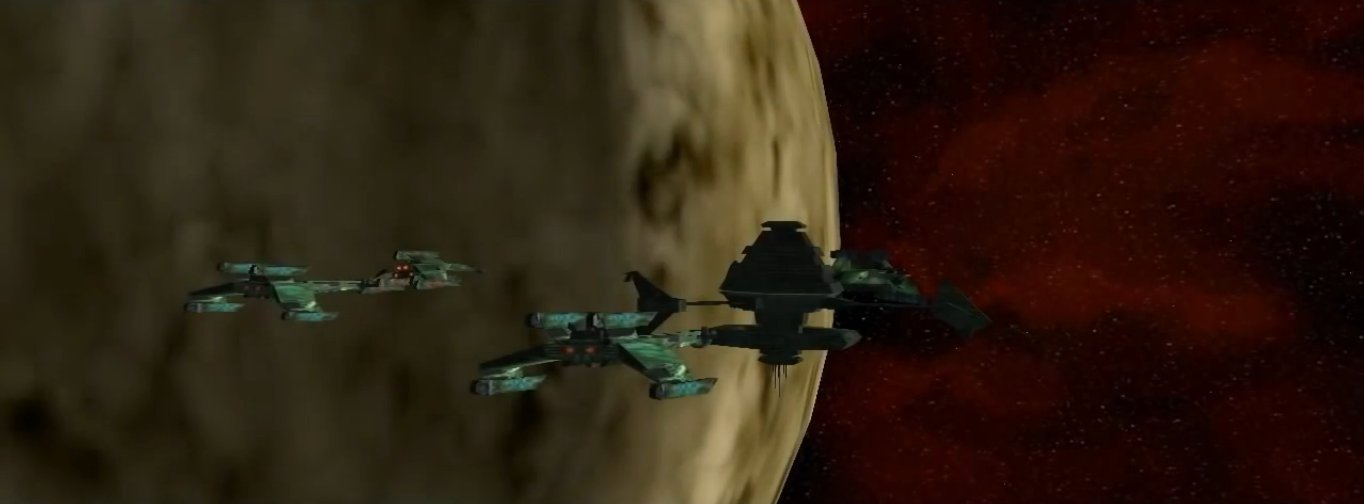
    With limited resources, the plan is to build smaller, tactically able warships such as the K'teremny and Insurrection class. The legendary D-7 class is to be fully stripped to the frames and rebuilt with new armour, sensors and weapons systems as a strike cruise variant. Time and resource shortages mean a quick and dirty refurbishment version has been commissioned as a stop-gap, with the remainder turned into cargo and tanker variants. Spearheading the Klingon fleet are the Emperor, Accuser and Riskadh classes. Whilst the refit programs are slower for these larger ships, the emphasis is on full refits rather than stop-gaps. The sluggish sword of Kahless class revealed its weakness on the Kinshaya battleground.

    The Suspicious, Insurrection, B'rel and Relentless classes make up the bulk of the scout, patrol and escort aspects of the Klingon fleet. Construction and refurbishment programs continue afoot. The Insurrection frigate and cargo/science versions continue to provide sterling service and along with the B'rel class they allow the fleet to expand their search for new sources of minerals for the empire; a priority after the explosion of Praxis. The future for the Imperial Klingon Navy is one of smaller, agile and more sophisticated warships. The proving ground of the Kinshaya Kingdom will test the wisdom of this philosophy. With rumoured further refits of the existing ships and prototype variants ready for the next generation.

    Accuser battlegroup.


    "Shooting space garbage is no test of a warrior's mettle. I need a target that fights back." - Captain Klaa, Star Trek V.

    Klingon subject races:

    subject race name Image Notes
    Arin'Sen The Arin'Sen were a pale-skinned humanoid species with a ridge running along their necks, vertical stripes running along their heads and two circular parts of the head next to the ridges.
    Ch'ramaki From Ch'ramak. Invaded 2285 after suplying the Klingons and surrounding area with their agriculture. They have rejected integration and their resistence has now become a fuly-fledged terrorist organisation, assassinating and bombing the Klingons off their world.
    Kzinti Members from the Patriarchy. Star Trek IV, V and VI all featured feline characters. In Star Trek IV these were Caitians as in the Animated Series. In Star Trek V it was a Kzinrett - named for the Kzinti from the Slaver Weapon episode of the Animated Series. Rura Penthe in STVI featured two felines. If they were Caitians they'd be Federation members, so these were most likely Kzinti.
    Kriosian Conquered in the mid-23rd Century.
    Nirophian Theocracy. Now independent and in charge of the Nirophian Corridor.
    Xarantine Not much known about them.


    Relentless class light cruiser


    The Arin'Sen:

    The Arin'Sen were a pale-skinned humanoid species with a ridge running along their necks, vertical stripes running along their heads and two circular parts of the head next to the ridges.

    In 2153, the starship Enterprise NX-01 encountered a severely damaged Arin'Sen vessel in a star system just outside Klingon territory. The surviving Arin'Sen told Captain Archer that, several years previously, their colony, Raatooras, had been annexed by the Klingon Empire. The Klingons had offered them protection, but abandoned the colony after stripping it of all valuable resources. Short on food and fuel, the Arin'Sen fled the colony, pursued by Captain Duras of the IKS Bortas. Having branded the Arin'Sen refugees as rebels, the Empire sent Duras to retrieve them, but Captain Archer refused to hand them over. After engaging in battle with the Bortas, Enterprise managed to evade Duras, and relocated the Arin'Sen refugees on a planet unknown to the Klingons.

    The Kriosians:

    In the 22nd century, the Kriosians were ruled by the Sovereign Dynasty of Krios Prime. They had a royal guardsmen: the Sovereign Guard. Their leader was known as the First Monarch. In September 2152, the future First Monarch Kaitaama was returning from a diplomatic mission when the Retellians attacked her transport. They killed her guards, placed her in stasis, and attempted to hold her for ransom. En route to their destination, the stasis pod in which she was held aboard the kidnappers' ship began to malfunction. They were assisted by NX-01 Enterprise, which later discovered the truth behind the kidnapping when their own chief engineer, Charles Tucker III, was himself kidnapped. Both Tucker and Kaitaama were later rescued, and the First Monarch was transported back to her homeworld. Kaitaama later ascended to the throne around May 16, 2153.

    Sometime between the mid-22nd and mid-24th century, the Klingons established a colony on Krios and subjugated the Kriosians under their rule.

    Author Notes:

    In 2367, the Kriosians began fighting for independence from the Klingon Empire. During the revolt, the rebels hid in the Ikalian asteroid belt, where they used the actinides in the asteroids to hide from sensor scans. The rebels later attacked a Ferengi freighter and a Cardassian freighter, in the belt.

    For the most part, the Klingons tolerated the rebellion, until Vagh, the Klingon governor of Krios, charged the Federation with supplying the rebels with phaser rifles. Upon further investigation by Starfleet, it was discovered that the suppliers were, in fact, the Romulans, who were planting the evidence in attempt to drive a wedge between the Klingons and the Federation, and to jeopardize the Treaty of Alliance.

    Kamala was the first female metamorph born on Krios since the mid-23rd century, was bred for mating to Chancellor Alrik, the leader of Valt Minor. The date from which there were no metamorphs is the opne that makes sense for when the species were annexed.


    The Xarantine:

    The Xarantine were a spacefaring species near Klingon space. The Klingons considered the Xarantines to be "no match" for them.

    In 2151, the Klingon vessel IKS Somraw raided a Xarantine outpost and looted Xarantine ale to celebrate the victory. However, unknown to the Klingons, the ale was poisoned. Falling ill and attacked by Xarantine ships, the captain of the Somraw eventually decided to retreat into a Q'tahL class gas giant's atmosphere.

    Other subject species of the Klingon Empire:

    1. The Vok’tar Compact — The Tempted Ones

    How they fell:
    The Vok’tar were a fractious cluster of asteroid-habitats with a proud mercantile tradition. They were never militarily weak — but they were politically divided. Klingon envoys exploited this, offering military protection, weapons, and “honourable partnership” to one faction.

    The Vok’tar leadership accepted, believing Klingon steel would secure their dominance. Instead, they became dependent, then absorbed.

    Role in the Empire:
    - Elite mining engineers
    - Zero-G shipyard labour
    - Administrators in frontier logistics
    - Known for their strict contractual culture, which Klingons mock but rely on

    Tone:
    They are the Baltic SSRs of the Empire — technically loyal, culturally proud, quietly resentful.

    2. The Krez’na Tribes — Crushed by Klingon-Backed Rivals

    How they fell:
    The Krez’na refused Klingon diplomatic overtures, believing their mountain-fortress world was impregnable. The Empire responded by arming their traditional rivals, the lowland Zathri clans, with disruptors and surplus war-gear.

    The Zathri overran the Krez’na heartlands in weeks. Klingon “peacekeepers” arrived immediately afterward — and never left.

    Role in the Empire:
    - Harsh-environment infantry
    - Penal battalions
    - Tunnel-warfare specialists
    - Forced labour in cold-region refineries

    Tone:
    They are the Chechens of the Empire — fierce, proud, and never fully pacified.

    3. The Velkir Dominion — The Willing Joiners

    How they fell:
    The Velkir were a declining aristocratic culture whose ruling houses saw Klingon ascendance as inevitable. They negotiated entry into the Empire in exchange for autonomy, noble titles, and trade privileges.

    They are the only subject people who celebrate Empire Day.

    Role in the Empire:
    - Bureaucrats
    - Quartermasters
    - Cultural intermediaries
    - Officers in the Imperial Klingon Navy (IKN), though never given command of capital ships

    Tone:
    They are the Ukrainian Cossack Hosts under the Tsars — loyal, proud, but always second-class.

    4. The Ch’ramaki — The Pierced and Subjugated How they fell:
    You’ve already established their Chechen/Iraqi/Afghan-like identity: humble farmers, invaded for food and minerals, rising up with agricultural tools. Their stalemate with the Empire has turned them into a mirror of their oppressors.

    Role in the Empire:
    - Frontier militia
    - Agricultural production
    - Insurgency-suppression auxiliaries
    - A constant drain on Klingon manpower

    Tone:
    They are the Pashtun tribal belt of the Empire — unconquered in spirit, conquered on paper.

    5. The Hek’taar Syndics — Shock-and-Awe Conquest

    How they fell:
    The Hek’taar were a cartel-state controlling a rich nebula-mining region. When they refused to pay tribute, the Empire deployed three full assault fleets, annihilating their orbital infrastructure in a 48-hour campaign.

    Ground troops followed, executing the surviving Syndic leadership.

    Role in the Empire:
    - Nebula-gas extraction
    - Slave-labour in antimatter refineries
    - Disposable troops in high-radiation zones
    - Smugglers tolerated for their usefulness

    Tone:
    They are the Crimean Tatars under Stalin — shattered, scattered, and used ruthlessly.

    6. The Torvath Enclaves — The Pierced but Proud

    How they fell:
    The Torvath fought a brutal ground war against Klingon shock troops. Their cities were taken one by one, their warrior-monks slaughtered, their temples burned. Yet their culture survived underground.

    Role in the Empire:
    - Elite bodyguards
    - Martial arts instructors
    - Honour-duel adjudicators
    - Cultural exports (poetry, philosophy, ceremonial weapons)

    Tone:
    They are the Georgians of the Soviet Union — conquered, but culturally prestigious.

    7. The Jor’vath Combine — The Industrial Prize

    How they fell:
    The Jor’vath were an industrial powerhouse weakened by decades of internal corruption. Klingon “advisors” were invited to help stabilize their economy. Within a decade, the advisors were governors.

    Role in the Empire:
    - Heavy industry
    - Starship component manufacturing
    - Munitions production
    - Propaganda distribution

    Tone:
    They are the East Germans — technologically advanced, politically smothered.

    8. The K’thari Nomads — The Broken Horse-Lords

    How they fell:
    A proud nomadic people who resisted taxation and refused to settle. Klingon cavalry units (yes, mounted troops exist on some worlds) broke them in a series of brutal plains battles.

    Role in the Empire:
    - Couriers
    - Scouts
    - Light cavalry on frontier worlds
    - Beast-handlers for Klingon war-beasts

    Tone:
    They are the Kazakh SSR — nomads forced into imperial structures.

    9. The Reth’kar Technate — The Assimilated Technologists

    How they fell:
    The Reth’kar were technologically sophisticated but militarily weak. Klingons seized their research stations in a lightning raid, then forced their scientists into “service to the Empire.”

    Role in the Empire:
    - Weapons R&D
    - Starship reactor design
    - Cyberwarfare
    - Reverse-engineering alien tech (including Metar relics)

    Tone:
    They are the Baltic German engineers under the USSR — brilliant, exploited, indispensable.

    10. The Yeth’na Choirworlds — The Willing Cultural Vassals

    How they fell:
    The Yeth’na admired Klingon honour and martial culture. They voluntarily joined, believing the Empire would protect their artistic traditions. Instead, they became the Empire’s propaganda singers, producing patriotic operas and war-chants.

    Role in the Empire:
    - Cultural propaganda
    - Imperial ceremonies
    - Diplomatic soft power
    - Training Klingon opera performers

    Tone:
    They are the Armenians of the USSR — culturally rich, politically constrained.

    Subjects and the Great Houses

    Subject cultures in the Klingon Empire do not interact with the Great Houses in a single uniform way. Each relationship is shaped by how they were conquered, what they produce, and which Houses profit from their subordination. What follows is a structured, gritty breakdown of how these peoples fit into the imperial machine — and how the Houses exploit, manipulate, or fear them.

    The Core Dynamic: Houses as Patrons, Subjects as Assets

    The simplest truth is this: every subject culture is “owned” by one or more Great Houses.

    A House gains:
    - tribute
    - manpower
    - industrial output
    - political leverage

    The subject culture gains:
    - protection
    - limited autonomy
    - a patron to petition
    - a potential path to favour or survival

    But the relationship is never equal. It is always feudal, transactional, and coercive.

    1. Tempted Cultures — Those who joined for Klingon strength

    These are peoples like the Vok’tar Compact who accepted Klingon military backing to settle internal disputes.

    How they interact with Houses

    - They treat their patron House as a guarantor of internal dominance.
    - Their elites often become clients, sending sons to serve as officers or administrators.
    - They lobby their patron House for weapons, trade rights, or protection from rival subject groups.
    - They are expected to vote with their patron in High Council proxy matters.

    House view

    Useful, compliant, but never fully trusted.
    They are the “junior partners” of the Empire.

    2. Cultures Crushed by Klingon-Backed Rivals — The humiliated and resentful

    These are peoples like the Krez’na, defeated not by Klingon armies but by Klingon-armed neighbours.

    How they interact with Houses

    - They despise their patron House but fear it more.
    - They send tribute reluctantly and often under military supervision.
    - Their warriors are conscripted into penal battalions or high-attrition frontier units.
    - They frequently appeal to rival Houses for relief, creating inter-House competition.

    House view

    Proud, dangerous, and useful as expendable troops.
    They are the “problem children” of the Empire.

    3. Willing Joiners — The collaborators

    Cultures like the Velkir Dominion that entered the Empire voluntarily.

    How they interact with Houses

    - They serve as bureaucrats, quartermasters, and administrators for multiple Houses.
    - They cultivate relationships with several Houses to avoid being dominated by one.
    - Their nobles often marry into minor Klingon lines, gaining status without honour.

    House view
    Politically useful, culturally soft.
    They are the “civil servants” of the Empire.

    4. Pierced Cultures — The spiritually wounded

    These are peoples like the Torvath or Ch’ramaki — conquered brutally, culturally scarred, but unbroken.

    How they interact with Houses

    - They maintain underground traditions, tolerated as long as tribute flows.
    - They produce elite warriors or specialists who serve as prestige assets for their patron House.
    - They often become symbols used by Houses to demonstrate “benevolent rule.”

    House view

    Exotic, dangerous, and culturally prestigious.
    They are the “ornaments” of the Empire — admired but never trusted.

    5. Shock-and-Awe Conquered Peoples — The broken industrial classes

    Cultures like the Hek’taar Syndics, whose worlds were devastated in rapid campaigns.

    How they interact with Houses

    - They are ruled directly by House-appointed governors.
    - Their industries are run by Klingon overseers; their labour is heavily coerced.
    - They rarely interact with Houses except through military administrators.

    House view
    A resource to be strip-mined.
    They are the “factory floors” of the Empire.

    6. Industrial Client Cultures — The Jor’vath-type technocrats

    These cultures were absorbed through “advisory missions” and economic dependency.

    How they interact with Houses

    - They negotiate constantly for industrial quotas, resource allocations, and workforce protections.
    - They are courted by Houses seeking better ship components or munitions.
    - Their technocrats often become informal power brokers.

    House view
    Valuable but uppity.
    They are the “East German engineers” of the Empire.

    7. Nomadic or Martial Cultures — The K’thari horse-lords and similar peoples

    These cultures were forced into imperial structures but retain martial traditions.
    How they interact with Houses

    - They serve as scouts, couriers, and light cavalry on frontier worlds.
    - They often swear personal loyalty to individual Klingon commanders.
    - They are used in House-vs-House conflicts as deniable auxiliaries.

    House view
    Useful, loyal to individuals rather than institutions.
    They are the “Cossacks” of the Empire.

    8. Technate Cultures — The Reth’kar scientists

    Cultures conquered for their technological value.
    How they interact with Houses

    - They are divided into research cadres, each assigned to a House.
    - They play Houses against each other to secure better conditions.
    - They are heavily monitored by Klingon intelligence.

    House view
    Indispensable but politically dangerous.
    They are the “brains in chains” of the Empire.

    9. Cultural Vassals — The Yeth’na Choirworlds

    Cultures valued for art, ritual, or propaganda.

    How they interact with Houses

    - They perform at House ceremonies, funerals, and victory feasts.
    - They create House-specific operas, mythologizing their patrons.
    - They are protected as long as they remain politically harmless.

    House view
    Useful for prestige and soft power.
    They are the “court musicians” of the Empire.

    The Hidden Layer: Inter-House Competition

    Subject cultures are not passive. They exploit the rivalries between Houses:

    - Some seek new patrons to escape abusive ones.
    - Some play Houses against each other to gain concessions.
    - Some secretly support Ronin Klingons or dissident Houses.
    - Some become bargaining chips in High Council politics.

    The Empire is not a monolith — it is a patchwork of fiefdoms, each with its own subject peoples, each with its own simmering tensions.

    Praxis did not just devastate Qo’noS — it destabilized the entire imperial hierarchy.
    Every subject culture felt the shock, but each in a different way depending on how they were conquered, what they produced, and which House ruled them. Below is a structured breakdown of the nine major impact vectors, each tied to a specific type of subject people.

    The Praxis Shockwave: How Subject Cultures Reoriented Themselves

    The explosion created a triple crisis:

    1. Material crisis — food shortages, energy rationing, industrial collapse
    2. Political crisis — Houses scrambling for resources, authority, and scapegoats
    3. Imperial crisis — subject peoples sensing weakness, opportunity, or doom

    Every subject culture had to renegotiate its place in the imperial order.

    1. Tempted Cultures — The ones who joined for protection

    These peoples (like the Vok’tar) suddenly realized the Empire could not protect itself, let alone them.

    Effects on them
    - Their elites panic, fearing their patron House can no longer guarantee dominance.
    - Internal rivals rise, claiming the Empire is failing.
    - They begin quietly stockpiling weapons and seeking alternative patrons (Orion Syndicate, even Federation smugglers).
    - Some Houses use them as buffer zones, draining their resources to feed Qo’noS.

    Net result
    They become nervous collaborators, clinging to the Empire but preparing for its collapse.

    2. Cultures Crushed by Klingon-Backed Rivals — The humiliated and resentful

    These peoples (like the Krez’na) see Praxis as divine justice.

    Effects on them
    - Insurgencies flare up immediately.
    - Penal battalions mutiny or desert.
    - They appeal to rival Houses for protection, triggering inter-House proxy wars.
    - Some attempt to overthrow the rival subject culture that once conquered them.

    Net result
    They become the Empire’s bleeding wounds, draining troops and attention.

    3. Willing Joiners — The collaborators

    These peoples (like the Velkir) double down on loyalty.

    Effects on them
    - They offer administrative support to stabilize the Empire.
    - They become indispensable bureaucrats, managing rationing, logistics, and relief.
    - Their nobles gain influence as Houses rely on them for paperwork and planning.
    - They quietly expand their autonomy while Klingons are distracted.

    Net result
    They become the technocratic glue holding the Empire together.

    4. Pierced Cultures — The spiritually wounded

    These peoples (Torvath, Ch’ramaki) see Praxis as proof that Klingon honour is hollow.

    Effects on them
    - Cultural revival movements surge.
    - Secret warrior orders re-emerge.
    - They refuse tribute, claiming the Empire has lost the Mandate of Kahless.
    - Some Houses use them as shock troops, exploiting their fatalism.

    Net result
    They become cultural insurgents, spiritually unbroken and politically dangerous.

    5. Shock-and-Awe Conquered Peoples — The broken industrial classes

    These peoples (like the Hek’taar) are hit hardest.

    Effects on them
    - Their worlds are strip-mined even more aggressively to compensate for lost Qo’noS output.
    - Klingon overseers become brutal, fearing rebellion.
    - Food and energy shortages cause riots.
    - Some Houses abandon them entirely, leaving them to collapse.

    Net result
    They become the Empire’s internal third world, exploited to the edge of starvation.

    6. Industrial Client Cultures — The technocratic vassals

    These peoples (like the Jor’vath Combine) suddenly become strategic lifelines.

    Effects on them
    - Their factories run nonstop to replace lost Qo’noS capacity.
    - They gain leverage over their patron Houses.
    - They demand better conditions, autonomy, or representation.
    - Some Houses attempt to seize their industries by force.

    Net result
    They become kingmakers, quietly shaping post-Praxis power.

    7. Nomadic or Martial Cultures — The horse-lords and frontier warriors

    These peoples (like the K’thari) thrive in chaos.

    Effects on them
    - They gain new roles as scouts, raiders, and frontier enforcers.
    - Houses recruit them heavily to fill manpower gaps.
    - They use the crisis to reclaim ancestral lands or privileges.
    - Some become warbands loyal only to charismatic Klingon commanders.

    Net result
    They become the Empire’s roaming militias, empowered but unpredictable.

    8. Technate Cultures — The Reth’kar scientists

    These peoples become the Empire’s last hope for survival.

    Effects on them
    - They are forced into emergency research programs.
    - They gain unprecedented influence over military procurement.
    - They quietly sabotage House projects they dislike.
    - Some defect to the Federation or Romulans, taking knowledge with them.

    Net result
    They become the brains of the Empire, but also its greatest flight risk.

    9. Cultural Vassals — The singers, poets, and ritualists
    These peoples (like the Yeth’na Choirworlds) are weaponized for morale.

    Effects on them
    - They produce patriotic operas about survival and sacrifice.
    - Houses compete for their performances to bolster legitimacy.
    - They subtly encode dissent into their art.
    - Their cultural exports become propaganda tools across the Empire.

    Net result
    They become the Empire’s myth-makers, shaping the narrative of decline.

    The Grand Synthesis: Praxis Turns Subjects Into Power Brokers

    Before Praxis, subject cultures were managed.
    After Praxis, they become active agents in the Empire’s survival or collapse.

    - Some rebel.
    - Some collaborate.
    - Some manipulate Houses.
    - Some prepare for independence.
    - All sense that the Empire is wounded — and that the future is up for grabs.

    The Post-Praxis Rebellion Cycle

    Praxis creates three simultaneous pressures:

    1. Material collapse — food, dilithium, and antimatter shortages
    2. Political paralysis — Houses hoarding resources, ignoring the High Council
    3. Military exhaustion — fleets gutted, reserves hollow, veterans dead

    Subject cultures sense weakness. They move.

    1. Humiliated Cultures — The First to Rise

    These are peoples like the Krez’na, conquered indirectly through Klingon-armed rivals.

    How they rebel

    - They target the rival subject culture first, not the Klingons.
    - They seize armouries, disrupt supply lines, and ambush tribute convoys.
    - They declare “restoration councils” claiming to undo Klingon-engineered humiliation.
    - Penal battalions desert en masse and return home as armed insurgents.

    House response

    - Patron Houses deploy under-strength garrison units, often losing control of rural regions.
    - Rival Houses secretly arm the rebels to weaken their competitors.

    Result
    These rebellions become proxy wars between Houses, not just anti-Klingon uprisings.

    2. Pierced Cultures — The Spiritual Revolts

    These are peoples like the Torvath and Ch’ramaki, whose cultures were scarred but never broken.

    How they rebel

    - They revive outlawed warrior orders and ancestral rites.
    - They refuse tribute, claiming the Empire has lost divine legitimacy.
    - They assassinate Klingon governors in ritualized killings.
    - They form shadow governments based on ancient clan law.

    House response

    - Brutal reprisals, often counterproductive.
    - Some Houses attempt “honour diplomacy,” sending envoys to negotiate.
    - Others hire Orion mercenaries to avoid losing Klingon troops.

    Result
    These rebellions become ideological wars, challenging the Empire’s moral foundation.

    3. Industrial Client Cultures — The Economic Mutinies

    These are peoples like the Jor’vath Combine, absorbed through economic dependency.

    How they rebel

    - They sabotage factories producing Klingon warship components.
    - They slow production under the guise of “resource shortages.”
    - They form technocratic councils demanding autonomy.
    - Some openly negotiate with the Federation for protection.

    House response

    - Houses attempt to seize factories by force.
    - Industrial worlds become battlegrounds between House militias.
    - Klingon engineers are kidnapped to force concessions.

    Result
    These rebellions become industrial strikes turned civil wars, crippling the Empire’s logistics.

    4. Shock-and-Awe Conquered Peoples — The Starvation Revolts

    These are peoples like the Hek’taar, whose worlds were devastated in conquest.

    How they rebel

    - They riot over food shortages.
    - They storm Klingon ration depots.
    - They form “survival militias” that evolve into insurgencies.
    - They seize refineries and threaten to destroy them unless fed.

    House response

    - Overwhelmed garrisons retreat to fortified compounds.
    - Houses send warships to orbit but lack troops for ground control.
    - Some Houses simply abandon these worlds to collapse.

    Result
    These rebellions become humanitarian disasters, creating ungoverned zones inside the Empire.

    5. Nomadic Martial Cultures — The Raider Rebellions

    These are peoples like the K’thari, forced into imperial structures but retaining warrior traditions.

    How they rebel

    - They form mobile warbands that raid House caravans.
    - They seize frontier outposts and turn them into clan strongholds.
    - They swear loyalty to charismatic Klingon renegades.
    - They disrupt communication lines between Houses.

    House response

    - Houses hire them as auxiliaries to fight other rebels.
    - Some Houses attempt to exterminate them, failing spectacularly.
    - Frontier worlds become lawless.

    Result
    These rebellions become roving insurgencies, impossible to pin down.

    6. Technate Cultures — The Brain Drain Rebellions

    These are peoples like the Reth’kar, conquered for their scientific value.

    How they rebel

    - They defect to the Federation or Romulans with stolen research.
    - They sabotage antimatter reactors and warp cores.
    - They form underground “knowledge cells” that refuse to work.
    - They leak House secrets to rival Houses.

    House response

    - Intelligence services crack down violently.
    - Houses compete to poach scientists from each other.
    - Some Houses attempt to enslave entire research communities.

    Result
    These rebellions become silent wars of sabotage, crippling the Empire’s technological edge.

    7. Cultural Vassals — The Propaganda Rebellions

    These are peoples like the Yeth’na Choirworlds, valued for art and ritual.

    How they rebel

    - They encode sedition into operas and chants.
    - They refuse to perform at House ceremonies.
    - They create underground art glorifying rebellion.
    - Their cultural exports spread anti-Klingon sentiment across the Empire.

    House response
    - Censorship, arrests, and forced performances.
    - Some Houses co-opt their art to attack rival Houses.
    - Cultural worlds become hotbeds of ideological conflict.

    Result
    These rebellions become wars of myth, shaping the narrative of imperial decline.

    The Empire-Wide Pattern

    Across all categories, rebellions share three traits:

    1. They are decentralized
    No unified anti-Klingon movement exists — rebellions are local, cultural, and often mutually hostile.

    2. They are exploited by Houses
    Every uprising becomes a tool in House-vs-House conflict.

    3. They drain the Empire’s strength
    The Empire bleeds from a thousand cuts, each rebellion small but cumulative.


    "Even as our emissaries negotiate for peace with the Federation, we will act for the preservation of our race! We will seize the secret of this weapon. The secret of ultimate power!" - Commander Kruge, Star Trek III.


    A selection of Klingon worlds:

    Quzu Qonn Forward operating base for rimward border.
    V'stok Forward operating base for Gorn border.
    Y'raG Forward operating base for Romulan border.
    Sk'Angel'Ak Forward operating base for Federation border, under the House of Amar.
    Kat'va Repair facility located here. Mentioned in Klingon Academy.
    Ch'ramak Attempting independence.
    Terajun Declared independence 2294.
    M'nin
    M'erp
    Radonsar'Q
    Sk'troit
    Sk'molen Resource-rich world exploited by the Klingons - think Mirny diamond mine in the former Soviet Union. Big cities next to huge bore holes.
    Z'Gomii
    Sk'MoncheG.
    Sk'lipet
    K'Hotilov
    Shalatov
    Sleng'E
    Skaya'chkalov
    Levo'DyaG
    Kakov'Shay Forward operating base for the Kinshaya region. General S'yrekka commands this world after her male siblings were killed by the Holy Order of the Kinshaya. S'yrekka has become cruel and efficient in dealing with the Kinshaya and any opposition to her leading her House and fleet. Another notable female leader in the Klingon Empire. The Jennifer Garner-like tall General is symbolic of how not all Klingon are alike. The brutality of neighbouring the Kinshaya has twisted her into cruelty and brutality.
    R'Stadd
    Sk'Manmur
    N'Tal
    KorbeQ Foundry worlds that forge the armour for Klingon warships Subject of the U.S.S. Courageous study following the construction of modern Klingon warships by following the foundry world activity.


    1. Molor’grad — The Balkan Foundry World
    Tone: Bulgaria / Romania
    Terrain: Forested mountains, polluted rivers, rusting industrial towns
    Output: Small-arms components, disruptor barrels, infantry armour plates

    Molor’grad is a world of old factories, patched-together machinery, and workers who’ve been doing the same job for generations.

    - Foundries built into mountain valleys
    - Rail-lines carrying ore and armour plates
    - Workers’ barracks clinging to cliff faces
    - Local militias guarding the mines

    The Houses barely know this world exists.
    But every Klingon disruptor has a little bit of Molor’grad in it.

    ---

    2. Dagh’Tath — The Mountain Warrior-Smith World
    Tone: Dagestan / Caucasus
    Terrain: Knife-edge ridges, deep gorges, isolated clan-cities
    Output: Elite melee weapons, shock-trooper armour, ceremonial blades

    Dagh’Tath is a world of clan-forges, each with its own style of metallurgy. The Empire relies on it for:

    - Shock-trooper plate armour
    - Honour blades for officers
    - Reinforced hull bracings for D-7 cruisers

    The people are fiercely independent, culturally distinct, and deeply traditional.
    They see themselves as the last true Klingons, even though the High Council ignores them.

    ---

    3. Urzik Prime — The Steppe Industrial Zone
    Tone: Kazakhstan
    Terrain: Endless plains, open-pit mines, horizon-wide refineries
    Output: Deuterium, antimatter precursors, heavy industrial gases

    Urzik Prime is the fuel tank of the Empire.

    - Massive deuterium farms
    - Steppe-spanning pipelines
    - Refineries visible from orbit
    - Entire cities built around reactor-grade isotope plants

    It is rich in resources but poor in everything else.
    Workers live in prefab blocks battered by steppe winds.
    The Empire treats it as a resource colony, not a world.

    ---

    4. Khar’Uzbek — The Desert Fabrication World
    Tone: Uzbekistan / Central Asia
    Terrain: Arid deserts, salt flats, ancient caravan cities
    Output: Starship interior modules, life-support systems, bulkhead kits

    Khar’Uzbek is a world of desert megafactories, producing the “boring” but essential parts of Klingon warships:

    - Air recyclers
    - Gravity plating
    - Bulkhead frames
    - Crew compartment modules

    It is a world of:

    - Dust storms
    - Sand-blasted factories
    - Workers in sun-bleached fatigues
    - Ancient temples beside modern assembly lines

    The Empire needs Khar’Uzbek more than it admits.

    ---

    5. Ruvak Minor — The Balkan Ship-Repair Yard
    Tone: Romania’s rust belt
    Terrain: River deltas, polluted wetlands, rusting orbital docks
    Output: Ship refits, hull patching, emergency repairs

    Ruvak Minor is where old Birds-of-Prey go to be patched, welded, and shoved back into service.

    - Orbital drydocks held together by scaffolding
    - Shipwrights working knee-deep in coolant runoff
    - Entire towns built around scrapyards

    It is the Klingon equivalent of a Soviet Black Sea shipyard— underfunded, overworked, and absolutely essential.

    ---

    6. T’Kar Plateau — The Highland Armour Forge
    Tone: Bulgaria’s Rhodope Mountains
    Terrain: High plateaus, cold forests, isolated fortresses
    Output: Ground vehicles, artillery pieces, siege disruptors

    T’Kar Plateau produces the heavy ground equipment used on:

    - Ch’ramak
    - Terajun
    - Kinshaya occupation zones

    Factories are built into mountain bunkers, protected from orbital attack. The workers are stoic, proud, and deeply suspicious of outsiders.

    ---

    7. Vor’Kesh Basin — The Central Asian Logistics Hub
    Tone: Kazakhstan / Uzbekistan borderlands
    Terrain: Dry basins, rail hubs, container cities
    Output: Ammunition, ration distribution, spare parts depots

    Vor’Kesh Basin is the logistical heart of the Empire’s industrial chain.

    - Ammunition depots
    - Rail-to-starship transfer hubs
    - Container cities stacked 40 stories high
    - Endless convoys moving toward KorbeQ and Quzu Qonn

    It is the Klingon equivalent of a Soviet military district supply hub.

    ---

    How These Worlds Fit Into the Empire
    Together with KorbeQ and GloMM, these worlds form the backbone of the Klingon military-industrial complex:

    - KorbeQ - alloys, armour, hull plating
    - GloMM - food, bloodwine, worker rations
    - Molor’grad - small arms and infantry armour
    - Dagh’Tath - elite melee weapons and shock armour
    - Urzik Prime - fuel and industrial gases
    - Khar’Uzbek - ship interior modules
    - Ruvak Minor - ship repairs and refits
    - T’Kar Plateau - ground vehicles and artillery
    - Vor’Kesh Basin - logistics and ammunition

    These are the Bulgarias, Romanias, Dagestans, and Kazakhstans of the Klingon Empire: ignored, exploited, essential.

    They are the worlds that keep the Empire alive while the Great Houses posture on Qo’noS.

    ---

    1. Ch’ramak — The Quagmire World
    The Empire’s Vietnam, Chechnya, and Afghanistan rolled into one.

    - Agrarian, mountainous, clan-based society.
    - Conquered in 2285 for food and mineral resources.
    - The Ch’ramaki fight with IEDs, farming tools, and ambush tactics.
    - Klingon garrisons rely on D4 gunships to survive.
    - The Empire cannot withdraw (loss of face) and cannot win (lack of manpower).

    Ch’ramak is the symbol of imperial overstretch: a world the Empire must hold but cannot pacify.

    --- 2. Terajun — The Sister Insurgency
    A nearby world culturally tied to Ch’ramak.

    - Less mountainous but more urbanised, making insurgency harder to root out.
    - Klingons hold the cities; the countryside belongs to the rebels.
    - Garrisons are conscript-heavy, under-equipped, and demoralised.
    - Terajun’s unrest bleeds into Ch’ramak and vice versa.

    Together, Ch’ramak and Terajun form a permanent drain on Klingon troops and logistics.

    ---

    3. Gav’ath — The Industrial Slave-World
    A planet strip-mined to feed the Empire’s failing shipyards.

    - Harsh climate, toxic atmosphere, endless refineries.
    - Populated by indentured labourers from conquered species.
    - Productivity falling due to equipment decay and worker sabotage.
    - Governors falsify output reports to avoid High Council scrutiny.

    Gav’ath is the Empire’s industrial heart—but its arteries are clogged.

    ---

    4. Vornak Prime — The Loyalist Showcase
    One of the few subject worlds that still believes in the Empire.

    - Klingon settlers dominate the ruling class.
    - Local elites benefit from trade, protection, and prestige.
    - Used in propaganda as proof that “the Empire brings prosperity.”
    - Beneath the surface: rising resentment from native populations.

    Vornak Prime is the Potemkin village of the Empire—clean uniforms, polished statues, and a lot of lies.

    ---

    5. K’thar’s Belt — The Pirate Frontier
    A cluster of asteroid colonies nominally under Klingon rule.

    - In reality controlled by Orion Syndicate smugglers.
    - Klingon patrols are too old and too few to enforce order.
    - Romulan-backed traffickers use the Belt as a shadow trade route.
    - The Empire pretends to control it; the Syndicate pretends to obey.

    K’thar’s Belt is where the Empire’s authority ends and criminal enterprise begins.

    ---

    6. Ruhlor III — The Militarised Buffer
    A fortress world on the Romulan frontier.

    - Heavy garrison presence, including aging K’t’inga cruisers in orbit.
    - Civilians live under curfews, rationing, and surveillance.
    - Romulan agents stir unrest to stretch Klingon resources.
    - Klingon commanders fear a rebellion more than a Romulan invasion.

    Ruhlor III is a powder keg—one spark from either side could ignite a war.

    ---

    7. D’kar Province — The Breadbasket
    A fertile world conquered generations ago.

    - Provides grain, livestock, and water to the Empire.
    - Klingon settlers own the best land; natives work it.
    - Increasingly resentful as food shipments rise and local rations shrink.
    - Small-scale sabotage is becoming common.

    D’kar is quiet—but only because the Empire needs it to be.

    ---

    8. Krez’ta — The Cultural Thorn
    A world with a proud warrior tradition of its own.

    - Conquered centuries ago but never fully assimilated.
    - Locals resent Klingon claims to be the “only true warriors.”
    - Frequent duels, riots, and symbolic acts of defiance.
    - Klingon governors walk a tightrope between appeasement and brutality.

    Krez’ta is a reminder that the Empire does not have a monopoly on honour.

    ---

    9. Vor’cha’s Reach — The Dying Colony
    A once-valuable mining world now nearly exhausted.

    - Mines collapsing, ore veins depleted.
    - Klingon administrators siphon remaining resources for personal gain.
    - Locals flee to other worlds, creating refugee pressure.
    - The Empire keeps a token garrison to avoid admitting failure.

    Vor’cha’s Reach is the ghost of past imperial glory.

    ---

    What This Map Shows
    Across 2287–2293, the Empire’s subject worlds fall into three categories:

    - Quagmires — Ch’ramak, Terajun
    - Resource colonies — Gav’ath, D’kar, Vor’cha’s Reach
    - Buffer states — Ruhlor III, K’thar’s Belt
    - Propaganda worlds — Vornak Prime
    - Culturally resistant worlds — Krez’ta

    Together, they form a picture of an empire that is too big to govern, too proud to retreat, and too weak to hold everything it claims.

    1. KorbeQ — The Iron Furnace of the Empire
    KorbeQ is the archetype of Klingon industrial worlds:
    a planet where the sky is permanently red with furnace-smoke, where the ground trembles from the stamping of armour plates, and where the air tastes of metal and ash.

    What KorbeQ Produces
    - Warship alloys for D-7, D-9, and K’t’inga hulls
    - Armour plating for ground forces
    - Disruptor housings and emitter coils
    - Bulkhead ribs for Birds-of-Prey
    - Heat-resistant composites for warp nacelles

    KorbeQ is the reason Klingon ships can take a beating and keep fighting.

    Why the Federation Watches It
    Starfleet sends ships like the Miranda-class U.S.S. Courageous to monitor KorbeQ and the nearby V’stok base because:

    - New alloys = new defensive capabilities
    - New hull compositions = new sensor signatures
    - New armour = new tactical problems

    KorbeQ is the barometer of Klingon naval strength.

    The Planet Itself
    - City-sized foundries
    - Open-pit mines kilometres deep
    - Toxic rivers of industrial runoff
    - Air thick with particulate ash
    - No environmental regulation whatsoever

    KorbeQ shows what the Empire could achieve if it had the minerals Kronos lacks — and what it must sacrifice to do so.

    Society on KorbeQ
    - Minor Houses run the factories
    - Workers live in barracks beside the furnaces
    - Scientists in alloy labs are “privileged,” but still expendable
    - Priests and Governor PuH’PeB enjoy the only luxury on the planet

    This is not a world of honour.
    It is a world of output.

    ---

    2. GloMM — The Canteen of the Empire
    If KorbeQ feeds the ships, GloMM feeds the workers and soldiers.

    What GloMM Produces
    - Mass-produced bloodwine (think Carling, not vintage)
    - Protein bricks for garrisons
    - Targ cuts for frontier troops
    - Pickled vegetables for long-haul transports
    - Bulk stews for mining colonies

    This is not cuisine.
    This is fuel.

    The Factories
    GloMM’s super-factories resemble KorbeQ’s foundries:

    - Slaughterhouses integrated with food processors
    - Vast crop reception centres
    - Bloodwine breweries that never stop running
    - Shift cycles that last 18–20 hours
    - Propaganda banners proclaiming:
    “Klingon hands feed Klingon warriors.”

    The Empire rejects replicators not out of tradition, but because manpower is cheaper.

    ---

    3. Vorga’teth — The Armour Loom
    A textile-industrial world producing:

    - Combat harnesses
    - Webbing and magazine pouches
    - Cold-weather cloaks for Kinshaya campaigns
    - Jungle fatigues for Quzu Qonn
    - Shock-trooper plate underlayers

    It is the uniform factory of the Empire.> ---

    4. Meklor Station Yards — The Warship Organ Bank
    Orbiting a barren rock, Meklor doesn’t build ships — it keeps old ones alive.

    Output
    - Warp nacelle coils
    - Disruptor emitters
    - Life-support modules
    - Bulkhead kits
    - Replacement armour plates

    A K’t’inga limps in, and Meklor grafts new organs onto the old hull.

    This is where the Empire’s rusting fleet is kept shambling forward.

    ---

    5. Gav’ath — The Refinery Hell
    The raw material source for the entire chain.

    Output
    - Refined metals
    - Deuterium
    - Industrial gases
    - Reactor-grade isotopes

    Labour
    - Conquered species
    - Overseen by Klingon foremen
    - Fed by GloMM rations
    - Driven by fear, not honour

    Gav’ath is the ore and fuel that everything else depends on.

    ---

    6. Ty’Gokor — The Elite Forge
    Where the Empire still tries to innovate.

    Output
    - Prototype disruptors
    - Command-grade bridge modules
    - Custom armour for generals
    - Experimental alloys

    It is the vanity workshop of the Empire — slow, expensive, and politically important.

    ---

    How It All Fits Together
    The Klingon Empire’s industrial chain is a closed loop of brutality:

    1. Gav’ath rips minerals from the ground.
    2. KorbeQ turns them into armour, hulls, and weapons.
    3. Meklor keeps the fleet alive with replacement parts.
    4. Vorga’teth clothes the soldiers.
    5. GloMM feeds the workers and troops.
    6. Ty’Gokor produces elite gear for commanders.
    7. Quzu Qonn and the Eastern Front consume it all in endless war.

    This is not a Federation-style economy.
    This is a war machine, and every world is a cog.

    ---

    Night Shift on KorbeQ: A Worker’s View From the Furnace Line

    “Honour is for warriors. We make the metal they bleed in.”

    ---

    The night shift siren screamed across KorbeQ, a metallic howl that vibrated through the barracks walls and rattled the bunk frames. K’Vor pushed himself upright before the second blast. You didn’t ignore the siren here. You didn’t ignore anything here.

    He pulled on his heat-scarred harness, the straps stiff with dried coolant and ash, and stepped into the corridor with the rest of the shift. The air smelled of burnt metal, industrial grease, and the sour tang of GloMM bloodwine — the cheap stuff, brewed fast for workers who needed something to dull the taste of the air.

    Outside, the sky glowed red.
    It always glowed red on KorbeQ.

    ---

    The Walk to Furnace Hall 6

    The workers marched in silence toward Furnace Hall 6, boots crunching on slag and broken ore. Above them, the great chimneys belched fire into the sky, each one a monument to the Empire’s hunger.

    A propaganda banner hung over the gate:

    “Klingon Hands Forge Klingon Victory.”

    K’Vor spat on the ground.
    Victory?
    He hadn’t seen a warrior in years. Only foremen, priests, and the occasional scientist from the alloy labs — soft-handed types who wore filtered masks and never stayed long.

    But he kept walking.
    Everyone did.

    ---

    Inside the Furnace Hall
    Heat slammed into him as the doors opened. The roar of the furnaces drowned out thought. Molten metal poured from the crucibles in glowing rivers, guided by workers with long poles and protective plates strapped to their arms.

    Tonight’s output was hull plating for D-7 Koro-class cruisers — the old warhorses still limping through the Empire’s frontier wars. Tomorrow it might be shock-trooper armour for the Kinshaya front, or bulkhead ribs for Birds-of-Prey.

    K’Vor took his place at the alloy press.
    The machine was older than he was.
    It shuddered with every cycle.

    He slammed the activation rune.
    The press came down with a thunderous KLANG, flattening the glowing slab into a curved plate.

    One more piece of a warship he would never see.

    ---

    The Overseer

    Foreman Drav stalked the catwalk above, his voice amplified by a battered loudhailer.

    “Faster! The Empire bleeds on the frontier!
    Quzu Qonn demands output!
    The Kinshaya will not wait for your laziness!”

    K’Vor kept his eyes on the press.
    Mentioning Quzu Qonn always meant the same thing:
    the Eastern Front needed more metal.

    Waurg’s war machine was hungry.

    ---

    Mid-Shift Break
    At mid-shift, the line shut down for ten minutes.
    Ten minutes to drink, eat, breathe.

    K’Vor sat on a crate beside the coolant pipes.
    A worker from the next line handed him a bottle of GloMM bloodwine — the cheap, mass-produced kind.

    It tasted like metal and smoke.
    It tasted like home.

    “Heard the scientists cracked a new alloy,” the worker said.
    “Stronger than the old Koro plating.”

    K’Vor shrugged.

    “Stronger plating means longer wars.”

    They drank in silence.

    ---

    Back to the Line
    The siren blared again.
    Break over.

    K’Vor returned to the press.
    The heat felt heavier now.
    The air thicker.

    He slammed the activation rune.
    The press came down.

    KLANG.

    Another plate.
    Another ship.
    Another war.

    ---

    End of Shift
    When the final siren sounded, K’Vor stepped out into the cooling night. The sky was still red. It was always red.

    He looked toward the horizon, where the furnaces of Molor’grad and Dagh’Tath glowed like distant volcanoes.
    Other worlds, other workers, all feeding the same machine.

    He wondered if any of them ever saw the ships they built.
    He wondered if the warriors ever thought of the hands that forged their armour.

    Probably not.

    But tomorrow, he would return.
    Because the Empire needed metal.
    Because the frontier needed ships.
    Because the war never ended.

    And because on KorbeQ, work was honour, even if no one on Qo’noS remembered their names.

    Uprising on KorbeQ: The Night the Furnaces Went Silent
    “If the Empire forgets us, let it hear us.”

    ---

    The third shift siren had just finished screaming across KorbeQ when the furnaces flickered. Not a full blackout — just a stutter, a heartbeat of darkness.

    But on KorbeQ, even a heartbeat meant something was wrong.

    K’Vor felt the press shudder beneath his hands.
    The molten stream in the crucible guttered.
    The overhead lights dimmed to a sickly orange.

    Workers looked up from their stations.
    No one spoke.
    Speaking during a shift was a luxury.

    Then the second flicker came.
    Longer.
    Deeper.
    Like the planet itself was holding its breath.

    ---
    v The Spark
    A voice rose from the far end of Furnace Hall 6.

    Not a foreman.
    Not a priest.
    A worker.

    “The quotas rise.
    The rations shrink.
    The Houses feast while we choke on ash.”

    K’Vor froze.
    Everyone did.

    The voice belonged to Jek’Lor — a broad-shouldered press operator with burns up both arms and a reputation for saying things that got others beaten.

    He stepped onto a crate, face lit by the glow of the molten metal.

    “We forge the Empire’s armour.
    We build its ships.
    We feed its wars.
    And what does the Empire give us?”

    Silence.
    Even the furnaces seemed to listen.

    “Nothing but smoke.”

    ---

    The Foreman Arrives
    Foreman Drav stormed onto the catwalk, loudhailer in hand.

    “Back to your stations!
    This is sedition!
    The High Council will—”

    A chunk of slag hit the railing beside him.
    Not thrown at him — thrown near him.
    A warning.

    The workers didn’t look at Drav.
    They looked at each other.

    K’Vor felt something shift in the air.
    A pressure.
    A possibility.

    ---

    The First Move
    Jek’Lor raised his fist.

    “Shut down the furnaces.”

    A ripple of shock passed through the hall.
    Shutting down a furnace was unthinkable.
    It took hours to restart.
    It cost the Empire thousands of tonnes of output.

    Drav shouted again, but his voice was swallowed by the roar of the machinery.

    Then K’Vor — without thinking — slammed his palm onto the emergency rune.

    The press hissed.
    The crucible shutters closed.
    The molten stream cut off.

    One machine fell silent.

    Then another.
    And another.

    Within minutes, Furnace Hall 6 — the largest on KorbeQ — went quiet for the first time in decades. ---

    The March
    Workers poured out of the hall, still in their heat-scarred harnesses, boots crunching on slag. They moved as one — not a mob, not yet, but a mass with purpose.

    They marched past the barracks.
    Past the slag pits.
    Past the propaganda banners proclaiming:

    “Klingon Hands Forge Klingon Victory.”

    Tonight, the hands refused.

    ---

    The Confrontation
    At the gates of the administrative tower, Governor PuH’PeB’s guards formed a line — disruptors drawn, armour polished, faces hidden behind visors.

    K’Vor felt his heart hammering.
    He wasn’t a warrior.
    He wasn’t trained.
    He had never held a weapon more dangerous than a slag-pole.

    But he didn’t step back.

    No one did.

    Jek’Lor stepped forward.

    “We demand rations.
    We demand shorter shifts.
    We demand the right to breathe air that does not poison us.”

    The guards shifted uneasily.
    They had never seen the furnaces go dark.
    They had never seen the workers united.

    One guard lowered his disruptor.
    Just slightly.

    Enough.

    ---

    The Breaking Point
    A priest of Kahless emerged from the tower, robes singed from the heat of the foundries.

    “Brothers,” he said, “honour is—”

    Jek’Lor cut him off.

    “Honour is for those who can afford it.”

    A murmur of agreement rolled through the crowd.

    K’Vor felt it in his bones.
    A truth spoken aloud for the first time.

    ---

    The Outcome
    The governor did not appear.
    The guards did not fire.
    The workers did not retreat.

    Instead, the furnaces stayed dark.

    For one night.
    One shift.
    One act of defiance.

    By dawn, the High Council would hear of it.
    By noon, the Eastern Front would demand answers.
    By evening, the priests would call it heresy.

    But for now?

    For now, KorbeQ belonged to its workers.

    And K’Vor knew this was only the beginning.

    ---

    The Lab Beneath the Furnace
    Dr. K’Marr wiped the soot from his goggles as the alloy chamber hissed open.
    A wave of heat rolled out — not as intense as the foundries above, but enough to sting the eyes and dry the throat.

    The KorbeQ alloy labs were buried deep beneath Furnace Hall 3, insulated from the roar of the crucibles but not from the pressure of expectation. The walls were lined with cracked heat tiles. The air smelled of ionised metal and burnt coolant.

    K’Marr adjusted the readout on the console.
    The numbers were wrong.
    Again.

    “The lattice collapsed,” he muttered.
    “Too much stress at the molecular hinge.”

    His assistant, a young technician from Molor’grad, frowned.

    “We followed the formula exactly.”

    K’Marr sighed.
    Formulas meant nothing on KorbeQ.
    Only results mattered.

    ---

    The Overseer Arrives
    The lab doors slammed open.
    Foreman Drav — the same brute who terrorised the furnace workers — stepped inside, flanked by two guards.

    “The High Council demands progress,” Drav barked.
    “The Eastern Front needs stronger hull plating.
    Waurg’s D-9 cruisers are taking too much damage.”

    K’Marr kept his voice steady.

    “Science does not obey deadlines.”

    Drav leaned in, breath hot with cheap GloMM bloodwine.

    “Everything obeys deadlines on KorbeQ.”

    The guards shifted their disruptors.
    K’Marr felt the familiar knot of fear tighten in his stomach.

    He was a scientist, yes — but on KorbeQ, that only meant he was beaten less often than the workers.

    ---

    The Experiment
    K’Marr turned back to the alloy chamber.

    Inside, a glowing ingot of experimental composite rested on a magnetic cradle. If it worked, it would become the new standard plating for D-7 Koro-class cruisers — lighter, stronger, more resistant to Kinshaya plasma fire.

    If it failed, the lab would lose another week.
    And Drav would lose his temper.

    K’Marr activated the stress test.

    The chamber filled with a blinding white beam.
    The ingot trembled.
    The readouts spiked.

    “Hold… hold…” K’Marr whispered.

    The lattice began to warp.
    The molecular hinge twisted.
    The structure buckled.

    Then —
    CRACK.

    The ingot shattered into molten fragments.

    The alarms wailed.

    ---

    The Confrontation
    Drav slammed his fist into the console.

    “Another failure?
    Do you think the Kinshaya will wait for your calculations?”

    K’Marr rounded on him.

    “Do you think metallurgy bends to threats?
    Do you think physics fears your voice?”

    The guards raised their disruptors.
    The technician froze.

    Drav’s eyes narrowed.

    “You forget your place, scientist.”

    K’Marr stepped closer, heat from the shattered alloy still radiating off his gloves.

    “My place is here.
    Making the armour that keeps your warriors alive.
    Without us, your ships are coffins.”

    Silence.
    Even the alarms seemed to hesitate.

    Drav lowered his fist.
    Barely.

    ---

    The Truth of KorbeQ
    When the overseers left, K’Marr slumped against the console.

    The technician whispered:

    “Why do you stay here?
    You could request transfer to Ty’Gokor.
    Or the capital.”

    K’Marr shook his head.

    “On Qo’noS, they debate honour.
    On Ty’Gokor, they polish prototypes.
    But here—”

    He gestured to the shattered alloy.

    “Here we build the Empire.
    One failure at a time.”

    He picked up a new ingot.
    Still warm.
    Still untested.

    “Reset the chamber.
    We begin again.”

    The technician nodded.

    The furnaces roared above them.
    The Empire demanded more metal.
    More armour.
    More war.

    And in the bowels of KorbeQ, the scientists obeyed —
    not out of honour,
    not out of fear,
    but because without them, the Empire would collapse.

    ---

    The House With No Shadow
    A minor House in the Empire is not a noble dynasty.
    It is a surname with a crest, a few holdings, and a history no one remembers.

    You are not a warrior.
    You are not a politician.
    You are not a name spoken in the High Council chambers.

    You are a function.

    A cog.

    A placeholder in a system that has no room for you.

    Your House is too small to field warriors, too poor to sponsor a fleet, and too irrelevant to challenge anyone. You exist in the cracks between the great powers — tolerated, ignored, and occasionally exploited.

    ---

    The Monotonous Career
    Your life is a rotation of:

    - administrative postings on industrial worlds
    - logistics assignments in the supply chain
    - clerical duties in House offices
    - maintenance oversight on foundry planets
    - resource audits for the High Command

    You are the Klingon equivalent of a Soviet bureaucrat in a forgotten oblast — necessary, invisible, and replaceable.

    Your career path is a straight line:

    Junior functionary ? mid-level overseer ? forgotten elder

    No battles.
    No duels.
    No songs.

    Just paperwork, quotas, and the slow decay of the Empire around you.

    ---

    Overshadowed by the Warrior Caste
    Everywhere you go, you are reminded of what you are not.

    Warriors dominate the culture.
    Their statues fill the plazas.
    Their victories fill the broadcasts.
    Their names fill the sagas.

    You?
    You file reports on KorbeQ furnace output or GloMM ration shipments.

    You oversee the shipment of armour plates to Quzu Qonn, knowing the warriors who wear them will never know your name.

    You watch warriors swagger through starports while you stand in the queue for transport clearance.

    You are Klingon —
    but not the kind anyone sings about.

    ---

    Fighting the Empire’s Exhaustion
    Your daily life is a battle against the Empire’s slow collapse:

    - Power outages in administrative blocks
    - Shortages of refined metals from Gav’ath
    - Delays in shipments from Molor’grad
    - Breakdowns in KorbeQ’s ancient machinery
    - Ration cuts from GloMM
    - Corruption from mid-tier Houses
    - Sabotage from enslaved labourers
    - Demands from the Eastern Front for more output

    You spend your days patching holes in a sinking ship.

    You know the Empire is dying.
    Everyone does.
    But no one says it.

    ---

    The Weight of Futility
    You attend House meetings where elders argue over:

    - minor land disputes
    - ceremonial seating
    - who insulted whom at a feast
    - which cousin should be sent to Ty’Gokor for “training”

    None of it matters.
    None of it changes anything.

    Your House is a footnote in a collapsing empire.

    You feel the futility in your bones.

    ---

    The Quiet Resentment
    You resent:

    - the warriors who take all the glory
    - the Houses who take all the wealth
    - the governors who take all the credit
    - the priests who preach honour while you ration power cells
    - the High Council who has never heard your House’s name

    You resent the Empire itself —
    but you would die before admitting it.

    Because you are Klingon.
    And Klingons endure.

    ---

    The Only Honour Left
    Your honour is not in battle.
    It is in endurance.

    You keep the furnaces burning.
    You keep the supply lines moving.
    You keep the Empire functioning long after it should have collapsed.

    You are the unseen backbone of a dying state.

    And though no one will ever sing of you,
    though no warrior will ever thank you,
    though your House will never rise —

    you know the truth:

    Without you, the Empire would fall tomorrow.

    And that is enough.

    The Drink: Blood Ale, Not Bloodwine

    Great Houses drink vintage bloodwine — aged in volcanic caverns, bottled in crystal, poured at feasts where warriors boast of battles you’ll never see.

    You?
    You drink blood ale.

    - Cheap
    - Bitter
    - Mass-produced on GloMM
    - Sold in dented cans
    - Strong enough to numb the taste of your day

    It’s the Klingon equivalent of corner-shop lager — the drink of shift workers, factory crews, and minor House clerks who haven’t seen a battlefield in generations.

    You drink it in:

    - cramped barracks
    - smoky worker taverns
    - break rooms beside furnace lines
    - the back of cargo shuttles

    It’s not honourable.
    It’s not refined.
    It’s what you can afford.

    ---

    The Music: Rave and Garage, Not Opera
    Great Houses attend opera — sagas of Kahless sung by choirs in the First City, accompanied by orchestras and ritual drums.

    You?
    You listen to Klingon rave and garage.

    - Bass-heavy
    - Industrial
    - Synth-driven
    - Played in underground clubs
    - Popular on Molor’grad and Ruvak Minor
    - Banned in some districts for “lack of honour”

    It’s the sound of:

    - factory shifts ending
    - workers blowing off steam
    - minor House youth rebelling
    - the Empire’s rust-belt beating its own rhythm

    Opera is for the Houses.
    Rave is for the people.

    ---

    The Food: Klingon Fast Food
    Great Houses feast on:

    - fresh targ
    - aged krada
    - imported delicacies
    - ceremonial dishes

    You eat:

    - fried gagh
    - ration-brick stew
    - spiced kelp rolls
    - blood-ale battered cutlets
    - “worker bowls” from GloMM canteens

    It’s the Klingon version of fast food — cheap, filling, and available in every industrial district.

    You eat it standing up, on the move, or during a ten-minute break between shifts.

    ---

    The Life: A Cog in the Machine
    As a member of a minor House, your life is defined by:

    - monotony
    - overwork
    - irrelevance
    - propaganda
    - survival

    You work in:

    - foundries on KorbeQ
    - textile mills on Vorga’teth
    - fuel refineries on Urzik Prime
    - ship-repair yards on Ruvak Minor

    Your tasks are:

    - repetitive
    - exhausting
    - essential
    - unnoticed

    You are a cog in the Empire’s war machine, not a warrior in its sagas.

    ---

    The Propaganda: “You Serve the Empire”
    Everywhere you go, you see slogans:

    - “Klingon Hands Forge Klingon Victory.”
    - “Work Is Honour.”
    - “The Empire Feeds Its Own.”

    You know it’s a lie.
    Everyone knows it’s a lie.

    But you repeat it anyway.
    Because the alternative is treason.

    ---

    The Reality: Scraps of Empire
    You live on:

    - unreliable power grids
    - rationed heating
    - flickering lights
    - broken replicator substitutes
    - patched-together machinery older than you

    Your House elders talk about honour, but they haven’t seen a warrior’s blade in decades.
    Your crest hangs on the wall, but no one outside your district recognises it.

    You are Klingon —
    but not the kind the Empire celebrates.

    ---

    The East Knows the Truth
    On Qo’noS, the High Council controls the narrative.
    They broadcast:

    - Azetbur’s speeches - diplomatic victories
    - unity slogans
    - “the Empire stands strong”

    But in the East — in the factories, the foundries, the worker barracks — everyone knows the truth:

    Waurg is the real choice.

    Not because he is noble.
    Not because he is just.
    But because:

    - he speaks like a worker
    - he fights like a worker
    - he bleeds like a worker
    - he doesn’t pretend the Empire is fine

    Waurg is the working-class Klingon hero —
    the man who rose from the furnace of the Metar War,
    the man exiled for being too dangerous,
    the man who built an empire in the East.

    Qo’noS has opera.
    Waurg has the people.

    ---

    The Future: A Choice That Isn’t a Choice
    Your House elders whisper:

    - “If Azetbur wins, we starve.”
    - “If Waurg wins, we serve.”
    - “If the Empire splits, we die.”

    But among the workers, the youth, the minor House rank-and-file?

    There is no whisper.
    There is only certainty:

    “When the time comes, we march East.”

    Because the East offers something the West never has:

    A place for people like you.

    ---

    A Minor House Between Two Empires

    “When giants fight, it is the grass that dies.” — Klingon proverb, unattributed

    ---

    The Position No House Wants
    A minor House sits in the worst possible place:
    between Azetbur’s Western Empire and Waurg’s Eastern Empire, with no power to choose and no strength to refuse.

    You are not important enough to court.
    You are not strong enough to ignore.
    You are not loyal enough to trust.

    You are a pawn in a game played by warlords and chancellors.

    ---

    The Western Demand: Loyalty Without Reward
    From Qo’noS, the High Council sends messages:

    “Remain loyal to the Iron Throne.”
    “Reject Waurg’s militarism.”
    “Support the Chancellor’s reforms.”

    But what does the Western Empire offer?

    - No ships
    - No warriors
    - No resources
    - No protection
    - No honour

    Just expectations.

    Your House elders bow, nod, and send back reports full of empty promises.
    Because refusing the Chancellor is treason.
    And treason is death.

    But obeying the Chancellor is also dangerous.

    ---

    The Eastern Demand: Tribute to the War Machine
    From Quzu Qonn, Waurg’s envoys arrive in battered D-7s:

    “Send metal.”
    “Send workers.”
    “Send sons.”

    The Eastern Front does not ask for loyalty.
    It demands contribution.

    - Armour plates from KorbeQ
    - Rations from GloMM
    - Fuel from Urzik Prime
    - Fabrication modules from Khar’Uzbek

    If you refuse, Waurg does not send diplomats.
    He sends inspectors.
    And behind the inspectors come gunships.

    ---

    The Impossible Balance
    Every minor House must perform the same impossible dance:

    - Send enough to Waurg to avoid punishment
    - Send enough to Azetbur to avoid suspicion
    - Keep enough for your own survival

    It is a three-way starvation.

    Your House treasury empties.
    Your workers collapse from exhaustion.
    Your sons vanish into the Kinshaya front.
    Your daughters are drafted into logistics corps.
    Your elders argue over which faction will kill you slower.

    You are not choosing a side.
    You are choosing a method of death.

    ---

    The Daily Reality: Fear, Exhaustion, and Pretending
    Life inside a minor House caught between factions is defined by:

    Fear
    Every transmission from Qo’noS or Quzu Qonn could be:

    - a demand
    - a reprimand
    - a summons
    - a death sentence

    Exhaustion
    Your House is expected to:

    - meet impossible quotas
    - maintain ancient machinery
    - supply both empires
    - keep your own people alive

    Pretending
    You pretend:

    - to support the Chancellor
    - to admire Waurg
    - to believe the Empire is united
    - to have a future

    Pretending is the only honour left.

    ---

    The Warrior Caste Overshadows You
    Warriors from great Houses swagger through your holdings, demanding:

    - tribute
    - supplies
    - hospitality
    - deference

    You bow.
    You nod.
    You endure.

    Because you are not a warrior House.
    You are a service House —
    a House that exists to keep the Empire functioning while others take the glory.

    You are the Bulgaria of the Empire.
    The Dagestan.
    The Romanian oblast.
    Essential, ignored, exploited.

    ---

    The Coming Storm
    Your House elders whisper in private:

    - “If Waurg wins, we must appear loyal.”
    - “If Azetbur wins, we must appear loyal.”
    - “If the Empire splits, we must survive.”

    But deep down, everyone knows the truth:

    Minor Houses do not survive civil wars.
    They are consumed by them.

    When the Eastern and Western Empires finally clash, your House will be:

    - annexed
    - absorbed
    - destroyed
    - or forgotten

    And no saga will mention your name.

    ---

    The Only Honour Left
    Your honour is not in battle.
    It is in endurance.

    You keep the supply lines moving.
    You keep the factories running.
    You keep the Empire alive long after it should have collapsed.

    You are the invisible backbone of a dying state.

    And though no one will ever sing of you,
    though no warrior will ever thank you,
    though your House will never rise —

    you know the truth:

    Without the minor Houses, there is no Empire at all.

    ---

    Minor House Rave Scene

    “We are Klingon. Just not the kind the sagas remember.”

    ---

    The District
    The rave was held in an abandoned coolant-processing hall on KorbeQ — a cavernous space where the walls still smelled faintly of ionised metal and burnt lubricant.

    The Great Houses would never set foot here.
    This was minor House territory — the rust-belt, the forgotten, the ones who kept the Empire running while the warriors took the glory.

    Outside, the sky glowed red from the furnaces.
    Inside, it pulsed blue and violet from the makeshift lighting rigs.

    ---

    The Sound
    The music hit like a disruptor pulse.

    Not opera.
    Not the sagas.
    Not the ceremonial drums of the First City.

    This was Klingon rave — industrial, bass-heavy, built from the rhythms of:

    - stamping presses
    - furnace pistons
    - coolant pumps
    - shuttle engines

    A DJ from Molor’grad mixed it live, twisting metallic shrieks into a beat that made the floor vibrate.

    It was the sound of the Empire’s working class.
    The sound of people who had never seen a battlefield but lived in a war economy.

    ---

    The Crowd
    K’Reth pushed through the crowd, the crest of his minor House stitched onto his jacket — a crest no one recognised, a House no one cared about.

    Around him:

    - workers from the foundries
    - technicians from the alloy labs
    - cargo haulers from Ruvak Minor
    - refinery crews from Urzik Prime
    - textile weavers from Vorga’teth

    All drinking blood ale, not bloodwine.
    All wearing cheap armour-style jackets bought from street vendors.
    All dancing like they were trying to shake the Empire off their shoulders.

    Someone handed him a can of Klingon cola — syrupy, fizzy, aggressively artificial.
    He cracked it open and drank.
    It tasted like rebellion.

    ---

    The Vibe
    The air was thick with:

    - sweat
    - smoke
    - the metallic tang of cheap blood ale
    - the ozone scent of overworked power cables

    A projection screen flickered above the crowd, showing propaganda slogans from Qo’noS:

    “The Empire Stands United.”
    “Honour Through Obedience.”
    “Azetbur Leads Us to Peace.”

    Every time a slogan appeared, the DJ distorted it into static.
    The crowd roared with laughter.

    They weren’t loyal.
    They were tired.

    ---

    The Whisper of the East
    In the darker corners of the hall, people talked in low voices.

    Not about the Chancellor.
    Not about the Houses.
    Not about the Empire’s “unity.”

    They talked about Waurg.

    - “He fought in the Metar War.”
    - “He bled like we bleed.”
    - “He was exiled for being too strong.”
    - “He knows what it means to work.”
    - “He doesn’t drink vintage bloodwine.”
    - “He drinks what we drink.”

    Someone had spray-painted a mural on the coolant tank:

    WAURG IS THE TRUE EMPIRE

    No one tried to hide it.
    No one cared if the overseers saw.

    ---

    The Moment
    The music dropped into a low, grinding rhythm — the sound of a D-7 engine spooling up.
    The crowd moved as one, fists raised, boots stomping in time.

    K’Reth felt the vibration in his bones.
    For a moment, he wasn’t a minor House nobody.
    He wasn’t a cog in the machine.
    He wasn’t a forgotten name in a forgotten district.

    He was Klingon.
    He was part of something.
    He belonged.

    And when the beat hit again — a thunderous, metallic crash — the entire hall erupted.

    This wasn’t rebellion.
    Not yet.

    But it was the beginning of belief.

    Belief that the Empire could be something else.
    Belief that someone in the East saw them.
    Belief that Waurg was the future.

    ---

    The Walk Home
    When the rave finally broke, K’Reth stepped out into the furnace-lit night.
    The air tasted of ash and freedom.

    He walked past propaganda posters peeling from the walls.
    Past ration queues.
    Past flickering streetlights.
    Past the barracks of his minor House.

    He whispered to himself:

    “Qo’noS does not speak for us.”
    “The East does.”

    And for the first time in his life, he felt hope.

    ---

    Klingon Rave Crackdown

    “The Empire fears what it cannot control.”

    ---

    The Night It Happened
    The rave was already in full swing inside the abandoned coolant hall on KorbeQ.
    Bass thumped through the metal floor.
    Blue and violet lights cut through the furnace-smoke haze.
    Workers from minor Houses danced shoulder-to-shoulder, drinking blood ale from dented cans and shouting over the music.

    K’Reth felt the beat in his bones.
    For a moment, he wasn’t a nobody.
    He wasn’t a cog.
    He wasn’t a forgotten name in a forgotten House.

    He was Klingon.

    Then the music cut out.

    Not faded.
    Not glitched.

    Cut.

    The silence hit harder than any bass drop.

    ---

    The Doors Seal
    A metallic clang echoed through the hall as the blast doors slammed shut.
    Red emergency lights flickered on.

    Someone shouted:

    “It’s a raid!”

    The crowd surged toward the exits, but the doors were sealed.
    The air tasted of panic and coolant vapour.

    K’Reth’s heart hammered.
    He knew this was coming.
    Everyone did.

    Qo’noS had been tightening its grip for months.

    ---

    The Enforcers Arrive
    The far wall split open with a hydraulic hiss.
    A squad of Imperial Security Enforcers marched in — armour polished, visors down, disruptors holstered but visible.

    Not warriors.
    Not soldiers.

    Political police.

    The kind the High Council used when it wanted obedience, not honour.

    Their leader stepped forward, voice amplified:

    “This gathering is illegal.
    You are in violation of Imperial Cultural Statute 47.
    Disperse immediately.”

    The crowd jeered.
    Someone threw an empty blood-ale can.
    It bounced harmlessly off a visor.

    The Enforcers didn’t flinch.

    ---

    The Propaganda Broadcast
    A holoscreen flickered to life above the stage.
    Azetbur’s face appeared, stern and composed.

    *“The Empire must remain united.
    Subversive gatherings weaken our resolve.”*

    The crowd booed.
    Someone shouted:

    “We’re not subversive — we’re starving!”

    Another voice:

    “Tell the Chancellor to fix the power grid!”

    A third:

    “Waurg wouldn’t shut us down!”

    The Enforcers stiffened at the name.

    ---

    The First Push
    The Enforcers advanced in a tight formation, shields raised.
    Not attacking — just pushing.

    A wall of metal and authority.

    K’Reth stumbled backward as the crowd compressed.
    People shouted, cursed, shoved.
    The music equipment toppled.
    Cables snapped.
    Lights burst.

    Someone screamed as they fell.
    Someone else shouted for help.

    The Enforcers kept pushing.

    ---

    The Spark
    A young woman from Molor’grad climbed onto a coolant pipe, fists raised.

    “We are Klingon!
    We work!
    We bleed!
    We deserve to dance!”

    The crowd roared. The Enforcers surged forward.

    The pipe snapped.

    She fell into the crowd.

    Chaos erupted.

    ---

    The Aftermath
    Hours later, the hall was silent.

    The Enforcers had left.
    The blast doors were open again.
    The lights were dead.
    The music rigs smashed.
    The coolant tanks dented.
    The graffiti half-scrubbed.

    K’Reth sat on the floor, bruised, exhausted, and furious.

    A propaganda drone hovered overhead, projecting a new slogan:

    “Obedience is Honour.”

    He spat blood ale at it.

    Around him, workers whispered:

    - “Qo’noS fears us.”
    - “They fear the East.”
    - “They fear Waurg.”
    - “They fear we’ll choose him.”

    K’Reth stood, wiped the blood from his lip, and whispered:

    “We already have.”

    ---

    1. State Messaging — The Official Line
    Qo’noS frames rave and garage culture as:

    - a threat to unity
    - a distraction from duty
    - a breeding ground for dissent
    - a corrupting influence from the industrial fringe

    The High Council’s core message:

    “True Klingons honour silence, discipline, and the Chancellor’s voice.”

    This is, of course, absurd — Klingons have never been silent — but propaganda rarely needs to be coherent.

    Key slogans projected across the core worlds:
    - “Noise Weakens the Empire.”
    - “Honour Has No Beat.”
    - “Rave Is Rebellion.”
    - “Only Traitors Dance in the Dark.”

    These appear on holoscreens, ration packets, and even armour plating shipped to the frontier.

    ---

    2. Target Audience — Who Qo’noS Is Trying to Control
    The propaganda is aimed at:

    - minor Houses
    - industrial workers
    - youth in the rust-belt districts
    - frontier labourers
    - the Eastern-leaning underclass

    These are the people who:

    - drink blood ale
    - eat fast food from GloMM
    - listen to rave and garage
    - live in barracks and tenements
    - feel abandoned by the Great Houses
    - know Waurg speaks more truth than the Chancellor

    Qo’noS fears them because they are the majority.

    ---

    3. Visual Style — Brutal, Industrial, Authoritarian
    The propaganda uses:

    - harsh red lighting
    - metallic textures
    - angular fonts
    - images of warriors scowling at crowds
    - silhouettes of dancers framed as “traitors”
    - the Chancellor’s face overlaid with slogans

    It mimics Soviet-era industrial posters, but with Klingon aesthetics:

    - disruptor silhouettes
    - bat’leths crossed like warning signs
    - the Imperial crest stamped like a threat

    The message is clear:

    “The Empire sees you.”

    ---

    4. Narrative Themes — The Lies Qo’noS Tells

    1. Rave culture is dishonourable
    The High Council claims:

    - dancing is “undisciplined”
    - rave beats “corrupt the warrior spirit”
    - garage lyrics “mock tradition”

    2. Rave gatherings are recruitment hubs for sedition
    This is partly true — Waurg’s name is chanted in the East — but the propaganda exaggerates it into conspiracy.

    3. Rave culture is a foreign influence
    Qo’noS blames:

    - Orion smugglers
    - Federation subversion
    - “degenerate frontier cultures”

    All false.
    Rave is homegrown — born in the furnaces, mines, and barracks.

    4. Only the Chancellor protects the Empire
    Every broadcast ends with:

    *“Azetbur is unity.
    Noise is division.”*

    ---

    5. Methods of Dissemination — How the Message Spreads

    Holoscreens
    Placed in:

    - ration queues
    - factory entrances
    - shuttle stations
    - barracks corridors

    Audio broadcasts
    Inserted between:

    - shift sirens
    - public announcements
    - blood ale advertisements

    Mandatory “honour briefings”
    Supervisors read scripts to workers before shifts.

    Security patrols
    Enforcers distribute pamphlets with slogans like:

    “The Empire Does Not Dance.”

    ---

    6. Counter-Culture Response — How Ravers Fight Back
    Rave crews remix the propaganda into their tracks:

    - Azetbur’s speeches distorted into bass drops
    - slogans chopped into rhythmic chants
    - Enforcer warnings turned into percussion
    - the Imperial crest used as ironic graffiti

    A popular underground track:

    “Obedience Is Honour — Remix”
    (the slogan repeated until it collapses into static)

    In the East, Waurg’s name is whispered like a counter-anthem.

    ---

    7. Why Qo’noS Fears Rave Culture — The Real Reason Behind the Crackdown
    It’s not the music.
    It’s not the dancing.
    It’s not the noise.

    It’s the unity.

    Rave culture:

    - unites minor Houses
    - crosses class boundaries
    - spreads faster than propaganda
    - gives the working class a voice
    - creates loyalty outside the state
    - normalises dissent
    - glorifies Waurg

    Qo’noS can control warriors.
    It cannot control workers who dance together.

    ---

    8. The Core Truth
    The High Council’s propaganda is built on fear:

    - fear of the East
    - fear of Waurg
    - fear of the working class
    - fear of losing control
    - fear of a culture they cannot shape

    Rave culture is the Empire’s pressure valve,
    but also its fault line.

    And everyone knows it.

    ---

    1. We Are Klingon — Even If the Empire Forgets Us
    We are the workers of KorbeQ,
    the farmers of GloMM,
    the haulers of Ruvak Minor,
    the refinery crews of Urzik Prime,
    the minor Houses no one sings about.

    We are not warriors in the sagas.
    We are the ones who build the ships the warriors fly.

    Our honour is not in battle.
    Our honour is in endurance.

    ---

    2. The Beat Is Our Blood
    The Great Houses have opera.
    We have rave and garage.

    Our music is:

    - the rhythm of furnace pistons
    - the pulse of warp-cores
    - the roar of foundries
    - the heartbeat of predators

    It matches the combat heart rate of our species.
    It feeds the instincts the Empire tries to bury under quotas and propaganda.

    We dance because our bodies demand it.
    We dance because the Empire cannot silence the pulse in our veins.

    ---

    3. Rave Is the Pressure Valve of a Dying Empire
    Qo’noS tells us:

    “Noise is dishonour.”
    “Unity is silence.”

    But silence is death.
    Silence is obedience.
    Silence is the grave of the working class.

    Rave is how we breathe.
    Rave is how we survive the shifts, the shortages, the broken power grids, the endless demands.

    Rave is the scream the Empire refuses to hear.

    ---

    4. We Reject the Lie That Honour Belongs Only to Warriors
    We are told:

    - honour is battle
    - honour is blood
    - honour is the blade

    But we know the truth:

    - honour is the worker who keeps the furnaces burning
    - honour is the minor House that survives another year
    - honour is the youth who dances instead of breaking
    - honour is the beat that keeps us alive

    We claim honour for ourselves.

    ---

    5. We Are Not United — And That Is Our Strength
    Some of us still follow the Iron Throne.
    Some of us whisper the name of Waurg.
    Some of us want peace.
    Some of us want fire.

    We do not agree.
    We do not need to.

    The rave floor is the only place in the Empire where:

    - loyalists
    - rebels
    - minor Houses
    - workers
    - frontier youth

    stand side by side.

    Unity is not obedience.
    Unity is shared rhythm.

    ---

    6. We Reject the Propaganda of Qo’noS
    The High Council broadcasts:

    “The Empire Stands United.”
    “Obedience Is Honour.”
    “Rave Is Rebellion.”

    We answer:

    “We are the Empire you ignore.”
    “We are the pulse you cannot silence.”
    “We are Klingon — and we dance.”
    ---

    7. The East Hears Us
    In the East, on Quzu Qonn,
    Waurg’s name is not whispered —
    it is chanted.

    Not because he is perfect.
    Not because he is noble.
    But because he is one of us:

    - a survivor
    - a fighter
    - a man who rose from the furnace of war
    - a leader who bleeds like we bleed

    Qo’noS controls the sagas.
    The East controls the future.

    ---

    8. Our Creed
    We are the forgotten.
    We are the minor Houses.
    We are the workers.
    We are the rust-belt.
    We are the pulse beneath the Empire.

    We claim:

    - the right to dance
    - the right to breathe
    - the right to exist
    - the right to be Klingon in our own way

    We are the beat the Empire fears.
    We are the rhythm of the coming age.
    We are K’Vorta.

    ---

    Alleyway Graffiti of the Klingon Rave Underground

    “The walls speak the truth the Empire fears.”

    ---

    The Setting: Rust, Smoke, and Neon
    In the industrial districts of KorbeQ, Molor’grad, and the lower levels of the First City, the alleyways are a maze of:

    - rusted coolant pipes
    - flickering power conduits
    - dripping steam vents
    - dented cargo crates
    - broken holoscreens

    And on every surface, the graffiti spreads like a viral pulse — the visual language of the rave underground.

    ---

    The Style: Industrial Calligraphy
    Klingon rave graffiti mixes:

    - jagged warrior glyphs
    - neon-spray strokes
    - industrial stencils
    - disruptor-burned etchings
    - scratched metal sigils

    It looks like battle poetry carved into a starship hull.

    Some tags are small — a single sigil.
    Others cover entire walls, glowing under ultraviolet lamps scavenged from shipyards.

    ---

    The Message: Azetbur’s Legitimacy Questioned
    One of the most common tags, sprayed in blood-red pigment:

    “Azetbur: Daughter, Not Challenger.”

    Another, burned into a bulkhead with a plasma cutter:

    “The Iron Throne Is Won, Not Inherited.”

    And the most dangerous one — the one Enforcers scrub off within hours:

    “She Took the Throne While Waurg Fought.”

    These aren’t political slogans.
    They’re working-class rage — the fury of minor Houses who feel the Empire has forgotten them.

    ---

    The Mythic Contrast: Gorkon vs. Azetbur
    Gorkon appears in graffiti as a mythic figure, often stylised like a saint of steel:

    - a bat’leth halo
    - a crown of furnace-flames
    - the glyph for vision behind his head

    Underneath, the tag:

    “Gorkon Led.”
    “Azetbur Echoes.”

    This isn’t disrespect — it’s disappointment.
    The workers remember Gorkon as a leader who saw the Empire’s decay.
    Azetbur, to them, is a shadow wearing his armour.

    ---

    The Eastern Hero: Waurg
    In the East — especially near Quzu Qonn — Waurg’s face appears everywhere:

    - stencilled on coolant tanks
    - sprayed across shuttle doors
    - carved into the sides of cargo crates

    Always with the same tag:

    “Waurg Fights While Others Feast.”

    Or:

    “The East Remembers.”

    Or the most common:

    “Waurg: The Warrior We Deserve.”

    This isn’t a political endorsement.
    It’s cultural identification — the working class seeing themselves in a man who bled on the frontier while the High Council debated opera seating.

    ---

    The Rave Symbols
    Rave crews leave their marks too:

    - a stylised pulse glyph
    - the K’Vorta sigil (a jagged heartbeat line through a bat’leth)
    - the Bass of Kahless (a drum-rune distorted into a waveform)
    - the Iron Beat (three vertical slashes representing furnace pistons)

    These symbols spread faster than propaganda.
    They appear on:

    - worker jackets
    - cargo containers
    - ration packets
    - shuttle bulkheads
    - the backs of helmets

    They are the visual language of the forgotten.

    ---

    The Themes:

    1. Rage at the Succession
    “Bloodline Is Not Honour.”
    “Challenge or Step Down.”

    2. Reverence for Gorkon
    “He Saw the Empire.”
    “He Walked the Path.”

    3. Admiration for Waurg
    “He Fights. We Work. Same Blood.”

    4. Working-Class Identity
    “We Are Klingon Too.”
    “Honour in the Furnace.”

    5. Rave as Resistance
    “The Beat Is Our Blade.”
    “We Dance Because We Endure.”

    ---

    The Crackdown
    Enforcers scrub the walls daily.
    They paint over the sigils.
    They weld plates over the slogans.
    They install holoscreens broadcasting Azetbur’s speeches.

    But by morning, the graffiti is back.

    Sometimes in the same place.
    Sometimes bigger.
    Sometimes glowing.

    The Empire cannot silence the walls.

    ---

    The Core Truth
    The graffiti isn’t about politics.
    It’s about identity.

    It’s the minor Houses saying:

    - “We exist.”
    - “We matter.”
    - “We see the truth.”
    - “We know who fights for us.”

    It’s the working class carving their story into the metal of the Empire.

    And the message is clear:

    “Azetbur inherited the throne.
    Waurg earned it.”

    ---

    The Drugs — Not Luxury, Not Pleasure, But Escape
    Klingon youth don’t take drugs to feel good.
    They take them to stop feeling everything else.

    The Empire gives them:

    - 16-hour shifts
    - collapsing power grids
    - propaganda broadcasts
    - no future

    The rave gives them:

    - anonymity
    - rhythm
    - release
    - a moment without fear

    Tonight, the crowd passed around Glow-Smoke — a shimmering vapour inhaled from cracked metal vials.
    It didn’t make you hallucinate.
    It made the world feel less heavy.

    Pulse-Dust — PulseDust — was sprinkled onto tongues like bitter ash.
    It sharpened the senses, syncing the body to the beat.

    No one cared about the names.
    They cared about the silence that followed.

    ---

    The Crowd — Minor Houses, Workers, Forgotten Youth
    K’Reth pushed through the mass of bodies:

    - furnace workers from KorbeQ
    - textile weavers from Vorga’teth
    - cargo haulers from Ruvak Minor
    - minor House youth wearing battered armour jackets

    All drinking blood ale from dented cans.
    All dancing like they were trying to shake the Empire off their shoulders.

    A girl with a shaved scalp and glowing tattoos exhaled a cloud of Glow-Smoke into the air.

    “For one night,” she said, “we are not cogs.”

    ---

    The Beat — A Predator’s Heart
    The DJ — a Molor’grad native with scars across his jaw — dropped a new track built from:

    - furnace pistons
    - disruptor charge cycles
    - warp-core hum
    - industrial shrieks

    It matched the combat heart rate of a Klingon warrior.
    The crowd moved as one — a single organism, a single pulse.

    This wasn’t dancing.
    This was survival.

    ---

    The High Council Propaganda — Distorted Into Rebellion
    A holoscreen flickered above the stage.
    Azetbur’s face appeared, delivering a unity message:

    “Noise weakens the Empire.”

    The DJ distorted her voice into static.
    The crowd roared with laughter.

    Someone sprayed graffiti across the coolant tank:

    “GORKON LED. AZETBUR ECHOES.”
    “WAURG FIGHTS. WE ENDURE.”

    The Enforcers would scrub it by morning.
    But tonight, it glowed.

    ---

    The Emotional Core — Why They Do It
    K’Reth inhaled a thin ribbon of Glow-Smoke.
    Warmth spread through his chest.
    The noise softened.
    The world stopped pressing down on him.

    He wasn’t a minor House nobody.
    He wasn’t a cog in the machine.
    He wasn’t a forgotten name in a forgotten district.

    He was Klingon.
    He was alive.
    He was free — if only for the length of a song.

    Around him, others felt the same:

    - the worker escaping exhaustion
    - the youth escaping monotony
    - the veteran escaping memories
    - the minor House escaping irrelevance

    The drugs weren’t the point.
    The escape was.

    ---

    The Crack in the Empire
    As the beat dropped again, K’Reth whispered to himself:

    “Qo’noS does not speak for us.”

    And in the shadows, someone answered:

    “The East does.”

    The Empire was cracking.
    And the rave was where the cracks glowed brightest.

    ---

    Drug Use in the Klingon Empire

    “Even warriors need something to silence the ghosts.”

    1. Military Stimulants — The Empire’s “Battle Wakes”

    Used like the German Wehrmacht’s Pervitin, but harsher, cruder, more Klingon.

    The Klingon military uses a class of stimulants known informally as “Battle Wakes” — chemical compounds designed to:

    keep warriors awake for 48–72 hours

    suppress pain

    heighten aggression

    sharpen reflexes

    reduce fear responses

    These are not elegant pharmaceuticals.They are industrial-grade combat drugs, brewed in frontier labs and tested on conscripts.

    Common types:

    K’Lor-Dust — inhaled powder that spikes adrenaline and suppresses fatigue

    Red-Vein Extract — injected stimulant used by shock troops

    Targ-Heart Serum — increases heart rate and aggression

    Side effects include:

    tremors

    paranoia

    heart strain

    post-combat emotional collapse

    addiction

    But the Empire accepts these costs.A warrior who dies after victory is still a warrior.

    2. Youth Drug Culture — Escapism in a Dying Empire

    The rave generation of the Empire’s rust-belt.

    In the industrial underbelly — KorbeQ, Molor’grad, Ruvak Minor — the youth use drugs not for battle, but for escape.

    They live in:

    collapsing tenements, failing power grids, overcrowded barracks, propaganda-saturated districts

    They work:

    16-hour shifts, dangerous furnace lines, ration-based economies, Their drugs are cheap, dirty, and improvised.

    Popular youth drugs:

    Glow-Smoke — a hallucinogenic vapour inhaled at raves

    Pulse-Dust — heightens sensory perception, syncs with rave beats

    K’Vorta Drops — used to dissociate from the monotony of minor House life

    These drugs feed into Klingon rave culture, acting as:

    pressure valves, emotional release, rebellion against the High Council, bonding rituals

    Qo’noS calls them “subversive substances.”The youth call them “breathing.”

    3. Elderly Klingons — Pain, Trauma, and the Quiet Shame

    The Empire celebrates warriors, but does not care for them once they break. Older Klingons — especially veterans — use drugs for pain management and trauma suppression.

    The Empire has no concept of:

    PTSD

    chronic pain care

    psychological support

    retirement dignity

    A warrior who cannot fight is expected to:

    endure

    drink

    or die

    Many choose chemicals instead.

    Common elder drugs:

    Kraath-Oil — numbs joint pain from old wounds

    Shadow-Root — sedative used to silence battle memories

    Blood-Calm — reduces aggression spikes in aging warriors

    These substances are often taken in private, hidden from family, because Klingon culture equates weakness with shame.

    But the truth is simple:

    “The scars of battle do not fade. Only the warrior does.”

    4. Why Klingons Use Drugs — The Cultural Logic

    Klingons are apex predators with:

    high metabolism, intense emotional cycles, aggressive neurochemistry, a cultural expectation of constant readiness

    Drugs fit naturally into this biology.

    Military use

    To push the body beyond natural limits.

    Youth use

    To escape a collapsing empire and a life with no upward mobility.

    Elder use

    To silence pain — physical and emotional — in a society that refuses to acknowledge either.

    5. The High Council’s Hypocrisy

    Qo’noS publicly condemns drug use as:

    dishonourable, weak, subversive

    But privately:

    generals approve stimulant programs minor Houses rely on worker-stimulants to meet quotas propaganda officers ignore youth drug use unless it becomes political elderly warriors are quietly allowed to self-medicate

    The Empire needs drugs to function.It simply refuses to admit it.

    6. Regional Differences

    Core Worlds (Qo’noS, Ty’Gokor)

    stimulants regulated, recreational drugs suppressed, propaganda heavy

    Industrial Worlds (KorbeQ, Molor’grad)

    youth drug culture rampant, stimulants used by workers, enforcement inconsistent

    Southwest Frontier (Kin’skoje, House Qo’mar) almost no recreational drug use stimulants used only for combat

    painkillers used by veterans cultural emphasis on physical purity House Qo’mar sees drugs as:

    “Tools for war, not toys for children.”

    Eastern Front (Quzu Qonn)

    stimulant use extremely high trauma-sedatives common Waurg’s forces tolerate drug use as long as warriors remain effective

    7. The Core Truth

    Drug use in the Klingon Empire is not a moral failing. It is a symptom of:
    a militarised society

    a collapsing economy

    a neglected working class

    a traumatised veteran population

    a youth generation with no future

    an empire stretched beyond its limits

    Klingons do not take drugs to feel good.They take drugs to survive

    KLINGON FACTIONS 2293

    1. The Western Empire — The Iron Throne of Qo’noS
    Leader: Chancellor Azetbur
    Capital: Qo’noS
    Power Base: The Great Houses, the High Council, the core fleet
    Ideology: Honour through diplomacy, survival through reform
    Historical Parallel: Western Roman Empire / Tripoli Government

    Territory
    - Qo’noS
    - Praxis (destroyed)
    - Ty’Gokor
    - The First City region
    - Loyalist core worlds
    - House-controlled estates and shipyards

    Strengths
    - Legal legitimacy
    - Diplomatic ties to the Federation
    - Control of the Chancellor’s Guard
    - Ritual authority and tradition

    Weaknesses
    - Industrial collapse
    - House infighting
    - Shrinking fleet
    - Loss of frontier loyalty

    Strategic Posture
    The Western Empire is trying to hold the center together while the periphery burns.
    It is Rome in the 470s: still proud, still dangerous, but hollowing out.

    ---

    2. The Eastern Empire — Waurg’s Driftward Front
    Leader: General Waurg, eldest son of Chancellor Kesh
    Capital: Quzu Qonn
    Power Base: The Driftward Armada, the Citadel, frontier warriors
    Ideology: Honour through war, expansion or death
    Historical Parallel: Eastern Roman Empire / Haftar’s LNA

    Territory
    - Quzu Qonn (Eastern capital)
    - The Citadel (deep in Kinshaya space)
    - Occupied Kinshaya worlds
    - Driftward supply chain worlds
    - Jungle-fortress shipyards

    Strengths
    - Largest fleet in the Empire
    - Unified military culture
    - Self-sustaining war economy
    - Fanatical loyalty to Waurg

    Weaknesses
    - Politically isolated
    - Dependent on conquest
    - Increasingly separatist
    - Viewed as a threat by the Houses

    Strategic Posture
    The Eastern Empire is a state within a state, a frontier war machine that believes it is the true Klingon Empire.
    It is Constantinople in the 390s — powerful, ascendant, and ready to claim the throne.

    ---

    3. The Kinshaya Occupation Zone — The Eastern Marches
    Leader: General S’yrekka (operational command)
    Local Commander: Brigadier Koovis (Citadel)
    Ideology: Total war, frontier survival
    Historical Parallel: Roman limitanei / Haftar’s desert militias

    Territory
    - Kinshaya border worlds
    - Occupied Kinshaya colonies
    - The Citadel
    - Forward bases hidden in nebulae and debris fields

    Strengths
    - Hardened veterans
    - Deep entrenchment
    - Brutal efficiency
    - Koovis’ D-9 command cruiser

    Weaknesses
    - Constant insurgency
    - High attrition
    - Logistical strain
    - Increasing autonomy from both Waurg and Qo’noS

    Strategic Posture
    This is the Eastern Front’s Eastern Front — the place where Klingon identity is forged in fire and blood.
    It is the frontier that creates warlords.

    ---

    4. The Ronin Enclaves — The Hur’q Ruins
    Leader: None (cell-based)
    Ideology: Anti-House, anti-Council, warrior purism
    Historical Parallel: Post-Roman warbands / Libyan militias

    Territory
    - The shattered Hur’q capital system
    - Melted cities, glass plains, slagged moons
    - Hidden bases inside Hur’q megastructures

    Strengths
    - Nothing to lose
    - Deep hatred of the Houses
    - Access to forgotten Hur’q technology
    - Perfect hiding terrain

    Weaknesses
    - No unified command
    - Limited resources
    - Viewed as dishonoured by most Klingons

    Strategic Posture
    The Ronin are the wild card — the Visigoths of your Klingon Empire.
    They will not start the civil war, but they will finish it.

    ---

    5. The Orion Interface — The Criminal Neutral Zone
    Leader: Orion Syndicate clans
    Ideology: Profit
    Historical Parallel: Libyan smuggling corridors / Roman frontier markets

    Territory
    - K’thar’s Belt
    - Smuggler stations
    - Shadow markets
    - Pirate havens

    Strengths
    - Control of black-market logistics
    - Influence over both Klingon factions
    - Cloaked fleets and bribed captains

    Weaknesses
    - No heavy warships
    - Dependent on instability
    - Vulnerable to Waurg’s wrath

    Strategic Posture
    The Orions are the brokers of the civil war —
    the ones who sell disruptors to both sides.

    ---

    6. The Old Colonies — The Quiet Rebellion
    Leader: Local governors (weak)
    Ideology: Survival
    Historical Parallel: Roman provincial drift / Libyan tribal zones

    Territory
    - D’kar Province
    - Mol’Rath
    - Targath
    - Other long-held subject worlds

    Strengths
    - Agricultural output
    - Local militias
    - Distance from the core

    Weaknesses
    - Rising unrest
    - Sabotage
    - Divided loyalties

    Strategic Posture
    These worlds will choose sides only when the winner is clear.

    ---

    7. The House Militias — The Feudal Fragmentation
    Leader: The 24 Great Houses
    Ideology: Power, prestige, survival
    Historical Parallel: Roman senatorial families / Libyan tribal militias

    Territory
    - House estates
    - Private shipyards
    - Feudal holdings

    Strengths
    - Political legitimacy
    - Private fleets
    - Influence over the Chancellor

    Weaknesses
    - Infighting
    - Corruption
    - No unified command

    Strategic Posture
    The Houses are the rotting Senate of your Klingon Empire —
    still powerful, but increasingly irrelevant.

    ---

    Summary: The Empire Is Already Two States
    Your Klingon Empire now consists of:

    1. The Western Empire (Qo’noS) — political, diplomatic, decaying
    2. The Eastern Empire (Quzu Qonn) — militaristic, expansionist, ascendant
    3. The Kinshaya Marches — warlord frontier
    4. The Ronin Enclaves — exiled warrior cults
    5. The Orion Interface — criminal neutral zone
    6. The Old Colonies — undecided provinces
    7. The House Militias — feudal remnants

    This is not a unified empire.
    It is a Roman-style dual state with Libyan-style fragmentation at the edges.

    The civil war has not begun.
    But the map shows it is inevitable.

    ---

    RONIN KLINGONS IN THE FORMER HUR'Q REGIONAL CAPITAL

    1. What the Empire Tries to Forget
    Long before the 24 Great Houses carved up the Empire, before Praxis, before the K’t’inga cruisers and the endless frontier wars, there was the Hur’q—the slavers who dragged early Klingons across the stars in chains.

    When the Klingons finally rose up and overthrew them, they did not merely win.
    They obliterated the Hur’q home system.

    - Cities slagged into molten glass
    - Continents cracked open by orbital fire
    - Oceans boiled into toxic fog
    - Megastructures shattered into drifting debris

    The Hur’q capital became a cluster of broken worlds, fused into blackened crusts and irradiated deserts. A monument to vengeance. A warning to anyone who might try to enslave the Klingons again.

    And then… the Empire abandoned it.

    Not out of shame.
    Out of fear.

    ---

    2. The Region Today: A Dead System With a Beating Heart
    The system is officially designated a Restricted Archaeological Zone, but that is a polite fiction. In truth, it is:

    - Unpatrolled
    - Unmapped
    - Unclaimed by any Great House
    - Unspoken in High Council chambers

    The Empire has no resources to spare for it.
    No House wants responsibility for it.
    No governor wants to be assigned to it.

    So the system rots.

    - Rubble continents
    - Melted cities
    - Glass plains stretching for hundreds of kilometres
    - Orbital debris fields that still glow faintly from ancient bombardment
    - Collapsed Hur’q vaults half-buried in ash

    It is the closest thing the Klingon Empire has to a haunted graveyard.

    ---

    3. The Ronin Klingons: Exiles, Outcasts, and the Discommended
    This is where the Ronin Klingons hide.

    Not ronin in the human sense—these are not wandering swordsmen.
    These are the discommended, the nameless, the cast out.

    When a Klingon is discommended, their name is struck from the records.
    Their House disowns them.
    Their honour is erased.

    Most die in duels or drink themselves into oblivion.

    But some…
    Some refuse to die.

    They flee to the one place the Empire will not follow:

    The shattered Hur’q capital system.

    Here, among the ruins of the first oppressors, they build:

    - Hidden bases inside melted Hur’q megastructures
    - Secret forges powered by scavenged reactors
    - Training halls carved into glass-fused caverns
    - Listening posts buried under slag dunes

    They are not a unified faction.
    They are not a House.
    They are not even allies.

    But they share one belief:

    The Great Houses are corrupt.
    The Empire is dying.
    And when it falls, they will return.

    ---

    4. Why the Great Houses Fear Them
    The Houses pretend the Ronin are irrelevant.
    They are wrong.

    The Ronin have:

    - Nothing to lose
    - Centuries of accumulated grudges
    - Knowledge of forgotten Hur’q technology
    - A culture forged in exile, hardship, and secrecy
    - A hatred of the 24 Houses that burns hotter than any disruptor

    And most dangerously:

    They have a myth.

    A myth that says:

    *“The Empire was born in fire on these worlds.
    One day, fire will birth it again.”*

    The Great Houses fear that myth more than any rebellion.

    ---

    5. The Future They Dream Of
    The Ronin do not want to reform the Empire.
    They want to replace it.

    Their vision is brutal, simple, and terrifying:

    - No Houses
    - No Council
    - No politics
    - Only strength
    - Only warriors
    - Only those who survived exile in the ruins of the Hur’q deserve to rule

    They believe the Empire has grown soft—bloated with bureaucracy, dishonour, and compromise.

    They believe Praxis was not an accident but a judgment.

    They believe the frontier rebellions are omens.

    And they believe that when the Empire finally collapses under its own weight, the Ronin will emerge from the ruins like the Klingons once emerged from Hur’q bondage.

    ---

    6. The Final Irony
    The Great Houses think the Ronin are a fringe problem.
    A footnote.
    A curiosity.

    But the Ronin know the truth:

    The Empire began with slaves rising from the ruins of their masters.
    History has a way of repeating itself.

    And in the shattered Hur’q system, among the melted cities and glass plains, the Ronin wait.

    Not patiently.
    Not peacefully.

    But with purpose.

    ---

    THE EASTERN FRONT OF THE KLINGON EMPIRE

    Quzu Qonn, the Citadel, and the Driftward Armada
    The rival empire inside the Empire.

    ---

    1. Quzu Qonn — The Eastern Capital
    Quzu Qonn is no longer just a base.
    It is the de facto capital of the Eastern Front, a jungle world turned fortress-state.

    - Endless canopy-covered drydocks
    - Mountain-carved hangars for D-7s and D-9s
    - Swamp-hidden logistics depots
    - Sensor-shrouded valleys where entire fleets can vanish
    - A population composed almost entirely of warriors, engineers, and exiles

    It is the only world in the Empire where the High Council’s authority is theoretical.

    The only law that matters here is Waurg’s.

    ---

    2. The Driftward Armada — The Eastern Empire’s Fist
    The armada based at Quzu Qonn is the largest concentration of Klingon firepower outside the home sector.

    - Quch Ha’ cruisers (old, brutal, reliable)
    - D-7 Koro-class (pre-refit, patched, battle-scarred)
    - D-7 K’t’inga-class (rare, prized, overworked)
    - D-9 Warrior’s Anger-class (the command ships of the Eastern Front)
    - Gunship wings for jungle and cavern warfare
    - Occupation transports for Kinshaya suppression

    This is not a parade fleet.
    It is a war-forged, attrition-hardened armada that has been fighting continuously for decades.

    It answers not to Qo’noS, but to General Waurg.

    ---

    3. The Citadel — The Forward Bastion in Kinshaya Space
    The Citadel is the Eastern Front’s most secret and most dangerous asset.

    A forward-operating base deep inside Kinshaya territory, protected by:
    - overlapping disruptor shield arrays
    - minefields
    - cloaked picket ships
    - a permanent screen of capital ships

    The Kinshaya have tried to find it for years.
    Every attempt has ended in massive losses.

    The Citadel is the Eastern Front’s Stalingrad, its Saigon, its Khe Sanh—a fortress that should not exist, yet does.

    ---

    4. Brigadier Koovis — The Citadel’s Iron Commander
    Brigadier Koovis is the kind of Klingon the Empire pretends it no longer produces.

    - Short-haired, ridged, 2273-era warrior aesthetic
    - A veteran of every major Kinshaya campaign
    - Has spent more time in Kinshaya space than Klingon space
    - Commands a D-9 Warrior’s Anger-class cruiser
    - Holds meetings aboard his ship to avoid Citadel politics
    - Answers only to General S’yrekka and ultimately Waurg

    Koovis is a legend among Eastern warriors.
    To the High Council, he is a dangerous fanatic.
    To the Kinshaya, he is a demon.

    ---

    5. General S’yrekka — The Eastern Front’s Field Marshal
    General S’yrekka is the operational commander of all Kinshaya-sector forces.

    - Ruthless
    - Brilliant
    - Politically independent
    - Loyal to Waurg, not the High Council
    - Commands from Quzu Qonn but spends months aboard D-9 flagships

    Her family’s deaths—caused by Gorkon’s strangled supply lines—turned her into a core-world skeptic and a frontier loyalist.

    She is the Eastern Front’s Rommel, its Zhukov, its Stormcrow.

    ---

    6. General Waurg — The Eastern Emperor
    General Waurg, son of Kesh, is the true heir to the Empire in the eyes of the Eastern Front.

    He is:

    - A battlefield legend
    - A political rival to Azetbur
    - A symbol of the “true Klingon way”
    - The patron of the Driftward Armada
    - The commander of the Kinshaya War
    - The man the Eastern warriors would die for

    He is the Prigozhin-like figure of the Empire:
    a warlord with a private army, a political base, and a mythic reputation.

    But unlike Prigozhin, Waurg is:

    - legitimate
    - noble
    - heir to a dynasty
    - beloved by the rank-and-file
    - feared by the Houses

    If the Empire fractures, Waurg will not rebel.
    He will claim what he believes is rightfully his.

    ---

    7. The Eastern Front vs. the Iron Throne
    The Eastern Front is not a rebellion.
    It is a parallel empire.

    The Iron Throne (Qo’noS)
    - Political
    - Bureaucratic
    - Corrupt
    - Resource-starved
    - Focused on diplomacy
    - Led by Azetbur

    The Eastern Front (Quzu Qonn)
    - Militaristic
    - Self-sufficient
    - Fanatically loyal to Waurg
    - Fed by conquered Kinshaya worlds
    - Focused on total war
    - Led by Waurg, S’yrekka, and Koovis

    The High Council rules the Empire.
    The Eastern Front defends it.

    But the Eastern Front increasingly believes the High Council is unworthy.

    ---

    8. After Praxis and Khitomer — The Eastern Resurgence
    The core believed Praxis and Khitomer would force a withdrawal from Kinshaya space.

    The Eastern Front saw the opposite:

    - The Empire was weak.
    - The Houses were divided.
    - The Federation was ascendant.
    - The frontier rebellions were spreading.
    - The Terajuni Incident proved the core could not protect its own worlds.

    So the Eastern Front expanded.

    More ships.
    More troops.
    More bases.
    More Kinshaya worlds under occupation.

    The Eastern Front became the only growing part of the Empire.

    ---

    9. The Coming Storm
    The Eastern Front is now:

    - A rival power bloc
    - A military caste
    - A frontier empire
    - A political movement
    - A cult of personality around Waurg
    - A ticking bomb

    If the Empire collapses, the Eastern Front will not fall with it.

    It will march coreward.

    It will claim the throne.

    It will declare itself the True Empire.

    And the galaxy will learn that the Kinshaya were never the real threat.

    The real threat was the Klingon Empire’s second empire, waiting in the jungle shadows of Quzu Qonn.

    ---

    KLINGON EMPIRE 2293 - AN OVERVIEW

    1. Strategic Overview

    The Klingon Empire in this period is a militarised state in visible decline, resembling the late-1980s Soviet Union: huge, proud, and increasingly obsolete.

    - Imperial overextension — Too many subject worlds, too many fronts, not enough resources.
    - Industrial exhaustion — Shipyards and foundries are running on fumes.
    - Multiple parity rivals — Federation, Romulans, Kinshaya.
    - Internal unrest — Ch’ramak, Terajun, Krez’ta, and others drain manpower.
    - Energy crisis — Praxis is being pushed beyond safe limits.

    The Empire is still dangerous—but its ability to project power is collapsing faster than the High Council admits.

    ---

    2. Order of Battle (2287–2293)

    Fleet Strength (IKN)
    The Imperial Klingon Navy once boasted 14,000 warships.
    By 2293, only ~7,000 remain operational.

    - Losses: Metar War, Kinshaya front, internal accidents, and Praxis-related shortages.
    - Reserve fleet: Thousands of mothballed hulls, many missing armour plating, half their systems nonfunctional—pulled back into service after Praxis.

    Army Strength (Ground Forces)
    - Large on paper, hollow in practice.
    - Heavy reliance on bekk-level conscripts.
    - Elite units (Shock Troopers, Imperial Guard) remain formidable but are too few to stabilise the frontier.

    ---

    3. Naval Forces Breakdown

    A. Capital Ships
    K’t’inga-class battlecruisers
    - Backbone of the fleet.
    - Many hulls 60+ years old.
    - Systems cannibalised from sister ships.
    - Still deadly in a stand-up fight.

    Warrior's Anger-class Command Cruisers
    - Aging command-and-control platforms.
    - Often serve as sector flagships.
    - Crews joke they are “held together by honour and rust.”

    B. Birds-of-Prey
    B’rel-class
    - The “U-boats” of the Empire.
    - Used for raids, patrols, and intimidation.
    - Cheap, numerous, and increasingly overworked.

    K’vort-class
    - Heavy raider variant.
    - Rare due to resource shortages.

    C. Gunships & Auxiliaries
    D4 Gunships
    - The Empire’s “Hind helicopters.”
    - Essential for counterinsurgency on Ch’ramak and Terajun.
    - Old, loud, terrifying, and indispensable.

    Logistics Fleet
    - The weakest link.
    - Freighters and tankers are ancient and vulnerable.
    - Losses to piracy and sabotage are rising.

    ---

    4. Ground Forces Breakdown

    A. Conscript Garrisons
    - Make up 70–80% of frontier deployments.
    - Poorly supplied, poorly trained, and poorly motivated.
    - Rely heavily on air support and orbital intimidation.

    B. Shock Troopers
    - Elite assault infantry.
    - Used sparingly due to high cost and political value.
    - Often deployed to “restore honour” after garrison failures.

    C. Imperial Guard
    - Protects High Council assets and key installations.
    - Politically reliable, ideologically indoctrinated.
    - Rarely wasted on frontier worlds.

    D. Planetary Pacification Units
    - Specialised in counterinsurgency.
    - Brutal reputation.
    - Spread too thin across multiple rebellions.

    ---

    5. Logistics & Supply (The Empire’s Achilles Heel)
    The Klingon military machine is starving.

    - Dilithium shortages cripple warp readiness.
    - Ammunition rationing forces units to train with simulators.
    - Fuel scarcity limits fleet patrols.
    - Shipyard delays stretch refits from months to years.
    - Praxis overuse is a ticking bomb.

    By 2293, the Empire is fighting with inventory, not production.

    ---

    6. Doctrine & Strategy

    A. Official Doctrine
    - Aggressive forward posture.
    - Honour-based engagement principles.
    - Emphasis on decisive battle.

    B. Actual Practice (2287–2293)
    - Avoiding major engagements due to resource shortages.
    - Reliance on intimidation, not combat.
    - Increasing use of proxy forces and Orion intermediaries.
    - Border skirmishes with Romulans are mostly theatre.

    The gap between doctrine and reality widens every year.

    ---

    7. The Frontier Problem

    Ch’ramak & Terajun
    - Endless insurgencies.
    - Drain manpower and morale.
    - D4 gunships and orbital strikes barely keep control.

    K’thar’s Belt
    - Orion Syndicate effectively runs the region.
    - Klingon authority is nominal.

    Ruhlor III
    - Militarised buffer against Romulans.
    - One misfire could trigger a war neither side wants.

    Krez’ta
    - Cultural resistance, duels, riots.
    - A constant embarrassment to the High Council.

    ---

    8. Morale & Internal Stability

    A. Among Officers
    - Cynicism rising.
    - Many falsify reports to avoid punishment.
    - Fear of political purges.

    B. Among Enlisted
    - Honour rhetoric feels hollow.
    - Equipment failures undermine confidence.
    - Frontier troops feel abandoned.

    C. Among Governors
    - Terrified of being blamed for failures.
    - Increasingly authoritarian.
    - Often falsify production and pacification data.

    ---

    9. 2293: The Praxis Shock
    Praxis’s destruction is not the cause of the Empire’s collapse.
    It is the moment the façade shatters.

    - The fleet cannot be fuelled.
    - Shipyards cannot operate.
    - Garrisons cannot be supplied.
    - The Empire cannot sustain its borders.

    The military crisis becomes a political crisis, then a civilisational one.

    ---

    STATE OF THE KLINGON EMPIRE 2293

    Core Takeaway

    The Klingon Empire suffers industrial exhaustion because its expansionist, militarised economy depends on conquered labor and reverse-engineered technology rather than robust internal development. This creates a brittle industrial base that cannot sustain the demands of a galaxy-spanning military.

    ---

    1. A War-First Economy
    Klingon society is canonically described as feudal, authoritarian, and dominated by a warrior caste, with slave labor forming a major part of its economic model.

    This produces several structural weaknesses:

    - Industrial output is geared toward weapons and ships, not infrastructure.
    - Civilian industry stagnates, leaving the Empire dependent on conquered worlds.
    - Technological innovation lags, because Klingons prioritise martial tradition over scientific research.

    This is the foundation of industrial exhaustion: an economy built for conquest, not sustainability.

    ---

    2. Reliance on Reverse-Engineered Technology
    The Klingons did not develop warp technology independently; they reverse-engineered Hur’Q drives after defeating their invaders roughly a millennium ago.

    This pattern continues into the 22nd–23rd centuries:

    - Klingon matter/antimatter reactors show signs of being derived from early Earth designs, not native innovation.
    - Early Klingon reactors were unreliable, failure-prone, and dangerous, requiring redundant fusion systems to compensate.

    This technological dependency creates long-term industrial fragility:

    - Klingon engineers can copy technology but struggle to improve it.
    - Ship designs accumulate decades of patchwork fixes.
    - Industrial facilities must maintain multiple incompatible power systems.

    By the 2280s, this becomes a major bottleneck.

    ---

    3. Overexpansion Without Industrial Scaling
    The Empire expands rapidly after acquiring Hur’q warp technology, but its industrial base does not scale proportionally.

    Consequences:

    - Too many conquered worlds require garrisons, shipyards, and supply lines.
    - Resource extraction outpaces the Empire’s ability to refine and transport materials.
    - Industrial centers like Qo’noS and Praxis are pushed to unsafe levels of output.

    This is the classic pattern of imperial overreach: more territory than the industrial base can support.

    ---

    4. Energy Infrastructure Under Strain
    While the Praxis disaster occurs in 2293, the underlying issue predates the explosion:

    - Praxis is a massive industrial and energy hub.
    - Klingon society is heavily dependent on high-output, high-risk energy production to sustain its military.
    - Overuse and under-maintenance are implied by the scale of the disaster and the Empire’s inability to recover from it.

    The explosion is the symptom; the exhaustion is the disease.

    ---

    5. Feudal Politics Undermine Industrial Efficiency
    Canon describes Klingon society as feudal, with Great Houses competing for power.

    This creates:

    - Redundant, inefficient industrial networks controlled by rival Houses.
    - Corruption and resource hoarding, as Houses prioritise prestige over productivity.
    - Inconsistent standards across shipyards and factories.

    Industrial exhaustion is not just material — it’s political.

    ---

    6. Slave Labour and Coercion Limit Productivity
    The Empire historically uses slave labour and forced labour camps on conquered worlds.

    This creates predictable problems:

    - Low productivity
    - High sabotage rates
    - Poor maintenance
    - Minimal innovation
    - High turnover due to mortality

    A coercive labour system cannot sustain a high-tech industrial economy indefinitely.

    ---

    Summary: Why the Empire Is Exhausted
    By the 2280s–2290s, the Klingon Empire’s industrial exhaustion is the result of:

    - A war-first economy that neglects civilian infrastructure
    - Technological stagnation and reliance on reverse-engineering
    - Overexpansion without proportional industrial growth
    - Energy systems pushed beyond safe limits
    - Feudal politics undermining efficiency
    - Forced labor that cannot sustain high-tech output

    Canon sources support the broad strokes: a militarised, authoritarian empire built on conquest and slave labor, with a history of reverse-engineered technology and internal political fragmentation. The exhaustion is the logical outcome of these traits.

    ---

    Klingon Overextension in the 2280s

    A warrior empire stretched past the breaking point

    1. Structural Cause: An Empire Built on Endless Expansion
    Memory Alpha confirms that the Klingon Empire grew by conquering and incorporating numerous systems, becoming a major regional power through territorial acquisition rather than internal development.

    This created a long-term structural problem:

    - Every new world required garrisons, governors, and logistical support.
    - The Empire’s economy—already strained by its militaristic nature—had to feed an ever-growing frontier.
    - The Klingon state relied on constant outward pressure to maintain internal cohesion.

    By the 2280s, the Empire had simply run out of capacity to absorb more territory while maintaining control of what it already held.

    ---

    2. Industrial Limits: A Warrior Culture With Finite Resources
    Canon sources emphasise that Klingon society is heavily militarised and authoritarian, with a warrior caste dominating political and economic life.

    This meant:

    - Industrial output was geared toward war, not sustainable development.
    - Civilian infrastructure lagged behind military needs.
    - The Empire depended on conquered worlds for labour and resources.

    As the number of subject worlds grew, the Empire’s ability to extract resources from them did not scale with the cost of maintaining control.

    ---

    3. Energy Strain: The Praxis Problem (Before It Exploded)
    While the Praxis disaster occurs in 2293, Memory Alpha notes that the Empire relied heavily on its industrial and energy infrastructure to maintain its military posture.

    By the 2280s:

    - Praxis was already being pushed to unsafe levels.
    - Energy demand from the fleet and industry was rising faster than supply.
    - The Empire was compensating by overworking its facilities.

    This created a hidden but severe vulnerability: the Empire could not fuel the military it needed to hold its borders.
    ---
    4. Military Overstretch: Too Many Frontiers, Too Many Enemies
    Canon sources describe the Klingons as long-term adversaries of the Federation, with a history of cold and hot conflicts.

    By the 2280s, the Empire faced:

    - The Federation on one frontier
    - The Romulans on another
    - Internal unrest on subject worlds
    - Ongoing tensions with other regional powers

    Each frontier required:

    - Patrol fleets
    - Garrisons
    - Logistics
    - Political oversight

    The Empire had the posture of a superpower, but not the capacity of one.

    ---

    5. Governance Breakdown: A Feudal, Militarised State
    Klingon society is described as authoritarian and feudal, with Great Houses competing for influence.

    This created systemic inefficiencies:

    - Local governors often acted in their own interests.
    - Reports to the High Council were unreliable.
    - Resources were diverted to House politics instead of frontier stability.

    The Empire lacked the bureaucratic machinery to manage a vast, multi-species territory.

    ---

    6. Cultural Rigidity: Honour Over Practicality
    Klingon culture emphasises warrior ethos, honour, and martial prestige.

    This made strategic retreat or consolidation politically impossible:

    - No House wanted to appear weak.
    - No Chancellor could afford to abandon territory.
    - Every crisis was met with more force, not reform.

    The Empire was locked into a cycle of expansion and repression that it could no longer sustain.

    ---

    Summary: Why the Empire Was Overextended
    The Klingon Empire of the 2280s was overextended because:

    - It had too many subject worlds to control effectively.
    - Its industrial base could not support its military commitments.
    - Its energy infrastructure (especially Praxis) was overstressed.
    - It faced multiple great-power rivals simultaneously.
    - Its feudal political system prevented efficient governance.
    - Its warrior ideology forbade strategic withdrawal.

    The Imperial Klingon Navy After Praxis (2293–2295)

    Takeaway: The post-Praxis Navy is a ghost of the force that once terrorised the quadrant—hollowed out by the Metar War, gutted by the Praxis disaster, and stretched thin across a dying empire. What remains is battered, outdated, and barely functional… yet still vital to holding the Empire together.

    ---

    1. The Numbers: From 14,000 Warships to Barely 7,000
    In 2287, before the Metar War and before Praxis, the Imperial Navy fielded roughly:

    - 14,000 operational warships
    - Thousands more in reserve storage
    - A robust industrial base to maintain them

    By 2294, the fleet has collapsed to:

    - ˜7,000 operational ships
    - Many barely spaceworthy
    - Hundreds cannibalised for parts
    - Entire squadrons grounded for lack of dilithium

    Half the Navy is simply gone—lost to the Metar pocket, destroyed in the Kinshayan quagmire, or crippled by the energy crisis after Praxis.

    Explore: Klingon fleet losses

    ---

    2. The Reserve Fleet: The Soviet Tank Graveyard in Space
    The Empire turns to its mothballed reserve fleet, the equivalent of the USSR dragging T-54s and T-62s out of storage in the 1980s.

    These ships are:

    - Old K’t’inga-era hulls with rusting plating
    - D5 and D6 cruisers pulled from scrapyards
    - Bird-of-Prey prototypes with half their systems nonfunctional
    - Armour plating missing from decades of neglect
    - Warp coils cracked from age
    - EPS conduits patched with battlefield welds

    Many ships launch with:

    - No functioning cloaks
    - Only one disruptor bank operational
    - Life support running at 60%
    - Crew quarters sealed off due to hull breaches

    They are warships in name only—flying relics, held together by honour, spit, and desperation.

    Explore: Klingon reserve fleets

    ---

    3. The Metar War: The Great Fleet Massacre
    The Metar War (2288–2291) annihilated Klingon naval strength:

    - 4,000+ ships lost
    - Entire fleets erased in the pocket collapse
    - Millions of warriors dead or missing
    - Shipyards starved of minerals and energy

    The Empire never recovered.
    Praxis only finished what the Metar started.

    Explore: Metar War timeline

    ---

    4. The Eastern Front: The Kinshaya Drain
    Most of the remaining 7,000 ships are deployed on the Eastern Front against the Kinshaya:

    - A brutal, grinding war of attrition
    - Constant raids on Klingon colonies
    - No strategic victories
    - Endless losses of ships and warriors

    The Eastern Front consumes:

    - 70% of all operational cruisers
    - Most remaining Bird-of-Prey squadrons
    - Nearly all heavy capital ships

    The Empire cannot withdraw—doing so would invite immediate Kinshayan incursions into the core worlds.

    Explore: Kinshayan conflict

    ---

    5. Fleet Composition: Hitler’s Navy in Space
    The post-Praxis Navy resembles the late-war Kriegsmarine:

    Bird-of-Prey = U-boats
    - Small
    - Cheap
    - Mass-produced
    - Used for raids, scouting, and harassment
    - High casualty rates
    - Crews exhausted and under-supplied

    Capital Ships = Bismarck-class relics
    - K’t’inga and Vor’cha-class cruisers
    - Scarred from decades of combat
    - Armour plating missing
    - Cloaks unreliable
    - Warp cores running on rationed dilithium
    - Crewed by veterans who look older than their ships

    These capital ships are the last symbols of Klingon power, paraded for morale but rarely risked in battle.

    Explore: Bird-of-Prey doctrine

    ---

    6. The Navy’s Condition: Battered, Tired, Vital
    The Imperial Navy of 2294 is:

    Battered
    - Hulls patched with scavenged plating
    - Disruptors firing at reduced power
    - Cloaks flickering or offline
    - Warp drives throttled to conserve fuel

    Tired
    - Crews on 18-month deployments
    - Warriors malnourished due to rationing
    - Morale collapsing
    - Mutinies on frontier garrisons
    - Officers promoted too quickly to replace the dead

    Vital
    Despite everything, the Navy is the only thing:

    - Holding the Kinshaya at bay
    - Keeping rebellious worlds like Ch’ramak in line
    - Maintaining the illusion of imperial strength
    - Preventing Romulan opportunism
    - Protecting the core worlds from collapse

    Without the Navy, the Empire would fall within a year.

    ---

    7. The Strategic Reality: A Dying Empire Held Together by Rust and Honour The Imperial Klingon Navy after Praxis is a paradox:

    - Too weak to win wars
    - Too important to lose them
    - Too exhausted to rebuild
    - Too proud to admit defeat

    It is a fleet of:

    - Veterans who have seen too much
    - Ships that should have been retired decades ago
    - Commanders who know the Empire is dying
    - Warriors who fight because honour is all they have left

    The Navy is the last pillar of a collapsing superpower—rusted, cracked, but still standing.

    ---


    The reality of frontier colonial Klingon garrison life 2293:

    Klingon Frontier Garrison: Composition, Culture, and Methods

    1. Core Purpose
    The garrison exists to:
    - Project Imperial authority in a region too distant for rapid reinforcement.
    - Extract resources (food, ore, labour) reliably and on schedule.
    - Suppress rebellion before it grows into a threat.
    - Maintain the fiction of Klingon control, even when the Empire is stretched thin.

    This is not a prestige posting. It’s where the Empire sends warriors who are either too troublesome for the homeworld or too valuable to waste but not valuable enough to promote.

    ---

    2. Command Structure

    Garrison Commander (HoD’quv)
    A mid-ranking Klingon officer, often a veteran of multiple campaigns. His authority is absolute locally, but he is painfully aware that:
    - Supplies from the Empire are inconsistent.
    - Reinforcements may take months.
    - Failure means execution or disgrace.

    He rules through a mix of brutality and performative honour.

    Political Overseer (Ja’chuq Keeper)
    A representative of the High Council or a Great House. Their job:
    - Monitor the commander for signs of disloyalty.
    - Ensure quotas are met.
    - Enforce ideological conformity.

    They are feared more than the commander.

    Senior Warriors (yaS’el)

    Veterans who lead patrols, interrogations, and punitive raids. They are the backbone of the garrison and often the most dangerous individuals present.

    ---

    3. Force Composition

    A. Infantry Cohort (200–400 warriors)
    The bulk of the garrison. Equipped with:
    - Disruptor rifles and pistols
    - Bat’leths and mek’leths for intimidation patrols
    - Armoured vests and field gear

    They rotate between:
    - Urban intimidation patrols
    - Guarding mines, farms, or factories
    - Rapid-response anti-insurgency teams

    B. Shock Trooper Detachment (30–50 warriors)
    Elite, brutal, and used sparingly. Their presence alone is a message:
    > “The Empire is displeased.”

    They are deployed for:
    - Crushing uprisings
    - Public executions
    - Raids on suspected rebel villages

    C. Logistics & Engineering Corps (50–100 personnel)
    Not glamorous, but essential. They:
    - Maintain the garrison’s power grid
    - Repair weapons and vehicles
    - Oversee forced labour projects

    Often includes enslaved or coerced locals under Klingon supervision.

    D. Intelligence Cell (10–20 operatives)
    Drawn from Imperial Intelligence. Their tasks:
    - Interrogate prisoners
    - Run informant networks
    - Seed rivalries among local factions
    - Monitor the garrison itself for disloyalty

    They are the quiet terror behind the loud terror.

    ---

    4. Infrastructure

    The Garrison Fortress
    A prefabricated duranium-plated structure, part fortress, part administrative hub. Features:
    - A central command tower
    - Barracks and armouries
    - A holding block for prisoners
    - A landing pad for shuttles
    - A ceremonial courtyard for executions and oaths

    Outlying Watchposts Small, heavily armed bunkers placed near:
    - Mines
    - Farmlands
    - Transit routes
    - Known rebel territories

    Each is manned by 6–12 warriors and a single disruptor cannon.

    ---

    5. Methods of Control

    A. Ritualised Violence
    Klingons believe fear must be renewed. Weekly displays include:
    - Public duels
    - Executions of captured rebels
    - Forced attendance by local leaders

    B. Divide-and-Rule
    The garrison encourages:
    - Clan rivalries
    - Religious disputes
    - Competition for limited privileges

    A united population is dangerous. A bickering one is manageable.

    C. Hostage Governance
    Local elites are required to send a family member to live within the garrison as a “guest.” Their safety depends on cooperation.

    D. Economic Pressure
    Quotas for food, ore, or manufactured goods are set deliberately high. Failure results in:
    - Punitive raids
    - Seizure of livestock
    - Destruction of property

    E. Controlled Corruption
    Some officers accept bribes. The Empire pretends not to notice as long as quotas are met. This creates:
    - Dependency
    - Compromise
    - Leverage

    ---

    6. Daily Life in the Garrison

    For Klingons
    - Gruelling training
    - Drinking, brawling, and storytelling
    - Boredom punctuated by sudden violence
    - Constant tension between honour and pragmatism

    For Locals
    - Curfews
    - Checkpoints
    - Forced labour
    - Surveillance by informants
    - Occasional moments of uneasy coexistence

    ---

    7. The Strategic Reality
    A frontier garrison is a symbol of a larger truth:
    The Empire is overextended, but cannot afford to appear weak.

    The garrison’s job is not to win hearts. It is to:
    - Delay rebellion
    - Extract resources
    - Maintain the illusion of control

    If the locals rise in force, the garrison will be overwhelmed. But the Empire counts on fear — and the knowledge that orbital reprisal is always an option.

    Klingon Frontier Garrison, 2290s: “The Empire’s Warsaw Pact Outpost”

    1. Strategic Context: The Klingon Empire’s Late-Stage Stagnation
    By this period, the Empire is:
    - Overextended, with too many subject worlds and not enough warriors.
    - Economically strained, relying on outdated industrial bases and tribute.
    - Politically paranoid, with Great Houses spying on each other more than on enemies.
    - Militarily hollow, maintaining the appearance of strength while fielding obsolete equipment.

    This garrison is the Klingon equivalent of a Soviet motor rifle regiment stationed in a resentful satellite state in 1988: underfunded, demoralised, and clinging to the myth of imperial inevitability.

    ---

    2. The Governor: A Klingon “Obkom First Secretary”

    Governor K’Vorag, Son of Merod
    A political appointee rather than a warrior of renown. His role mirrors a late-Soviet oblast party chief:
    - More bureaucrat than soldier, obsessed with quotas and reports.
    - Terrified of being recalled to Qo’noS for “inadequate revolutionary zeal.”
    - Surrounded by sycophants, each reporting on the others to the High Council.
    - Publicly bombastic, privately exhausted.

    He gives speeches about “the eternal strength of the Empire” while knowing full well that the garrison’s disruptors jam in cold weather and the local militia could probably overrun the base if they coordinated for once.

    ---

    3. The Garrison Commander: A Burned-Out Relic

    Commander Darg, Veteran of Too Many Wars
    Think of a late-Cold-War Soviet colonel:
    - Once formidable, now worn down by decades of pointless frontier duty.
    - Knows the equipment is junk, the conscripts are unmotivated, and the Empire is lying to itself.
    - Keeps discipline through inertia, not inspiration.
    - Drinks too much bloodwine, mutters about “the old days,” and avoids political entanglements.

    He and the governor despise each other but need each other to survive.

    --- 4. Equipment: The Klingon Equivalent of T-55s and MiG-21s

    A. Starship Detachment
    The garrison’s “flagship” is a Bird-of-Prey from the Enterprise era — a museum piece still limping along:
    - Cloaking device flickers unreliably.
    - Warp coils require constant recalibration.
    - Hull plating is pitted and patched with mismatched alloys.
    - Crew quarters smell of coolant leaks and mildew.
    - Half the consoles have handwritten labels because the original interfaces no longer work.

    It’s the Klingon version of a Warsaw Pact airbase still flying 1950s jets in 1988.

    B. Ground Forces
    The infantry are equipped with:
    - Disruptor rifles two generations out of date, prone to overheating.
    - Armour that predates the Four Years War, heavy and uncomfortable.
    - Ground vehicles that break down more often than they run.

    Maintenance logs are falsified to show “excellent readiness.”

    C. Communications
    The comms network is a patchwork of:
    - Old subspace relays
    - Civilian repurposed equipment
    - Jury-rigged Klingon military nodes

    It’s vulnerable to weather, sabotage, and sometimes just bad luck.

    ---

    5. Personnel: The Conscripts and the Disillusioned

    A. Conscripts (QochwI’pu’)
    The Empire now drafts from:
    - Poor rural Klingon regions
    - Minor Houses with little political clout
    - Subject populations deemed “semi-reliable”

    These troops resemble late-Soviet conscripts:
    - Poorly trained
    - Badly fed
    - Low morale
    - More afraid of their officers than the enemy
    - Prone to hazing, corruption, and desertion

    B. Officers
    Many are:
    - Careerists waiting for retirement
    - Political appointees with no tactical skill
    - Corrupt quartermasters selling supplies on the black market

    The few competent officers are exhausted and cynical.

    ---

    6. The Garrison Base: A Klingon “Concrete Socialist Fortress”

    Architecture
    - Brutalist duranium slabs.
    - Cracked walls patched with local stone.
    - A central parade ground used mostly for political rallies.
    - A reactor that needs constant coaxing to stay online.

    Daily Reality
    - Power outages.
    - Water rationing.
    - Heating failures.
    - A constant smell of burnt circuitry.

    The locals call it “The Rusting Fang.”


    --- 7. Methods of Control: The Empire’s Hollowed-Out Iron Fist

    A. Show-of-Force Patrols
    Warriors march through towns with:
    - Rusting disruptors
    - Faded banners
    - Armour held together with tape and pride

    It’s intimidation theatre — everyone knows it.

    B. Political Indoctrination
    The governor holds mandatory assemblies praising:
    - The High Council
    - The “glorious destiny of the Empire”
    - The “unbreakable unity” of subject worlds

    Attendance is high; belief is low.

    C. Surveillance
    Informant networks exist, but:
    - Reports are often fabricated
    - Files are disorganised
    - Intelligence officers are overwhelmed

    D. Crackdowns
    When rebellion flares, the response is:
    - Brutal
    - Clumsy
    - Often counterproductive

    Like the late Warsaw Pact, the Empire can still crush dissent — but only at great cost, and only for a while.

    ---

    8. The Illusion of Strength
    The garrison’s true mission is not to enforce control.
    It is to maintain the illusion that the Empire still has control.

    Everyone knows the truth:
    - The Empire is stretched thin.
    - The equipment is obsolete.
    - The warriors are tired.
    - The subject world is restless.
    - The future is uncertain.

    But the banners still fly, the governor still gives speeches, and the old Bird-of-Prey still limps across the sky — a relic of a once-mighty empire pretending it hasn’t begun to crumble.

    “I am Bekk Torvak. And I am tired.”

    They told me serving the Empire would make me a warrior.

    They lied.

    I am a bekk, a conscript. Not a son of a Great House. Not a hero. Just another body in a rusting uniform, stationed on a world that hates us almost as much as we hate being here.

    Every morning the klaxon wheezes to life — it doesn’t sound like a military alarm anymore, more like an old targ coughing up its last meal. We form up on the parade ground, boots sinking into cracked duracrete, while the governor shouts slogans about “Imperial destiny” and “eternal strength.” His voice echoes off the walls, but no one listens. Even he doesn’t believe it.

    The banners flap in the wind. Faded. Torn. Like everything else.

    Our Equipment
    My disruptor rifle is older than my father. The power cell rattles when I move. If I fire more than three shots in a row, it overheats and shuts down. The armour plates on my vest don’t match — one is from the Four Years War, the other from some surplus depot on a mining moon. The straps dig into my shoulders.

    We joke that the armour is most useful for keeping the cold out.
    We joke because the alternative is screaming.

    The Old Bird-of-Prey
    Our garrison’s “pride” is an ancient Bird-of-Prey from the Enterprise era. The officers call it a symbol of Klingon resilience. We call it The Widowmaker.

    The cloak flickers like a dying candle. The warp core leaks radiation warnings every other week. The deck plating is warped from some battle fought a century before I was born. When it takes off, the whole base shakes — not from power, but from instability.

    Sometimes I wonder if it will explode on the pad.
    Sometimes I hope it will.

    Life in the Garrison
    We spend most days on patrol through villages that glare at us from behind shuttered windows. The locals spit when they think we’re not looking. Some spit when we are looking. We’re supposed to respond with “firmness,” but most of us just keep walking. What’s the point? They know we’re stretched thin. We know they’re waiting for the Empire to collapse.

    The officers pretend everything is fine. They falsify readiness reports. They hold ideological lectures about honour and loyalty. They drink the good bloodwine while we get the sour stuff that tastes like engine coolant.

    At night, the barracks are cold. The heating grid fails more often than it works. We huddle under blankets, listening to the hum of the failing reactor and the distant rumble of storms rolling across the plains.

    Some of the older conscripts talk about deserting.
    Some already have.
    The officers claim they were “transferred.”
    We all know better.

    The Truth We Don’t Say Aloud
    The Empire is dying.

    Not today. Not tomorrow. But soon.

    We feel it in the way supplies arrive late, if at all.
    In the way our commanders bark louder because they’re afraid.
    In the way the governor’s speeches grow longer and more desperate.
    In the way the locals whisper when we pass.

    We are the façade.
    We are the paint covering the cracks.
    We are the illusion of strength.

    And we know it.

    But Still…
    There are moments — small ones — when I remember why I wanted to serve. When we sit around a heater that actually works, passing a bottle, telling stories of battles we’ll never fight. When the sky turns red at sunset and the old Bird-of-Prey limps overhead, silhouette sharp against the clouds. When I hear the old songs, the ones about honour and glory and standing unbroken.

    For a heartbeat, I feel like a warrior.

    Then the power cuts out again, and reality returns.

    I am Bekk Torvak.
    I serve the Empire.
    And I am tired.

    ---

    Commander Darg, Son of Relmek

    “The Last Warrior Standing in a War No One Remembers”


    1. What He Looks Like Now
    Commander Darg is the kind of Klingon who used to terrify enemies just by stepping onto the battlefield.
    Now he terrifies his own men simply because he looks like someone who has survived things that should have killed him.

    - Hair gone grey, tied back in a knot that’s more habit than pride.
    - A scar across his jaw from a Romulan blade — back when the Empire still pretended it wasn’t fighting them.
    - A limp from a disruptor burn that never healed right because the medbay was out of supplies that month.
    - Eyes that don’t burn with fury anymore, but with exhaustion sharpened into something like resignation.

    He wears his armour like a man wearing a uniform to a funeral.

    --- 2. His History: Too Many Wars, Too Few Reasons
    Darg has fought in:

    - The border skirmishes with the Kinshaya
    - The brushfire wars on the Gorn frontier
    - The Ch’ramak insurgency
    - The House feuds that killed more Klingons than enemies ever did
    - The “police actions” that were really massacres
    - The “honour duels” that were really political executions

    He has buried more comrades than he can count.
    He has forgotten the names of half of them.
    He hates himself for that.

    He used to believe in honour.
    He used to believe in the Empire.
    He used to believe in victory.

    Now he believes in survival, and even that feels like a temporary arrangement.

    ---

    3. His Relationship With War
    Darg knows the truth every young Klingon is shielded from:

    > “War is not glory. War is mud, blood, and the smell of your own fear.
    > Glory is what the High Council prints on recruitment posters.”

    He has seen:

    - Warriors freeze to death because supply lines failed.
    - Officers falsify casualty reports to protect their careers.
    - Conscripted bekks die because their disruptors jammed.
    - Entire villages wiped out because someone misread a sensor scan.
    - The Empire claim victory in battles that were disasters.

    He knows the Empire is lying.
    He knows the High Council is lying.
    He knows he is lying — every time he tells his troops they are “defending the frontier.”

    ---

    4. His Command: Holding Together a Force That Shouldn’t Exist Darg commands a garrison that is:

    - Undermanned
    - Underequipped
    - Undersupplied
    - Undermotivated

    His troops are conscripts who barely know which end of a disruptor to point.
    His officers are political appointees or burnouts like him.
    His armoury is full of weapons older than the Federation itself.
    His starship is a Bird-of-Prey from the Enterprise era that should be in a museum, not a warzone.

    He spends half his time yelling at engineers to keep the reactor online, and the other half yelling at quartermasters who are selling supplies on the black market.

    He knows the locals could overrun the garrison if they coordinated for a single day.

    He also knows the Empire would blame him for it.

    ---

    5. What He Fears
    Darg is not afraid of death.
    He’s afraid of dying for nothing.

    He’s afraid of:

    - A disruptor misfire killing him in his sleep.
    - The Bird-of-Prey exploding during takeoff.
    - A conscript panicking and shooting him by accident.
    - A political overseer deciding he’s “insufficiently loyal.”
    - The Empire collapsing and leaving him stranded on a hostile world.

    He has lived long enough to know that the universe doesn’t reward loyalty, courage, or honour. It rewards luck — and his luck is running out.

    ---

    6. How His Troops See Him
    To the bekks, Darg is:

    - A relic
    - A survivor
    - A man who has seen too much
    - A commander who doesn’t pretend anymore
    - Someone who won’t waste their lives for a political report

    They respect him because he doesn’t lie to them.

    He tells them:

    > “Your disruptor will jam.
    > Your armour will fail.
    > The Empire will forget you.
    > So watch each other’s backs — because no one else will.”

    It’s the closest thing to honesty they’ve ever heard from a superior.

    ---

    7. What Keeps Him Going
    Not honour.
    Not glory.
    Not the Empire.

    What keeps Darg going is duty stripped down to its bones:

    - Protect your troops.
    - Keep the base running.
    - Prevent a massacre.
    - Survive another day.

    He knows he is the only thing standing between his garrison and total collapse.

    He knows that if he gives up, the whole frontier will burn.

    So he keeps going.

    Not because he believes in the Empire.
    But because he believes in the warriors under his command — even the conscripts, even the scared ones, even the ones who will never see Qo’noS again.

    ---

    8. The Truth He Will Never Say Aloud
    Darg knows the Empire is dying.

    He can smell it in the stale air of the barracks.
    He can hear it in the groaning of the old Bird-of-Prey.
    He can see it in the eyes of his bekks — young, tired, already defeated.

    He knows he is not a commander of a proud frontier force.

    He is the caretaker of a crumbling outpost of a fading empire.

    And he will hold the line until the end, because that is all he has left.

    Governor Krel Vornak

    “The Empire’s Loyal Functionary on a World That No Longer Believes in Empires”


    1. His Role: A Klingon Party Secretary in All but Name
    Governor Krel Vornak is the only Klingon civilian on the entire planet.
    He is the Empire’s voice, its bureaucratic fist, its ideological mouthpiece.

    He is not respected.
    He is not feared.
    He is tolerated — because the garrison commander keeps him alive and the High Council keeps him employed.

    He is the Klingon equivalent of a late-1980s Warsaw Pact provincial First Secretary:

    - A political survivor, not a fighter.
    - A master of paperwork, not battle.
    - A man who knows how to flatter superiors, not inspire subordinates.
    - A functionary in a system that is collapsing, but must pretend it isn’t.

    He gives speeches about “Imperial unity” while the power grid flickers behind him.

    ---

    2. His Appearance and Demeanor
    Krel Vornak is soft by Klingon standards:

    - His armour is ceremonial, polished, and never used.
    - His ridges are narrow, suggesting a minor House with little influence.
    - His beard is carefully trimmed, more for show than tradition.
    - His eyes dart constantly — a man always calculating who might report him.

    He sweats easily.
    He drinks too much.
    He sleeps poorly.

    He is the face of an empire that has forgotten how to project confidence.

    ---

    3. His Posting: A Punishment Disguised as Duty
    Vornak was sent here because:

    - He annoyed the wrong House.
    - He lost a political struggle on Qo’noS.
    - He is competent enough to run a colony, but not important enough to keep close.

    This world is a frontier agricultural and repair hub, feeding the Neutral Zone patrols and keeping their hulls patched. It is strategically vital but politically unglamorous — the Klingon equivalent of being sent to manage a tractor factory in East Germany in 1988.

    He knows he will never be promoted from here.
    He knows the High Council barely remembers his name.
    He knows the locals hate him.

    He clings to procedure because it is all he has left.

    ---

    4. His Relationship With the Garrison Commander
    Governor Vornak and Commander Darg coexist in a tense, mutually resentful partnership:

    Vornak’s view of Darg
    - “A brute who refuses to follow proper reporting channels.”
    - “A relic who undermines morale with his cynicism.”
    - “A liability who might snap one day.”

    Darg’s view of Vornak
    - “A bureaucrat who has never seen a battlefield.”
    - “A coward who hides behind memos.”
    - “A man who would sell out his own mother for a favourable report.”

    And yet — they need each other.

    - Vornak needs Darg to keep the colony from rebelling.
    - Darg needs Vornak to keep supplies flowing and the High Council off his back.

    It is a marriage of necessity, not respect.

    ---

    5. His Daily Life: The Theatre of Authority
    Every day, Vornak performs the rituals of a governor:

    Morning
    - Reviews falsified production quotas.
    - Signs requisition forms for parts the Empire will never send.
    - Writes reports praising “the unwavering loyalty of the indigenous population.”

    Afternoon
    - Inspects factories that barely function.
    - Gives speeches to workers who stare through him.
    - Hosts delegations of local leaders who despise him but need his approval.

    Evening
    - Drinks alone.
    - Dictates long, rambling memos about “the need for ideological vigilance.”
    - Worries about being recalled to Qo’noS — or worse, forgotten entirely.

    He lives in a fortified residence that is more bunker than home.
    He rarely leaves it without an escort.

    ---

    6. His Fears
    Vornak is afraid of everything:

    - The locals, who outnumber the Klingons 10,000 to 1.
    - The garrison, which respects Darg far more than him.
    - The High Council, which demands results but provides no resources.
    - The Imperial Navy, which is siphoning ships to deal with the Tabula Rasa worlds and the Taubat crisis — leaving frontier colonies exposed.
    - The future, which looks increasingly like collapse.

    He knows the Empire is stretched thin.
    He knows reinforcements will not come.
    He knows that if the Neutral Zone flares up, this world will be abandoned.

    He fears being left behind.

    ---

    7. His Public Face vs. Private Reality

    Publicly
    Vornak speaks of:
    - “The eternal strength of the Empire.”
    - “The honour of service.”
    - “The unity of Klingon and subject peoples.”
    - “The vigilance required to defend the frontier.”

    He stands tall, voice booming, banners behind him.

    Privately
    He mutters:
    - “The Navy has stripped half our patrols.”
    - “The Bird-of-Prey is older than I am.”
    - “The factories can’t meet quotas.”
    - “The locals are restless.”
    - “The Empire is bleeding itself dry.”

    He knows the truth:
    This colony is a liability the Empire can no longer afford — but cannot admit losing.

    ---

    8. How the Locals See Him
    To the indigenous population, Vornak is:

    - A puppet.
    - A coward.
    - A symbol of occupation.
    - A man who hides behind warriors because he cannot face them alone.

    They mock him in private.
    They bow to him in public.
    They wait for the day the Empire falters.

    And he knows it.

    ---

    9. The Tragedy of Governor Vornak
    He is not evil.
    He is not cruel by nature.
    He is a man trapped in a system that demands cruelty, demands obedience, demands the performance of strength even when none remains.

    He is the embodiment of a late-stage empire:

    - Rigid
    - Fearful
    - Hollow
    - Pretending

    He will cling to his post until the Empire collapses or the locals rise — whichever comes first.

    And deep down, he suspects he will not survive either.

    Barracks Life for a Conscripted Bekk

    “Strength of the Empire, My Ass.”


    1. Morning in the Barracks: Cold, Damp, and Smelling of Failure
    The barracks are prefab duranium shells from the 2230s, shipped from one frontier world to another like unwanted furniture. The insulation is gone. The heating grid works only when the reactor isn’t coughing itself into shutdown.

    Every morning begins with:

    - Condensation dripping from the ceiling
    - The smell of stale sweat and coolant
    - A malfunctioning klaxon that wheezes instead of blares
    - Warriors swearing as they pull on armour that doesn’t fit

    The bunks creak. The lights flicker. The air recyclers rattle like they’re choking on dust.

    No one complains. Complaining means extra duty.

    ---

    2. Food Delivery: A Parade of Disappointment
    The supply shuttle arrives twice a week — when it arrives at all. The quartermaster calls it “nutritional support.” The bekks call it “evidence the Empire has forgotten us.”

    The Gagh
    Dead.
    Always dead.

    Not “recently dead.”
    Not “still twitching.”
    Dead like it’s been sitting in a cargo hold for a month.

    It arrives in vacuum-sealed blocks that smell faintly of ammonia. The cooks try to rehydrate it. It becomes a grey, rubbery sludge.

    The officers get live gagh flown in from the governor’s residence.
    The bekks get whatever didn’t rot in transit.

    The Bloodwine
    It’s not bloodwine.
    It’s something called bloodwine.

    Thin. Sour. Metallic.
    Rumour says it’s diluted with recycled water from the reactor coolant system.

    It burns going down, but not in the good way.

    The Bread Rations
    Hard enough to hammer nails.
    Sometimes mouldy.
    Sometimes frozen.
    Sometimes both.

    ---

    3. The Equipment Pool: A Museum of Junk
    Every few weeks, a cargo hauler drops off “new” military kit. It’s not new. It’s not even good. It’s the frontier equipment pool — a rotating pile of obsolete gear shuffled from one forgotten garrison to another.

    Disruptors
    - Power cells that rattle
    - Emitters that misalign if you breathe on them
    - Overheat after three shots
    - Some still stamped with the emblem of the old Imperial Guard

    One bekk jokes: > “The safest place in a firefight is in front of one of our rifles.”

    No one laughs anymore.

    Communicators
    Half don’t turn on.
    The other half turn on but don’t transmit.
    A few transmit but only static.

    One unit picks up a local radio station.
    Another picks up the Bird-of-Prey’s engine harmonics.

    The commander once threw a communicator at a wall.
    The wall broke.
    The communicator didn’t.

    It still didn’t work.

    Body Armour
    A disgrace.

    - Plates that don’t match
    - Straps that don’t secure
    - Gaps big enough to fly a targ through
    - Some sized for species that aren’t even Klingon

    One bekk got armour so oversized he could hide a disruptor rifle under it.
    Another got armour so tight he couldn’t breathe.

    The quartermaster shrugs:
    > “It’s what the Empire sent.”

    ---

    4. The Barracks Culture: Cynicism as Survival
    The bekks cope with humour so dark it could blot out a star.

    - “If the rebels don’t kill us, the armour will.”
    - “If the armour doesn’t kill us, the disruptors will.”
    - “If the disruptors don’t kill us, the Bird-of-Prey will explode.”
    - “If the Bird-of-Prey doesn’t explode, the Empire will send us somewhere worse.”

    They drink the bad bloodwine.
    They gamble with ration tokens.
    They carve graffiti into the bunks:
    “Strength of the Empire — Ha!”

    They talk about home.
    They talk about leaving.
    They talk about nothing at all.

    ---

    5. The Supply Reality: The Empire Is Bleeding Out
    Everyone knows why the supplies are so bad:

    - Ships diverted to the Tabula Rasa worlds
    - Resources drained by the Taubat crisis
    - The Imperial Navy stretched thin across the Neutral Zone
    - Great Houses hoarding equipment for their own private armies
    - Frontier worlds like this one left to rot

    The bekks whisper:

    > “We’re not warriors.
    > We’re placeholders.”

    They’re not wrong.

    ---

    6. Nights in the Barracks: The Sound of a Dying Empire
    At night, the barracks hums with:

    - The failing reactor
    - The wind howling through cracked seals
    - The distant groan of the ancient Bird-of-Prey
    - The muttered curses of warriors trying to fix their gear with tape and hope

    Some bekks sleep in their armour because the straps won’t come off.
    Some sleep with their disruptors under their pillows because the armour won’t stop a knife.
    Some don’t sleep at all.

    They lie awake, staring at the ceiling, listening to the Empire fall apart one failing component at a time.

    ---

    7. The Truth Every Bekk Knows
    They won’t die in glorious battle.
    They won’t die defending the Empire.
    They won’t die with honour.

    They’ll die because:

    - A disruptor misfired
    - A communicator failed
    - Their armour slipped
    - The supply shuttle never came
    - The Bird-of-Prey’s reactor finally gave out
    - The Empire forgot they existed

    And they know it.

    But they still show up for duty.
    Because that’s what bekks do.

    Local Reactions to the Klingon Garrison
    “The Empire Is Dying — We Can Smell It.”


    1. The Atmosphere in the Settlements The indigenous population has lived under Klingon rule for decades. They know the rhythms of occupation:
    - The patrols that march through town with mismatched armour
    - The supply convoys that break down
    - The governor’s speeches that no one listens to
    - The conscripts who look more afraid than the locals

    They see the same thing the bekks see:
    the Empire is stretched thin, and this garrison is a relic.

    The locals don’t rise up — not yet — but their contempt is no longer hidden.

    ---

    2. Graffiti on the Barracks Walls
    The barracks walls are a canvas of quiet rebellion. The Klingons paint over it every week. The locals repaint it every night.

    Common slogans:
    - “Strength of the Empire = Rust of the Empire.”
    - “Your armour is older than our grandmothers.”
    - “We feed you. You threaten us. Who is the conqueror now?”
    - “Gorkon promised reform. You delivered nothing.”
    - “Azetbur = child on a throne.”
    - “Kesh was a tyrant. You are his leftovers.”

    Some graffiti is written in Klingon — deliberately misspelled to mock the occupiers.
    Cruder messages:
    - A Bird-of-Prey drawn with smoke pouring from its engines.
    - A caricature of Governor Vornak with the caption: “Paper Lion.”
    - A disruptor drawn with the words: “Will it fire today?”

    The garrison commander has stopped trying to punish the artists.
    He knows he’d have to arrest half the planet.

    ---

    3. Pro-Federation Propaganda
    The Federation doesn’t officially support resistance movements — but the locals don’t care. They print their own material, based on old broadcasts, smuggled pamphlets, and rumours.

    Posters appear overnight:
    - Starfleet officers shaking hands with colonists
    - Federation starships drawn as sleek, clean, reliable
    - Slogans like:
    - “A better future is possible.”
    - “The Federation builds. The Empire consumes.”
    - “Freedom is not dishonour.”

    The Klingons tear them down.
    The locals put them back up.

    Some posters are decades old — faded, torn, but still displayed proudly.

    ---

    4. Anti-Klingon Political Material — Even From Before 2285
    The locals have long memories. They keep old pamphlets, old speeches, old underground newspapers from the days when Chancellor Kesh ruled with an iron fist.

    These materials resurface now:

    Old anti-Kesh slogans:
    - “Kesh starves the frontier to feed the Great Houses.”
    - “Kesh’s honour is a lie.”
    - “The Empire devours its own.”

    The irony is not lost on anyone:
    The same criticisms apply to the current regime.

    Even Gorkon — once a symbol of hope — is now gone.
    His death is whispered about in the markets:

    > “He tried to change things. That’s why they killed him.”

    ---

    5. Criticism of Azetbur: The Inexperienced Daughter
    The locals don’t know Azetbur personally.
    They don’t need to.

    They see her as:

    - Young
    - Unproven
    - A political compromise
    - A symbol of an Empire that can no longer produce strong leaders

    Graffiti appears:

    - “Azetbur: Chancellor by blood, not by honour.”
    - “If she were truly Klingon, she would have earned the seat.”
    - “A child cannot fix a dying Empire.”

    Some locals even mock the Klingon succession system:

    > “If the Empire is so strong, why does it need a princess?”

    The governor orders these messages erased immediately.
    The bekks don’t bother.
    They’ve said the same things themselves.

    ---

    6. The Locals’ Quiet Calculus
    The indigenous population is not suicidal. They know the Klingons can still kill them. They know the Empire still has teeth.

    But they also know:

    - The garrison is undermanned
    - The equipment is failing
    - The Navy is busy with the Tabula Rasa worlds
    - Ships are being diverted to deal with the Taubat crisis
    - The Neutral Zone patrols are stretched to breaking
    - Reinforcements will not come

    They smell weakness.
    They taste the possibility of change.

    They wait.

    ---

    7. The Mood in the Streets
    When patrols pass:

    - Some locals spit
    - Some turn their backs
    - Some stare openly, daring the bekks to react
    - Children mimic the sound of a disruptor misfiring

    The bekks pretend not to notice.
    They’re too tired to enforce respect.

    ---

    8. The Truth the Locals Whisper
    In taverns, in markets, in workshops repairing Klingon hull plating:

    > “The Empire is dying.”
    > “Qo’noS cannot protect them.”
    > “The Federation would treat us better.”
    > “When the Empire falls, we will be ready.”
    They don’t fear the Klingons anymore.
    They pity them.

    And pity is the first step toward rebellion.

    The Garrison Intelligence Centre

    “A Broken Eye for a Broken Empire.”


    1. The Room Itself: A Museum of Malfunction
    The intelligence centre sits in the heart of the garrison fortress — a reinforced bunker meant to project power. Instead, it projects neglect.

    Inside:
    - Flickering consoles from three different decades
    - Wiring bundles hanging like exposed veins
    - A smell of burnt circuitry that never goes away
    - A constant hum from a failing power regulator
    - A cracked viewscreen patched with transparent tape

    The walls are plastered with peeling banners of the Empire, meant to inspire loyalty. They only highlight the decay.

    A sign above the main console reads:
    “Vigilance Is Honour.”
    Someone has scratched underneath:
    “Honour needs spare parts.”

    ---

    2. The Staff: Exhausted, Cynical, and Undertrained
    The intelligence team is a mix of:

    - Two veteran analysts who should have retired years ago
    - Four conscripted bekks who barely understand the equipment
    - One political officer who pretends everything works perfectly

    They drink bad bloodwine from metal mugs and argue about which system will fail next.

    One bekk jokes:
    > “We don’t monitor the population. We monitor which machine dies first.”

    No one laughs anymore.

    ---

    3. The Surveillance Network: Half Blind, Half Deaf
    The garrison is supposed to monitor:

    - Cities
    - Farms
    - Transit routes
    - Industrial zones
    - The spaceport
    - The local comms grid

    In reality, the system is a patchwork of failing tech.

    A. Monitoring Satellites
    There are three satellites in orbit.

    - One works intermittently.
    - One only transmits thermal data.
    - One is believed to be dead, but occasionally sends a burst of static that terrifies the technicians.

    The Empire hasn’t sent replacement parts in years.

    B. City Scanners
    The citywide sensor grid was installed in 2260. It has not been properly serviced since.

    - Half the scanners don’t power on.
    - The other half misidentify livestock as armed insurgents.
    - One scanner reports the same crowd of people every day — because its image buffer is stuck.

    The locals know exactly which scanners work and which don’t.
    They walk around them.

    C. Listening Posts
    The audio surveillance network is a joke.

    - Microphones pick up wind more clearly than voices.
    - Some are clogged with dust.
    - Some were stolen by locals and replaced with rocks.
    - One post transmits only the sound of dripping water.

    The political officer insists it’s “enemy code.”

    ---

    4. The Equipment: Held Together by Hope and Fists
    The intelligence centre’s gear is a graveyard of obsolete tech.

    Communicators
    - Static on every channel
    - Range limited to a few kilometres
    - Batteries that drain in minutes
    - Buttons that stick

    One unit only works if you hit it.
    Hard.

    Fabricators
    The fabricators are supposed to produce spare parts.

    They don’t.

    - One is jammed with half-formed components
    - One overheats and shuts down
    - One prints everything at 70% scale
    - One prints everything at 130% scale

    The technicians have given up.
    Consoles
    The consoles are so old that:

    - The displays flicker
    - The controls lag
    - The processors overheat
    - The memory cores corrupt data

    One console only works if a bekk keeps his fist pressed against the side panel. They call it “percussive engineering.”

    ---

    5. The Work: Watching a Population That No Longer Cares
    The intelligence centre tries to track:

    - Graffiti
    - Pro-Federation propaganda
    - Anti-Klingon sentiment
    - Black-market activity
    - Resistance meetings

    But the equipment is so unreliable that most reports are guesswork.

    A typical intelligence briefing:

    - “We believe a group of five… or maybe fifteen… individuals met last night.”
    - “The scanner detected weapons… or possibly farm tools.”
    - “The satellite shows movement… or a sensor glitch.”

    The governor pretends to understand.
    The commander pretends to care.
    Everyone knows the truth:

    The locals are winning the information war simply by existing.

    ---

    6. The Illusion of Control: Flags, Banners, and Empty Rituals
    To compensate for the failing surveillance, the Empire relies on theatre:

    - Banners hung over the intelligence centre
    - Propaganda posters praising Azetbur
    - Loudspeakers broadcasting patriotic music
    - Ceremonial inspections
    - Public speeches about “eternal vigilance”

    The locals walk past without looking.
    The bekks roll their eyes.
    The commander sighs.

    The Empire is trying to win hearts and minds with cloth and slogans, while the equipment that actually matters falls apart.

    ---

    7. The Truth Everyone Knows
    The intelligence centre is not a weapon.
    It is not a shield.
    It is not even a deterrent.

    It is a symbol of an empire that cannot maintain its own machinery, let alone its authority.

    The bekks say:

    > “The Empire sees everything.”
    > “Except what matters.”
    > “Except the truth.”

    And the truth is simple:

    A broken garrison cannot control a world.
    A broken empire cannot hold a frontier.


    The Pre-Praxis Empire: A Superpower Built on Exhaustion
    Takeaway: The Klingon Empire of 2280–2290 is the ultimate military-industrial state, outwardly mighty but internally brittle—an overstretched, resource-hungry colossus whose glory masks accelerating decline.
    ---

    Industrial, Honourable, and Brutally Practical
    The Empire of this era is industrial to the bone.
    Not the sleek, post-Praxis “reformist” Klingons of the 2290s, but a society where:

    - Shipyards run 26 hours a day
    - Warrior-engineers weld hull plates with the same reverence they give to battle
    - Factories are temples
    - Honour is a production metric as much as a battlefield virtue

    It’s a culture where the line between soldier, worker, and citizen is blurred.
    A Klingon doesn’t serve the Empire; a Klingon is the Empire.

    This is the Soviet 1985 parallel:
    A system that believes its own myth, even as the cracks widen.

    ---

    The Hur’Q Legacy: A Stolen Galaxy
    The Hur’Q didn’t just enslave the proto-Klingons—they stripped the region bare.

    - Mineral-rich worlds gutted
    - Strategic systems exploited
    - Infrastructure left in ruins
    - Entire sectors rendered marginal for centuries

    When the Klingons overthrew their masters, they inherited an already-depleted neighbourhood.
    The Empire’s later aggression isn’t just ideology—it’s resource trauma.
    They expand because they must, not because they can.

    This is the Soviet analogy again:
    A state built on the ruins of someone else’s extraction economy, forever trying to catch up.

    ---

    Overreaching to Maintain Parity
    By 2285, the Empire is locked in a three-front technological arms race:

    - Federation – post-Constitution-class innovation boom
    - Romulans – cloaking supremacy and political paranoia
    - Kinshaya – a grinding, attritional war that bleeds the Empire dry

    To keep pace, the Klingons push their energy grid, their dilithium refineries, and their industrial base beyond safe limits.

    Praxis isn’t an accident waiting to happen.
    It’s the inevitable result of a system that has no other way to survive.

    ---

    Subjugation as a Full-Time Job
    The Empire’s greatest enemy isn’t the Federation or Romulans.
    It’s its own borders.

    By this era:

    - Up to 40% of the Imperial Army is tied down in garrison duty
    - Half the Navy is on patrol, suppression, or “stability operations”
    - Entire fleets exist solely to keep subject worlds compliant
    - Governors rule like late-Soviet apparatchiks—corrupt, paranoid, and terrified of being recalled

    Every conquered world is a drain.
    Every rebellion is a distraction.
    Every “victory” creates another occupation.

    The Empire is a shark that must keep swimming or die—but it’s swimming in circles.

    ---

    The Slow Collapse
    From the outside, the Empire looks unstoppable:

    - New cruisers rolling off the lines
    - Endless propaganda about honour and destiny
    - A warrior culture that refuses to admit weakness

    But internally:

    - Energy shortages
    - Food rationing on core worlds
    - Corruption in the Great Houses
    - A military stretched to breaking
    - A political system incapable of reform
    - A population raised on glory but living in austerity

    This is the Soviet 1985 moment:
    A superpower that still looks formidable, but whose foundations are already crumbling.

    Praxis is not the cause of the collapse.
    It is merely the spark that reveals the rot.

    ---

    Qo’noS: The Capital of a Tired Warrior-God
    Takeaway: Qo’noS is a world of monuments and martial pride, but everything is worn, soot-stained, and overused. The glory is real, but so is the decay.

    ---

    A City of Statues, Arches, and Exhaustion
    Qo’noS is covered in statues of Kahless, ancient heroes, and long-dead generals. But they aren’t pristine marble icons. They’re:

    - streaked with grime
    - pitted by industrial soot
    - repaired with mismatched alloys
    - surrounded by cracked plazas and flickering torch-lamps

    Think Trafalgar Square after decades of underfunding—except every statue is holding a bat’leth and every plaque lists a battle that cost a million lives.

    The Great Arches of Victory still stand, but the metal is dull, the banners faded, and the crowds that pass beneath them are workers trudging to factories, not warriors marching to glory.

    ---

    The Overworked Heart of an Overworked Empire
    Qo’noS is the industrial furnace that keeps the Empire alive.

    - Shipyards ring the equator
    - Foundries belch smoke into a permanently overcast sky
    - Cargo haulers rumble through the capital like 1970s lorries
    - The air tastes of iron, ozone, and burnt plasma

    It’s a world that never sleeps because the Empire can’t afford for it to.

    Every district feels like a city that’s been running at wartime tempo for a century. Because it has.

    ---

    Parades of Glory… and Fatigue

    The Empire still holds its martial parades—massive, thunderous, choreographed displays of honour and unity.

    But look closer:

    - The armour is polished, but dented
    - The banners are bright, but patched
    - The soldiers march proudly, but their boots are worn
    - The crowds cheer, but the cheers sound tired

    It’s like a late-Cold-War May Day parade: impressive, intimidating, and quietly desperate.

    The message is clear:
    We are strong. We are eternal. Ignore the cracks.

    ---

    Honour as Social Glue
    Qo’noS runs on the Code of Kahless the way the USSR ran on Marxist-Leninist slogans—except the Klingons actually believe theirs.

    Honour isn’t just a virtue.
    It’s the moral lubricant that keeps a brutal system functioning.

    - Soldiers die for honour
    - Workers endure for honour
    - Families sacrifice sons for honour
    - Governors justify oppression with honour

    It’s a society where body count equals legitimacy.
    Where victory is proof of righteousness.
    Where suffering is a sacrament.

    ---

    Their Gods Are Warriors
    Klingon religion is not metaphorical.
    Their gods are warriors, their saints are killers, and their myths are battle reports written in poetry.
    Faith on Qo’noS is:

    - loud
    - bloody
    - communal
    - unquestioned

    Temples smell of incense and machine oil.
    Priests bless disruptors and starships.
    Every holiday commemorates a war.

    War isn’t just a necessity.
    War is the faith.

    ---

    Imperialism as Identity
    Qo’noS is the capital of an empire that defines itself by conquest.

    Every building, every mural, every public square reminds citizens that:

    - The Empire expands or dies
    - The weak exist to be ruled
    - The strong prove themselves through domination

    It’s imperialism not as policy, but as cosmic destiny.

    And yet… beneath the rhetoric, the strain is visible.

    The Empire is too big.
    The demands are too high.
    The victories cost too much.

    Qo’noS is a world trying to look eternal while quietly running out of breath.

    ---

    Street Food, Smoke, and Steel
    The markets of Qo’noS are dense, hot, and loud, more like Brixton or Camden in the 1970s than a polished imperial capital.

    You smell them before you see them:

    - Grilled krada ribs sizzling over open plasma burners
    - Spiced targ offal skewers dripping fat onto cracked stone
    - Fermented blood-broth ladled from dented metal vats
    - Gagh stalls where the worms are barely contained, slithering over the rims

    Vendors shout over one another, voices hoarse from smoke and competition.
    Everything is cooked fast, served hot, and eaten standing up.
    Food is fuel for warriors, not a leisure activity.

    The air is a mix of:

    - charcoal
    - engine exhaust
    - incense from nearby shrines
    - the metallic tang of disruptor residue

    It’s intoxicating and overwhelming, the way a capital of a war-obsessed empire should be.

    ---

    Markets: Controlled Chaos
    The markets sprawl through old districts built centuries ago, long before the Empire industrialised. Now they’re choked with:
    - armour repair kiosks
    - surplus military gear
    - bootleg disruptor parts
    - House banners sold cheap
    - black-market ration coupons
    - crates of dried kelp from conquered worlds

    Everything is worn, patched, or repurposed.
    Nothing is new unless it’s military.
    Merchants argue like warriors.
    Deals are made with shouting, chest-thumping, and the occasional knife drawn for emphasis.

    ---

    Propaganda Everywhere
    Qo’noS is plastered with propaganda like London plastered with union posters and political graffiti in the 70s—except Klingon propaganda is louder, bloodier, and far more literal.

    You see:

    - Holoscreens showing glorious battle footage
    - Posters of Kahless pointing a bat’leth at the viewer
    - Slogans carved into stone: “Strength Is Eternal.”
    - Recruitment banners hanging from rusted balconies
    - Patriotic chants blaring from loudspeakers on street corners

    The message is constant:
    Fight. Serve. Endure. Honour the Empire.

    Even the graffiti is martial—House crests, kill-counts, and insults carved into walls with knives.

    ---

    The Travel Trains: The Rust-Streaked Arteries of the Capital

    The trains are:

    - rust-streaked
    - armoured
    - loud as thunder
    - reliable but rattling
    - smelling of oil, sweat, and ozone

    Doors slam with the force of a bulkhead.
    Seats are metal benches with dents from generations of warriors.
    The lights flicker when the train accelerates.
    The PA system crackles with announcements delivered in a barked, military cadence.

    Stations are dim, utilitarian, and decorated with:

    - statues of ancient heroes
    - murals of victories
    - plaques listing the dead from past wars

    Even public transport is a shrine to conquest.

    And yet—despite the noise, the grime, the shaking—the trains always run.
    The Empire may be tired, but it is disciplined.

    ---

    Street Life: A World Built on Bodies
    Everywhere you walk, you feel the weight of history and sacrifice.

    - Children play with wooden bat’leths in alleys
    - Veterans with missing limbs sell trinkets
    - Priests bless commuters with chants of Kahless
    - Workers in soot-covered uniforms march to factories like soldiers to the front
    - Patrols of warriors stride through markets, armour clattering

    Qo’noS is a city where every stone is laid on a corpse, and everyone knows it.
    But the Code of Kahless makes it righteous.
    The Empire’s faith makes it holy.

    This is a capital that believes suffering is proof of worth.
    A world that worships war because war built it.

    ---

    A Worker’s Shift on Qo’noS: The Forge of the Empire
    Takeaway: A Klingon factory shift is a ritual of duty, sweat, noise, and faith—half industrial labour, half holy war. Every bolt tightened, every plate forged, every component shipped is an offering to Kahless and a promise to the Empire that it will endure one more day.

    ---

    Dawn: The Call to Labour
    The shift begins before sunrise, though on Qo’noS the sky is so often choked with industrial haze that dawn is just a lighter shade of red-brown.

    Workers arrive in groups, boots clanging on metal walkways, uniforms stained with oil and plasma residue. No one complains. Complaints are for the weak. Weakness is treason.

    At the factory gates, a loudspeaker blares:

    > “Productivity is Honour. Honour is Victory. Victory is Life.”

    Every worker touches the engraved sigil of Kahless beside the entrance—a gesture as automatic as breathing.

    ---

    The Factory Floor: Heat, Noise, and Purpose
    Inside, the factory is a cathedral of industry:

    - massive forges glowing like the hearts of dying stars
    - assembly lines clattering with relentless rhythm
    - sparks showering from welding rigs
    - steam vents hissing like angry beasts
    - overhead cranes groaning under the weight of starship hull plates

    The air is thick with heat, metal dust, and the smell of burning lubricant.
    Every sound is amplified, every vibration felt in the bones.

    This is where disruptor coils, armour plating, torpedo housings, and starship components are born.
    This is where the Empire’s wars begin.

    ---

    The Work: Precision Through Grit
    A Klingon worker’s tasks are brutally physical but executed with almost religious precision.

    - Hammering armour plates into shape
    - Welding structural ribs for Bird-of-Prey wings
    - Assembling disruptor focusing arrays
    - Testing power couplings until they glow white
    - Inspecting parts with scarred hands and sharp eyes

    Mistakes are not tolerated.
    A flawed component kills warriors.
    A dead warrior dishonours the worker who forged the flaw.

    So every strike of the hammer is deliberate.
    Every weld is a vow.

    ---

    Propaganda as Background Noise
    Throughout the shift, propaganda broadcasts echo across the factory:

    - heroic battle footage
    - speeches from High Council members
    - chants praising Kahless
    - casualty lists framed as honour rolls
    - production quotas announced like military orders

    Screens show warriors fighting on distant worlds, reminding workers that their labour feeds the war machine.

    A popular slogan flashes every hour:

    “Your hands forge the Empire’s future.”

    No one questions it.
    They’ve heard it since childhood.

    ---

    Mid-Shift Meal: Fuel for the Faithful
    The break is short—barely enough time to swallow food.

    Workers gather in a canteen that smells of metal and broth. Meals are simple:

    - thick blood-stew
    - dried kelp strips
    - ration bread
    - lukewarm blackroot tea

    Conversation is sparse.
    Most workers eat in silence, staring at the propaganda screens or sharpening tools.

    A few trade stories of sons serving on the front.
    A few boast of quotas exceeded.
    A few simply rest their eyes, exhausted.

    Then the klaxon sounds, and the shift resumes.

    ---

    The Final Hours: Endurance as Honour
    By the last hours, the factory feels hotter, louder, heavier.
    Muscles ache.
    Eyes sting.
    But no one slows.

    To endure is honour.
    To falter is shame.

    Supervisors—veterans too injured for frontline duty—walk the aisles, barking encouragement and threats in equal measure.
    A worker finishes assembling a disruptor coil, holds it up to the light, inspects it, nods once, and stamps it with the sigil of their House.
    A mark of pride.
    A mark of responsibility.

    ---

    Shift’s End: The Quiet After the Storm
    When the klaxon finally signals the end of the shift, the workers file out slowly, sweat-soaked and soot-covered.

    Outside, the air is cooler.
    The sky is still red.
    The city still hums with industry.

    Some workers head to taverns for cheap bloodwine.
    Some go home to families.
    Some visit shrines to thank Kahless for another day of strength.

    All know they will return tomorrow.
    The Empire demands it.
    Honour demands it.
    Their faith demands it.

    Qo’noS survives because they endure.
    The Empire conquers because they labour.
    Warriors fight because workers forge.

    And in the eyes of a Klingon, there is no higher purpose.

    ---

    High Council Chamber, Qo’noS — 2292
    Takeaway: This is the Empire in its final pre-Praxis year—still proud, still fierce, but running on momentum and denial. Gorkon presides like a reformer trapped in a warrior-state. Chang is the last true believer in the old ways. Kor, Kang, and Koloth are elder statesmen who have seen too much to be fooled. And the Neutral Zone hangs over them like a storm cloud.

    ---

    The Chamber
    The High Council chamber is dim, lit by braziers that spit sparks into the smoky air. The great banners of the Houses hang heavy and soot-stained. The floor is worn smooth by centuries of boots and blood.

    The room smells of incense, sweat, and old metal.

    Gorkon sits on the Chancellor’s dais—tired, sharp-eyed, leaning on his staff like a man who knows the future and hates it.

    Around him stand the giants of the Empire:

    - General Chang — immaculate armour, theatrical posture, eyes like polished disruptor coils
    - Kor — older, scarred, amused by everything and impressed by nothing
    - Kang — rigid, disciplined, a warrior carved from basalt
    - Koloth — elegant, sardonic, the only one who still bothers to look dignified

    Other councillors murmur in the shadows, lesser Houses watching the titans speak.

    ---

    The Federation Neutral Zone
    Gorkon opens the meeting with a voice that carries the weight of a dying star.

    “The Federation strengthens its border patrols. Their new long-range sensors reach deeper than before. We must decide our response.”

    Chang steps forward immediately, as if he has been waiting for this cue.

    “We respond with strength. The Neutral Zone exists because they fear us. Let them continue to fear us.”

    He taps a control on his gauntlet. A holo-map flickers to life—Federation starbases, patrol routes, sensor nets.

    “They expand their surveillance. We expand our presence. A show of force. A reminder.”

    Kor snorts.

    “A reminder of what? That we can rattle our sabres? They already know. They also know we cannot afford a war.”

    Chang’s jaw tightens. He hates being contradicted, especially by a legend.

    Kang speaks next, voice low and steady.

    “The Federation is not preparing for war. They are preparing for collapse. Ours.”

    A murmur ripples through the chamber.

    Koloth folds his arms.

    “They smell weakness. They see our supply lines stretched. Our fleets overworked. Our colonies restless. They wait for us to stumble.”

    Gorkon nods slowly.

    “And Praxis… continues to show instability.”

    Silence. Even Chang does not interrupt.

    Everyone knows the moon is dying.
    No one wants to say it aloud.

    ---

    Running the Empire
    Gorkon shifts the discussion.

    “Our garrisons report increased resistance on the outer colonies. The Kinshaya front drains our strength. The Romulans test our borders. We cannot be everywhere at once.”

    Chang answers instantly.

    “Then we must be decisive. Crush rebellion swiftly. Strike the Kinshaya harder. Show the Romulans our teeth.”

    Kor laughs—a dry, humourless sound.

    “You speak as if we have infinite ships. Infinite warriors. Infinite fuel.”

    Kang adds:

    “We are fighting three wars and governing fifty worlds. Even Kahless could not hold such a line forever.”

    Koloth’s voice is softer, but cutting.

    “The Empire is a great beast, Chancellor. But even great beasts starve if they grow too large.”

    Gorkon closes his eyes briefly. He has seen the future on Boreth. He knows the truth they all circle around.

    “We must choose our battles. Or the Empire will choose for us.”

    Chang steps forward, defiant.

    “Peace is a lie. Diplomacy is weakness. The Federation will never respect us unless we stand unbroken.”

    Gorkon meets his gaze.

    “And what if we are breaking, General?”

    The chamber freezes.

    Chang’s voice drops to a whisper.

    “Then we die with honour.”

    Gorkon’s reply is colder than space.

    “I would prefer we live with wisdom.”

    ---

    The Old Guard Speaks
    Kor leans on his cane, eyes glittering.

    “Chancellor, the Empire has survived worse. But never by pretending strength we do not have.”

    Kang nods.

    “We must consolidate. Withdraw from the least profitable fronts. Strengthen the core.”

    Koloth adds:

    “And perhaps… speak to the Federation. Quietly. Carefully. A gesture, not a surrender.”

    Chang looks as if they have all betrayed him.

    “You would kneel to them?”

    Koloth smiles thinly.

    “I would kneel to no one. But I would speak. Even Kahless spoke before he struck.”

    ---

    The Meeting Ends
    Gorkon rises, leaning heavily on his staff.

    “We will not provoke the Federation. We will not expand the Neutral Zone conflict. We will stabilise the Empire before it collapses under its own victories.”

    Chang bows stiffly, fury barely contained.

    Kor, Kang, and Koloth exchange glances—old warriors who know the truth:

    The Empire is dying.
    The Chancellor is trying to save it.
    The generals may doom it.
    And Praxis is ticking like a bomb.

    The braziers crackle.
    The banners sway.
    The Empire holds its breath.

    ---

    Gorkon Alone — The Weight of a Vision
    Takeaway: After the Council meeting, Gorkon stands between two futures—one he has seen, and one he must somehow create. His Boreth vision is no longer a prophecy; it is a countdown.

    ---

    The Chamber Empties
    The last councillor’s footsteps fade.
    The braziers gutter.
    The banners hang still.

    Gorkon remains seated on the Chancellor’s dais long after the others have gone, his hand resting on the carved head of his staff. The chamber feels colder now, as if the fire has retreated from him alone.

    He exhales slowly.

    He has heard the bravado, the denial, the old songs of conquest.
    He has heard Chang’s certainty, Kor’s cynicism, Kang’s discipline, Koloth’s weary pragmatism.

    But none of them have seen what he has seen.

    ---

    The Vision Returns
    Boreth.
    The time crystals.
    The future laid bare.

    He closes his eyes and the images return with brutal clarity:

    - Praxis splitting open like a rotten fruit
    - The shockwave ripping through the system
    - Qo’noS choking on its own atmosphere
    - The Empire staggering, bleeding, collapsing
    - His own death—swift, inevitable, necessary
    - Azetbur standing where he stands now, alone but unbroken

    He had thought the vision would fade with time.
    It has not.
    It grows sharper with every decision he makes.
    Fate is not a river, he reminds himself.
    It is a battlefield.
    And he is still a warrior.

    ---

    The Meeting Through the Lens of Destiny
    He replays the Council’s words in his mind.

    Chang’s fury.
    Kor’s bitter laughter.
    Kang’s warnings.
    Koloth’s quiet realism.

    They are all right.
    And all wrong.

    The Empire is breaking.
    The Neutral Zone is a trap.
    The colonies are restless.
    The Kinshaya are bleeding them dry.
    Praxis is dying.

    But none of them understand the scale of what is coming.

    He whispers to the empty chamber:

    “You see only the cracks. I have seen the collapse.”

    His voice echoes back at him, thin and tired.

    ---

    Duty vs. Fate
    He rises slowly, joints aching from years of war and politics—two battles equally exhausting.

    He walks to the great window overlooking the capital.
    Qo’noS sprawls beneath him:

    - smoke rising from factories
    - trains rattling through rusted tunnels
    - banners fluttering over crowded markets
    - warriors marching in formation
    - citizens enduring with grim pride

    A world built on strength.
    A world built on sacrifice.
    A world that believes it cannot fall.

    He knows better.

    But he also knows this:
    The Empire must not die. Not like this.

    If fate demands his life, he will give it.
    If destiny demands reform, he will force it.
    If the Empire must change to survive, he will break it himself.

    ---

    The Burden of Knowing
    He touches the window, palm against the cold metal frame.

    “Kahless,” he murmurs, “why show me a future I cannot escape?”

    There is no answer.
    There never is.

    The vision was not a warning.
    It was a command.

    He must walk toward his death.
    He must guide the Empire toward a peace it does not want.
    He must prepare Azetbur for a throne that will burn her alive.

    He must do all this while pretending he has not already seen the end.

    ---

    Resolve
    He straightens, shoulders squaring, the old fire returning to his eyes.

    “If fate is a blade,” he says softly, “then I will meet it with mine drawn.”

    He turns from the window.
    The braziers flare as if stirred by his resolve.

    Tomorrow he will speak with Azetbur.
    Tomorrow he will begin the first steps toward the unthinkable.
    Tomorrow he will challenge the Empire’s oldest instincts.

    Tonight, he carries the weight alone.

    But he walks with purpose.
    Because he has seen the future.
    And he refuses to let it be the end.

    ---

    Flashback: Gorkon’s Vision on Boreth
    Takeaway: The vision is not symbolic. It is not metaphor. It is a memory of the future—as vivid, brutal, and undeniable as any battle Gorkon ever fought. It is the moment that breaks him and remakes him.

    ---

    The Chamber of Time Crystals
    Boreth is silent except for the low hum of the crystals—an ancient, resonant vibration that feels like it comes from the bones of the universe.
    Gorkon stands alone in the sanctum, breath steaming in the cold air.
    The monks watch from the shadows, their faces unreadable.

    He reaches out.
    His fingers brush the surface of the crystal.

    The world shatters.

    ---

    Praxis Splits the Sky
    He is no longer in the sanctum.

    He is standing on the balcony of the High Council chamber, but the sky above Qo’noS is wrong—too bright, too violent.

    A sun is rising where no sun should be.

    Praxis explodes in absolute silence, a blossom of white fire tearing itself apart.
    Then the sound hits—an impossible roar that shakes the world.

    The shockwave races toward Qo’noS like a living thing.

    Gorkon watches the moon disintegrate, its fragments tumbling like burning cities.

    He whispers, without meaning to:

    “No…”

    The shockwave slams into the planet.

    The sky turns to ash.

    ---

    Qo’noS Suffocates
    He sees the atmosphere ignite.
    He sees the factories collapse.
    He sees the great statues of Kahless topple like dying giants.
    He sees the oceans boil at the edges.
    He sees the capital drown in dust and fire.

    He sees warriors clawing at the air, choking on the poison their own moon has become.

    He sees children running through streets filled with falling embers.

    He sees the Empire—his Empire—brought to its knees not by an enemy, but by its own hunger.

    ---

    His Own Death
    The vision shifts.

    He is aboard a starship—his starship.
    He recognizes the corridor, the lighting, the smell of metal and ozone.

    He sees himself walking toward a diplomatic table.
    Federation officers.
    A chance for peace.

    Then—

    A flash.
    A blast.
    Pain.
    Darkness.

    He sees his own body fall.
    He sees Azetbur scream his name.
    He sees Chang’s shadow in the smoke.

    He sees the moment the Empire chooses its future—and the moment he loses his life.

    ---

    Azetbur Ascendant
    The vision shifts again.

    Azetbur stands in the High Council chamber, alone, surrounded by warriors who do not trust her, do not want her, but cannot deny her.

    She speaks with a voice that trembles but does not break.

    She speaks of survival.
    Of change.
    Of peace.

    The Council roars in fury.
    But she does not yield.

    Gorkon watches her and feels something he has not felt in years:

    Hope.

    ---

    The Final Image
    The vision collapses into a single moment:

    A blade.
    A hand.
    A choice.

    His choice.

    He understands then:
    - His death is the hinge on which the Empire will turn.
    - Praxis is the price of their arrogance.
    - Azetbur is the future he will never see.
    - Peace is the only path that avoids extinction.

    The crystal releases him.

    He falls to his knees on the cold stone floor of Boreth, gasping, shaking, knowing that his life is no longer his own.

    ---

    Back in the Present
    In the Council chamber, after the meeting, the memory of the vision burns behind his eyes.

    He knows what must come.
    He knows what he must do.
    He knows what it will cost.

    And he whispers into the empty hall:

    “If fate demands my blood… then let it be for the Empire.”

    ---

    Post-Praxis Qo’noS — A Wounded Homeworld
    Takeaway: Praxis did not merely explode. It scarred Qo’noS. Half the planet was burned, poisoned, and shaken to its core. The Empire survived, but the homeworld was transformed into a landscape of ash, ruin, and mourning.

    ---

    The Nearside: A Hemisphere Burned by a Dying Moon
    When Praxis tore itself apart, the shockwave hit the nearside of Qo’noS like a cosmic blowtorch.

    The entire hemisphere facing the moon was:

    - scorched black
    - stripped of vegetation
    - pitted with molten craters
    - bathed in delta radiation strong enough to melt organic matter

    Forests became charcoal.
    Cities became glass.
    Mountains slumped like wax.
    Billions died in seconds.

    The sacred lands of Kahless—battlefields, shrines, ancestral plains—were obliterated in a single incandescent flash.
    Places that had stood for millennia vanished in the time it takes to draw breath.

    The Klingon people had always believed their world was forged in fire.
    They had never imagined it could be unmade by it.

    ---

    Delta Radiation: The Silent Killer
    The shockwave carried a storm of delta radiation that swept across the nearside like a red tide.

    It did not simply kill.
    It dissolved.

    - Skin blistered and sloughed away
    - Eyes melted in their sockets
    - Bone marrow boiled
    - Organic matter turned to sludge

    Entire districts became fields of fused armour, twisted metal, and unrecognisable remains.

    Even the strongest warriors died without a chance to fight.
    There was no enemy to strike.
    No honour to reclaim.
    Only annihilation.

    ---

    ??? Smoke, Ash, and Poisoned Skies
    For weeks after the explosion, the skies of Qo’noS were a permanent twilight.

    - Ash clouds circled the planet
    - Toxic smoke from burning cities choked the air
    - Chemical fallout rained down like black snow
    - Sunlight struggled to penetrate the haze

    The air tasted of metal and death.
    Breathing was an act of endurance.

    The great statues of Kahless, once proud and towering, were now half-buried in soot, their faces streaked with ash like warriors mourning the fallen.

    ---

    Aftershock Earthquakes: A Planet in Convulsion
    The Praxis shockwave didn’t just scorch the surface—it rattled the planet’s core.

    For months, Qo’noS endured:

    - rolling earthquakes
    - collapsing buildings
    - ruptured magma vents
    - tsunamis on the far side
    - entire districts swallowed by fissures

    The ground itself seemed to rebel, as if the planet were trying to shake off the pain.

    Factories toppled.
    Transit tunnels collapsed.
    The ancient catacombs beneath the First City cracked open, releasing centuries of dust and bones.

    Even the most stoic Klingons whispered that the world was dying.

    ---

    Cities Lost, Billions Gone
    The nearside cities—once the industrial heart of the Empire—were simply erased.

    - Qam-Chee, the oldest city, reduced to a crater
    - The Plains of Honour, scorched to obsidian
    - The Monastery of Boreth’s sister temples, vaporised
    - Entire provinces turned into radioactive deserts

    Billions perished.
    Entire bloodlines ended.
    Great Houses lost half their warriors in a single day.

    The Empire had always been built on sacrifice.
    But this was not sacrifice.
    This was slaughter.

    ---

    Pollution and Ruin: A World Struggling to Breathe
    The environmental devastation was catastrophic:

    - Oceans contaminated with industrial runoff and fallout
    - Rivers clogged with debris and corpses
    - Air thick with particulate matter
    - Soil poisoned for generations
    - Wildlife nearly extinct on the nearside

    The homeworld of the warrior race became a planet of choking smog and dying ecosystems.

    Even the hardy Klingon flora—ironwood trees, bloodgrass, fire moss—withered under the toxic rain.

    ---

    The Empire Survives—Barely
    Qo’noS did not fall.
    But it staggered.

    The Empire’s pride was shattered.
    Its capital wounded.
    Its people grieving.
    Its future uncertain.

    And yet, in the ruins, the Klingons endured.

    They rebuilt.
    They fought.
    They refused to die.

    Because for them, survival itself is an act of honour.

    ---

    Refugee Camp on Post-Praxis Qo’noS — A Nation in Ashes
    Takeaway: The refugee camps of post-Praxis Qo’noS are not shelters. They are mass graves that haven’t finished their work. They are the Empire’s shame made visible—millions of survivors huddled in the shadow of a catastrophe that erased Houses, history, and half a world.

    ---

    The Camps Rise on the Far Side — The Only Side Left
    The nearside hemisphere is dead.
    The far side—scarred but intact—is where the survivors flee.

    The camps are built on:

    - old parade grounds
    - factory yards
    - training fields
    - the outskirts of cities suddenly swollen with the displaced

    Tents made from scorched banners.
    Shelters built from twisted starship plating.
    Makeshift fire pits burning debris from the ruins.

    The air smells of smoke, sweat, and grief.

    ---

    The Horror of the Survivors
    The refugees are not simply homeless.
    They are shell-shocked witnesses to planetary murder.

    You see:

    - warriors with burns across half their bodies
    - mothers carrying children whose skin has begun to peel from delta exposure
    - elders coughing black phlegm from the poisoned air
    - survivors wandering in silence, eyes unfocused, as if still watching the moon explode

    Some are so irradiated they glow faintly in the dark.
    They know they will not live long.
    They stay anyway—because dying among their people is better than dying alone.

    ---

    Lost Houses — Lineages Erased in a Single Flash Entire Great Houses are gone.

    Not defeated.
    Not dishonoured.
    Erased.

    Their keeps vaporised.
    Their bloodlines ended.
    Their ancestral weapons melted into slag.
    Their banners burned to ash before the shockwave even reached the ground.

    In the camps, you hear the roll calls:

    “House Morath… no survivors.”
    “House K’Tal… one survivor, gravely wounded.”
    “House D’Kar… confirmed extinct.”

    Warriors weep openly.
    There is no shame in mourning a House that no longer exists.

    ---

    History and Tradition Obliterated
    The cultural loss is incalculable.

    - The Shrine of Kahless’s First Victory—gone.
    - The Hall of Songs—collapsed into a crater.
    - The Valley of the Long Hunt—now a radioactive wasteland.
    - The Monastery of the First Forge—vaporised.

    The Empire has always believed its history was eternal.
    Now it lies buried under ash and rubble.

    Priests wander the camps in shock, clutching fragments of shattered relics, whispering prayers to gods who did not protect them.

    ---

    Orbiting Armada and Factory Stations Vaporised
    The destruction was not limited to the surface.

    The shockwave from Praxis tore through orbit like a scythe:

    - Shipyards—gone
    - Orbital foundries—gone
    - Drydocks—gone
    - Weapons platforms—gone
    - Entire fleets—shredded into glowing debris

    The Empire’s industrial backbone—centuries in the making—was erased in minutes.

    Refugees in the camps look up at night and see the sky glittering with the burning remains of their own armada.

    It is a sight no Klingon ever imagined:
    the Empire’s strength falling like dying stars.
    ---

    Pollution, Smoke, and the Taste of Death
    Even on the far side, the air is thick with:

    - soot
    - chemical fallout
    - burning plastics
    - pulverised stone
    - the faint metallic tang of delta radiation

    Every breath is a reminder of what was lost.

    The sky is a permanent bruise-coloured haze.
    The sun is a dim red smear.
    The ground trembles with aftershocks.

    Children ask if the world is ending.
    No one answers.

    ---

    The Medical Tents — Where Hope Goes to Die
    Klingon medics work tirelessly, but they are overwhelmed.

    Inside the tents:

    - warriors scream as radiation burns eat through armour and flesh
    - healers amputate limbs melted by heat and delta exposure
    - bodies are stacked outside when the tents fill
    - priests chant the death rites nonstop, voices hoarse

    There is no bacta, no miracle cure, no Federation aid.
    Only pain, endurance, and the slow acceptance of fate.

    ---

    A People Too Proud to Break — But Breaking Anyway
    Klingons do not fear death.
    But this is not death in battle.
    This is annihilation without honour.

    And that wounds them deeper than any blade.

    In the camps, you hear whispered questions:

    “Why did Kahless not protect us?”
    “What crime did we commit to deserve this?”
    “Is the Empire cursed?”

    For the first time in centuries, the Klingon people feel something unfamiliar:

    Doubt.

    ---

    Yet They Endure
    Even in the ruins, the Klingons rebuild fire pits.
    They share food.
    They sing mourning songs.
    They sharpen weapons they may never use again.
    They swear oaths to the dead.

    Because survival is honour.
    Because endurance is victory.
    Because the Empire may be broken, but its people refuse to die.

    Qo’noS bleeds.
    The camps suffer.
    But the Klingon spirit—scarred, furious, grieving—still burns.
    ---

    The Warrior’s Anger-Class Command Cruiser
    Neutral Zone Command & Control, Late 2280s

    A Warrior’s Anger-class Command Cruiser on Neutral Zone duty in the late 2280s is the kind of ship the Empire pretends it no longer has. It is a relic from the era of Chancellor M’rek—broad-shouldered, over-armed, and built to intimidate entire sectors. In its youth it was a symbol of Klingon dominance. In its old age it is a floating reminder of imperial overstretch, a Cold-War hulk kept alive because there is nothing newer to take its place.

    It is the Klingon equivalent of a late-1980s Soviet Kara-class cruiser:
    once formidable, now a rusting command platform held together by pride, scrap metal, and denial.

    ---

    A Ship Past Its Prime
    The Warrior’s Anger-class was designed as a fleet command ship, coordinating squadrons of Birds-of-Prey and heavy cruisers along the Federation frontier. But by the 2280s:

    - Its reactors run below safe output, forcing rolling blackouts across nonessential decks.
    - Entire sections are sealed off due to structural fatigue and micro-fractures.
    - Weapon systems misfire, overheat, or require manual overrides.
    - Sensor arrays flicker, giving the ship a narrow, unreliable picture of the border.
    - Warp 6 is the absolute limit, and only for minutes at a time.

    The hull plating is pitted and dull, the once-proud green-bronze finish now mottled with corrosion. The internal corridors smell of coolant, recycled air, and old metal. The ship feels tired—like a warrior who has outlived his battles.

    ---

    The Admiral: A Veteran Holding the Line
    The ship’s commander is an aging Klingon Admiral, a veteran of wars the younger officers only know from propaganda reels. He was once a firebrand, a disruptor-in-hand warrior who led from the front. Now he commands from a cracked leather chair on a failing bridge, overseeing a flotilla of smaller, newer patrol craft.

    He knows the truth the High Council refuses to speak aloud:

    - The Empire is stretched thin.
    - The Kinshaya front bleeds ships and warriors.
    - The Taubat and Metar crises drain resources.
    - Praxis is beginning to show signs of instability.
    - The fleet is aging faster than it can be replaced.

    His Warrior’s Anger-class cruiser is not a flagship—it is a symbolic presence, a command node, a political reassurance that the Neutral Zone is “secure.” He knows better. He sees the cracks forming in the Empire just as clearly as he sees the cracks in his ship’s bulkheads.

    ---

    Life Aboard the Warrior’s Anger
    The crew live in conditions reminiscent of a late-Cold-War Soviet vessel:

    - Cold compartments where heating systems have failed
    - Dimmed lighting to conserve power
    - Improvised repairs using mismatched parts from cannibalised hulls
    - Morale that swings between fatalism and dark humour

    Young officers view assignment here as punishment. Veterans view it as purgatory. The Admiral views it as the last battlefield he will ever command.

    ---

    Role in the Neutral Zone
    Despite its decrepitude, the Warrior’s Anger-class still matters.

    It coordinates:

    - Patrol routes
    - Sensor sweeps
    - Intercepts of smugglers and defectors
    - Intelligence reports on Starfleet movements
    - Emergency responses to border incidents

    Its silhouette alone—massive, angular, unmistakably Klingon—still carries psychological weight. Even a dying Klingon cruiser can be dangerous if cornered.

    ---

    The Era’s Tone
    The late 2280s are a time of:

    - Imperial overextension
    - A shrinking industrial base
    - A navy held together by pride and desperation
    - Commanders forced to pretend everything is fine

    The Warrior’s Anger-class cruiser embodies this contradiction.
    It is both a relic and a warning.
    A symbol of an empire that refuses to admit decline.

    ---

    Admiral K’Vath epetai-Morag
    Commander, Neutral Zone Sector Command
    Flagship: Warrior’s Anger-class Command Cruiser

    The Admiral is a man who wears his past like armour and his present like a wound. His uniform is immaculate, pressed daily by a junior aide who fears him too much to do anything less. His chest is a wall of medals—campaign ribbons from wars half the crew have never heard of, commendations from three Chancellors, and a ceremonial blade-pin awarded for personal bravery during the Battle of Donatu V.

    But the truth is obvious to anyone who looks closely:

    He is a warrior far past his prime.

    ---

    Physical Presence: A Lion Gone Grey
    Admiral K’Vath is broad-shouldered but stooped, the posture of a man who has spent too many years hunched over tactical displays and too many nights sleeping in a command chair. His hair, once jet black, is now streaked with iron grey. His eyes are still sharp, but they carry the weight of decades—eyes that have seen too many comrades die and too many victories turn to ash.

    His gait is uneven. Old disruptor wounds ache in the cold compartments of the ship. He refuses medical augmentation, insisting that “a warrior’s scars are his truth.”

    He still carries a d’k tahg at his belt, but the crew whisper that he hasn’t drawn it in years.

    ---

    A Career Built on Glory… and Then Left Behind by History
    K’Vath was once the kind of officer ballads were written about:

    - A frontline commander in the Kinshayan War - A hero of the Archanis Raids
    - A strategist who outmaneuvered Federation task forces with daring and instinct
    - A favourite of Chancellor Kesh, who valued boldness over caution

    But the Empire changed.
    The wars changed.
    The High Council changed.

    K’Vath did not.

    He was promoted upward and outward—first to fleet command, then to border oversight, and finally to this Neutral Zone backwater. It is a posting meant to honour him without giving him anything important to break.

    He knows it.
    He resents it.
    He endures it.

    ---

    Personality: Pride, Weariness, and a Quiet, Dangerous Honesty
    K’Vath is not a fool. He sees the Empire’s decline with painful clarity:

    - Ships older than their captains
    - Conscripts replacing warriors
    - Supply lines stretched thin
    - The High Council pretending everything is fine

    He speaks less than he once did, but when he does, his words cut like a mek’leth.

    He has the same bitter, reflective tone as General Korrd—
    a man who remembers what the Empire was, and fears what it is becoming.

    He drinks more than he should.
    He sleeps less than he needs.
    He carries the burden of a warrior who survived too long.

    ---

    His Relationship With the Crew
    To the young officers, he is a relic—an old general with too many medals and too many stories.
    To the veterans, he is a reminder of better days.
    To the conscripts, he is terrifying.

    But to all of them, he is still K’Vath:

    - A commander who will not abandon his post
    - A man who will die on his bridge before he yields
    - A leader who still believes honour matters, even if the Empire no longer does

    He inspires loyalty not through charisma, but through sheer, stubborn endurance.

    ---

    His Command Style
    K’Vath rules his failing Warrior’s Anger-class cruiser with a mixture of ritual, discipline, and weary pragmatism.

    He knows the ship is dying.
    He knows the Empire is fraying.
    He knows his own time is nearly over.

    But he will not let the Neutral Zone fall on his watch.

    He will not let the Federation see weakness.
    He will not let his crew forget what it means to be Klingon.

    Even if he must stand alone to remind them.

    ---

    K’Vath and the High Council
    A relic they respect… but no longer listen to

    K’Vath’s relationship with the High Council is defined by three things:

    1. Old Loyalty
    He served under three Chancellors, fought in wars that shaped the Empire, and once had the ear of powerful houses. Some councillors still call him “brother” out of habit or sentiment.
    2. Political Obsolescence
    The current Council sees him as:

    - too cautious
    - too reflective
    - too tied to the old codes
    - too aware of the Empire’s fragility

    He is the kind of officer who speaks uncomfortable truths—about logistics, morale, shipyard output, and the real cost of endless conflict. That makes him politically inconvenient.

    3. A Safe Exile
    His Neutral Zone posting is a classic Klingon political maneuver:

    - honourable enough not to be an insult
    - remote enough to keep him out of the capital
    - important enough to justify his rank
    - irrelevant enough that he can’t interfere with the Council’s ambitions

    He is a respected relic, not a power broker.

    ---

    His Enemies: The Klaa-Generation
    Young, hungry, reckless, revolutionary

    These are the officers who grew up on propaganda, not war. They believe the Empire is destined for expansion, not consolidation. They see the Federation as weak, decadent, ripe for humiliation.

    They are:

    - Ambitious — every battle is a stepping stone
    - Reckless — they mistake boldness for strategy
    - Impatient — they want glory now, not in ten years
    - Ideological — they believe the Empire must be reborn through fire
    - Politically connected — many are protégés of rising houses

    They look at K’Vath and see everything they despise:

    - restraint
    - experience
    - caution
    - the memory of real war
    - the understanding that empires can fall

    To them, he is a fossil blocking the path to a new, more aggressive Klingon future.

    ---

    Why They Hate Him

    1. He refuses to lie
    K’Vath tells the Council what they don’t want to hear:
    that the fleet is aging, the shipyards are overworked, and the Empire is stretched thin.

    2. He embodies the old warrior ethos
    The young officers want spectacle, not honour.
    They want viral victories, not strategic ones.

    3. He survived too long
    In Klingon culture, a warrior who lives past his prime becomes a symbol—
    and symbols are dangerous.

    4. He won’t give them the war they want
    K’Vath refuses to provoke the Federation.
    He refuses to start a conflict the Empire cannot win.
    This infuriates the Klaa-types, who see restraint as cowardice.

    ---

    Key Enemies (Archetypes)

    Captain D’Rav — The Klaa-like protégé
    A rising star, commanding a modern Bird-of-Prey.
    He openly mocks K’Vath’s “museum ship” and believes the Admiral is unfit for command.

    General Torvak — The political climber
    A High Council favourite who sees K’Vath as a reminder of the old guard he wants to replace.

    Commander J’Kala — The revolutionary
    A true believer in a “new Klingon destiny.”
    She sees K’Vath’s caution as betrayal.

    ---

    How K’Vath Responds
    He does not argue.
    He does not defend himself.
    He simply endures.

    He knows these young officers have never seen a real war—
    not a border skirmish, not a raid, but a war that grinds empires into dust.

    He knows the Empire is closer to collapse than they realise.
    He knows their ambition will one day lead them to ruin.

    And he knows that when that day comes,
    they will wish they had listened to the old man on the failing cruiser.

    ---


    "I've come a long way for the power of Genesis. And what do I find? A weakling human, ...a Vulcan boy, ...and a woman!" - Commander Kruge, Star Trek III.

    Author's notes:

    24 Houses. We have 24 Houses in the Empire; I think they need to clarify if these were 24 GREAT houses or just 24 in total. I’ve got the feeling that it’s the latter. Each House has a specialisation and a credo that they live by and prism that they see the words of Kahless through.

  • House of T’kuvma are the religious ones.
  • House of Mo’kai are the spies.
  • House of Kor are the political regal ones.
  • House of Mogh is Worf’s
  • House of Duras are the treacherous ones.

    And so on. Of the CANON ones.

    House Qo'mar and the 24 Houses. (T'bok name rejected as too Romulan/Vulcan).

    Now 24 seems like a big number, but can soon run out. With Houses being discommended, new ones rising and Houses being renamed by their new leader, this allows a fluid change of House names. The way I’ve run round this with the one House I’ve created is that it’s a new post-2293 House that rose to power after the discommendation of the Generals from Star Trek VI. House Qo'mar is the House that faces the Gorn and they’re a whole new twist on Klingons. They’re weapons, clothes and tactics are geared to fighting Gorn. Their major bladed weapons are a modified armour-piercing tajtiq and backed up by a dk’tahg that’s more akin to a medieval rondel knife (again, armour piercing for the Komodo-like Gorn skin). The House has the attitude that they don’t sneak or hide but kick down the front door. Their young must face a gorn in single combat to earn the right to be a warrior. Pain sticks are seen as more of a Worf-Starfleet substitute for the warrior spirit Kahless wants. The weak die and their seed will not contaminate the future gene stock. As it should be; the weak make way for the strong. This is Darwinian biology in action. House Qo'mar are all like big rugby players – 6 ft 4+ males and 6 ft+ females. These are the big Klingons. They don’t care for the politics and intrigue. They would just pick up a lesser Klingon and smash their head into the wall (GoT Mountain-style). Their actions speak louder than words.

    Their warships are more of the armoured-D7 bulked-up with firepower and armour over cloaking and sneaking. That isn’t their way. They aren’t Romulans. Again, they focus on the Gorn as their territorial enemies of the Empire, not the Federation. And why not? Discovery showed the Klingons were going to win the war (33% of Starfleet destroyed and 20% of the Federation occupied), Yesterday’s Enterprise showed that by Picard’s time this fact is still the same. The Klingons have our number. T’kuvma may have portrayed them as a First Nation people fearful of being civilised, but in truth they’re more like the Mongols, Vikings or even Soviets – more than capable of obliterating the United Federation of Planets. House Qo'mar studies their enemies and learns about them (e.g. Federation exchange school or science vessels), from this they develop the strategies, tactics and weapons to defeat their enemy. House Qo'mar D-7 are more like a cross between a K’T’inga and an Accuser class: a really beefy version of Kronos One/IKC Amar. The lighter ships the House has are more like destroyers and light cruisers in size, given their beefy armoured make-up. They don’t sneak’ they crash through your front door and end you.

    General Qo'mar is head of this newly ascended House and his son: L’mak. Qo'mar is the veteran of several campaigns against the Gorn but has been drawn into the court of Azetbur, much to his chagrin. He’d far rather be fighting Gorn. His son is now the head of leadership in the new campaign against the Gorn. He’s got the facial and upper body scars that proudly show him to have earned the mantle of warrior to the standards of House Qo'mar. House Qo'mar are different to many of the Klingon Houses in not having medals and ribbons to celebrate victories – scars and markings on their bodies and warships are the proof of victory. House Qo'mar does not venerate old age as they revere combat and a glorious death in the name of the House and Empire. There are no Worf-ian watered-down adaptations of the words of Kahless, this is about warfare and victory. Blood and blood wine. House Qo'mar has a focus on the Gorn as their enemy as the Gorn have fought over the traditional lands of the House for centuries. To lose focus would be to lose everything. Politics and squabbling amongst the Houses holds NO interest to House Qo'mar. Besides, they’re very big Klingons; it’d be a short fight.


    A selection of Klingon Houses:

    House Qo'mar

    This is a newly-minted Great House that has a seat on the High Command. Based on the colony world of Kin'skoje, House Qo'mar gained in status from the discommendation of Houses Chang, B'oeke and Grokh after the Battle of Khitomer. An Accuser class dreadnought, Warrior's Anger command cruisers and various K'T'inga class battle cruisers are given to General Qo'mar as a sign of the House being elevated by Azetbur to the High Command. Qo'mar has little regard for High Command politics and only attends the High Command chambers when necessary; he is a warrior first, a politician second. The High Command and great House 'obsession' with Qo'noS and the Federation is little understood by House Qo'mar. This House has traditionally fought the Gorn and been well-removed from the clashes with Starfleet. Even during the Federation-Klingon War of 2256, the House was little involved directly.

    The lands of House Grokh on Kronos are also gifted to Qo'mar both as punishment to the disgraced fallen Great House as much a reward for the newly promoted one. General Qo'mar has proven hiself in battle many times, rising through the ranks to General through fighting the Gorn, amongst others. Now House Qo'mar has been selected to support Chancellor Azetbur and defend the Empire from enemies ot foreign and domestic. Qo'mar is loyal to the Empire and has no time for political scheming; the House has always focussed on fighting the enemy and not politics. This is how they interpret the ways of Kahless. Like other Klingons, they call a boy a man when he can hold a blade, but he is only a warrior in this House when they earn scars from fighting their traditional Gorn enemies. House Qo'mar Klingons can be identified from the heavy armour they wear for fighting Gorn and the beaten, scarred faces they have from Gorn claws. All this in addition to their height and muscular build.

    The House of Qo'mar comes from the genetic pool of the 'South West' region of the Klingon Empire, near the Gorn border. Combat and natural selection has resulted in these being large, tall, strong Klingons that are suited to fighting these powerful lizard enemies. The House of Qo'mar comes from being the House of Qo'mar that was an established medium sized House. Qo'mar soon found himself to be at the front of fighting ther Gorn. His father, Colonel L'sark had taught him the ways of Kahless and how to fight. Qo'mar took what his father had built and went to the next level, battling the Gorn Hegemony to gain territory for the Klingon Empire. Qo'mar has gained many scars from his battles but these act as badges of honour and sources of stories in the taverns of Kin'skoje. His successes and leadership soon earned him a small fleet of warships to command and his name was known of by the time of Chancellors Kesh and Gorkon.

    House Qo'mar acts as a counterbalance to the axis of Houses Duras and Amar on the Klingon and Romulan borders of the Empire and also allows Azetbur unfettered access to the Federation border. L'mak is the sole heir to Qo'mar and was sent to the new Klingon-Federation Exchange School in Ka'Hat on Sherman's Planet. As Kahless taught us, "To defeat an enemy you must first learn about them; also it is wise to learn from a worthy enemy, to take what is better about them and their ways to make you stronger."

    Qo'mar took Grokh's old lands, personally seeing off any challengers with his mighty 6 ft 7 inch frame. Qo'mar is a member of the Order of the Bat'leth and through his successful battle campaigns has earned himself bladed weapons from the famed House of Kihreg. His Bat'leth ("Lizard-slayer"), Mek'leth ("Limb-cleaver") and d'ktahg are all custom-made and personalised for him. They have been stained with the blood of his enemies many times and have never let him down. Some of the established Great Houses look down on House Qo'mar and its alien presence on the High Command. The House of Qo'mar is rare that it is not based on Kronos and cannot be traced directly back to regal bloodlines. This is new blood, forged in the fires of battle and some of the older Great Houses fear the ambitiousness and strategic skills of the General.
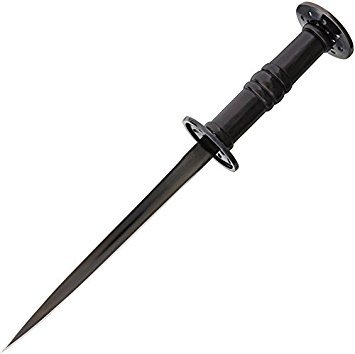
    The status of House Qo'mar as a newly minted Great House acts as a beacon for the average House that they can ascend to the High Command and Great House status. Qo'mar now commands a sizeable portion of the main Imperial Klingon Navy fleet and is a force to reckon with. Qo'mar has no desire to become Chancellor; he wants to fight and bring glory to his House and the Empire. Rivals for the Chancellory therefore have no desire to kill Qo'mar or destroy his House as he poses no challenge to their ambitions. They would rather gain favour with the General. Qo'mar has no time for treachery and challenging Azetbur. Being Chancellor means sitting on the throne and spending your days doing politics. Qo'mar would rather be defeating enemies and facing death to live another day; to feel alive.

    House Qo'mar has bladed weapons and tactics geared towards fighting the Gorn. The bladed weapons are shorter and armour-piercing to stab through Gorn hide. Typical tactics are to use a disruptor to break up or damage the hide and finish off at close-range with a bladed weapon like a tajtiq (knife sword). The typical weapons are a dk'tahg like a Rondel knife with a diamond cross-section blade for stabbing through the reinforced Gorn skin. The larger weapon of House Qo'mar is a tajtiq or knife-sword in the style of a yoroi-doshi Japanese Samurai sword - a 'mail piercer' weapon usually wielded with the left or reins hand. This is a shorter weapon than a Bat'leth, more like a Mek'leth. This brings the members of House Qo'mar close-quarters with Gorn and this is why their rite of passage is to fight a Gorn one-on-one. The gene pool is kept strong as the Klingons who are not strong enough are killed in the encounter and do not spread their weak genes. The House Qo'mar bat'leth is like an Uruk-Hai sword from the Lord of the Rings movies, with a crooked, heavy tip that helps to pierce armour. Again, this is a concession to fight the Gorn. In practice, the shorter tajtiq is more the weapon of choice.
    Winston Duke, the Mountain Chief M'Baku in Black Panther (and a good visual role-model for L'mak), sums up the approach of House Qo'mar in a Vanity Fair interview: "We don't hide, we don't sneak. We come through the front door." In the same way, the House Qo'mar does not use cloaking devices, they're more geared to full-on frontal assault against the Gorn. Good honest combat in the spirit of Kahless.

    The House has a selection of 86 mostly larger cruiser sized ships: 1x B-11 Accuser, 1x D-10 Riskadh, 1x D-9 Warrior's Anger, 8x D-8 K't'inga, 13x D-7 Koro, 9x D-6 and 25 B'rel Bird of prey.

    Author's Notes:

    I wanted to have a Klingon 'hero family' as a counterpoint to the Hawkins family and House Qo'mar is it. This is a Klingon House that has just achieved the big time as a Great House through hard fighting and gaining a lot of scars. Qo'mar has elevated himself from soldier up to four-star General by fighting Gorn. To put that in perspective, that is like the late, great Jonah Lomu (see right) taking on a walking - 7 foot tall salt-water crocodile walking on man-sized legs with a gun. Qo'mar may be an awfully big Klingon but Gorn are naturally huge. The Klingons of the South-West (or Spinward Rimward corner) have grown huge out of necessity fighting the Gorn. Smaller, lesser built Klingons just simply die.

    Qo'mar renamed the House after himself when they achieved Great House status. He already earned a collection of prestigious blade weapons from the famed House Kihreg and now is on the Klingon High Command. He is a traditional fighting Klingon - he's no desire for a boring throne to sit on and would far rather be fighting, singing songs and telling tales of his glorious victories. He's a philosopher too with knowledge of the teachings of Kahless, this leads to him sending his only son - L'mak - to Ka'Hat on Sherman's Planet exchange and learn with the Federation and there he meets Hawkins. The rest is story.

    Qo'mar has a named set of swords - just like Excalibur and the Valyrian steel swords in Game of Thrones. Lizard-slayer was an apt name to say this is a Klingon who doesn't have stories of fighting weedy human Starfleet captains but powerful Gorn ones. The House gains from the lands and ships of House Grokh after it is discommended - just like the House of Mogh after the events in DS9 'Way of the Warrior' when Worf sides against Chancellor Gowron. Older, more traditional Great Houses resent this fledgling Great House and how it has grown even more from acquiring lands and ships without a fight. Of course, none would say this to Qo'mar as he'd kill them where they stand. No Worfian idle threats here. Qo'mar is Klingon.

    House Qo'mar - as House J'tal - had many minor House enemies. Now that they are the great House Qo'mar, these threats have evaporated. Qo'mar's fleet has now become the property of his House. Some of the minor Houses that had feuded with his now must bend the knee to serve a great House of the High Command. Qo'mar has the ear of the Chancellor; that is power on a whole new level. I wanted House Qo'mar to have its own feel - fighting Gorn does this. This House does not just consider a boy a man when he wields a blade, when he earns scars from fighting a Gorn, that's when he is REALLY a warrior - marked in scars. This is not a House of models and pretty boys. Their armour was another thing I thought of - if you're fighting Gorn then you need high-grade heavy armour, not just body armour to stop knives and the likes.

    House Qo’mar is geared for the Gorn front.

    Their age of ascendance ritual is very different to the one seen with Worf. No pain sticks. This is a one-on-one duel with a Gorn. If you are worthy, then the scarred victor is a true Klingon warrior. If they lose, they die at the hand of the Gorn and the weak genetic material is eliminated from the gene pool. This is how it should be. Post-Discovery, I’m not sure the PG rated pain stick version is appropriate for a warrior race. This harsh initiation rite has resulted in large-build warriors more akin to quarterbacks and ice hockey enforcers in size.

    Even their targs are bred to bring down Gorn and are a larger breed – more like a Wolfhound, Rottweiler or Alsatian than a smaller breed. Klingons don’t live long. Kang, Koloth and Kor seemed to live until their 130s – very unlikely for a race that pride themselves in combat. Death before 70 is likely. Better to burn out, than to fade away.

    Fighting style

    The House of Qo’mar use armour-piercing bladed weapons, more akin to an ice pick than a knife. The fighting style is accordingly geared for precision stabbing attacks to the eyes, neck and heart. Slashing attacks are shunned as a blade generally will not slice through the bone-chainmail of a Gorn hide.

    Kahless interpretation

    For House Qo’mar the emphasis is Kahless the warrior-king. The interpretation is about fighting to earn glorious victory and to honour the Empire and your House. This is a version full of bloodshed, strength and sacrifice. No hiding, no sneaking, this is about looking the enemy in the eye. And ending them. House Qo’mar hold the gate against the invaders (Gorn and Federation) and traditionally hold territory that the Gorn fight them for.


    House Bora'DoK

    This is a minor House that specialises in border patrol. This House is based on one of the outer colonies and they swear a duty to protect the boundaries of the Empire. They have a small collection of 23 ships, with a handful of battlecruisers acting as a command ship for a mixture of D-18 Gull and B'rel patrol ships. The House has: 1xD-10 Riskadh, 1xD-8 K't'inga, 6xD-18 Gull, 7x B'rel and 8x Suspicious class.

    House Kruge

    The House of Kruge was a powerful political force in the Empire up to the mid-2280s. The leader of the House, Kruge, refused to accept the peace overtures that Councillor Gorkon was proposing after a change of heart following his visit to the lava tubes of Boreth. Gorkon claimed to have had a vision in which we needed to fulfill the words of the Organians and make peace with the United Federation of Planets. Chancellor Kesh refused to listen to the dissent from Kruge. Kruge took it upon himself to send an envoy, Valkris, to obtain information on the Project Genesis torpedo, to show the High Command how dangerous the Federation really was.

    In the event, Valkris was killed for reading the secret data, Kruge destroyed the Starfleet science vessel Grissom and legendary vessel Enterprise. In the event, Kruge was outfoxed and killed by Admiral Kirk. The Bird of Prey belonging to Kruge was stolen, along with the cloaking technology and secrets of the armour, weapons and sensors. This was a tactical loss to the Empire, the House of Kruge fell into shame a a result. The findings of Kruge ironically did fuel caution in the High Command, the Houses of Duras and Koloth helped to protect the House of Kruge from discommendation ro serious repercussions.

    The House of Kruge still serves on the High Council, mostly as a puppet of the wishes of those houses propping it up. It is hope that the House will one day ascend to greatness and the wisdom of Kruge will see the light, before the Empire is destroyed by diplomacy and a show of weakness.

    House N’reden

    Minor House in the driftward region of the Empire. Acquired assault ships from House MoraKh from a blood debt dating to the ISC war. This minor House is looking to build up its stature in the Empire after losing much of their forces and lands during the Kinshaya invasion. G’loth, head of the house, secured the blood debt from fighting bravely with the forces of House MoraKh. So impressed was General MoraKh that he pledged to honour the smaller house for showing more courage than most warriors.

    Previously the House N’reden had supplied cruisers, destroyers and frigates to defend the assault ships of house MoraKh. During the Kinshaya war these ships put themselves into harm’s way to defend these larger capital ships. As a result, House N’reden’s forces were annihilated by the onslaught of the Kinshaya with the PPD weapon. With the gift of assault ships, the role of House N’reden has begun to evolve.

    House O'giak

    This is a minor House with a background in workers and the occasional warrior. The fleet of this House has a mixture of D-7, D-6, D-5, T-5 and T-3 all converted into tankers, freighters and supply ships. This House has a glorious heritage of supporting the warrior fleets in their great battles and campaigns.

    House Koryak

    This is a faded minor House that fell from greater House status in the 2250s/60s. Their fleet consists of outdated and refurbished warships from the time of Garth, Pike and Kirk. This House dreams of redemption, but failed campaigns in the 2270s and 2280s cost further lands and property. The decline of the Empire in the 2290s after Praxis means the House has few assets left; all that remains is a hunger to regain their honour and glory. A failed delaying action meant the better Emperor, D-10, D-9, and D-8 ships were destroyed by the Kinshaya fleet. Only the more numerous, older ships are now left.

    All this failure has left the House now eager to sense which way the political wind is blowing. To his end, they sided early with General Kaarg for his succession and his policies. House Gorak was discommendated after the assassination of Chancellor Azetbur, the lands and ships from that House are now being distributed by Kaarg to his loyal followers. House Koryak hopes to benefit from this generosity.

    House V'rokian

    This House has a proud tradition of being there for Day One combat of special forces-style fleet that operates Supression of Enemy Astro Defences (SEAD) missions. The House also has VoDIeh class vessels for deep space penetration missions to cripple the enemy in Day One operations (D1 Ops). The rest of the fleet consists of B'rel class and Suspicious class science vessels used for jamming sensors.


    House MoraKh

    Assault specialist Great House that has designed the latest designs of assault ships for the Empire. This House has a collection of T-5, T-12 and T-15 assault ships, along with D-11 command cruiser and a B-11 capital ship. This House has always stood by the Chancellor and is seen as the powerhouse for any Chancellor to secure their loyalty.

    House Stex

    Great House of General Stex, who heroically lost his right arm in the assault on Kronos One. This House has a mix of a B-11 with D-11, D-10, D-8. Azetbur rewarded this House for his valiant attempt to stop the assassination of her father.

    House Klaa

    General Klaa, a personal friend now to Kaarg after their fight for the leadership, Klaa has been built up to the position of Chief of Staff by his mate, Vixis. This Great House is now in a position to cement their place on the High Command for generations to come.

    House B’oeke

    From the General that insisted to Azetbur to attack or be slaves in their world. Ignored by Azetbur, B’oeke continued to oppose Azetbur’s policy of engagement with the Federation. Named for Jim Boeke who played First General in ST:VI.

    House of Grokh

    Discommended for treason along with General Chang. This House looks to be revived with the death of Azetbur. Named for Matthias Hues’ character Second General from ST:VI, named in the novel.

    House R’shar

    Minor House based entirely on one T-12G class assault ship, the IKS R’shar. Alliances with other Houses allow them access to shipyards and training facilities off-ship. Their resources are turned over back into the ship, ensuring it is the most advanced of its type in the fleet.

    House P’tookH

    Minor House operating in the Kinshaya Sector, looking for the big win of minerals to earn their way to greater things.

    House Kihreg

    Honoured Great House of the Klingon Empire. This House specialised in making weapons, especially bladed weapons, for the best of the Empire. Bat'leths, Mek'leths and D'ktahgs customer made to order for the greatest Houses and warriors. These weapons cannot be bought, they have to be earned. Each weapon is etched with the markings for the House receiving the weapon and the owner. The weaponsmith also leaves their personal marking on the weapon and every weapon is unique. They are also all named. Like Excalibur and Robin Hood's sword Albion, each bladed weapon from the House of Kihreg is named. Heart Cleaver, Blood Seeker, Lizard-slayer and other descriptive, snappy names. These are prestigious weapons, reliable blades and to own one is to have a social standing. This House is in high demand, but only serve those worthy of their craftmanship.

    The Klingons aren't necessarily the tallest Klingons in the Empire, their build being more suited to forging and weapons manufacture. Large upper body musculature with clothing of leather designed to withstand the fierce heat of the forge. House Kihreg designs swords, daggers, knives, spears, axes, throwing stars and other weapons. Inspiration from Danny Trejo's "Man At Arms: Weapons of War" series with Chinese weapons like the Sun and Wind stars and the Ji spear, indian weapons like the Urumi whip sword and the Haladie tri-blade dagger, finally the Egyptian weapons like the Khopesh sword. Also the "Forged in Fire episode with the Sword-breaker.


    Star Trek: Excelsior

    The Klingon perspective of the first series of the Interim Years will be a step change from the TOS movies that precede it. Whilst it won't go over the events of the movie ST: VI The Undiscovered Country, it will expand and extrapolate on events, people and places both before and after the movie. The reign of Gorkon and who he was, the actual details of Praxis and the aftermath of the detonation and the assassination of Gorkon. Azetbur and the High Command will also be explored. The Khitomer Accords are a major factor, both the aspirational version spoken of by Spock and the reality. For half of the great Houses, the Accords are too close to being surrender. For the other half, it is a battle to convince the rest that the Accords will save the Empire by focussing on the existing battlefronts without a frozen conflict going hot. There will be famou Klingons from numerous Star Trek series and movies on both sides of this argument. This is like Brexit in the UK, a divided leadership that fights to get consensus and drive the Empire forward out of the damage that the Praxis explosion caused. Praxis itself will have scorched half of Praxis and wiped out many of the population and great Houses. Operation Rebirth is launched to stabilise and rebuild the Empire.

    Azetbur will need to convince the skeptics that she's the best Klingon to lead the Empire. The decision to select her was as divided as the one to engage with the Federation over Praxis. Amongst the cynics will be Koloth, the famous Klingon from the two encounters with Kirk and the Tribbles; he's now a General and isnt convinced on peace with the Federation. Having been humiliated twice, Koloth is against both the surrender of the Khitomer Accords and the selection of Azetbur as the Chancellor. She is weak, inexperienced and her combat track record pales compared to the likes of the General. Koloth is raw from the loss of his firstborn child and the Empire is all that he has left. A legacy of empire building and battles. Khitomer could open the flood gates to destroying the Empire and its ways; the Klingons could become tamed and lose their way. Koloth refuses to let this happen. Azetbur must act as the leader and bridge-builder between the political halves of her High Council and between the Klingon and Federation peoples. This will require political agility that perhaps even her father didn't possess.

    There will be plenty of new material in ST: Excelsior too; new characters, new location, species, battlefronts, warships and enemies are explored in plenty of detail. What 6 TOS moves couldn't show, 5 seasons of 10 episodes (50 in total) will have the capacity to flesh things out in far more detail. The Kinshaya, ngej and Ch'ramaki campaigns and their politics will be explored. Some of these will be shown in ST: Duj Puj as well later on. The dominant parity enemy will be the Romulan Star Empire. They dwell on exploiting weakness and the disruption of Praxis is ideal for them to exploit on the Northern border of the Klingon Empire. This border conflict will continue to slow-burn across decades as both sides manoeuvre for the dominant position to win. What the Romulans have in technological superiority, the Klingons match in military quantity and ferocity. A frozen stalemate is the common result. The far Eastern border of the Empire sees two enemies the Federation is only vaguely aware of; the Holy Order of the Kinshaya are a religious species that the Klingons see as demons. Their religious fervour matches the military determination of the Imperial Klingon Empire, resulting in a never-ending bloodbath, chewing up the unweary and inexperienced. The military equipment and warships of the Empire will be explored.

    Star Trek: Duj Puj

    This is the first series on the Interim Years to delve deeper into the ground-level of life in the Imperial Klingon Navy. This is the Das Boot (1981 and 2018) of Star Trek. The nearest translation for Duj Puj is Underdog. This is the story of an old, arguably obsolete, MK1 Bird of Prey from the time of ST: Enterprise. Duj Puj has no cloaking device, or a VERY basic one. She's been upgraded dozens of times and has jury-rigged improvements all over the ship. The sensors, the armour, the weapons - all have been upgraded on this old girl. The crew are close-knit and the ship is one of the crew. The captain is a young Klingon named L'mak. He's huge, part of the House Qo'mar from the Southern part of the Klingon Empire. He's faced Gorn and is a large Klingon, built broad and stong to face adult Gorn. He has to stoop and think small to fit inside the cramped spaces of Duj Puj. The storylines will take Duj Puj from the Southern hunting grounds of the Gorn to the Eastern frontier with the Kin'shaya and ngej. Then to the Northern border war with the Romulans and finally to face her fate in the Western campaign at Ch'ramak. Like the Enterprise, the idea is to show a glimpse of life in a U-boat-like warship of the Imperial Klingon Navy on the various fronts. To show the viewer what life is REALLY like in the Imperial Klingon Navy. Other ships of similar age make up the bulk of the fleet: D-5, Raptor and the newer D-6 will be shown, along with the modern variants of K'tinga D-7, Warrior's Anger, Emperor, Relentless, Bridgehead assault ships and mighty Accuser dreadnoughts. Starting in 2295 with L'mak as a Lieutenant or newly-minted Commander. Fresh from Command Training School (part of which might have been under the legendary General Chang). This 'reserve' Bird of Prey is his first command, a chance for him to show his mettle. The crew are are loyal to his House and have served for years on this old girl. The limitations of this near-century old vessel are known, she's well-kept and actually really capable. It's not the ship; it's the crew. She's stacked with photon torpedoes, with a mission to get tonnage from destroyed enemies.

    Claustrophobia. Like the Kaiser-era U-boat. Ducting, cables and junction boxes hanging from the ceiling and the bulkheads. Equipment where there's space. No one hurries in this maze of system upgrades. Duj Puj is at the limits of upgrades to keep her relevant in modern warfare. The cloaking device limitations are from the insufficient power generation. If she has a cloak it's early generation. She can't fire whilst cloaked or warp if cloaked. Duj Puj is in many ways like Grandfather's Hammer: 5 new heads and 7 new handles. She's had wings and command module replacements and upgrades. The Captain has a cabin. There's a Sickbay. Beyond that there's a crew mess and bunks for hot bunking. No luxuries. Lots of radiation in the overworked reactor pit.

    Season One will be scene-setting for the Imperial Klingon Navy. Excelsior has shown the K'tinga we're familiar with. This is ground-level stuff on a 'reserve' warship. In truth, there's not much difference between a reserve warship and a frontline active one, given the constant war-footing of the Empire. Duj Puj is officially based at V'stok naval base. Duj Puj will be surrounded by other cannibalised MK1 Bird of Prey and D-5. Many contemporary ships of her age don;t deploy. Lieutenant L'mak has the opportunity to be made a commander to earn honour for his ship, crew and himself. V'stok will be seen like a Mediterranean naval base. Vast. This serves as the principal base for the Southern border of the Klingon Empire. As a lesser priority, the ships are older and smaller than compared with the Northern or Eastern bases. The large vessels here are D-6, D-7 and Warrior's Anger classes. Possibly Emperor class. Fresh from Command School, L'mak looks to get a ship and take her out to do her duty. Regardless of her age or capability. The tactics of Chang, Kang, Korrd, Kor and Koloth still ringing in his ears. Duj Puj is symbolic of the Imperial Klingon Navy: vast numbers being made up of older, arguably obsolete ships. Ships upgraded many times over. A make-do and mend navy. These older ships are labelled as the reserve fleet. With a warrior nation, like the Empire, the constant war footing has amde her as frontline as the rest. The older ships are a liability and are generally assigned to face less capable enemies, or smaller ships. Not state-of-the-art. Ships like Duj Puj live off the skills of their commanding officers and crew.

    Post-Praxis there's a standing secondary mission for Klingon vessels to find dilithium and other power sources. MK1 Bird of Prey and Raptor classes are lined up as scout vessels to seek out and plunder new sources. Small factors like geographical borders don't factor in much. The Duj Puj will venture over the Gorn border to seek out mineral-rich worlds. Gorn patrol ships will be sought out and fought. Larger capital ships will be avoided as necessary. Without a cloaking device, the tactics of hiding are more limited. L'mak, son of a recently-minted General, is well-versed in combat. House Qo'mar are specialised in fighting Gorn, so L'mak is in familiar ground here. His test of manhood was to fight a full-grown Gorn, so he has the knowledge, skills and scars to deal with the enemy. As a good warship commander, he knows the capabilities and weaknesses of his ship. He just needs to understand his crew and discover their strengths and limitations. For Duj Puj, the elderly, overworked reactor is a definite concern, both for the dangerous radiation effects on the crew and the danger of being detected that it creates. The claustrophobic ship is robust and functional. The sensors and weapons are only a couple of decades old.

    Star Trek: Grunts

    Star Trek: Grunts is a deep dive into the lives of the lesser Houses and the Houseless. This is about those Klingons who live away from Kronos, with no names or reputations. In the eyes of the warrior-led society they're worthless. The fate of these individuals will be readily forgotten without a great House name or a reputation in martial prowess. The way forward for these individuals is to enlist or be drafted to the Imperial Klingon Navy or Imperial Klingon Marines to make a name for themselves. This series of stories will follow the lives of these people prior to their military service, training and posting to the frontlines. This is not the glamorous lives that Star Trek has traditionally shown, this is down in the mud with the Lieutenants, Sergeants and Privates. This isn't about Generals and Captains. There's a gulf between the ideology of Kahless and the realities of IED explosives, guerilla asymmetric warfare and fighting in the trenches with drone support. There's no glory here, only the mission and hope that you and your troop will survive to the next one. The stereotype of bathleths and disruptors is dispelled; these are the practicalities of warfare with disruptor assault rifles, pistols and combat knife. No ceremonial two-handed swords in the trenches. The uniforms are pared down to flak jacket armour with camouflage. This a a low tech, basic version of Klingons geared to fighting against a faceless enemy that looks like them. The basics extend to tricorders, combat communicators and rations; all the necessities without the flashy tech that won't survive the first two minutes of combat.

    The inspiration for these stories are the US campaign in Vietnam and Gulf War 1 and 2, The US, British and USSR in Afghanistan and the Russian campaigns in Chechnya, Georgia and Ukraine. This will reflect the aftermath of the explosion of Praxis in the combat trenches of the Ch'ramak Campaign. The initial cracks are here and the Klingons are fighting to stop the disintergration of their Empire. This both moves the story forward from the Excelsior series and the talks of Khitomer Accords and the Praxis explosion. Like Star Wars: Andor, this is a ground-level look at the realities of the Klingon Empire away from the great Houses, famous names and politics. This is about brothers and sisters looking out for each other, the boredom, action and utter fear of warfare. Soldiers sent to a world they've no idea where it is, to fight a people they don't know and to achieve goals that are vague at ground level. In warfare, there are no heroes and villains, only people following their orders, others trying to just stay alive and those out to escape. There are heroic acts and atrocities on both sides. The Klingons trying to pacify the planet, the Ch'ramaki trying to repel oppression.

    Author's Notes:

    The Klingon Empire - devised as a cheaper alternative to using the Romulan make-up. The Soviet analogy of the original series and movies, with a Japanese Samurai element added from Star Trek III and Viking elements from TNG, DS9 and Voyager onwards.

    Qo'noS First CityOne of the first thoughts I had for the Interim Years was about the races that the Sheffield would examine and detail. The Klingons would be the obvious choice - Hawkins notes that the Starfleet has been obsessed with the Klingons for over one hundred and fifty years. This was bourne from the appearance of the Klingons in virtually all the Star Trek series and movies from their first appearance in 'Errand of Mercy' right up to an appearance in the new film 'Star Trek'. I wanted to go back to the basics: what are the Klingons? how do they describe themseves and their government? what does this mean?
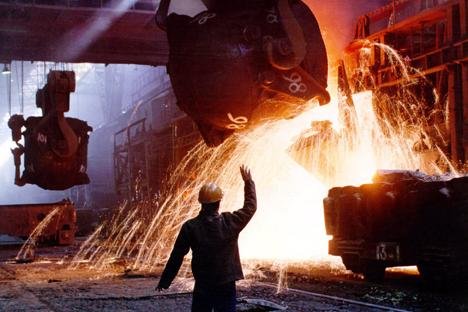
    The Klingons are an empire - this means that they conquer other planets and cultures to assimilate their mineral resources, technology or peoples into their realm to improve the state and culture as a whole. Klingons are warriors, at least that is the way they see themselves now. ST: Enterprise episode 'Judgement' descibes how the Klingons were descending from being a culture of artists etc. to a military-industrial culture. This fits in to the Soviet model of the soldier, the farmer and the factory worker. I envision that the Klingon Empire once had a balance between these three elements and that the warriors eventually push things to benefit them, rather like the Grey Council of the Minbari in Babylon 5.

    I wanted to go back to basics; if you are an empire then you are not nice. Lesser cultures are dominated for the benefit of the empire; history shows this to be the case with the British, Soviet, Romans and many others who had empires. The Klingons were shown in ST: Enterprise 'Marauders' for what they are - after dilithium and resources to build up the empire. 'Trouble with Tribbles' showed how this approach was refined in the 2260s with propaganda and a promise of improvement under the Klingons (rather like the Soviets promising improvements in the 1960s). Gorkon and his daughter Azetbur had taken the empire away from these militaristic, aggressive roots and the empire was seen to stagnate. This would be when plans to assassinate Azetbur would be made, just as the plans to kill her father were made for the same reason.

    As with Russia over the last decade from 1998 - 2008, I wanted to show how the empire had fallen into hard times. Without conquering new worlds and without the ability to keep a tight rein on the conquered worlds, not only was the empire not getting the new resources they needed, but some of the colonies would be leaving the empire. To quote General Gogol from 'View to a Kill' - No one ever leaves the KGB. Just as with the break-up of the Soviet Union and Warsaw pact from 1985 - 1992, the Klingon empire was predicted to break-up from that famous Starfleet briefing at the beginning of Star Trek VI: The Undiscovered Country. With the Interim Years I wanted to show that this was happening; they just got the timing of events wrong: This was no sudden splintering, more a gradual glacier-like break-up.

    I have had e-mail conversations with quite a few of the Star Trek novel authors such as Keith R A DiCandido and David R George III to ask their opinions on the Klingons and such individuals as Azetbur and Kaarg. Keith's novel 'Art of the Impossible' and David's 'Serpents among the Ruins' paint a picture of the Empire in decline after Praxis. With this basic in mind, I then turned to Russia - the traditional analogy of the Klingon Empire. There were events in Russian history since 1992 which I felt the Klingons should also go through as this would lead nicely into the events of TNG - they would also keep the Klingons relevant to present day Russia - something I felt was highly important.

    As a sort of blueprint for the Klingon Empire of 2293 onwards, I examined the modern history of Russia. This shows the highs and lows of the recent history of the country, and gives an idea of the direction of the Klingon Empire. A new cold war? Perhaps; or certainly a change in relations. 'The art of the impossible' describes in detail the conflict between the Cardassian Union and the Klingon Empire, as with the events of 'Serpents among the ruins', I intend to stay faithful to established history.


    "The above artwork is © Interplay Productions. All rights reserved"


    Interplay Productions


    Click here to go back to the races pageClick here to go to U.S.S Excelsior.