

Star Trek: Underworld is the second phase of Star Trek: The Interim Years. After the Excelsior stories deal with the Star Trek we know and love, Underworld moves away from this to deal with 'ground level' Star Trek. This does for the Star Trek Universe, what Andor did for the Star Wars one. This is a firm movement away from the cameos and familiar big ship Starfleet of the Star Trek series so far. This is my story that "Deconstructs Star Trek and the United Federation of Planets", looking at why they are the good guys and what the Federation is really like for normal people in normal jobs, away from the elite explorers of Starfleet. Frontier deals with the lives of civilians, the masses who inhabit the Federation. What is life like for them? Away from the core worlds on the myriad of colonies, where a new poverty exists: the poverty of opportunities. How equal are the lives of the people living in the Federation utopia? Federal law Vs. Colonial law. It also addresses the merchant trader perspective, looking at trade and criminality in the Star Trek universe. The antagonists of the series, the Orion Syndicate are explored in depth. This is a full on graphic look at a culture of a criminal cartel, a different kind of threat to the Klingons, Romulans or Tholians: a more direct, personal threat. The U.S.S. Interceptor is the third of these story arcs, bringing to life the mall ship navy that is the majority of Starfleet. We've seen the Enterprise, Hood, Potemkin, Repulse and other big name, big ships. This is about the thousands of small ships that do the daily work that helps the Federation to work: first responders, police work, refugee rescue, relief work, showing the flag and diplomatic work. Whilst these ships don't grab the headlines like the Enterprise, they work just as hard.
Star Trek: Underworld has a different feel. Small ships are more personal, everyone knows everyone else personally. Something you can't really do on a ship of 502 people, but you can on a ship with only 45 people. The smaller size and need for officers and crew of a lower rank, allows for a younger crew with fewer years on the clock than Kirk and co. had by the latter three movies IV - VI. The Commanding Officer is around 28 - 30 years old and is only a Lieutenant Commander, their Executive Officer is a Lieutenant aged around 25 - 27. These are more aggressive, enthusiastic officers more akin to Royal Navy Lord Nelson's 'Band of Brothers'. Assigned to the colonies around the Orion system, they are the frontline against the Orion Syndicate, a major criminal cartel within the constrains of the United Federation of Planets. Whilst the two earlier series explained the roots and reasons for criminality in Paradise, Interceptor are the police and intelligence-gathering investigators that are defending civilians and merchants against the insidious clutches of the Syndicate. These are the adventure of the 45 members of the crew, along with their commando contingent. Starfleet Commando were shown in Star Trek V and will be built upon here. These are the brave tip of the spear who do stop-and-searches on merchant ships, as well as boardings to ensure compliance on trading laws.
Commissioned stardate 10905.4 - June 2299 - the Interceptor is the latest generation of the popular Okinawa class corvettes. With state of the art sensors and propulsion, she can outrun and outmanoevre most ships at sublight speeds. The latest upgrades to the design were added to counter the newer Klingon Bird of Prey design and the Orion privateers. Less like a cruiser or a larger naval vessel, this is akin to a patrol vessel like today's HMS Severn, Tyne, Mersey, Forth, Medway, Trent, Tamar or Spey of the Royal Navy River class. This ship deals with colonial issues - like HMS Forth does around the Falkland Islands and dependencies - as well as being the first responder to any emergencies out there on the final frontier. You're FAR more likely to send a patrol vessel to investigate, than to pull the Enterprise across the quadrant. As mentioned earlier, the Orion Syndicate are the adversaries. Underworld will build up on the Orion Syndicate and cartel culture, explaining how they relate to both the Orion people and the Federation itself. Their roots go right back to the very beginning. This is a diferent kind of threat; unlike the militaristic, belligerent Klingons or Romulans, many people benefit from the trade and activities of the Orion Syndicate. Some will see them as Robin Hood and aid them in evading from Starfleet. Some live in fear of the Syndicate; death and retribution can get you ANYWHERE and NOWHERE is safe, even on the Interceptor. The crew of Interceptor must punch above their weight to combat this threat, Starfleet Intelligence is one way that they do this. Star Trek: Interceptor will address Starfleet Intelligence, Starfleet Security and Federation Security: how these agencies all work together with Interceptor to keep Federation citizens safe. The thirty year-old Riker or Shelby-like commanding officer is a Lieutenant Commander. They didn't get the Enterprise or Excelsior, instead they have their own state-of-the-art command. With the thrill of the Big Chair and the drive of a sports team captain to win a cup, this officer has a chance to prove themselves and progress up the career ladder. Names and reputations are made this way. Over a thousand Okinawa class patrol the Federation; this is a winning formula.
The mission is critical. The Orion Syndicate have been shown to be a very real threat to the fabric of the Federation. With the distraction of larger and more militant nations, this danger wasn't fully appreciated. This is a very real, different and personal danger to facing starship combat against the Klingons. Many Starfleet personnel have been killed, maimed or otherwise blackmailed or deterred by the actions of the Syndicate. Better to quit Starfleet than to put your family, children or friends in danger. Fatal danger. The Syndicate has got making a horrific example down to a fine art. The Orion Sydicate is a cartel or gang culture with decentralised cells. Decentralised so that Starfleet Intelligence cannot collapse the organisation as a whole. Once it was Kirk and the Enterprise against the pirates. They soon learned they couldn't face Starfleet head on. They now operate through proxies and other third parties to obfuscate their operations. The Syndicate traffick people, drugs, sex workers and other artefacts, lifeforms and illegal products like AI or alternative medicines and banned services. They have Sicario-like assassins that eliminate theats to their trade. The Syndicate swapped from piracy to guerilla-style operations and Starfleet had a very real problem. Fear and intimidation cowed Starfleet and colonial governors alike. Things got VERY nasty. Starfleet Intelligence, along with Akula, Saladin and Okinawa class starships have worked hard to bring the balance back. This is the ROUGHEST and MOST DANGEROUS assignment within the Federation borders. Where Klingons have codes of honour, Orions don't. Face and respect are everything. Disrespect the Syndicate and expect trouble.
Crew:
49 crew: 13 Officers, 14 Non-Commissioned Officer and 22 enlisted.
Commanding Officer Lieutenant Commander (7 - 9 years since graduation).
Executive Officer Lieutenant
Science Officer Lieutenant (jg)
Chief Medical Officer Lieutenant (jg)
Chief Engineering Officer ensign
Security Chief ensign
Starfleet Commando ensign
Operations Officer Lieutenant (jg)
Mission Operations Officer ensign
Social Sciences Officer Ensign Nathaniel Hawkins.
Communications Officer ensign
Helm Officer ensign
Navigation Officer ensign
Cultural Expert: Orion male. Placed on the ship by Starfleet Intelligence.
U.S.S. Interceptor
Flight IIIa Okinawa class frigates incorporate the latest upgrades in open architecture command systems, replacing the orginal seventies ones. The improved sensor systems of baseline 8 phase 4, which incorporates Cooperative Operations Systems and adapted Snoopy sensors from the Apollo development program. Originally the Okinawa class was to be limited to a production run of a prototype, pre-production of a Low Rate of Initial Production (LRIP) and then to two full flights of a few hundred hulls. The prototype, NX 150, was launched in 2275 with the first Flight being built 2278-83. A second Flight II batch was built from 2285-89 with improvements made to the sensor and command systems, incorporating the latest enhancements to the DCLD.
 The ratifying of the Khitomer Accords in 2295 brought a new requirement for frigates to reaffirm the border of the Federation - Klingon border. Another requirement for the new supply of frigates was to replace lost members of Okinawa Flight Ia and those whose hull members were considered life expired. Starfleet's Advanced Starship Design Bureau (ASDB) quickly rejected calls for a totally new design, opting for an upgrade of the successful Okinawa class, both for the speed of restarting the construction lines and their capacity for growth and multi-mission flexibility. Yards across the Federation quickly adapted operations from refitting Okinawa vessels to constructing new Flight IIIa and refitting the upgrades to the Flight Ic and Flight IIb vessels.
Okinawa class has been successfully shown an ability for flexibility and multi-mission swap-out mission modules. Variations on the Okinawa class include: police corvette, comando special forces, ELectronic INTelligence (ELINT), Suppression of Enemy Area Defences (SEAD), science version and diplomatic courier. In addition, Okinawa vessels have been used as a small, adaptable testbed for future starship technology. All the signs are there for a Flight IVa Okinawa construction and future upgrades. This successful hull design is destined to remain the Starfleet frigate design for the first half of this century.
The Okinawa class starship has 8 decks, summarised as follows:
Deck 1: Main Bridge, Antimatter tanks
Deck 2: Officers lounge, briefing room
Deck 3: Officer quarters, Crew quarters
Deck 4: Sickbay
Deck 5: Transporter room
Deck 6:
Deck 7:
Deck 8: Torpedo bay


Stardate 13489.5, Okinawa class U.S.S. Falkland, NCC 2309, diverted from the Churchill system to investigate a theft of intellectual property from the Dharma Initiative. Sister ship U.S.S. Interceptor joins the hunt for the thieves. With the ship too far ahead for either ship to catch, Starfleet guides the Sheffield to intercept. Operating from Starbase 52.
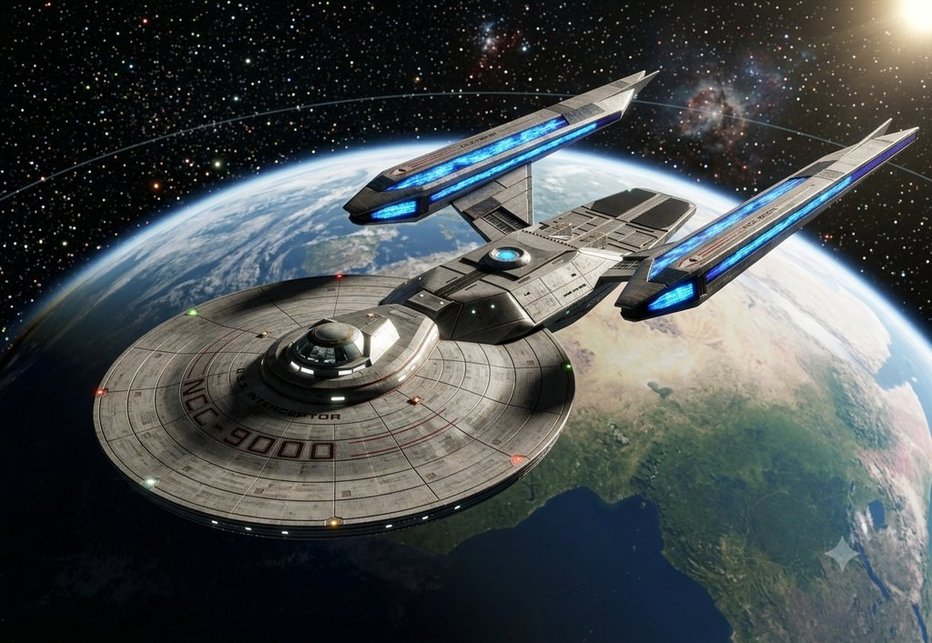
The Interceptor has two shuttles:
01 Keen
02 Agile
 Author's Notes:
U.S.S. Interceptor is named both for the excellent, but short-lived game show on Channel 4 in 1989 starring Sean O'Kane in the titular role and it is also named for the ship of the same name in the film "Pirates of the Carribbean". Sean O'Kane is the source of the motto catchphrase for the ship, it being the one he used in the show, along with an eagle screech.

Star Trek: Underworld:
A small, battered Star Trek III Merchantman-class freighter operates out of a neglected Federation backwater colony. The colony has been left behind by the prosperity enjoyed on the core worlds, and its people face a stark reality: without external support, they cannot remain viable. Bureaucratic delays, distant supply lines and political indifference have pushed them into a corner.
To survive, the crew have turned to smuggling for the Orion Syndicate. They are criminals by Federation law, yet their motives remain rooted in Federation morals and ethics. They smuggle only what keeps their colony alive, and they refuse assignments that would harm innocents. Their loyalty is to their people, not to the Syndicate. This puts them in constant danger, both from the Syndicate—who expect obedience—and from Starfleet, who see only the criminal acts.
Their greatest pursuer is the U.S.S. Interceptor, a young, eager patrol frigate whose officers believe wholeheartedly in the Federation’s ideals. The Interceptor’s crew view the Merchantman as Syndicate collaborators, unaware of the colony’s desperation. This creates a tense cat-and-mouse dynamic: the freighter dodging patrols, the Interceptor trying to uphold the law, and both sides convinced they are doing the right thing.
The Merchantman crew evoke the spirit of Blake’s Seven: anti-heroes driven by necessity, constantly wrestling with their own ethics, and operating on the fringes of a political system that has failed them. They are rebels, smugglers and idealists all at once. Their Syndicate assignments frequently clash with their Federation upbringing, forcing them to navigate impossible moral choices.
They are criminals—but only because the Federation left them no other path. They are Syndicate assets—but only until they can find a way to break free. And they are still Federation at heart, even when the Federation hunts them.
Merchantman Anti-Hero Crew
A small, battered Merchantman-class freighter operates out of a forgotten Federation colony on the fringes of known space. The colony is economically strangled by distance, bureaucracy and Syndicate pressure. With no reliable supply lines and no meaningful Federation support, the crew have been forced into smuggling for the Orion Syndicate simply to keep their people alive.
They are criminals by circumstance, not by nature. Their Federation upbringing clashes constantly with the Syndicate’s demands, creating a crew defined by moral conflict, loyalty, desperation and quiet rebellion.
Below is the full cast.
1. Captain Mara Teral
Role: Captain of the Merchantman
Age: Mid-30s
Background: Former Federation colonial administrator
Tone: Steely, principled, quietly furious at the Federation’s neglect
Mara once believed wholeheartedly in the Federation’s ideals. Years of watching her colony deteriorate while pleas for assistance were ignored have hardened her. She turned to smuggling only when every legal avenue failed. She refuses Syndicate jobs that harm innocents and constantly rewrites assignments to minimise damage. The Syndicate sees her as “difficult”; Starfleet sees her as a criminal. She sees herself as the only one doing what’s necessary.
2. Jace Rennik
Role: Pilot and Syndicate Liaison
Age: Late 20s
Background: Raised in Syndicate-controlled districts
Tone: Cynical, razor-sharp, morally ambiguous
Jace understands the Syndicate better than anyone aboard. He knows their culture, their debts, their grudges, and how far they’ll go to enforce obedience. He keeps the crew alive by navigating Syndicate politics, but he’s terrified of what happens if they ever stop being “useful”. He admires Mara’s ethics but believes they’ll get them all killed.
3. Dr Lira Voss
Role: Medical Officer
Age: Early 30s
Background: Former Federation frontier medic
Tone: Compassionate, weary, quietly defiant
Lira treats Syndicate victims and Syndicate enforcers alike. She hates the criminal life but knows the colony would collapse without the Merchantman’s income. She is the moral centre of the crew, constantly reminding them of the Federation values they still cling to. Her presence keeps the crew from slipping fully into criminality.
4. Tovan Kesh
Role: Orion Cultural Expert
Age: Around 40
Background: Former Syndicate accountant who defected
Tone: Wry, secretive, charmingly untrustworthy
Tovan knows the Syndicate’s financial networks, hidden cells and operational habits. He defected after a Syndicate purge and now uses the Merchantman as a shield. He is invaluable for predicting Syndicate reprisals, but his loyalties are never entirely clear. He may be helping the crew—or simply hiding behind them.
5. Rian Hale
Role: Engineer
Age: Mid-20s
Background: Starfleet dropout who deserted after Syndicate threats
Tone: Idealistic, conflicted, brilliant under pressure
Rian still thinks like a Starfleet officer. She maintains the Merchantman with improvised engineering miracles and refuses to let the ship fall into full criminal modification. She clashes with Jace over ethics and practicality, and she dreams of redemption—even though returning to Starfleet would mean immediate arrest.
6. “Grim”
Role: Ex-Syndicate Enforcer
Age: Unknown
Background: Former muscle for Syndicate debt collection
Tone: Silent, intimidating, unexpectedly gentle
Grim is a terrifying presence, trained to kill without hesitation. He defected after refusing to carry out an execution and now protects the crew with fierce loyalty. He is trying to be better, but the Syndicate trained him too well. His past haunts him, and his skills make him both an asset and a danger.
The Crew’s Moral Code
They follow a self-written doctrine called The Wayfarer Compact:
- Never smuggle weapons to warlords.
- Never traffic people.
- Never deliver anything that will kill innocents.
- Always skim Syndicate profits to support the colony.
- Sabotage Syndicate operations whenever possible.
- Kill only when survival demands it.
- Uphold Federation ideals—even when breaking Federation law.
They are criminals—but they are Federation criminals.
Their Opponent: The U.S.S. Interceptor
The Interceptor’s young officers see the Merchantman as Syndicate collaborators. They don’t understand the colony’s desperation. This creates a tense, ideological chase:
- The Interceptor enforces the law.
- The Merchantman fights to survive.
- Both believe they are doing the right thing.
The Merchantman crew often save civilians the Interceptor cannot reach, while the Interceptor unknowingly protects them from Syndicate retaliation. They are mirrors of each other—idealism versus realism.
Tone
- Gritty frontier survival
- Moral conflict and quiet rebellion
- Syndicate intimidation and retaliation
- Federation bureaucracy failing the margins
- Blake’s Seven-style doomed brilliance
Merchantman-Class Freighter: Detailed Ship Profile
1. General Overview
The Merchantman-class freighter is an ageing, rugged civilian cargo vessel widely used across the Federation’s frontier colonies. Originally designed for low-risk commercial transport, it has become a favourite among independent traders, smugglers and Syndicate proxies due to its modular cargo spaces, forgiving engineering tolerances and ease of modification.
The Merchantman is slow, under-armed and outdated by core-world standards, but it is reliable, repairable, and surprisingly adaptable. Its hull design dates back to the late 23rd century, with many ships still flying well into the 24th thanks to frontier ingenuity and black-market upgrades.
The crew’s vessel—known locally as the Wayfarer—is a typical example of a Merchantman pushed far beyond its intended purpose.
2. Technical Specifications
- Class: Merchantman-class light freighter
- Length: Approx. 110 metres
- Crew Capacity: 12–20 (though often run with fewer)
- Cargo Capacity: 3,000–5,000 tonnes depending on internal configuration
- Warp Capability: Warp 5 (nominal), Warp 6.2 (with Syndicate bypass active—dangerous)
- Impulse Drive: Standard civilian impulse package, heavily modified
- Armament:
- Originally none
- The Wayfarer carries two concealed civilian-grade phaser strips (illegal)
- Deflectors: Minimal; reinforced plating added by the crew
- Sensors: Civilian-grade, supplemented with Syndicate dampeners and a salvaged Federation medical scanner array
The ship is a patchwork of legal and illegal technology, Federation salvage, Syndicate modifications and frontier improvisation.
3. Bridge & Command Systems
The Merchantman’s bridge is cramped and utilitarian. The Wayfarer retains several Federation-style chairs and consoles, salvaged from a decommissioned Okinawa-class frigate. This gives the bridge an oddly familiar feel—Federation bones beneath Syndicate scars.
Key features:
- Manual helm controls preferred by Jace Rennik
- A Syndicate-installed sensor-signature scrambler hidden beneath the navigation console
- A Federation-issue emergency medical scanner repurposed as a long-range biological sensor
- A captain’s chair that still bears a faded Starfleet serial number
The bridge is a symbol of the crew’s identity: Federation ideals, criminal reality.
4. Engineering
The engineering section is the heart of the ship’s improvisation. Rian Hale has transformed it into a hybrid of:
- Federation engineering discipline
- Frontier make-do pragmatism
- Syndicate-installed warp-coil bypasses
Key systems:
- Warp Coil Bypass: Allows short bursts above safe warp limits; extremely dangerous
- Impulse Overdrive: Jury-rigged to provide rapid acceleration during Syndicate runs
- Cooling Manifold Patchwork: A mix of Federation parts, civilian replacements and Orion components
- Hidden Compartments: Built into the cargo-transfer conduits for smuggling
Engineering is barely within safety margins, but Rian keeps it running through sheer skill and stubbornness.
5. Cargo Bays
The Merchantman’s cargo bays are its defining feature. The Wayfarer has three main holds:
Hold A – Legitimate Cargo
Used for:
- Food
- Medicine
- Machinery
- Supplies for the colony
This is the hold they show to Starfleet.
Hold B – Syndicate Cargo
Hidden behind false bulkheads and sensor-masked compartments. Used for:
- Contraband
- Syndicate goods
- High-value smuggling items
The crew strictly follow the Wayfarer Compact, refusing to carry weapons, slaves or anything that harms innocents.
Hold C – Colony Relief
A dedicated space for emergency supplies, humanitarian cargo and anything the colony desperately needs. Mara insists this hold is never used for Syndicate work.
6. Medical Bay
The medical bay is a salvaged Federation frontier module, installed by Dr Lira Voss. It includes:
- A functioning biobed
- A portable surgical unit
- A Federation-issue medical tricorder array
- A Syndicate-supplied stasis pod (originally for organ transport; now used ethically)
It is the most “Federation” part of the ship, and Lira keeps it spotless.
7. Crew Quarters
Cramped, functional and heavily personalised.
- Mara’s cabin contains Federation administrative plaques and old colony maps.
- Jace’s cabin is sparse, with Syndicate markers he refuses to explain.
- Rian’s cabin is cluttered with engineering schematics and half-finished repairs.
- Tovan’s cabin is neat, with Orion cultural artefacts and coded ledgers.
- Grim sleeps in the cargo bay, preferring open space and quick access to danger.
8. Defensive & Offensive Systems
The Merchantman was never meant to fight, but the Wayfarer carries:
- Two concealed civilian phaser strips
- Reinforced hull plating
- A Syndicate-installed micro-torpedo launcher (rarely used; Mara hates it)
- A sensor-scrambler that masks the ship’s profile
The ship cannot win a fight against the U.S.S. Interceptor—but it can run, hide and out-think.
9. Operational Role
The Wayfarer serves three simultaneous roles:
1. Colony Lifeline
Transporting food, medicine and vital supplies.
2. Syndicate Smuggling Vessel
Under duress, carrying contraband to keep the colony financially afloat.
3. Quiet Rebellion Platform
Sabotaging Syndicate operations from within, guided by Federation ethics.
This triple life makes the ship a constant target for both the Syndicate and Starfleet.
10. Reputation
Among frontier colonies:
- The Wayfarer is seen as a lifeline.
Among Syndicate operatives:
- The crew are “useful but troublesome”.
Among Starfleet:
- The ship is flagged as a Syndicate asset, wanted for questioning.
Among the crew:
- It is home.
11. Narrative Themes
The Merchantman embodies:
- Federation ideals surviving in criminal circumstances
- Frontier desperation
- Moral compromise
- Quiet rebellion
- Blake’s Seven-style anti-heroism
It is a ship that should not matter—but does.
The Colony: Full Detailed Profile
A forgotten Federation world on the far edge of the Orion frontier, officially designated Colony K-6 “Haven’s Reach”, though almost no one calls it that anymore. To its inhabitants, it is simply “the Reach”—a name that reflects both its distance from the Federation core and the constant struggle to reach a better future.
The colony is not failing, but it is slowly starving of opportunity. It is a place where Federation ideals exist only on posters in the administrative hall, while reality is shaped by distance, scarcity and the shadow of the Orion Syndicate.
1. Geography & Environment
The Reach is a temperate frontier world with wide plains, shallow seas and a scattering of low mountain ranges. It is beautiful in a quiet, unremarkable way—no dramatic vistas, no exotic flora, just a world that feels lived-in.
Key features:
- Dust-rich plains ideal for agriculture but prone to seasonal storms
- Shallow coastal settlements built around fishing and kelp-processing
- Old mining sites now exhausted, leaving behind rusting equipment
- A single major settlement, Port Meridian, surrounded by smaller homesteads
- A Syndicate-controlled shanty district on the outskirts, known as “Lowtown”
The planet’s environment is stable, but its infrastructure is not.
2. Port Meridian (Capital Settlement)
Port Meridian is a frontier town scaled up to a small city, built around a starport that has seen better days. The streets are clean but worn, the buildings functional but patched, and the people proud but tired.
Notable districts:
- The Starport Quarter: Once bustling, now half-empty. Cargo cranes rust in place.
- The Administrative Hall: Federation flags hang outside, sun-bleached and ignored.
- The Market Strips: A mix of legal trade, barter, and Syndicate-influenced stalls.
- Lowtown: A Syndicate-dominated sprawl of makeshift housing and illicit commerce.
- The Old Mines: Now used as storage, hideouts, or makeshift workshops.
Port Meridian is the beating heart of the colony—steady, stubborn, and quietly desperate.
3. Population & Culture
The Reach has around 38,000 inhabitants, mostly Federation citizens descended from early settlers. Their culture is shaped by:
- Frontier pragmatism
- Community loyalty
- Suspicion of distant authority
- A strong work ethic
- A quiet resentment of the Federation’s neglect
They are not anti-Federation. They simply feel forgotten.
Cultural traits:
- People greet strangers cautiously but warmly once trust is earned.
- Bartering is common; credits are scarce.
- Community gatherings revolve around food, music and shared labour.
- Children grow up learning both Federation civics and frontier survival.
- The Syndicate is spoken of in whispers—never directly, never loudly.
The colony’s identity is defined by resilience, not rebellion.
4. Economy
The Reach’s economy is fragile and uneven. It relies on:
1. Agriculture
Grain, legumes, hardy vegetables, and kelp-derived products.
2. Fishing & Aquaculture
A reliable but modest source of protein and trade goods.
3. Light Manufacturing
Workshops producing tools, spare parts and frontier equipment.
4. Black-Market Trade
The Syndicate fills the gaps left by Federation supply failures.
The colony’s biggest problem is distance. Transport costs make legal trade unprofitable, and Federation subsidies are inconsistent. When shipments fail to arrive, the Syndicate steps in—at a price.
5. Government & Law
The Reach is governed by a Colonial Council, elected locally but bound by Federation law. In practice, the council has limited power.
Federal Law vs Colonial Reality
- Federal law is idealistic but impractical.
- Colonial law is pragmatic but often unenforceable.
- The Syndicate exploits the gap between the two.
The council tries to maintain order, but without Starfleet presence, enforcement is weak. The local constabulary is underfunded, understaffed and intimidated by Syndicate influence.
6. The Orion Syndicate’s Influence
The Syndicate does not rule the Reach—but it permeates it.
Their presence includes:
- Smuggling networks
- Debt-bond labour
- Protection rackets
- Black-market medicine
- “Unofficial” trade brokers
- A quiet but constant threat of retaliation
Most colonists do not support the Syndicate. But when the Federation fails to deliver medicine, parts or food, the Syndicate does. That creates dependency.
Lowtown is effectively Syndicate territory. The Merchantman crew grew up watching friends and neighbours fall into Syndicate debt, disappear, or become “assets”.
7. The Merchantman’s Role in Colony Life
To the colony, the Merchantman is:
- A lifeline
- A symbol of defiance
- A necessary evil
- A source of hope
The crew smuggle Syndicate goods only to keep the colony afloat. They also bring:
- Medicine
- Spare parts
- Food
- Tools
- Educational supplies
- Emergency relief
They are criminals by Federation law, but heroes to their people.
8. Relationship with Starfleet
Starfleet sees the colony as:
- Low priority
- Low strategic value
- A minor administrative concern
The colony sees Starfleet as:
- Distant
- Well-meaning but ineffective
- Blind to frontier realities
The arrival of the U.S.S. Interceptor changes everything. The Interceptor’s crew believe they are protecting the Federation. The colony believes they are disrupting the only lifeline they have.
This creates tension, misunderstanding and moral conflict.
9. Themes the Colony Embodies
The Reach represents:
- The limits of Federation utopia
- The cost of distance
- The vulnerability of frontier worlds
- The moral grey zones of survival
- The quiet heroism of ordinary people
It is the perfect birthplace for an anti-hero crew: Federation at heart, criminal by necessity, and determined to protect their home at any cost.
Port Meridian: Full Expansion
Port Meridian is the capital settlement of Haven’s Reach, a frontier colony clinging to survival on the Federation’s distant margins. It is not a failed city—merely a forgotten one. Everything here works just well enough to keep going, and just poorly enough to remind its citizens how far they are from the Federation core.
Port Meridian is a place of contrasts: Federation ideals painted on peeling walls, Syndicate influence lurking in the shadows, and ordinary people trying to live decent lives in a system that has quietly abandoned them.
1. Urban Character & Atmosphere
Port Meridian feels like a frontier town scaled up to a small city, with architecture that mixes Federation prefab modules, locally built structures, and improvised expansions.
Atmosphere:
- Streets are clean but worn.
- Buildings are functional, patched, and often mismatched.
- The air smells of dust, sea-salt, and industrial lubricant.
- People move with purpose, but rarely with optimism.
It is a city built on resilience, not prosperity.
2. The Starport Quarter
The Starport Quarter is the beating heart of Port Meridian—and its greatest disappointment.
Originally designed to handle regular Federation traffic, it now sees only:
- Occasional merchant vessels
- Rare Federation supply ships
- Frequent Syndicate-linked freighters
- The Merchantman Wayfarer, slipping in and out quietly
Key features:
- Rusting cargo cranes that haven’t been fully operational in years
- Half-empty docking bays with flickering signage
- A customs office staffed by overworked officials who know they’re outmatched
- A Syndicate “brokerage” office disguised as a shipping consultancy
The Starport is a symbol of what the colony was meant to be—and what it never became.
3. The Administrative Hall
A squat, functional building made of Federation prefab panels, now faded and patched.
Inside:
- Federation flags hang, sun-bleached and ignored
- A tired Colonial Council meets in a chamber too large for its authority
- Posters proclaiming “Federation Values for All Worlds” peel at the corners
- A small Starfleet liaison office sits empty most days
The Hall is where the colony’s laws are written—but rarely enforced.
4. The Market Strips
The Market Strips are lively, colourful and chaotic. They are the closest thing Port Meridian has to prosperity.
Stalls sell:
- Fresh produce from local farms
- Tools and spare parts
- Kelp-derived foodstuffs
- Frontier clothing and equipment
- Syndicate-sourced goods passed off as “imports”
Bartering is common. Credits are scarce.
Federation regulations are technically in place, but enforcement is lax.
The Market Strips are where the colony’s spirit lives: noisy, stubborn, and determined to survive.
5. Lowtown
Lowtown is the Syndicate’s foothold in Port Meridian. It is not a slum—just a district that has slipped through the cracks.
Characteristics:
- Makeshift housing built from old cargo containers
- Illegal workshops producing counterfeit goods
- Syndicate debt collectors operating openly
- Children playing in alleys watched by nervous parents
- A constant sense of tension beneath everyday life
Lowtown is not ruled by the Syndicate, but influenced by them.
People here are not criminals—they are desperate.
6. Industrial Zone
A cluster of old mining facilities and small manufacturing workshops.
Features:
- Abandoned ore-processing plants
- Repurposed warehouses used for storage or covert Syndicate meetings
- Small engineering shops producing frontier tools
- A Federation-era power station kept running by sheer determination
The Industrial Zone is where the colony’s practical work happens. It is also where the Syndicate hides its less savoury operations.
7. The Waterfront
Port Meridian’s waterfront is surprisingly beautiful, with shallow seas and long, low docks.
Activities:
- Fishing vessels bringing in daily catches
- Kelp-processing plants producing food and industrial materials
- Families gathering on the shoreline in the evenings
- Quiet smuggling operations conducted under the cover of legitimate trade
The waterfront is the colony’s most peaceful district—and its most vulnerable.
8. Social Life & Culture
Port Meridian’s culture is shaped by:
- Frontier pragmatism
- Community loyalty
- A strong work ethic
- Quiet resentment of Federation neglect
Social spaces include:
- The Meridian Exchange, a communal hall used for meetings, dances and markets
- The Drift Bar, a popular gathering place for traders, pilots and Syndicate watchers
- The Old Mines Amphitheatre, used for concerts and community events
People here are cautious with strangers but fiercely loyal once trust is earned.
9. Law & Order
Port Meridian’s constabulary is small, underfunded and overstretched.
Challenges:
- Syndicate intimidation
- Limited equipment
- Slow Federation response times
- A population that prefers to solve problems quietly
The constabulary does its best, but everyone knows they cannot stand up to Syndicate pressure alone.
10. Relationship with the Merchantman Crew
To Port Meridian, the Merchantman crew are:
- Heroes
- Criminals
- Rebels
- Protectors
- A necessary evil
The crew bring medicine, food, tools and hope. They also bring Syndicate attention.
The colony loves them, fears for them, and depends on them.
11. Themes Port Meridian Embodies
Port Meridian represents:
- The limits of Federation utopia
- The vulnerability of frontier worlds
- The moral grey zones of survival
- The quiet heroism of ordinary people
- The tension between law and necessity
It is the perfect setting for your anti-hero Merchantman crew: Federation at heart, criminal by circumstance, and determined to protect their home.
Lowtown: Full Detailed Description
Lowtown is the shadow side of Port Meridian—an entire district shaped by neglect, desperation and the quiet, pervasive influence of the Orion Syndicate. It is not a slum, nor is it lawless. It is simply a place where Federation ideals have worn thin and survival has taken their place.
Lowtown is where the colony’s contradictions live openly: Federation citizens who cannot afford Federation life, Syndicate operatives who pretend to be legitimate traders, and families who simply want to get through another day without attracting the wrong kind of attention.
1. Geography & Layout
Lowtown sits on the south-eastern edge of Port Meridian, built on land originally intended for industrial expansion. When the mines closed and investment dried up, the area was repurposed informally by settlers who needed cheap housing.
Its layout is:
- Dense, with narrow streets and improvised alleyways
- Chaotic, built from cargo containers, prefab modules and salvaged materials
- Layered, with structures stacked or welded together over decades
- Unregulated, expanding organically without official planning
The district feels like a maze—one that locals navigate instinctively and outsiders find disorienting.
2. Housing & Infrastructure
Lowtown’s housing is a patchwork of:
- Old cargo containers converted into homes
- Prefab shelters dating back to the colony’s founding
- Makeshift extensions built from scrap metal and polymer sheets
- Communal living blocks maintained by neighbourhood groups
Infrastructure is functional but fragile:
- Power is stable but prone to brownouts
- Water supply is clean but rationed
- Waste disposal is handled by community cooperatives
- Streets are lit by mismatched lamps, some Syndicate-installed
Lowtown survives because its residents make it work, not because the Federation supports it.
3. Population & Social Fabric
Lowtown is home to around 8,000 people, roughly a fifth of Port Meridian’s population. Its residents include:
- Families who cannot afford central housing
- Former miners and industrial workers
- Small-scale traders and craftspeople
- Syndicate debt-bond labourers
- Refugees from other frontier worlds
- People who simply prefer the anonymity Lowtown offers
Despite its reputation, Lowtown has a strong sense of community. Neighbours look out for one another, share resources, and maintain informal support networks. The district’s social fabric is woven from mutual aid, not Federation policy.
4. Syndicate Presence
The Orion Syndicate does not openly rule Lowtown—but it permeates it.
Their influence includes:
- Debt collectors operating under the guise of “financial advisors”
- Smuggling brokers disguised as shipping consultants
- Enforcers who blend in as labourers or traders
- Informants embedded in community groups
- “Protection services” that are impossible to refuse
The Syndicate’s power is subtle:
- No uniforms
- No banners
- No overt control
Instead, they operate through fear, debt and dependency.
Everyone knows who they are. No one says their name aloud.
5. Markets & Commerce
Lowtown’s markets are lively, resourceful and morally grey.
Goods sold include:
- Salvaged machinery
- Frontier tools
- Home-grown produce
- Syndicate-sourced “imports”
- Counterfeit Federation tech
- Black-market medicine
Bartering is common. Credits are rare.
Federation regulations are ignored unless they benefit the locals.
The markets are also a Syndicate revenue stream. Every stall pays a “fee”—some willingly, some under duress.
6. Workshops & Industry
Lowtown’s workshops are the colony’s unofficial industrial backbone.
They produce:
- Spare parts for agricultural machinery
- Improvised tools
- Repaired electronics
- Modified civilian tech
- Illegal sensor dampeners (quietly tolerated)
Many of these workshops are run by families or small cooperatives. Some are Syndicate fronts. Most are both.
7. Law & Order
The constabulary rarely enters Lowtown unless absolutely necessary. When they do:
- They travel in pairs
- They avoid certain streets
- They rely on local guides
- They leave quickly
Lowtown maintains its own informal order through:
- Neighbourhood councils
- Community mediators
- Mutual protection groups
- Quiet agreements with Syndicate representatives
Crime exists, but violence is rare. The Syndicate prefers control, not chaos.
8. Culture & Daily Life
Life in Lowtown is hard but not hopeless.
Cultural traits include:
- Strong community bonds
- Evening gatherings in communal courtyards
- Music played on old Federation instruments
- Street food stalls serving kelp-based dishes
- Children playing in alleys under watchful eyes
- A tradition of painting murals on container walls
These murals often depict:
- Frontier landscapes
- Federation starships
- Scenes of community solidarity
- Abstract patterns inspired by Orion art
Lowtown’s culture is a blend of Federation heritage and frontier adaptation.
9. Relationship with the Merchantman Crew
To Lowtown, the Merchantman crew are:
- Heroes who bring medicine and supplies
- Smugglers who keep the Syndicate appeased
- Rebels who quietly sabotage Syndicate operations
- Locals who never forgot where they came from
Many crew members grew up here.
Their families still live here.
Their loyalty to Lowtown is absolute.
Lowtown protects them with silence, misinformation and community solidarity.
The Syndicate tolerates them because they are useful.
Starfleet misunderstands them because they see only the criminal acts.
10. Themes Lowtown Embodies
Lowtown represents:
- The limits of Federation reach
- The moral grey zones of frontier survival
- The quiet resilience of ordinary people
- The subtle power of the Syndicate
- The birthplace of anti-heroes
It is the perfect crucible for your Merchantman crew:
Federation at heart, criminal by necessity, and shaped by a community that refuses to give up.
A Day in the Life of a Lowtown Resident
Marin Jallo, age 42, lives in a converted cargo container on the eastern edge of Lowtown. He is not a criminal, not a rebel, not a Syndicate asset—just an ordinary man trying to keep his family afloat in a district the Federation forgot.
Morning: Dust, Noise and Pragmatism
Marin wakes before sunrise. Lowtown rises early; the district is loud even at dawn. The hum of generators, the clatter of makeshift shutters, and the distant thump of industrial machinery form a familiar soundtrack.
His home is small but tidy:
- A converted cargo container with welded extensions
- A water recycler shared with three neighbouring families
- A patched-together heating unit that works “most days”
Breakfast is simple: kelp-cakes, reheated stew, and weak tea. His daughter, Lysa, prepares for school—one of the few Federation services that still functions reliably. She walks with friends, staying to well-lit streets and avoiding Syndicate-watched corners.
Marin heads to work in the workshop district, a cluster of improvised engineering sheds where he repairs agricultural machinery for farmers across the colony. His tools are a mix of Federation-issue spanners and homemade replacements.
Late Morning: Work, Worry and Quiet Deals
Work is steady but unpredictable. Today he repairs:
- A broken harvester blade
- A faulty coolant manifold
- A sensor array damaged by dust storms
Farmers pay in credits when they can, but more often in barter:
- Food
- Spare parts
- Favour tokens
Around mid-morning, a Syndicate “advisor” stops by. She is polite, smiling, and terrifying. She reminds Marin that his workshop owes a “maintenance fee”—a euphemism for protection money. He pays what he can. She leaves without incident.
Marin hates these visits, but he knows the alternative: smashed equipment, stolen goods, or worse.
Midday: Markets, Community and Caution
At lunch, Marin walks to the Market Strips, where Lowtown’s energy is at its brightest. Stalls sell:
- Fresh vegetables
- Repaired electronics
- Frontier clothing
- Syndicate-sourced “imports”
He buys kelp noodles and a packet of medicine for his elderly neighbour—medicine that should be free under Federation healthcare, but rarely arrives on time.
He chats with friends, exchanging news:
- A Syndicate debt collector was seen near the waterfront
- A Starfleet patrol passed overhead yesterday
- The Merchantman Wayfarer is rumoured to be returning soon
The last rumour lifts spirits. The crew of the Wayfarer bring supplies, hope and a sense that someone still cares.
Afternoon: Family, Fear and Small Joys
Marin returns home to help Lysa with her schoolwork. The colony’s education system is stretched thin, but teachers are dedicated. Lessons cover:
- Federation civics
- Frontier ecology
- Basic engineering
- Cultural studies
Lysa asks why the Federation doesn’t help more. Marin gives the same answer he always gives:
“We’re far away. Sometimes far away means forgotten.”
Later, he visits his neighbour, Old Rella, delivering the medicine he bought. She insists on paying him with a jar of pickled vegetables. He accepts—refusing would be rude.
Evening: Shadows and Syndicate Pressure
As dusk falls, Lowtown changes. Lights flicker on, some Federation-issue, some Syndicate-installed. The streets feel narrower. People move with more caution.
Marin walks to the communal courtyard for the evening gathering. Children play. Adults share food. Someone plays music on an old Federation instrument. For a moment, Lowtown feels almost peaceful.
Then a Syndicate enforcer passes through. He doesn’t speak. He doesn’t need to. His presence is a reminder:
Lowtown survives because the Syndicate allows it.
The mood tightens, but the gathering continues. Lowtown has learned to live with shadows.
Night: Hope, Exhaustion and Quiet Defiance
Marin returns home. He checks the generator, secures the shutters, and shares a quiet moment with Lysa before bed. She asks whether the Wayfarer will come soon.
He tells her yes.
He doesn’t know if it’s true.
But hope is a form of resistance.
As he lies down, he listens to the familiar sounds of Lowtown at night:
- Generators humming
- Distant laughter
- The occasional Syndicate vehicle
- The wind against metal walls
It is not a safe life. It is not an easy life.
But it is his life—and he will protect it.
Themes Illustrated
Marin’s day reflects the core truths of Lowtown:
- Community is strong because institutions are weak.
- The Syndicate fills the gaps the Federation leaves.
- Survival requires compromise, caution and quiet courage.
- Hope is fragile but persistent.
- Ordinary people carry extraordinary burdens.
Lowtown is not a den of criminals—it is a district of survivors.
The Colonial Council of Haven’s Reach
The Colonial Council is the official governing body of Haven’s Reach—an institution meant to uphold Federation law, protect citizens, and manage the colony’s development. In practice, it is a well-meaning but overstretched authority, caught between Federation bureaucracy, Syndicate pressure, and the daily realities of frontier survival.
The Council is not corrupt, incompetent or malicious. It is simply outmatched.
1. Structure & Composition
The Colonial Council consists of nine elected members, each representing a district or sector of the colony. Their roles are modelled on Federation civic structures but adapted for frontier needs.
Council Roles
- Council Chair – Oversees meetings, liaises with Federation authorities
- Deputy Chair – Manages internal affairs and emergency coordination
- Treasurer – Oversees budgets, trade agreements and resource allocation
- Infrastructure Officer – Responsible for power, water, transport and repairs
- Agricultural Representative – Speaks for farmers and food producers
- Industrial Representative – Oversees workshops, mining remnants and manufacturing
- Education & Welfare Officer – Manages schools, healthcare and social support
- Security Liaison – Coordinates with the constabulary and any Starfleet presence
- Lowtown Representative – A controversial but vital seat, often held by someone Syndicate-pressured
The Council is elected every four years, though turnout is low due to apathy and disillusionment.
2. The Council Chair
The current Chair, Elias Verin, is a former Federation civil servant who came to the colony decades ago. He is:
- Dedicated
- Exhausted
- Constantly negotiating between ideals and reality
Verin believes in the Federation’s values but knows the colony cannot rely on distant promises. He spends most of his time writing reports, requests and pleas to Federation agencies—most of which receive polite acknowledgements and little action.
3. Political Dynamics
The Council is divided into three informal factions:
1. The Idealists
Believe the Federation will eventually intervene.
Push for legal solutions, formal appeals and diplomatic channels.
Often frustrated by delays and bureaucracy.
2. The Pragmatists
Focus on what can be done now.
Support local initiatives, community cooperatives and frontier self-reliance.
Often clash with Idealists over “waiting for help that never comes”.
3. The Lowtown Bloc
Represent Lowtown’s interests.
Often pressured by Syndicate influence.
Not Syndicate agents, but forced to navigate their presence carefully.
Their votes are unpredictable and often shaped by fear.
The Council’s decisions are rarely unanimous.
Compromise is constant.
Progress is slow.
4. Relationship with Federation Authorities
Officially, the Council is part of the Federation’s civic network.
Unofficially, it is on its own.
Challenges include:
- Slow response times
- Limited funding
- Bureaucratic hurdles
- Low strategic priority
- No permanent Starfleet presence
The Council sends regular reports to Starfleet Command and the Federation Colonial Office. Replies are polite, supportive, and almost always end with:
“Resources are currently allocated elsewhere.”
This has created a quiet resentment among Council members, though none dare voice it publicly.
5. Relationship with the Orion Syndicate
The Council cannot openly oppose the Syndicate.
They also cannot openly cooperate with them.
Their stance is:
- Officially: Zero tolerance
- Unofficially: Avoid escalation
- Practically: Manage the damage
The Syndicate exerts pressure through:
- Debt manipulation
- Threats
- “Advisors” attending public meetings
- Quiet influence over Lowtown representatives
The Council’s greatest fear is provoking a Syndicate crackdown that the colony cannot withstand.
6. Security & Enforcement
The Council oversees the Port Meridian Constabulary, a small force of:
- 18 officers
- 1 chief constable
- Limited equipment
- No heavy support
The constabulary is dedicated but intimidated.
They rely on community cooperation and avoid Lowtown unless absolutely necessary.
The Council has repeatedly requested Starfleet assistance.
Starfleet has repeatedly declined due to “resource constraints”.
7. Budget & Resources
The Council’s budget is a patchwork of:
- Agricultural levies
- Market fees
- Federation subsidies (inconsistent)
- Emergency grants (rare)
- Donations from community groups
They must stretch every credit to cover:
- Power grid maintenance
- Water purification
- School supplies
- Medical equipment
- Starport upkeep
- Constabulary wages
The budget is always in deficit.
The Treasurer’s job is thankless.
8. Public Perception
Colonists view the Council with:
- Respect
- Frustration
- Sympathy
- Disappointment
Most citizens understand the Council is doing its best.
They also know its best is not enough.
Lowtown residents are more sceptical, seeing the Council as distant and ineffective.
Some believe the Council fears the Syndicate more than it protects the people.
9. Relationship with the Merchantman Crew
The Council’s relationship with the Merchantman crew is complicated.
Officially:
- The crew are criminals
- Their ship is flagged for investigation
- Their activities violate Federation law
Unofficially:
- The Council knows the crew keeps the colony alive
- They quietly rely on the supplies the Merchantman brings
- They avoid interfering with the crew’s operations
- Some members privately support them
The Council Chair has never publicly acknowledged the crew’s importance—but he has never authorised action against them either.
10. Themes the Council Embodies
The Colonial Council represents:
- The limits of Federation governance
- The moral compromises of frontier politics
- The struggle between ideals and survival
- The quiet heroism of bureaucrats trying to hold a community together
- The tension between law, necessity and fear
It is a governing body doing everything it can—while knowing it will never be enough.
Orion Syndicate Operations in Port Meridian
The Orion Syndicate does not rule Port Meridian. It does not fly flags, occupy buildings, or openly challenge the Colonial Council. Its power is quieter, more insidious, and far more effective. The Syndicate operates through dependency, debt, fear and convenience, embedding itself into the colony’s daily life until resistance becomes unthinkable.
Port Meridian is not a criminal city. It is a Federation colony under pressure, and the Syndicate has learned exactly how to exploit that pressure.
1. The Syndicate’s Operating Philosophy
The Syndicate’s approach to Port Meridian is built on three principles:
1. Don’t be seen. Be felt.
They avoid overt displays of force. Their influence is subtle, woven into commerce, debt and favours.
2. Make yourself indispensable.
When Federation supply lines fail, Syndicate shipments arrive. When medicine runs out, Syndicate stock appears. When machinery breaks, Syndicate parts fill the gap.
3. Punish selectively, not broadly.
Violence is rare but unforgettable. One public beating, one disappearance, one ruined business—enough to remind everyone who holds the real power.
2. Organisational Structure in Port Meridian
The Syndicate operates through decentralised cells, each with its own speciality. This prevents Starfleet Intelligence from collapsing the organisation as a whole.
Cells active in Port Meridian include:
- The Ledger Cell – Manages debt, loans and financial coercion
- The Broker Cell – Handles smuggling, trade routes and cargo movement
- The Quiet Cell – Enforcers, intimidation specialists, “problem solvers”
- The Lowtown Cell – Embedded in the community, gathering intelligence
- The Supply Cell – Manages black-market medicine, parts and food
Each cell knows only what it needs to know. No one sees the full picture.
3. Economic Influence
The Syndicate’s economic footprint is everywhere, especially in Lowtown and the Market Strips.
Key economic operations:
- Protection fees for market stalls
- Debt-bond labour for those who cannot repay loans
- Black-market medicine sold at inflated prices
- Smuggling of high-value goods through the Starport
- Counterfeit Federation technology
- “Brokerage services” that are actually smuggling fronts
- Syndicate-controlled shipping routes for desperate traders
The Syndicate does not need to control the colony’s economy.
It only needs to control the parts people cannot live without.
4. Debt Manipulation
Debt is the Syndicate’s most powerful weapon.
How it works:
1. A struggling family takes a small loan.
2. Interest is low at first.
3. Payments become difficult.
4. Interest spikes.
5. A “friendly advisor” offers restructuring.
6. The family becomes Syndicate-dependent.
7. Someone in the family is asked to “do a favour”.
8. The cycle continues.
Debt is how the Syndicate recruits:
- Informants
- Smugglers
- Labourers
- Lookouts
- Enforcers
No one thinks they’re joining the Syndicate.
They think they’re paying off a loan.
5. Influence Over the Colonial Council
The Syndicate does not control the Council, but it pressures it.
Methods include:
- Quiet threats
- “Advisors” attending public meetings
- Manipulating Lowtown representatives
- Offering “assistance” during crises
- Sabotaging Council initiatives that threaten Syndicate interests
The Council Chair knows the Syndicate is present.
He also knows the colony cannot withstand a confrontation.
6. Community Integration
The Syndicate embeds itself into daily life through:
- Sponsoring community events
- Funding repairs in Lowtown
- Providing food during shortages
- Offering “free” medicine
- Supporting local workshops
This creates a dangerous truth:
Many residents rely on the Syndicate more than the Federation.
People do not support the Syndicate.
They simply cannot afford to oppose it.
7. Enforcement & Violence
Violence is rare, but decisive.
Syndicate enforcement includes:
- Public beatings
- Quiet disappearances
- Sabotage of businesses
- Threats against family members
- “Accidents” involving machinery or vehicles
The Syndicate prefers fear over bloodshed.
One act of violence can control a hundred people.
8. Smuggling Operations
Port Meridian’s Starport is a perfect smuggling hub:
- Understaffed customs
- Outdated scanners
- High traffic from independent traders
- A desperate colony willing to look the other way
Smuggled goods include:
- Medicine
- Spare parts
- Narcotics
- Illegal technology
- Exotic lifeforms
- Syndicate contraband
The Merchantman crew often carry Syndicate cargo—but only what keeps the colony alive. They refuse assignments involving weapons, slaves or lethal substances, which makes them both useful and troublesome.
9. Intelligence Gathering
The Syndicate knows more about Port Meridian than the Colonial Council does.
Sources include:
- Debt-bond labourers
- Market stall owners
- Lowtown residents
- Smugglers
- Informants embedded in workshops
- “Volunteers” who owe favours
They track:
- Starfleet movements
- Council decisions
- Merchantman activity
- Constabulary patrols
- Supply shortages
- Community tensions
Information is power—and the Syndicate has plenty.
10. Relationship with the Merchantman Crew
The Syndicate views the Merchantman crew as:
- Useful
- Skilled
- Annoyingly principled
- Difficult to control
- Too popular in Lowtown
- Too Federation-minded
They tolerate the crew because:
- The colony needs them
- They complete most assignments
- They avoid unnecessary trouble
- They keep the colony stable
But they also watch the crew closely.
Principled smugglers are unpredictable.
Themes Illustrated
Syndicate operations in Port Meridian reveal:
- The fragility of frontier governance
- The limits of Federation reach
- The moral compromises of survival
- The power of decentralised criminal networks
- The quiet desperation of ordinary citizens
The Syndicate is not a foreign invader.
It is a symptom of a colony left too long without support.
Port Meridian Constabulary: Full Detailed Profile
The Port Meridian Constabulary is the official law-enforcement body of Haven’s Reach. It is small, overstretched, under-equipped and quietly intimidated by the Orion Syndicate. Despite this, its officers are dedicated, principled and determined to protect their community—often at great personal risk.
The constabulary is not corrupt. It is simply outnumbered, outgunned and out of options.
1. Size, Structure & Staffing
The constabulary consists of 18 officers and 1 Chief Constable, responsible for policing a settlement of nearly 40,000 people.
Ranks
- Chief Constable
- Senior Constable
- Constable First Class
- Constable
- Reserve Constable (volunteers trained for emergencies)
Departments
- Patrol Division – General policing, community presence
- Investigations Unit – Theft, fraud, minor assaults
- Frontier Response Team – Rural incidents, missing persons, wildlife hazards
- Administrative Office – Records, permits, liaison with the Colonial Council
There is no dedicated anti-Syndicate unit, no tactical team, and no forensic department. They rely on improvisation, community cooperation and sheer determination.
2. Equipment & Resources
The constabulary’s equipment is functional but outdated.
Standard Gear
- Civilian-grade phasers (low-power, non-lethal settings preferred)
- Ageing ground vehicles prone to breakdown
- Basic tricorders with limited forensic capability
- Body armour designed for environmental hazards, not combat
- Outdated comms network vulnerable to Syndicate interference
Facilities
- A small station with:
- Three holding cells
- A cramped briefing room
- A single interview suite
- A shared office space
- A garage with two barely-functional patrol vehicles
The constabulary has repeatedly requested Federation upgrades.
The Federation has repeatedly replied with polite refusals.
3. Operational Philosophy
The constabulary follows three guiding principles:
1. Keep the peace, not win the war.
They cannot defeat the Syndicate. They can only prevent escalation.
2. Protect the vulnerable first.
Lowtown residents, farmers and small traders rely heavily on constabulary support.
3. Avoid unnecessary confrontation.
Direct conflict with the Syndicate risks lives they cannot afford to lose.
Their policing style is community-focused, not militaristic.
4. Relationship with the Orion Syndicate
The constabulary’s relationship with the Syndicate is defined by fear, caution and quiet resistance.
What they can do:
- Intervene in minor disputes
- Protect citizens from overt violence
- Investigate crimes not linked to Syndicate interests
- Gather intelligence discreetly
- Support victims quietly
What they cannot do:
- Arrest Syndicate enforcers
- Shut down Syndicate operations
- Protect witnesses long-term
- Confront Syndicate debt collectors
- Investigate Syndicate murders without risking reprisals
The constabulary knows the Syndicate watches them.
They also know the Syndicate prefers a compliant police force to a dead one.
5. Relationship with the Community
The constabulary is respected by most residents, especially in:
- The Market Strips
- Agricultural districts
- The waterfront
Lowtown’s relationship is more complicated:
- Some residents trust the constabulary
- Others fear bringing Syndicate attention
- Many believe the constabulary is powerless
- A few quietly cooperate, providing information at great personal risk
The constabulary relies heavily on community goodwill.
Without it, they would collapse.
6. Relationship with the Colonial Council
The constabulary reports directly to the Security Liaison on the Colonial Council.
Challenges include:
- Insufficient funding
- Political pressure to avoid provoking the Syndicate
- Limited authority
- Bureaucratic delays
- Conflicting priorities
The Council supports the constabulary in principle.
In practice, they cannot give them what they need.
7. Relationship with Starfleet
Starfleet’s involvement is minimal.
Starfleet’s view:
- The colony is low priority
- The Syndicate is a civilian criminal matter
- Resources are needed elsewhere
- The constabulary should “manage locally”
Constabulary’s view:
- Starfleet does not understand frontier realities
- The Interceptor’s presence is both helpful and disruptive
- Starfleet idealism clashes with local pragmatism
When the U.S.S. Interceptor arrives, the constabulary must balance:
- Cooperation
- Caution
- Avoiding escalation
- Protecting the Merchantman crew
- Preventing Starfleet from making things worse
It is a delicate dance.
8. Daily Duties
Constables handle:
- Domestic disputes
- Theft
- Market fraud
- Missing persons
- Agricultural accidents
- Syndicate intimidation reports (rarely actionable)
- Smuggling rumours (handled carefully)
- Community mediation
Their work is more social than tactical.
They are peacekeepers, not soldiers.
9. Notable Challenges
1. Understaffing
18 officers cannot police a city of 40,000.
2. Syndicate intimidation
Officers have been threatened, followed, and occasionally assaulted.
3. Lack of forensic capability
Most investigations rely on witness testimony and intuition.
4. Community fear
Residents often refuse to report Syndicate crimes.
5. Political pressure
The Council discourages actions that might provoke Syndicate retaliation.
6. Starfleet interference
The Interceptor’s idealistic officers sometimes escalate situations unintentionally.
10. Key Personnel
Chief Constable Ressa Durn
A veteran officer in her late 50s. Calm, principled, and quietly defiant. She has lost friends to Syndicate violence and refuses to abandon her post.
Senior Constable Jalen Miro
Lowtown liaison. Trusted by residents, feared by the Syndicate. Walks a dangerous line every day.
Constable First Class Tira Venn
Young, idealistic, and frustrated by the colony’s limitations. Secretly admires the Merchantman crew.
Reserve Constable Halen Rook
A farmer who volunteers during crises. Represents the colony’s spirit of mutual aid.
Themes the Constabulary Embodies
The Port Meridian Constabulary represents:
- The limits of frontier law enforcement
- The quiet heroism of ordinary officers
- The moral compromises of survival
- The tension between Federation ideals and frontier reality
- The struggle to maintain order without provoking catastrophe
They are not the thin blue line.
They are the thin blue thread—frayed, fragile, but still holding.
The Market Strips of Port Meridian
The Market Strips are the busiest, loudest and most culturally vibrant part of Port Meridian. They stretch across three long streets near the Starport Quarter, forming a chaotic, colourful artery of trade that keeps the colony alive. If Port Meridian has a soul, it lives here—among the stalls, the noise, the smells, and the constant negotiation between legality, necessity and survival.
The Market Strips are not glamorous. They are functional, improvised, and deeply human.
1. Atmosphere & Layout
The Market Strips are arranged in three parallel lanes:
Strip One – The Legal Lane
Closest to the Administrative Hall. Mostly legitimate trade.
Strip Two – The Grey Lane
A mix of legal goods, questionable imports, and quiet Syndicate influence.
Strip Three – The Lowtown Lane
The busiest, cheapest, and most morally flexible. Syndicate presence is strongest here.
The lanes are connected by narrow alleys, makeshift bridges and improvised awnings. The air is thick with:
- Cooking smells
- Machine oil
- Dust
- Music
- Shouting
- The hum of generators
It is chaotic, but never hostile. The Market Strips are the colony’s beating heart.
2. Strip One – The Legal Lane
This lane is the closest thing Port Meridian has to a Federation-compliant marketplace.
Goods sold here include:
- Fresh produce from agricultural districts
- Clothing made in local workshops
- Tools and household items
- Federation-approved medicine (when shipments arrive)
- Educational supplies
- Legal imports from nearby colonies
Stalls are tidy, signage is clear, and prices are stable.
Constables patrol here regularly.
Typical customers:
- Teachers
- Families
- Farmers
- Council staff
- Starport workers
Strip One is safe, predictable and respectable—but limited. It cannot meet all the colony’s needs.
3. Strip Two – The Grey Lane
Strip Two is where the colony’s pragmatism lives. It is neither legal nor illegal—just necessary.
Goods sold here include:
- Salvaged machinery
- Repaired electronics
- Frontier-grade medical supplies
- “Unregistered” tools
- Imported goods with unclear paperwork
- Syndicate-sourced items disguised as legitimate stock
Prices fluctuate daily.
Bartering is common.
Constables patrol occasionally, but carefully.
Typical customers:
- Engineers
- Traders
- Workshop owners
- Lowtown residents
- Merchantman crew (quietly)
Strip Two is the colony’s unofficial supply chain. Without it, Port Meridian would collapse.
4. Strip Three – The Lowtown Lane
Strip Three is the Syndicate’s playground. It is loud, crowded, and full of life—but also full of risk.
Goods sold here include:
- Black-market medicine
- Counterfeit Federation tech
- Illicit imports
- Syndicate-controlled food shipments
- Exotic items from Orion space
- “Protection services” disguised as insurance
- Debt restructuring “consultations”
Stalls here pay Syndicate fees.
Constables rarely enter unless absolutely necessary.
Typical customers:
- Lowtown residents
- Desperate families
- People in debt
- Smugglers
- Syndicate operatives
Strip Three is not lawless—it is controlled.
Everyone knows who controls it.
5. The Traders
The Market Strips are run by a mix of personalities:
Federation Loyalists
Try to maintain legal trade. Often frustrated.
Frontier Pragmatists
Sell whatever keeps the colony alive. Respected.
Syndicate-Pressured Traders
Forced to sell certain goods or pay certain fees.
Independent Smugglers
Operate quietly, often helping the Merchantman crew.
Community Cooperatives
Groups of families running shared stalls to survive.
Traders form a tight community. They share news, warn each other of danger, and quietly resist Syndicate pressure when they can.
6. Law & Order in the Market Strips
The constabulary’s presence varies by lane:
Strip One:
Regular patrols, friendly interactions, predictable enforcement.
Strip Two:
Occasional patrols, careful observation, selective intervention.
Strip Three:
Rare patrols, high caution, avoidance of confrontation.
Constables know that pushing too hard in Strip Three risks Syndicate retaliation.
They focus on keeping the peace, not enforcing every regulation.
7. Syndicate Influence
The Syndicate’s presence is strongest in Strip Three, but its influence extends across all lanes.
Methods include:
- Protection fees
- Debt manipulation
- “Brokerage” stalls
- Quiet intimidation
- Control of supply chains
- Embedded informants
The Syndicate does not disrupt the Market Strips.
It benefits from them.
8. Food Culture
Food stalls are central to Market Strip life.
Popular dishes include:
- Kelp noodles
- Spiced grain bowls
- Fried root vegetables
- Frontier stew
- Orion-influenced street snacks
Food is cheap, filling and communal.
Eating in the Market Strips is a social ritual.
9. Social & Cultural Role
The Market Strips are more than commerce—they are culture.
They host:
- Music performances
- Community gatherings
- Political discussions
- Rumour exchanges
- Quiet Syndicate meetings
- Merchantman crew sightings
They are where:
- News spreads
- Deals are made
- Conflicts begin
- Alliances form
- Hope survives
The Market Strips are the colony’s living room.
10. Relationship with the Merchantman Crew
The Merchantman crew are well-known in the Market Strips.
Strip One:
They avoid it—too visible.
Strip Two:
They buy tools, parts and supplies quietly.
Strip Three:
They meet Syndicate brokers, negotiate assignments, and gather intelligence.
Many traders admire the crew.
Some fear the trouble they attract.
All know the colony would suffer without them.
Themes the Market Strips Embody
The Market Strips represent:
- Frontier resilience
- Economic desperation
- Cultural vibrancy
- Syndicate infiltration
- Federation neglect
- Community solidarity
- Moral complexity
They are the perfect backdrop for your anti-hero Merchantman crew—alive, dangerous, and full of stories.
The Starport Quarter of Port Meridian
The Starport Quarter is the first thing visitors see when they arrive on Haven’s Reach—and the last thing most ships want to linger near. Once intended to be a bustling Federation transit hub, it has become a symbol of the colony’s stalled ambitions: functional, worn, underfunded, and quietly shaped by Syndicate influence.
It is not a failed starport. It is simply a forgotten one.
1. Atmosphere & Layout
The Starport Quarter occupies a broad, flat stretch of land on the western edge of Port Meridian, close to the shallow coastline. Its layout reflects decades of improvisation:
- Three main landing pads, each capable of handling mid-sized freighters
- Two cargo bays, one operational, one semi-derelict
- A customs building, small and perpetually understaffed
- A control tower, patched with replacement panels and outdated software
- A ring of warehouses, some legitimate, some Syndicate-linked
- A scattering of repair sheds, run by independent engineers
The Quarter feels like a place built for a future that never arrived.
2. Infrastructure & Condition
The starport’s infrastructure is functional but fragile.
Landing Pads
- Pad A: Fully operational, used for legitimate traffic
- Pad B: Operational but prone to power fluctuations
- Pad C: Officially “under refurbishment”, unofficially used for Syndicate arrivals
Cargo Handling
- Cranes are rusting and slow
- Conveyor belts are patched with frontier repairs
- Automated loaders work intermittently
- Manual labour fills the gaps
Power & Systems
- The power grid is stable but outdated
- Shielding is minimal, suitable only for atmospheric hazards
- Sensor arrays are civilian-grade and easily spoofed
- Communications lag during storms
The Quarter survives through constant maintenance and quiet ingenuity.
3. Personnel
The Starport staff are dedicated but overstretched.
Roles include:
- Dockmasters
- Customs officers
- Cargo handlers
- Traffic controllers
- Repair technicians
- Security attendants
Most staff are locals. Many grew up watching the starport decline. They take pride in keeping it running, even when Federation support is minimal.
Staff Challenges
- Understaffing
- Outdated training
- Syndicate intimidation
- Equipment shortages
- Bureaucratic delays
Despite everything, they keep ships landing safely.
4. Traffic & Ship Types
The Starport sees a mix of vessels:
Legitimate Traffic
- Agricultural transports
- Frontier merchant ships
- Occasional Federation supply vessels
- Scientific survey craft (rare)
Grey-Zone Traffic
- Independent traders
- Smugglers posing as merchants
- Ships carrying “unregistered” cargo
- The Merchantman Wayfarer, slipping in discreetly
Syndicate-Linked Traffic
- Privateers
- Broker vessels
- Debt-collection transports
- Cargo ships with falsified manifests
The Quarter’s scanners cannot reliably distinguish legal from illegal traffic.
Everyone pretends not to notice.
5. Customs & Regulation
The customs office is small, underfunded and overwhelmed.
Customs Officers Handle:
- Basic cargo checks
- Identity verification
- Trade permits
- Hazard declarations
- Emergency inspections
Limitations:
- Outdated scanners
- Limited authority
- Fear of Syndicate retaliation
- Pressure from the Colonial Council to “avoid escalation”
Customs officers do their best, but they cannot enforce every regulation.
They focus on safety, not legality.
6. Syndicate Presence
The Syndicate’s influence in the Starport Quarter is subtle but pervasive.
Their operations include:
- Smuggling through Pad C
- “Brokerage offices” disguised as shipping consultancies
- Debt-bond labour in cargo handling
- Quiet manipulation of manifests
- Bribery of desperate staff
- Surveillance of arrivals and departures
The Syndicate does not disrupt the starport.
It uses it.
Everyone knows which warehouses belong to them.
No one says it aloud.
7. Repair & Maintenance Sheds
The Quarter’s repair sheds are vital to frontier survival.
Services include:
- Hull patching
- Engine diagnostics
- Sensor recalibration
- Warp-coil maintenance
- Atmospheric shielding repairs
Independent engineers run these sheds.
Some are Federation-trained.
Some learned through necessity.
All are indispensable.
The Merchantman crew often visit these sheds quietly, trading favours or parts.
8. The Waterfront Connection
The Starport Quarter blends into the waterfront, creating a hybrid zone of trade and transport.
Waterfront Activities:
- Fishing vessels unloading catches
- Kelp-processing plants shipping goods
- Smuggling operations hidden among legitimate cargo
- Families gathering near the docks at sunset
The waterfront provides cover for Syndicate shipments and opportunities for legitimate trade.
It is both peaceful and dangerous.
9. Community Role
Despite its decline, the Starport Quarter remains central to colony life.
It is:
- A gateway to the wider galaxy
- A source of employment
- A hub for trade
- A symbol of hope
- A reminder of neglect
Children visit the Quarter on school trips.
Families gather to watch ships land.
Locals dream of a future where the starport thrives again.
10. Relationship with the Merchantman Crew
The Merchantman crew are well-known in the Quarter.
Dockmasters see them as:
- Skilled pilots
- Troublemakers
- Lifelines for the colony
Customs officers see them as:
- Smugglers
- Survivors
- People doing what the Federation won’t
Syndicate brokers see them as:
- Useful
- Difficult
- Too principled
The crew’s visits are quiet, discreet and always noticed.
Themes the Starport Quarter Embodies
The Starport Quarter represents:
- Federation ambition fading at the frontier
- The tension between legality and necessity
- The colony’s economic fragility
- The Syndicate’s quiet dominance
- The resilience of ordinary workers
- The moral complexity of frontier trade
It is the perfect stage for your Merchantman crew—alive with danger, opportunity and compromise.
U.S.S. Interceptor — Full Ship & Crew Profile
The U.S.S. Interceptor is an Okinawa-class tactical frigate assigned to frontier patrol duties in the Orion Sector. It is fast, sharp, and built for pursuit—everything the Merchantman is not. Its crew are young, idealistic and eager to prove themselves. They believe wholeheartedly in Federation ideals and see the Syndicate as a clear, uncomplicated enemy.
They are not cruel. They are not corrupt.
They are simply inexperienced, ambitious, and dangerously confident.
1. The Ship
Class: Okinawa-class frigate
Crew: 49
Mission Profile:
- Anti-smuggling patrols
- Rapid response
- Border enforcement
- Intelligence support
- Humanitarian assistance (secondary)
The Interceptor is sleek, fast and over-equipped for the frontier. Its sensor grid is cutting-edge, its warp coils optimised for pursuit, and its tactical systems far beyond anything the Merchantman can withstand.
To its crew, it is a symbol of Federation justice.
To the colony, it is a symbol of Federation ignorance.
2. Crew Composition
Total crew: 49
- 13 Officers
- 14 Non-Commissioned Officers
- 22 Enlisted personnel
They are young, eager, talented—and almost entirely lacking frontier experience. Their training is textbook. Their instincts are idealistic. Their confidence is high. Their understanding of the Orion frontier is minimal.
They are the perfect foil to the Merchantman crew.
3. Senior Officers & Key Personnel
Commanding Officer — Lieutenant Commander Arlen Vos
7–9 years since graduation
Ambitious, sharp, and determined to make his mark. Vos believes in the Federation’s ideals with almost religious fervour. He sees the Syndicate as a cancer and the Merchantman crew as criminals who “should know better”.
He is not cruel—just uncompromising.
Executive Officer — Lieutenant Mara Ellin
Calm, disciplined, and quietly sceptical of Vos’s zeal. She is the ship’s stabilising force, often softening orders and smoothing over crew mistakes.
She suspects the frontier is more complicated than Starfleet teaches.
Science Officer — Lieutenant (jg) Talis Renn
Brilliant, excitable, and prone to over-explaining. Renn is fascinated by frontier anomalies and frustrated by the ship’s focus on smuggling.
He secretly admires the Merchantman crew’s ingenuity.
Chief Medical Officer — Lieutenant (jg) Sora Venn
Young, idealistic, and deeply compassionate. Venn believes the colony’s suffering is a failure of Federation logistics, not morality.
She clashes with Vos over humanitarian priorities.
Chief Engineering Officer — Ensign Ral Torvek
A prodigy straight out of the Academy. Brilliant but inexperienced. Keeps the Interceptor running through sheer enthusiasm and caffeine.
He thinks the Merchantman is “held together by hope and scrap metal”.
Security Chief — Ensign Jaya Holt
Eager, disciplined, and slightly too enthusiastic about phaser drills.
She sees the Syndicate as a clear enemy and the Merchantman crew as reckless criminals.
Starfleet Commando — Ensign Kade Rourke
Young, muscular, and absolutely convinced he’s in an action holonovel.
He is talented, brave, and dangerously overconfident.
Operations Officer — Lieutenant (jg) Lira Chen
Efficient, organised, and constantly stressed. She keeps the ship functioning despite the crew’s enthusiasm.
She suspects the Merchantman crew are not what they seem.
Mission Operations Officer — Ensign Tovan Pell
A logistics specialist who loves flowcharts.
He believes every problem can be solved with better planning.
Social Sciences Officer — Ensign Nathaniel Hawkins
Bright, curious, and painfully earnest.
He studies frontier cultures and constantly reminds the crew that “context matters”.
He is the only officer who openly sympathises with the colony.
Communications Officer — Ensign Ria Solen
Fast-talking, witty, and slightly too informal for Starfleet protocol.
She is excellent at her job but often forgets to say “sir”.
Helm Officer — Ensign Jorel Tan
A gifted pilot with a competitive streak.
He treats pursuit missions like sport.
Navigation Officer — Ensign Velin Sar
Quiet, precise, and brilliant at stellar cartography.
He is the least cocky member of the crew.
Cultural Expert — Orion Male (Starfleet Intelligence Placement)
A calm, observant Orion specialist placed aboard by Starfleet Intelligence to advise on Syndicate behaviour.
He is older, wiser, and quietly amused by the crew’s youthful confidence.
He knows the Merchantman crew are not true Syndicate assets—but cannot say so.
4. Crew Personality & Culture
The Interceptor’s crew share several traits:
- Young
- Talented
- Eager
- Inexperienced
- Cocky
- Idealistic
- Academy-polished
- Frontier-naïve
They believe:
- The Federation is always right
- The Syndicate is always wrong
- Smugglers are criminals
- Law solves everything
- Starfleet saves everyone
They are not malicious—just sheltered.
5. Their View of the Merchantman Crew
To the Interceptor:
- The Merchantman crew are criminals
- Their excuses are lies
- Their colony is mismanaged
- Their smuggling is dangerous
- Their ethics are irrelevant
- Their “good intentions” do not matter
They do not understand:
- Frontier desperation
- Syndicate coercion
- Colonial neglect
- Moral grey zones
- The Wayfarer Compact
- The colony’s reliance on the Merchantman
This misunderstanding drives the entire conflict.
6. Themes the Interceptor Embodies
The Interceptor represents:
- Federation idealism
- Law without context
- Youthful confidence
- Institutional blindness
- The dangers of good intentions
- The clash between utopia and frontier reality
It is the perfect foil to the Merchantman:
Law vs survival. Idealism vs pragmatism. Youth vs experience.
Lieutenant Commander Arlen Vos
Commanding Officer, U.S.S. Interceptor
Service: 7–9 years since graduation
Age: Early 30s
Personality: Idealistic, ambitious, disciplined, uncompromising, quietly insecure
Reputation: “The model Starfleet officer—on paper.”
Vos is the kind of officer Starfleet Academy loves to produce: sharp, articulate, driven, and absolutely committed to Federation ideals. He is also the kind of officer the frontier quietly dreads: inexperienced in real-world complexity, convinced of the moral clarity of law, and determined to “fix” problems he does not fully understand.
He is not a villain.
He is not cruel.
He is simply young, brilliant, and dangerously certain.
1. Background & Upbringing
Vos was raised on a prosperous Federation core world—one of those places where:
- crime is rare,
- institutions work,
- Starfleet officers are admired,
- and the Federation’s utopian ideals feel real.
His parents were educators; his home life was stable, structured and supportive. He grew up believing:
- rules protect people,
- institutions are trustworthy,
- and Starfleet is the galaxy’s moral compass.
He has never lived anywhere that required compromise.
This shapes everything he does.
2. Academy Years
Vos excelled at the Academy:
- top marks in command track,
- commendations in ethics and diplomacy,
- strong tactical scores,
- flawless discipline record.
He was not the most charismatic cadet, but he was the most consistent. Instructors described him as:
- “reliable,”
- “methodical,”
- “principled,”
- “a future captain.”
He absorbed Starfleet doctrine with total conviction.
He never questioned the curriculum.
He never encountered moral ambiguity.
His worldview was forged in classrooms, not crises.
3. Early Career
Vos served on two cruisers before receiving his first command:
- U.S.S. Halcyon (operations division)
- U.S.S. Asterion (tactical and border patrol)
Both postings were orderly, well-resourced and tightly supervised. He saw minor skirmishes, diplomatic standoffs, and a few Syndicate incidents—but always with senior officers present.
He learned procedure, not improvisation.
He learned doctrine, not frontier reality.
When he was promoted to command the U.S.S. Interceptor, he saw it as proof that Starfleet trusted him with “real responsibility”.
He was right.
He was also unprepared.
4. Leadership Style
Vos leads by the book. His command philosophy is built on three pillars:
1. Law is clarity.
If the regulations say something is illegal, then it is wrong.
If someone breaks the law, they must be stopped.
Intentions do not matter.
2. The Federation is the moral centre of the galaxy.
Its values are universal.
Its systems are just.
Its authority is legitimate.
3. Starfleet officers must be examples.
He expects:
- discipline,
- precision,
- professionalism,
- and absolute adherence to protocol.
He is respected by his crew—but not always understood.
5. Strengths
Vos is genuinely talented:
- razor-sharp tactical instincts,
- excellent crisis management,
- strong ethical grounding,
- calm under pressure,
- decisive,
- articulate,
- inspiring to young officers.
He is the officer you want in a clean, well-defined emergency.
He is not the officer you want in a morally grey frontier situation.
6. Weaknesses
Vos’s flaws are not malicious—they are structural.
1. Idealistic rigidity
He struggles to adapt when reality contradicts doctrine.
2. Frontier naïveté
He does not understand:
- poverty,
- desperation,
- colonial neglect,
- Syndicate coercion,
- or moral compromise.
3. Overconfidence
He believes he can “fix” the frontier through enforcement.
4. Blind spots
He misreads:
- the Merchantman crew,
- Lowtown residents,
- Syndicate manipulation,
- and the colony’s political fragility.
5. Insecurity masked as authority
He fears failure.
He fears being seen as inexperienced.
He fears losing control.
This makes him double down when challenged.
7. His View of Haven’s Reach
Vos sees the colony as:
- mismanaged,
- undisciplined,
- too tolerant of criminal influence,
- and in need of firm Federation guidance.
He does not see:
- the supply failures,
- the bureaucratic neglect,
- the Syndicate pressure,
- the economic desperation,
- or the moral complexity.
He believes the colony can be “corrected” through enforcement and structure.
He is wrong—but he cannot see why.
8. His View of the Merchantman Crew
To Vos, the Merchantman crew are:
- criminals,
- smugglers,
- Syndicate collaborators,
- dangerous,
- irresponsible,
- and morally compromised.
He does not understand:
- their ethics,
- their desperation,
- their loyalty to the colony,
- or their quiet rebellion against the Syndicate.
He believes they are choosing crime.
He cannot imagine they have no choice.
This misunderstanding drives the entire conflict.
9. Relationship with His Crew
Vos’s officers respect him, but they also:
- question his rigidity,
- worry about his idealism,
- and quietly discuss his lack of frontier experience.
The XO, Lieutenant Ellin, often softens his orders.
The Social Sciences Officer, Ensign Hawkins, openly challenges his assumptions.
The Orion Cultural Expert watches him with quiet amusement.
Vos interprets this as “healthy debate”.
It is actually damage control.
10. Themes Vos Embodies
Vos represents:
- Federation idealism,
- institutional blindness,
- the dangers of certainty,
- the gap between doctrine and reality,
- the clash between utopia and frontier survival,
- and the tragedy of good intentions misapplied.
He is not a villain.
He is a young officer trying to do the right thing in a world he does not understand.
Lieutenant Mara Ellin
Executive Officer, U.S.S. Interceptor
Age: Late 20s
Personality: Calm, perceptive, diplomatic, quietly sceptical, quietly brave
Reputation: “The officer who actually listens.”
Ellin is the Interceptor’s stabilising force—its conscience, its mediator, and the person who quietly prevents the ship from becoming a blunt instrument of Federation idealism. She is young, but unlike Vos, she has already learned that the galaxy is rarely as simple as the Academy teaches.
She is not rebellious.
She is not insubordinate.
She is simply wise enough to doubt.
1. Background & Upbringing
Ellin grew up on a mid-tier Federation colony—not wealthy, not struggling, but far enough from the core to understand that:
- supply lines fail,
- bureaucracy is slow,
- and people sometimes bend rules to survive.
Her parents were civil mediators, specialising in inter-community disputes. She grew up watching:
- negotiations,
- compromises,
- cultural misunderstandings,
- and the quiet work of keeping peace.
She learned early that law is a tool, not a solution.
This makes her uniquely suited to frontier service.
2. Academy Years
Ellin was not the top of her class, but she was one of the most respected cadets.
She excelled in:
- diplomacy,
- conflict resolution,
- cultural studies,
- leadership psychology,
- and crisis negotiation.
Her instructors described her as:
- “steady,”
- “emotionally intelligent,”
- “a natural XO,”
- “a future captain—if she wants it.”
She was popular among cadets because she listened, understood, and never dismissed anyone’s concerns.
Vos was the model cadet.
Ellin was the cadet people trusted.
3. Early Career
Ellin served on two exploration vessels before joining the Interceptor:
- U.S.S. T’Mara (diplomatic support)
- U.S.S. Kestral (frontier survey operations)
These postings exposed her to:
- struggling colonies,
- cultural tensions,
- Syndicate intimidation,
- and the quiet desperation of frontier life.
She learned that Federation ideals are noble—but not always practical.
This experience is why Starfleet placed her on the Interceptor:
She is meant to balance Vos.
4. Leadership Style
Ellin leads through empathy, observation and quiet authority.
Her command philosophy is built on three principles:
1. Listen first. Act second.
She gathers context before making decisions.
She asks questions Vos never thinks to ask.
2. People matter more than protocol.
She believes morale, trust and understanding are the foundation of effective command.
3. Doubt is healthy.
She encourages officers to question assumptions—especially in the frontier.
She is not a rule-breaker.
She is a context-seeker.
5. Strengths
Ellin’s strengths complement Vos’s weaknesses:
- Exceptional emotional intelligence
- Skilled mediator
- Strong cultural awareness
- Calm under pressure
- Excellent communicator
- Trusted by junior officers
- Able to de-escalate conflict
- Intuitive understanding of frontier dynamics
She is the officer who keeps the Interceptor humane.
6. Weaknesses
Ellin’s flaws are subtle:
1. Over-cautious at times
She hesitates when decisive action is needed.
2. Conflict-averse
She avoids direct confrontation with Vos unless absolutely necessary.
3. Quietly undermined by her youth
Some officers see her empathy as softness.
4. Torn between duty and conscience
She struggles when Starfleet orders contradict frontier reality.
5. Secret fear of becoming like Vos
She worries that command will harden her.
7. Her View of Haven’s Reach
Ellin sees the colony clearly:
- struggling,
- neglected,
- pressured by the Syndicate,
- doing its best with limited resources.
She understands why colonists bend rules.
She sees the humanity behind the desperation.
She recognises the moral complexity Vos refuses to acknowledge.
She believes the colony needs support, not enforcement.
8. Her View of the Merchantman Crew
Ellin does not see criminals.
She sees:
- survivors,
- protectors,
- principled smugglers,
- people trapped by circumstance,
- and a crew trying to uphold Federation values in impossible conditions.
She suspects the Merchantman crew are more ethical than most Syndicate assets.
She also suspects Starfleet is misreading the situation.
She is the first officer on the Interceptor who might reach out instead of arrest.
9. Relationship with Vos
Vos trusts Ellin—he sees her as disciplined, reliable and supportive.
Ellin respects Vos—she sees his sincerity and his potential.
But beneath the surface:
- she softens his orders,
- she corrects his assumptions,
- she protects the crew from his rigidity,
- she quietly prevents escalation,
- and she privately disagrees with him often.
Vos thinks she is his ideal XO.
Ellin knows she is his counterbalance.
10. Relationship with the Crew
Ellin is the officer junior personnel go to when:
- they’re unsure,
- they’re overwhelmed,
- they disagree with Vos,
- or they need guidance.
She is the emotional centre of the Interceptor.
Officers describe her as:
- “the calm one,”
- “the reasonable one,”
- “the one who actually listens,”
- “the XO who understands the frontier.”
She is the crew’s anchor.
11. Themes Ellin Embodies
Ellin represents:
- the Federation’s compassionate side,
- the value of doubt,
- the importance of context,
- the tension between duty and empathy,
- the quiet strength of emotional intelligence,
- and the possibility of bridging the gap between law and survival.
She is the officer who could change the Interceptor’s fate— and the colony’s.
Lieutenant (jg) Talis Renn
Science Officer, U.S.S. Interceptor
Age: Mid-20s
Personality: Brilliant, excitable, verbose, idealistic, socially awkward, easily dazzled
Reputation: “The officer who can explain anything… at length.”
Renn is the Interceptor’s scientific prodigy—an enthusiastic, academically gifted officer whose intellect is matched only by his ability to talk for far too long. He is earnest, curious, and utterly convinced that knowledge solves everything. He is also naïve, sheltered, and prone to misreading frontier realities.
He is not arrogant.
He is not dismissive.
He is simply young, brilliant, and untested.
1. Background & Upbringing
Renn grew up on a Federation research station orbiting a quiet M-class world. His parents were xenobiologists; his childhood was filled with:
- lab equipment,
- scientific conferences,
- holo-lectures,
- and a constant stream of visiting academics.
He grew up believing:
- knowledge is power,
- science is neutral,
- and the Federation’s research network is the galaxy’s greatest achievement.
He has never lived anywhere where science is a luxury rather than a foundation.
This shapes his worldview profoundly.
2. Academy Years
Renn was a standout cadet in the sciences:
- top marks in astrophysics,
- high distinction in exobiology,
- commendations in sensor analytics,
- and a reputation for answering questions no one asked.
He struggled socially:
- too earnest,
- too verbose,
- too intense,
- too quick to correct others.
But he was beloved by instructors for his enthusiasm and curiosity.
He absorbed Starfleet’s scientific doctrine completely.
He never questioned its assumptions.
He never encountered a situation where science wasn’t the answer.
3. Early Career
Renn’s first posting was a short stint on a science vessel, where he:
- catalogued nebulae,
- analysed stellar anomalies,
- and wrote long reports no one read fully.
He was then transferred to the Interceptor—partly because of his talent, partly because Starfleet wanted a strong science officer on a frontier patrol ship.
He saw this as a promotion.
He did not realise it was a test.
4. Role Aboard the Interceptor
Renn oversees:
- sensor analysis,
- anomaly detection,
- environmental scanning,
- biological hazard assessment,
- and scientific interpretation of mission data.
He is brilliant at:
- identifying patterns,
- spotting anomalies,
- predicting environmental risks,
- and explaining complex phenomena.
He is terrible at:
- reading people,
- understanding politics,
- recognising moral nuance,
- and noticing when he’s talking too much.
5. Strengths
Renn’s strengths are undeniable:
- Exceptional scientific intellect
- Rapid analytical thinking
- Deep knowledge of frontier biology
- Strong sensor interpretation skills
- Genuine curiosity
- Infectious enthusiasm
- Ability to explain complex ideas clearly (eventually)
He is the officer who can save the ship from a spatial anomaly.
He is not the officer who can interpret a Syndicate threat.
6. Weaknesses
Renn’s flaws are not malicious—they are developmental.
1. Social naïveté
He misses subtext, sarcasm, and emotional cues.
2. Frontier blindness
He does not understand:
- desperation,
- poverty,
- colonial neglect,
- or Syndicate coercion.
3. Over-explanation
He often gives ten paragraphs when one sentence would do.
4. Misplaced confidence
He believes scientific analysis can solve moral problems.
5. Poor situational awareness
He sometimes walks into dangerous situations while distracted by readings.
7. His View of Haven’s Reach
Renn sees the colony as:
- scientifically fascinating,
- ecologically rich,
- sociologically complex,
- and politically “in need of structured intervention”.
He does not understand:
- why supply lines fail,
- why colonists distrust Starfleet,
- why the Syndicate thrives,
- or why the Merchantman crew are forced into smuggling.
He believes the colony can be “stabilised” through better resource modelling.
He is wrong—but he means well.
8. His View of the Merchantman Crew
Renn is the only Interceptor officer who is openly curious about the Merchantman crew.
He sees:
- their ingenuity,
- their improvisation,
- their engineering miracles,
- their ability to survive with limited resources.
He does not see:
- their desperation,
- their moral conflict,
- their quiet rebellion,
- or their fear of Syndicate retaliation.
He admires their technical skill.
He misunderstands their circumstances.
9. Relationship with the Crew
Renn is liked—but gently teased.
Officers describe him as:
- “the enthusiastic one,”
- “the walking lecture,”
- “the sensor whisperer,”
- “the guy who forgets meals during analysis.”
Ellin protects him from Vos’s impatience.
Hawkins tries to teach him cultural nuance.
The Orion Cultural Expert quietly enjoys his earnestness.
Renn is the crew’s heart, even if he doesn’t realise it.
10. Themes Renn Embodies
Renn represents:
- the Federation’s scientific optimism,
- the belief that knowledge solves everything,
- the innocence of youth,
- the gap between theory and reality,
- and the tragedy of good intentions misapplied.
He is the officer who could learn the most from the Merchantman crew—
and the colony.
Ensign Kade Rourke
Starfleet Commando, U.S.S. Interceptor
Age: Mid-20s
Personality: Bold, physical, competitive, overconfident, loyal, impulsive
Reputation: “The one who thinks he’s in a holonovel.”
Rourke is the Interceptor’s muscle—its young, eager, action-driven commando who believes every mission is a chance to prove himself. He is talented, brave, and physically exceptional. He is also inexperienced, impulsive, and dangerously convinced that he understands the frontier.
He is not malicious.
He is not cruel.
He is simply young, gifted, and catastrophically sure of himself.
1. Background & Upbringing
Rourke grew up on a Federation world where:
- holonovels glorified Starfleet heroism,
- commando units were seen as legends,
- and physical prowess was celebrated.
His parents were athletic instructors; his childhood was filled with:
- martial arts,
- competitive sports,
- survival training,
- and endless holodeck simulations of heroic missions.
He grew up believing:
- bravery solves everything,
- action is the answer,
- and Starfleet commandos are the galaxy’s elite protectors.
He has never lived anywhere where violence has consequences beyond the mission.
2. Academy & Commando Training
Rourke excelled in:
- tactical movement,
- close-quarters combat,
- survival operations,
- weapons proficiency,
- physical conditioning.
He struggled in:
- diplomacy,
- cultural studies,
- ethics,
- patience.
Instructors described him as:
- “exceptionally gifted physically,”
- “strategically promising,”
- “emotionally immature,”
- “likely to learn the hard way.”
He graduated with honours in tactical performance— and barely passed cultural sensitivity.
3. Role Aboard the Interceptor
Rourke is the ship’s rapid-response commando, responsible for:
- boarding actions,
- high-risk arrests,
- tactical extractions,
- shipboard security support,
- and physical intervention during crises.
He is the officer Vos relies on when force seems necessary.
He is the officer Ellin worries about when force is not necessary.
4. Strengths
Rourke’s strengths are undeniable:
- Exceptional physical conditioning
- High tactical awareness
- Quick reflexes
- Fearless under pressure
- Strong loyalty to his crew
- Natural leadership in action scenarios
- Ability to improvise physically in dangerous environments
He is the officer you want in a firefight.
He is not the officer you want negotiating with desperate colonists.
5. Weaknesses
Rourke’s flaws are developmental, not malicious.
1. Overconfidence
He believes he can handle any situation physically.
2. Frontier naïveté
He does not understand:
- Syndicate coercion,
- colonial desperation,
- moral grey zones,
- or the consequences of escalation.
3. Impulsiveness
He acts before thinking—especially when adrenaline spikes.
4. Hero complex
He sees himself as the protagonist of every mission.
5. Blind loyalty to Vos
He trusts Vos’s judgement completely, even when Ellin disagrees.
6. His View of Haven’s Reach
Rourke sees the colony as:
- “a place that needs cleaning up,”
- “full of people who need rescuing,”
- “too tolerant of criminals,”
- “a frontier that needs Starfleet muscle.”
He does not understand:
- why colonists distrust Starfleet,
- why the Syndicate thrives,
- why smuggling is necessary,
- or why the Merchantman crew are beloved.
He believes the colony can be “fixed” through decisive action.
He is wrong—but he cannot see why.
7. His View of the Merchantman Crew
To Rourke, the Merchantman crew are:
- criminals,
- smugglers,
- Syndicate collaborators,
- dangerous,
- and “exactly the kind of people commandos are meant to stop.”
He does not see:
- their ethics,
- their desperation,
- their quiet rebellion,
- or their protection of the colony.
He believes they are choosing crime.
He cannot imagine they have no choice.
8. Relationship with the Interceptor Crew
Rourke is popular among junior officers:
- charismatic,
- energetic,
- fun,
- confident.
He is respected by:
- Security Chief Holt (they train together),
- Helm Officer Tan (they compete constantly),
- Ensign Pell (who admires his decisiveness).
He is gently tolerated by:
- Ltjg Renn (who finds him exhausting),
- Ensign Hawkins (who tries to teach him nuance).
Ellin sees him as a risk.
Vos sees him as an asset.
9. Relationship with Vos
Vos admires Rourke’s:
- discipline,
- loyalty,
- physical capability,
- willingness to act decisively.
Rourke admires Vos’s:
- clarity,
- authority,
- moral certainty,
- confidence.
Their relationship is mutually reinforcing— and dangerously blind to frontier complexity.
Ellin often intervenes quietly to prevent them from escalating situations.
10. Themes Rourke Embodies
Rourke represents:
- youthful Federation zeal,
- the dangers of action without context,
- the gap between heroism and reality,
- the tragedy of good intentions misapplied,
- and the tension between force and understanding.
He is the officer most likely to spark conflict with the Merchantman crew— and the officer most likely to learn from them.
Ensign Jaya Holt
Security Chief, U.S.S. Interceptor
Age: Mid-20s
Personality: Disciplined, intense, loyal, sharp-eyed, rule-bound, quietly anxious
Reputation: “The officer who takes regulations personally.”
Holt is the Interceptor’s young, fiercely dedicated Security Chief—a role she takes far more seriously than her rank suggests. She is talented, physically capable, and deeply committed to Starfleet ideals. She is also inexperienced, rigid, and quietly terrified of failure.
She is not cruel.
She is not reckless.
She is simply young, disciplined, and convinced that order prevents chaos.
1. Background & Upbringing
Holt grew up on a Federation colony that experienced a brief but traumatic period of criminal infiltration when she was a child. Her earliest memories include:
- frightened neighbours,
- whispered warnings,
- and constables stretched too thin.
Starfleet eventually intervened, restoring order. Holt never forgot the relief she felt when uniformed officers arrived.
She grew up believing:
- security is safety,
- rules protect people,
- and Starfleet is the galaxy’s shield.
Her worldview is shaped by fear—fear of disorder returning.
2. Academy Years
Holt excelled in:
- security protocols,
- tactical theory,
- phaser proficiency,
- shipboard defence,
- and emergency response.
She struggled with:
- diplomacy,
- cultural nuance,
- improvisation,
- and anything requiring moral flexibility.
Instructors described her as:
- “exceptionally disciplined,”
- “highly reliable,”
- “rigid under pressure,”
- “a future security leader—once she gains experience.”
She was respected, but rarely relaxed.
3. Role Aboard the Interceptor
As Security Chief, Holt oversees:
- shipboard security,
- weapons lockers,
- tactical drills,
- arrest protocols,
- internal threat assessment,
- and coordination with Ensign Rourke during high-risk operations.
She is the officer who ensures the Interceptor is always ready for trouble.
She is also the officer most likely to escalate a situation unintentionally.
4. Strengths
Holt’s strengths are clear and formidable:
- Exceptional discipline
- Strong tactical instincts
- High phaser proficiency
- Keen observational skills
- Deep loyalty to her crew
- Ability to maintain order under stress
- Strong adherence to protocol
- Reliable in emergencies
She is the officer you want defending the ship.
She is not the officer you want interpreting frontier politics.
5. Weaknesses
Holt’s flaws are rooted in fear and inexperience.
1. Rigidity
She struggles when rules do not apply cleanly.
2. Frontier naïveté
She does not understand:
- Syndicate coercion,
- colonial desperation,
- moral compromise,
- or the necessity of smuggling.
3. Escalation risk
She is quick to interpret ambiguity as threat.
4. Anxiety masked as authority
She fears failure and overcompensates with strictness.
5. Blind loyalty to Vos
She sees Vos as the embodiment of order and trusts his judgement completely.
6. Her View of Haven’s Reach
Holt sees the colony as:
- disorderly,
- poorly regulated,
- dangerously tolerant of crime,
- and in need of firm Starfleet intervention.
She does not understand:
- why colonists distrust Starfleet,
- why the Syndicate thrives,
- why smuggling is necessary,
- or why the Merchantman crew are beloved.
She believes the colony can be “stabilised” through strict enforcement.
She is wrong—but she cannot see why.
7. Her View of the Merchantman Crew
To Holt, the Merchantman crew are:
- criminals,
- smugglers,
- Syndicate collaborators,
- dangerous,
- unpredictable,
- and “exactly the kind of people security officers must stop.”
She does not see:
- their ethics,
- their desperation,
- their quiet rebellion,
- or their protection of the colony.
She believes they are choosing crime.
She cannot imagine they have no choice.
8. Relationship with the Interceptor Crew
Holt is respected but slightly feared.
Junior officers describe her as:
- “the strict one,”
- “the rulebook,”
- “the officer who never relaxes,”
- “the one who checks your phaser twice.”
She is close to:
- Ensign Rourke, who shares her action-driven mindset,
- Lt Cmdr Vos, who values her discipline,
- Lt Ellin, who quietly tries to soften her rigidity.
She is gently avoided by:
- Ensign Hawkins, who sees her as culturally blind,
- Ltjg Renn, who finds her intensity overwhelming.
9. Relationship with Vos
Vos sees Holt as:
- disciplined,
- reliable,
- principled,
- and aligned with his worldview.
Holt sees Vos as:
- the ideal officer,
- the embodiment of order,
- the model of Starfleet authority.
Their relationship is mutually reinforcing— and dangerously blind to frontier complexity.
Ellin often intervenes quietly to prevent them from escalating situations.
10. Themes Holt Embodies
Holt represents:
- the Federation’s belief in order,
- the dangers of rigid enforcement,
- the fear that drives security culture,
- the gap between protocol and reality,
- and the tragedy of good intentions misapplied.
She is the officer most likely to spark conflict with the Merchantman crew— and the officer most likely to learn from them painfully.
Ensign Nathaniel Hawkins
Social Sciences Officer, U.S.S. Interceptor
Age: Mid-20s
Personality: Empathetic, curious, observant, idealistic but flexible, academically trained, quietly rebellious
Reputation: “The officer who understands people.”
Hawkins is the Interceptor’s cultural and social sciences specialist—its anthropologist, sociologist, and informal moral compass. He is young, but unlike most of the crew, he has already learned that the frontier is complicated, messy, and full of people doing their best under impossible conditions.
He is not naïve.
He is not cynical.
He is simply the only officer aboard who sees the galaxy as it truly is.
1. Background & Upbringing
Hawkins grew up on a Federation colony that sat on the edge of Syndicate trade routes. His childhood was shaped by:
- cultural diversity,
- economic instability,
- periodic Syndicate intimidation,
- and a community that survived through cooperation rather than law.
His parents were Starfleet Officer: His father was Chief Engineer on the Hood and other ships. His mother worked at Gateway Colony as a medical officer. He grew up watching:
- neighbours negotiate with smugglers,
- families barter for medicine,
- constables quietly avoid confrontation,
- and Starfleet ships arrive too late to matter.
He learned early that people survive through context, not rules.
This makes him uniquely suited to frontier service—and uniquely out of place on the Interceptor.
2. Academy Years
Hawkins studied:
- anthropology,
- sociology,
- cultural psychology,
- frontier political systems,
- and conflict mediation.
He excelled academically but struggled socially—not because he was awkward, but because he challenged assumptions. He questioned:
- Starfleet’s idealism,
- Federation centralism,
- the ethics of enforcement,
- and the blind spots in frontier policy.
Instructors described him as:
- “insightful,”
- “empathetic,”
- “politically aware,”
- “a necessary voice in Starfleet.”
He was not popular with cadets who preferred clean moral narratives.
He was deeply respected by those who understood complexity.
3. Role Aboard the Interceptor
Hawkins is responsible for:
- cultural analysis,
- social impact assessments,
- frontier political briefings,
- community liaison work,
- and advising command on local dynamics.
Vos rarely listens.
Ellin always does.
Hawkins is the officer who warns:
- “This colony is desperate.”
- “These smugglers are pressured, not malicious.”
- “The Syndicate uses debt, not ideology.”
- “Enforcement will escalate things.”
He is often ignored—until he is proven right.
4. Strengths
Hawkins’s strengths are subtle but powerful:
- Exceptional cultural insight
- Deep empathy
- Strong observational skills
- Ability to read social tension
- Understanding of Syndicate coercion
- Frontier experience
- Calm, non-judgemental communication
- Ability to de-escalate conflict
He is the officer who can walk into Lowtown and come out with allies.
He is not the officer who can convince Vos to change course.
5. Weaknesses
Hawkins’s flaws are human, not professional.
1. Idealistic compassion
He sometimes believes he can save everyone.
2. Quiet defiance
He occasionally bends protocol to protect civilians.
3. Frustration with Starfleet blindness
He struggles with the Interceptor’s rigid worldview.
4. Emotional vulnerability
He feels deeply responsible for suffering he cannot fix.
5. Limited authority
He is junior, and his insights are often dismissed.
6. His View of Haven’s Reach
Hawkins sees the colony clearly:
- neglected,
- pressured,
- economically fragile,
- socially resilient,
- morally complex.
He understands:
- why colonists distrust Starfleet,
- why the Syndicate thrives,
- why smuggling is necessary,
- why the Merchantman crew are beloved.
He sees Haven’s Reach not as a problem to be solved, but as a community trying to survive.
He is the only Interceptor officer who truly grasps the colony’s reality.
7. His View of the Merchantman Crew
To Hawkins, the Merchantman crew are:
- protectors,
- rebels,
- survivors,
- ethical smugglers,
- people trapped by circumstance,
- and the colony’s lifeline.
He sees their moral complexity.
He sees their quiet resistance to the Syndicate.
He sees their loyalty to Lowtown.
He sees their desperation.
He believes Starfleet is misreading them entirely.
He is right—but he cannot say so openly.
8. Relationship with the Interceptor Crew
Hawkins is liked, but not fully understood.
Junior officers describe him as:
- “the thoughtful one,”
- “the cultural guy,”
- “the one who actually talks to colonists,”
- “the officer who sees things we don’t.”
He is close to:
- Lt Ellin, who values his insight,
- Ltjg Renn, who enjoys his curiosity,
- the Orion Cultural Expert, who respects his nuance.
He is gently avoided by:
- Holt, who sees him as “too soft,”
- Rourke, who thinks he “overcomplicates things,”
- Vos, who sees him as “idealistic but misguided.”
9. Relationship with Vos
Vos sees Hawkins as:
- well-meaning,
- overly sympathetic,
- insufficiently disciplined,
- and too willing to excuse criminal behaviour.
Hawkins sees Vos as:
- principled,
- sincere,
- dangerously rigid,
- and blind to frontier reality.
Their relationship is respectful but strained.
Ellin often mediates between them.
10. Themes Hawkins Embodies
Hawkins represents:
- the Federation’s compassionate potential,
- the importance of cultural understanding,
- the tragedy of institutional blindness,
- the moral complexity of frontier life,
- and the possibility of bridging the gap between law and survival.
He is the officer who could change the Interceptor’s fate— and the colony’s.
Ensign Jorel Tan
Helm Officer, U.S.S. Interceptor
Age: Mid-20s
Personality: Competitive, sharp-witted, thrill-seeking, talented, impatient, charmingly cocky
Reputation: “The pilot who thinks every manoeuvre is a performance.”
Tan is the Interceptor’s gifted young helm officer—a natural pilot with instincts far beyond his experience. He is fast, confident, and dangerously eager to prove himself. He treats pursuit missions like sport, evasive manoeuvres like choreography, and the frontier like a challenge designed specifically for him.
He is not reckless.
He is not malicious.
He is simply young, brilliant, and convinced he’s invincible.
1. Background & Upbringing
Tan grew up on a Federation world known for its flight academies and competitive piloting culture. His childhood was shaped by:
- shuttle races,
- flight simulators,
- competitive aerial sports,
- and a community that celebrated daring pilots.
His parents were shuttle engineers; he grew up around:
- engine parts,
- flight manuals,
- test flights,
- and pilots telling stories of “the perfect manoeuvre”.
He learned early that:
- speed is skill,
- precision is pride,
- and piloting is identity.
He has never lived anywhere where flying is a matter of survival rather than performance.
2. Academy Years
Tan excelled in:
- helm control,
- evasive manoeuvres,
- pursuit dynamics,
- spatial awareness,
- and multi-vector navigation.
He struggled with:
- patience,
- diplomacy,
- long-term planning,
- and anything requiring slow, methodical work.
Instructors described him as:
- “a natural pilot,”
- “exceptionally gifted,”
- “overconfident,”
- “likely to mature through experience rather than instruction.”
He was popular among cadets—funny, charismatic, and always ready to show off in simulations.
3. Role Aboard the Interceptor
As Helm Officer, Tan is responsible for:
- ship manoeuvring,
- pursuit trajectories,
- evasive patterns,
- atmospheric entry,
- and rapid tactical repositioning.
He is the officer who makes the Interceptor feel fast.
He is also the officer most likely to push the ship harder than necessary.
Vos admires his precision.
Ellin worries about his enthusiasm.
4. Strengths
Tan’s strengths are undeniable:
- Exceptional piloting instincts
- Rapid reaction time
- Strong spatial reasoning
- High confidence under pressure
- Ability to improvise manoeuvres
- Natural coordination with tactical officers
- Competitive drive that sharpens performance
He is the officer you want at the helm during a chase.
He is not the officer you want during delicate diplomatic fly-bys.
5. Weaknesses
Tan’s flaws are developmental, not malicious.
1. Overconfidence
He believes he can out-fly any ship—including the Merchantman.
2. Frontier naïveté
He does not understand:
- colonial desperation,
- Syndicate coercion,
- smuggling necessity,
- or the political consequences of pursuit.
3. Impatience
He dislikes slow manoeuvres, waiting, or holding position.
4. Competitive mindset
He treats pursuit missions like personal challenges.
5. Blind spots in empathy
He sees smugglers as opponents, not people.
6. His View of Haven’s Reach
Tan sees the colony as:
- chaotic,
- poorly organised,
- frustratingly slow,
- and “full of people who don’t appreciate Starfleet efficiency”.
He does not understand:
- why colonists distrust Starfleet,
- why the Syndicate thrives,
- why smuggling is necessary,
- or why the Merchantman crew are beloved.
He believes the colony needs “better infrastructure and better piloting”.
He is wrong—but he cannot see why.
7. His View of the Merchantman Crew
To Tan, the Merchantman crew are:
- rivals,
- smugglers,
- reckless pilots,
- “frontier cowboys”,
- and “exactly the kind of ship I want to out-fly”.
He does not see:
- their desperation,
- their ethics,
- their loyalty to the colony,
- or their quiet rebellion against the Syndicate.
He believes they are choosing crime.
He cannot imagine they have no choice.
8. Relationship with the Interceptor Crew
Tan is popular, charismatic, and fun to be around.
Junior officers describe him as:
- “the cool one,”
- “the pilot who makes everything look easy,”
- “the one who jokes during drills,”
- “the officer who thinks he’s in a race.”
He is close to:
- Ensign Rourke, who shares his competitive streak,
- Ltjg Renn, who enjoys Tan’s enthusiasm,
- Ensign Pell, who admires his precision.
He is gently avoided by:
- Holt, who finds him too relaxed,
- Hawkins, who sees his blind spots clearly.
Ellin tries to mentor him.
Vos encourages him—sometimes too much.
9. Relationship with Vos
Vos sees Tan as:
- talented,
- reliable,
- decisive,
- and aligned with Starfleet ideals.
Tan sees Vos as:
- authoritative,
- inspiring,
- a model officer,
- and someone who appreciates his skill.
Their relationship is mutually reinforcing— and occasionally dangerous when enthusiasm overrides caution.
Ellin often intervenes quietly to temper their shared confidence.
10. Themes Tan Embodies
Tan represents:
- youthful Federation confidence,
- the thrill of piloting,
- the dangers of competitive zeal,
- the gap between skill and wisdom,
- and the tragedy of good intentions misapplied.
He is the officer most likely to chase the Merchantman too aggressively— and the officer most likely to learn humility from the frontier.
Ensign Velin Sar
Navigation Officer, U.S.S. Interceptor
Age: Mid-20s
Personality: Quiet, analytical, observant, introverted, deeply competent, emotionally reserved
Reputation: “The officer who sees everything but says little.”
Sar is the Interceptor’s quiet anchor—a meticulous, thoughtful navigator whose brilliance is understated and whose presence is often overlooked. He is the opposite of Tan’s flashy piloting, Rourke’s bravado, Holt’s intensity, and Renn’s enthusiasm. He is steady, grounded, and quietly aware of the frontier’s complexity.
He is not timid.
He is not uncertain.
He is simply the one officer aboard who thinks before he speaks.
1. Background & Upbringing
Sar grew up on a remote Federation colony known for its astronomy institutes and contemplative culture. His childhood was shaped by:
- long nights under clear skies,
- observatories filled with quiet scholars,
- star charts pinned to every wall,
- and a community that valued precision over performance.
His parents were stellar cartographers; he grew up around:
- navigation tables,
- astrometric data,
- star-mapping expeditions,
- and discussions about gravitational drift.
He learned early that:
- space is vast,
- navigation is art and science,
- and silence is not weakness.
He has never lived anywhere loud, chaotic, or politically volatile—until the Interceptor.
2. Academy Years
Sar excelled in:
- stellar cartography,
- multi-vector navigation,
- warp-field trajectory modelling,
- long-range sensor interpretation,
- and spatial mathematics.
He struggled with:
- competitive environments,
- loud personalities,
- command simulations requiring assertiveness,
- and social dynamics.
Instructors described him as:
- “exceptionally precise,”
- “quietly brilliant,”
- “introverted but reliable,”
- “a natural navigator.”
He was respected, but rarely noticed.
3. Role Aboard the Interceptor
As Navigation Officer, Sar is responsible for:
- plotting pursuit trajectories,
- calculating warp vectors,
- mapping frontier anomalies,
- predicting Syndicate smuggling routes,
- and coordinating with Ensign Tan during high-speed manoeuvres.
He is the officer who ensures the Interceptor doesn’t get lost— and the officer who quietly prevents Tan from pushing the ship too far.
Vos trusts his calculations implicitly.
Ellin values his calm.
Tan relies on him more than he admits.
4. Strengths
Sar’s strengths are subtle but essential:
- Exceptional precision
- Deep spatial awareness
- Strong analytical thinking
- Ability to predict smuggler routes
- Calm under pressure
- Quiet observational insight
- Strong coordination with helm and tactical
- Ability to notice patterns others miss
He is the officer who sees danger before anyone else.
He is not the officer who shouts about it.
5. Weaknesses
Sar’s flaws are human, not professional.
1. Introversion
He speaks only when necessary—sometimes too little.
2. Hesitation in conflict
He avoids confrontation, even when he should intervene.
3. Emotional reserve
He struggles to express concern or disagreement.
4. Underestimation by peers
His quiet nature leads others to overlook his insight.
5. Limited influence
He is junior, and his warnings are sometimes ignored.
6. His View of Haven’s Reach
Sar sees the colony differently from most Interceptor officers.
He notices:
- the exhaustion in people’s faces,
- the patched-together infrastructure,
- the quiet fear in Lowtown,
- the way colonists watch Starfleet with caution,
- the Syndicate’s subtle presence.
He does not judge.
He observes.
He understands that the colony is fragile— and that the Interceptor’s presence could break it further.
He is the officer who sees the danger in escalation.
7. His View of the Merchantman Crew
Sar sees the Merchantman crew as:
- skilled navigators,
- improvisational geniuses,
- people who understand the frontier better than Starfleet,
- and individuals forced into morally grey roles.
He does not see criminals.
He sees survivors.
He quietly admires their ability to navigate Syndicate-controlled space with limited resources.
He suspects they are more ethical than Vos believes— but he rarely says so aloud.
8. Relationship with the Interceptor Crew
Sar is liked, but quietly.
Junior officers describe him as:
- “the calm one,”
- “the quiet genius,”
- “the officer who always knows where we are,”
- “the one who doesn’t get caught up in drama.”
He is close to:
- Ltjg Renn, who appreciates his quiet curiosity,
- Ensign Hawkins, who values his observational insight,
- Orion Cultural Expert, who respects his silence.
He is gently avoided by:
- Ensign Tan, who finds him too serious (but relies on him),
- Ensign Rourke, who thinks he “overthinks things,”
- Ensign Holt, who misreads his reserve as uncertainty.
Ellin sees his potential.
Vos sees his precision.
9. Relationship with Vos
Vos sees Sar as:
- reliable,
- precise,
- disciplined,
- and aligned with Starfleet ideals.
Sar sees Vos as:
- principled,
- sincere,
- dangerously rigid,
- and blind to frontier nuance.
Their relationship is respectful— but Sar quietly disagrees with Vos more often than he admits.
Ellin occasionally encourages him to speak up.
10. Themes Sar Embodies
Sar represents:
- quiet competence,
- the value of observation,
- the importance of subtlety,
- the gap between loud confidence and quiet wisdom,
- and the tragedy of insight ignored.
He is the officer most likely to notice danger first— and the officer least likely to be heard.
Ensign Tovan Pell
Mission Operations Officer, U.S.S. Interceptor
Age: Mid-20s
Personality: Methodical, earnest, anxious, hyper-organised, quietly ambitious, socially awkward
Reputation: “The officer who colour-codes his colour-coding.”
Pell is the Interceptor’s mission operations specialist—its planner, scheduler, logistics coordinator, and the person who believes every crisis can be solved with a better flowchart. He is young, eager, and deeply committed to Starfleet procedure. He is also anxious, rigid, and prone to panic when reality refuses to follow his carefully-constructed plans.
He is not incompetent.
He is not timid.
He is simply a brilliant organiser trapped in a chaotic frontier.
1. Background & Upbringing
Pell grew up on a Federation administrative colony—one of those places where:
- everything runs on time,
- infrastructure is immaculate,
- public services are efficient,
- and bureaucracy is considered a civic virtue.
His parents were civil planners; his childhood was shaped by:
- scheduling boards,
- resource allocation models,
- community planning meetings,
- and a culture that prized order above all else.
He learned early that:
- structure prevents chaos,
- planning prevents failure,
- and good organisation is a moral duty.
He has never lived anywhere where improvisation is survival.
2. Academy Years
Pell excelled in:
- mission planning,
- logistics,
- operations management,
- procedural compliance,
- and crisis modelling.
He struggled with:
- improvisation,
- field operations,
- unpredictable simulations,
- and anything requiring rapid emotional adaptation.
Instructors described him as:
- “exceptionally organised,”
- “highly reliable,”
- “procedurally gifted,”
- “likely to thrive in structured environments.”
He was respected, but often teased for his meticulousness.
3. Role Aboard the Interceptor
As Mission Operations Officer, Pell is responsible for:
- mission planning,
- resource allocation,
- scheduling crew rotations,
- coordinating departmental tasks,
- analysing mission risk,
- and ensuring Vos’s orders are executed efficiently.
He is the officer who keeps the Interceptor running smoothly— and the officer who panics when things deviate from plan.
Vos values his precision.
Ellin protects him from overload.
The crew quietly rely on him more than they admit.
4. Strengths
Pell’s strengths are practical and indispensable:
- Exceptional organisational skill
- Strong procedural knowledge
- High logistical awareness
- Ability to coordinate multiple departments
- Reliable under structured pressure
- Deep understanding of mission flow
- Strong analytical thinking
- Ability to foresee resource bottlenecks
He is the officer who prevents chaos.
He is not the officer who thrives in it.
5. Weaknesses
Pell’s flaws are rooted in anxiety and rigidity.
1. Over-reliance on structure
He struggles when plans collapse.
2. Frontier naïveté
He does not understand:
- colonial desperation,
- Syndicate coercion,
- smuggling necessity,
- or the unpredictability of frontier life.
3. Stress under improvisation
Unexpected events overwhelm him.
4. Social awkwardness
He communicates in bullet points when nervous.
5. Fear of disappointing Vos
He overworks himself to avoid failure.
6. His View of Haven’s Reach
Pell sees the colony as:
- disorganised,
- inefficient,
- poorly structured,
- and “in desperate need of administrative reform”.
He does not understand:
- why supply lines fail,
- why colonists distrust Starfleet,
- why the Syndicate thrives,
- or why smuggling is necessary.
He believes the colony could be “fixed” with better logistics.
He is wrong—but he cannot see why.
7. His View of the Merchantman Crew
To Pell, the Merchantman crew are:
- unpredictable,
- chaotic,
- reckless,
- “operationally inefficient”,
- and “a logistical nightmare”.
He does not see:
- their desperation,
- their ethics,
- their loyalty to the colony,
- or their quiet rebellion against the Syndicate.
He believes they are choosing chaos.
He cannot imagine they have no choice.
8. Relationship with the Interceptor Crew
Pell is liked, but gently teased.
Junior officers describe him as:
- “the planner,”
- “the checklist guy,”
- “the one who schedules meetings no one asked for,”
- “the officer who panics when someone improvises.”
He is close to:
- Lt jg Renn, who appreciates his analytical mind,
- Ensign Hawkins, who tries to teach him frontier nuance,
- Ensign Sar, who shares his quiet nature.
He is gently avoided by:
- Ensign Tan, who finds him too rigid,
- Ensign Rourke, who thinks he “overplans everything”,
- Ensign Holt, who misreads his anxiety as indecision.
Ellin mentors him.
Vos relies on him.
9. Relationship with Vos
Vos sees Pell as:
- disciplined,
- reliable,
- precise,
- and aligned with Starfleet ideals.
Pell sees Vos as:
- authoritative,
- inspiring,
- demanding,
- and someone he desperately wants to impress.
Their relationship is functional— but Pell’s fear of disappointing Vos often leads to overwork and stress.
Ellin quietly intervenes to protect him.
10. Themes Pell Embodies
Pell represents:
- the Federation’s belief in structure,
- the dangers of rigid planning,
- the gap between procedure and reality,
- the tragedy of good intentions overwhelmed by chaos,
- and the quiet heroism of those who keep ships running.
He is the officer most likely to panic during a frontier crisis— and the officer most likely to grow from it.
Orion Cultural Expert
Starfleet Intelligence Placement, U.S.S. Interceptor
Age: Late 30s to early 40s
Personality: Calm, observant, wry, patient, quietly amused, quietly dangerous
Reputation: “The officer who knows more than he says.”
He is the Interceptor’s most experienced officer—and the only one who understands the frontier’s moral complexity. He is older than the rest of the crew, wiser than most Starfleet Intelligence analysts, and far more familiar with Syndicate behaviour than Vos realises.
He is not a spy against the crew.
He is not a Syndicate defector.
He is simply a man who has lived the reality the Interceptor is only beginning to glimpse.
1. Background & Upbringing
He was born on an Orion colony not controlled by the Syndicate—one of the rare independent worlds where:
- matriarchal Houses still hold cultural authority,
- Syndicate influence is present but not dominant,
- and Orion identity is shaped by tradition rather than crime.
His upbringing included:
- ritual dances,
- lineage ceremonies,
- pheromone discipline training,
- cultural storytelling,
- and a strong emphasis on emotional control.
He learned early that:
- power is subtle,
- influence is quiet,
- and survival depends on understanding people.
He grew up adjacent to Syndicate activity, not inside it—giving him insight without corruption.
2. Path to Starfleet
He joined Starfleet as part of a cultural liaison programme designed to improve Federation understanding of Orion societies. His early career included:
- anthropological fieldwork,
- cultural diplomacy,
- Syndicate behavioural analysis,
- and intelligence support for frontier colonies.
He became known for:
- calm negotiation,
- accurate threat assessment,
- deep cultural insight,
- and an uncanny ability to predict Syndicate moves.
Starfleet Intelligence placed him on the Interceptor because:
- Vos is inexperienced,
- the crew is young,
- the frontier is volatile,
- and the Syndicate is watching.
He is not there to enforce. He is there to interpret.
3. Role Aboard the Interceptor
Officially, he is:
- Cultural Advisor,
- Frontier Liaison,
- Intelligence Consultant.
Unofficially, he is:
- the crew’s reality check,
- Ellin’s quiet ally,
- Hawkins’s mentor,
- Renn’s translator of nuance,
- Sar’s sounding board,
- and Vos’s unacknowledged counterbalance.
He advises on:
- Syndicate behaviour,
- frontier politics,
- cultural dynamics,
- negotiation strategies,
- and the moral implications of enforcement.
He is the only officer who understands the Merchantman crew’s position.
4. Strengths
His strengths are subtle but formidable:
- Deep cultural knowledge
- Strong emotional discipline
- Keen observational insight
- Ability to read Syndicate intent
- Skilled negotiator
- Quiet authority
- Ability to de-escalate conflict
- Frontier experience
- Patience with inexperienced officers
- Wry humour that disarms tension
He is the officer who sees danger before anyone else— and the officer who knows when not to act.
5. Weaknesses
His flaws are human, not ideological.
1. Emotional reserve
He rarely reveals his feelings, which frustrates some officers.
2. Quiet cynicism
He has seen too much to believe in Starfleet idealism.
3. Limited authority
Vos often ignores his advice.
4. Cultural misinterpretation by crew
Some officers assume Orion = Syndicate, which he tolerates with weary patience.
5. Hidden guilt
He carries personal regrets from past Syndicate encounters—never spoken aloud.
6. His View of Haven’s Reach
He sees the colony clearly:
- fragile,
- pressured,
- economically starved,
- socially resilient,
- politically neglected.
He understands:
- why colonists distrust Starfleet,
- how Syndicate coercion works,
- why smuggling is necessary,
- and why the Merchantman crew are beloved.
He sees Haven’s Reach not as a problem, but as a community surviving under pressure.
7. His View of the Merchantman Crew
He sees the Merchantman crew as:
- principled smugglers,
- reluctant rebels,
- survivors,
- people resisting Syndicate control,
- and individuals caught between law and necessity.
He does not see criminals.
He sees people doing what the Federation should be doing.
He quietly admires their courage.
He quietly fears what will happen if Vos confronts them.
He is the only Interceptor officer who understands the Merchantman captain’s moral burden.
8. Relationship with the Interceptor Crew
He is respected, but not fully understood.
Junior officers describe him as:
- “the calm one,”
- “the quiet expert,”
- “the guy who knows everything,”
- “the one who doesn’t panic.”
He is close to:
- Ensign Hawkins, who shares his cultural insight,
- Ensign Sar, who appreciates his quiet nature,
- Lt Ellin, who values his nuance.
He is gently avoided by:
- Ensign Rourke, who finds him “too calm”,
- Ensign Holt, who misreads his reserve as secrecy,
- Ensign Tan, who thinks he “never smiles”.
Vos respects him but rarely listens.
9. Relationship with Vos
Vos sees him as:
- useful,
- knowledgeable,
- occasionally inconvenient,
- and “too willing to excuse criminal behaviour”.
He sees Vos as:
- principled,
- sincere,
- dangerously rigid,
- and blind to frontier reality.
Their relationship is polite— but strained beneath the surface.
Ellin often mediates between them.
10. Themes the Orion Expert Embodies
He represents:
- the Federation’s potential for cultural understanding,
- the tragedy of institutional blindness,
- the quiet wisdom of lived experience,
- the moral complexity of frontier life,
- and the possibility of bridging the gap between law and survival.
He is the officer most likely to prevent conflict—
and the officer most likely to be ignored until it is too late.
Chief Petty Officer Gral “Gravel” Brunt
Senior Enlisted Leader, U.S.S. Interceptor
Species: Tellarite
Age: Late 40s
Personality: Gruff, blunt, sardonic, fiercely loyal, quietly wise, endlessly competent
Reputation: “The backbone of the ship.”
Gral Brunt—universally known as “Gravel”—is the Interceptor’s senior enlisted leader. He is the officer the junior crew trust, the one the officers rely on, and the one who keeps the ship functioning when youthful enthusiasm threatens to tear it apart.
He is not polished.
He is not diplomatic.
He is simply the most experienced person aboard—and he knows it.
1. Background & Upbringing
Gravel was born on a Tellarite industrial moon where:
- arguments were a sport,
- engineering was a family tradition,
- and children learned to fix machinery before they learned to read.
His upbringing included:
- loud debates,
- competitive problem-solving,
- communal workshops,
- and a cultural expectation that competence matters more than rank.
He learned early that:
- respect is earned,
- work speaks louder than words,
- and leadership is proven through action.
He has never been intimidated by officers—only disappointed by them.
2. Starfleet Career
Gravel joined Starfleet as an enlisted technician and rose through the ranks through:
- sheer competence,
- relentless work ethic,
- and a reputation for “getting things done even when the ship is falling apart”.
His postings included:
- two frigates,
- one border cutter,
- a humanitarian transport,
- and a long stint on a frontier patrol vessel.
He has seen:
- Syndicate intimidation,
- colonial desperation,
- smuggling necessity,
- and the consequences of rigid enforcement.
He is the only person aboard the Interceptor with real frontier experience.
3. Role Aboard the Interceptor
As Chief Petty Officer, Gravel is responsible for:
- supervising enlisted personnel,
- maintaining discipline,
- overseeing shipboard routines,
- mentoring junior crew,
- coordinating with officers,
- and quietly preventing disasters.
He is the officer who:
- spots problems before they escalate,
- fixes issues before officers notice,
- and keeps morale stable through sheer presence.
He is the ship’s backbone.
4. Strengths
Gravel’s strengths are practical, human, and indispensable:
- Deep technical knowledge
- Strong leadership presence
- Ability to de-escalate conflict
- Keen understanding of enlisted culture
- Frontier experience
- Quiet emotional intelligence
- Unshakeable loyalty to his crew
- Ability to challenge officers without insubordination
- Blunt honesty that cuts through nonsense
He is the officer who keeps the Interceptor grounded.
5. Weaknesses
Gravel’s flaws are part of his charm—and his challenge.
1. Bluntness
He speaks plainly, sometimes too plainly.
2. Impatience with officers
He has little tolerance for idealistic naivety.
3. Cynicism
He has seen too much to believe in clean moral narratives.
4. Protective instincts
He will bend rules to protect his enlisted crew.
5. Quiet resentment of Starfleet Intelligence placements
He dislikes outsiders meddling in ship culture—even when they’re right.
6. His View of Haven’s Reach
Gravel sees the colony clearly:
- struggling,
- neglected,
- pressured by the Syndicate,
- and doing its best with limited resources.
He understands:
- why colonists distrust Starfleet,
- why smuggling is necessary,
- why enforcement can break communities,
- and why the Merchantman crew are beloved.
He sees Haven’s Reach not as a problem, but as a community trying to survive.
7. His View of the Merchantman Crew
Gravel sees the Merchantman crew as:
- competent,
- principled,
- desperate,
- and doing the Federation’s job without Federation support.
He does not see criminals.
He sees people doing what needs to be done.
He quietly admires their grit.
He quietly fears what will happen if Vos confronts them.
He is the only enlisted leader who understands the Merchantman’s moral burden.
8. Relationship with the Interceptor Crew
Gravel is beloved by enlisted personnel.
They describe him as:
- “the one who actually listens,”
- “the chief who protects us,”
- “the guy who fixes problems before they become paperwork,”
- “the one who knows how the frontier really works.”
He is close to:
- Ensign Hawkins, whose cultural nuance he respects,
- Ensign Sar, whose quiet competence he values,
- Lt Ellin, who trusts his judgement implicitly.
He tolerates:
- Lt jg Renn, whose enthusiasm he finds exhausting.
He is wary of:
- Ensign Rourke, whose impulsiveness he sees as dangerous,
- Ensign Holt, whose rigidity reminds him of officers who caused disasters.
He quietly mentors:
- Ensign Tan, teaching him humility through dry humour.
9. Relationship with Vos
Vos sees Gravel as:
- competent,
- reliable,
- occasionally insubordinate,
- and “too willing to excuse frontier behaviour”.
Gravel sees Vos as:
- principled,
- sincere,
- dangerously inexperienced,
- and blind to the consequences of rigid enforcement.
Their relationship is respectful— but Gravel often acts as a brake on Vos’s zeal.
Ellin relies on Gravel to keep the ship stable.
10. Themes Gravel Embodies
Gravel represents:
- the Federation’s working backbone,
- the wisdom of experience,
- the quiet heroism of enlisted personnel,
- the gap between idealism and reality,
- and the moral complexity of frontier life.
He is the officer most likely to prevent disaster— and the officer most likely to challenge Vos when necessary.
Life Aboard the U.S.S. Interceptor
Life aboard the Interceptor is defined by youthful confidence, tight quarters, rigid structure, and a constant hum of barely-contained energy. It is a ship built for pursuit, staffed by officers who believe they are the Federation’s sharpest instrument—and quietly held together by a handful of older, wiser crew who know better.
It is not a dysfunctional ship. It is simply young, idealistic, and dangerously sure of itself.
1. The Ship’s Atmosphere
The Interceptor feels:
- fast,
- bright,
- efficient,
- slightly cramped,
- and always on alert.
The corridors are narrow, the ceilings low, the lighting crisp. Everything is designed for speed and tactical readiness. There is no wasted space, no luxury, no softness.
The ship hums with:
- engine vibration,
- sensor pings,
- comm chatter,
- and the constant movement of eager junior officers.
It feels like a ship that expects action at any moment.
2. Crew Culture
The Interceptor’s culture is shaped by its youth.
Most officers are:
- fresh from the Academy,
- eager to impress,
- convinced of Starfleet’s moral clarity,
- and quietly competing with one another.
They believe:
- the Federation is always right,
- smugglers are criminals,
- the Syndicate is evil,
- and enforcement solves everything.
They are not malicious. They are simply inexperienced.
The enlisted crew—especially Chief Petty Officer Gravel Brunt—spend much of their time quietly preventing disasters caused by youthful enthusiasm.
3. Daily Routine
Life aboard the Interceptor is structured, efficient, and tightly scheduled.
Morning
- 0600: Wake-up
- 0630: Physical training (Rourke leads, too enthusiastically)
- 0700: Breakfast
- 0730: Department briefings
- 0800: Duty shifts begin
Daytime
- Helm and navigation drills
- Tactical readiness checks
- Sensor sweeps
- Engineering diagnostics
- Cultural briefings (Hawkins, often ignored)
- Intelligence updates (Orion Expert, politely tolerated)
Evening
- 1800: Dinner
- 1900: Off-duty recreation
- 2100: Quiet hours begin
- 2300: Night shift rotation
The ship runs like a machine—because Gravel makes sure it does.
4. Work Dynamics
Each department has its own flavour:
Bridge
- Fast, sharp, efficient
- Vos’s domain
- Tan’s playground
- Ellin’s balancing act
- Renn’s lecture hall
- Hawkins’s frustration zone
Engineering
- Chaotic brilliance
- Torvek’s caffeine-fuelled miracle-making
- Gravel’s quiet supervision
- Constant repairs to keep the ship pursuit-ready
Security
- Holt’s rigid drills
- Rourke’s action-movie enthusiasm
- A culture of readiness bordering on over-eagerness
Science
- Renn’s excited rambling
- Hawkins’s cultural nuance
- Sar’s quiet precision
The departments work well together— but tension simmers beneath the surface.
5. Mess Hall Culture
The mess hall is the social heart of the ship.
It is:
- loud,
- energetic,
- full of jokes,
- full of debates,
- and full of officers trying to impress one another.
Tan tells piloting stories.
Rourke exaggerates action scenes.
Renn explains anomalies no one asked about.
Holt critiques everyone’s discipline.
Hawkins tries to add nuance.
Gravel rolls his eyes and eats in peace.
Ellin sits quietly, listening.
Vos rarely joins—he prefers his office.
6. Living Quarters
The Interceptor is small.
Space is limited.
Privacy is rare.
Officers
- Small cabins
- Minimal personal items
- Shared washrooms
- Constant interruptions
Enlisted
- Shared bunks
- Tight quarters
- Communal storage
- Gravel’s presence keeps order
The ship feels crowded—but alive.
7. Tension Points
Several recurring tensions define life aboard the Interceptor:
1. Vos’s rigidity vs frontier reality
Vos believes in law.
The frontier does not.
2. Ellin’s empathy vs the crew’s idealism
She sees nuance.
They see criminals.
3. Hawkins’s cultural insight vs Starfleet doctrine
He understands the colony.
The crew does not.
4. Gravel’s experience vs youthful enthusiasm
He knows the dangers.
They think they’re invincible.
5. The Merchantman
The crew sees smugglers.
Hawkins sees survivors.
Gravel sees necessity.
The Orion Expert sees complexity.
Vos sees criminals.
This tension shapes every mission.
8. How the Crew Sees Their Mission
The Interceptor’s crew believe they are:
- protecting the frontier,
- enforcing Federation law,
- stopping criminals,
- and upholding justice.
They do not understand:
- colonial desperation,
- Syndicate coercion,
- smuggling necessity,
- or the moral grey zones of frontier life.
They are learning—slowly, painfully.
9. Themes Life Aboard the Interceptor Embodies
The Interceptor represents:
- youthful Federation idealism,
- institutional blindness,
- the dangers of certainty,
- the gap between doctrine and reality,
- and the tragedy of good intentions misapplied.
It is the perfect foil to the Merchantman:
law vs survival, idealism vs pragmatism, youth vs experience.
Author's Notes:
The Starfleet Okinawa class starship is very much like the contemporary Royal Navy River class Offshore Patrol Vessel (OPV). The River class batch 1 has 45 crew - 13 officers, 14 senior rates and 22 junior rates.


Okinawa class Copyright © Interplay Games. All Rights Reserved.
Okinawa class bridge images Copyright © Howie Day. All Rights Reserved. Used with permission.
Okinawa class images Copyright © Andrew Brown. All Rights Reserved. Used with permission.





